
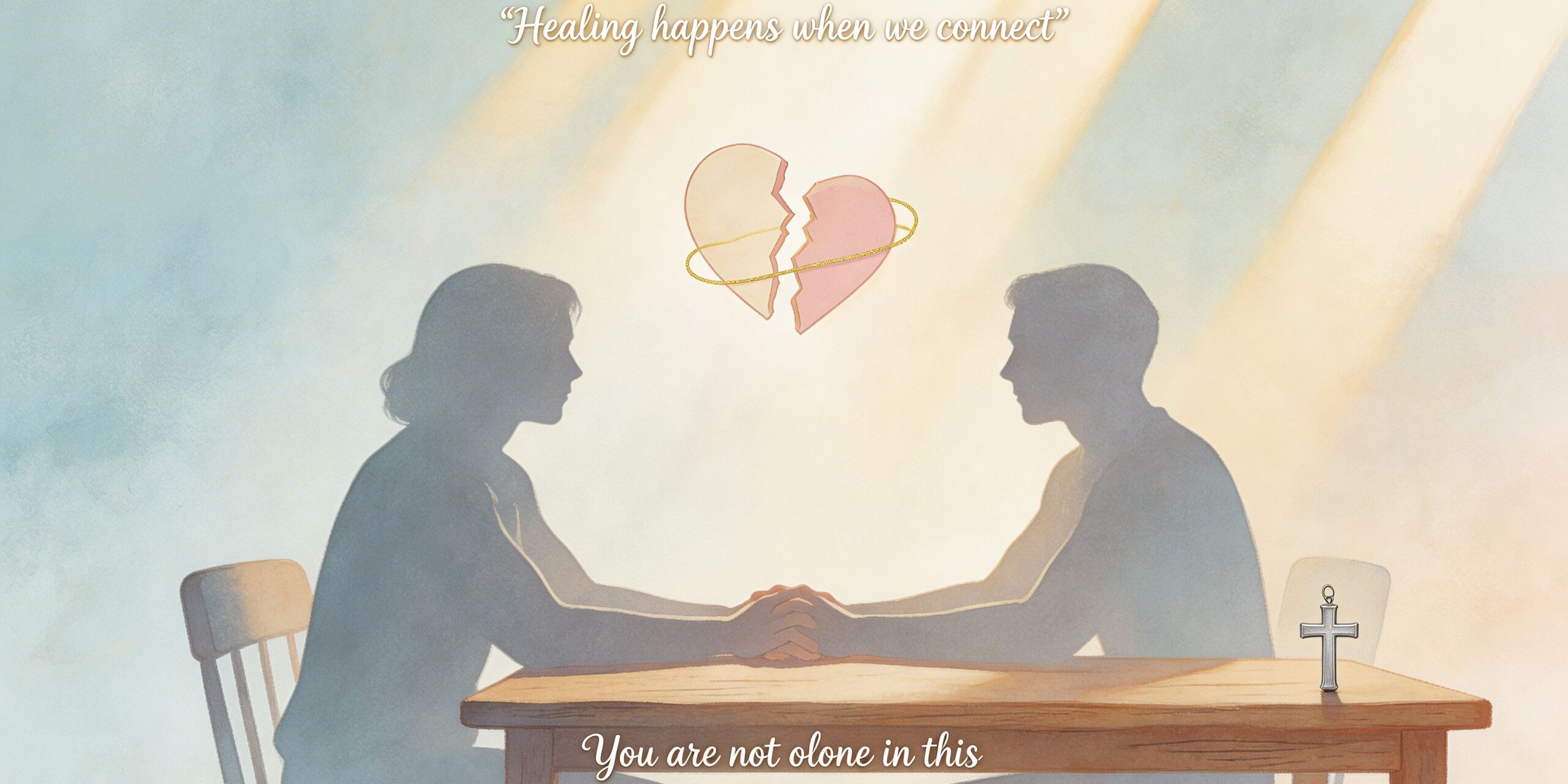
Some discoveries are loud. Others happen in silence. A phone lights up. A story stops adding up. A confession lands, and the room suddenly feels unfamiliar.
If you are searching for how to rebuild a marriage after infidelity, you may be carrying shock, anger, numbness, grief, and a thousand unanswered questions at the same time. That response is not weakness. It is what deep betrayal does to the heart, the mind, and the body.
Christian couples often face another layer of pain. Along with the broken trust, there is spiritual confusion. What does repentance look like? What does forgiveness mean now? Can a marriage be restored without pretending the wound is smaller than it is?
The Unspoken Pain and The Hope for Healing
The first days after an affair often feel unreal. One spouse wants every answer immediately. The other may panic, minimize, or promise quick change just to stop the crisis. Both are hurting, but not in the same way.
For many believers, the pain is compounded by shame. They may worry about family, church, children, and whether this failure defines the rest of their story. In that fog, it helps to say something plain. Affairs damage real people, real covenants, and real families. A practical legal perspective on that fallout is explored in this piece on how affairs lead to heartache.

There is also real reason for hope. Infidelity affects 20-40% of marriages in the US, and with disclosure and therapeutic help, 60-75% of couples stay together after discovery according to New York Behavioral Health. Some couples do more than survive. They build a more honest marriage than the one they had before.
That does not happen through denial. It happens through truth, structure, repentance, and time under God’s care.
Healing after betrayal does not mean returning to the old marriage. It means building a different one, with fewer secrets and stronger foundations.
Creating Safety and Setting Boundaries
In the immediate aftermath, do not try to solve the whole marriage. Stabilize the crisis first. The first task is safety.
For the first seventy-two hours, focus on what stops further harm:
- End the affair completely: No calls, no texts, no social media contact, no “closure” meetings.
- Slow major decisions: Unless there is danger, do not make permanent decisions in the height of panic.
- Protect sleep and basic functioning: Eat simple meals, rest when you can, and ask one trusted person for support.
- Reduce exposure to fresh triggers: This may mean sleeping separately for a short period or taking space during intense conversations.
- Set communication windows: Agree on when to talk and when to pause so the home does not become a nonstop interrogation room.
These boundaries are not punishment. They create conditions where honest work can begin.
What safety usually looks like
The spouse who broke trust should not argue for privacy right now. They should move toward accountability. The betrayed spouse should not feel pressured to “calm down” for everyone else’s comfort. Their nervous system has been hit by a real shock.
A useful early question is this: What helps this home feel less chaotic today? The answer might be written updates, limited phone use at night, a temporary stay with family, or having a pastor and counselor involved quickly.
What does not work
Several responses almost always deepen the wound:
- Trickle truth: Revealing facts in fragments.
- Spiritual shortcuts: Saying “God forgave me, so you should too.”
- Defensiveness: Explaining the affair before owning the betrayal.
- Forced closeness: Pushing for physical affection when safety has not been rebuilt.
Building a Foundation of Radical Honesty
Many couples hope they can repair the marriage by saying as little as possible about the affair. That approach usually fails. Secrecy created the damage. Secrecy cannot repair it.
Radical honesty does not mean chaotic oversharing at random hours. It means a structured, truthful process where the betrayed spouse can understand what happened, ask questions, and stop living in a maze of half-truths.
According to Addo Recovery, research on trust recovery found a direct relationship between discussion depth and healing. Couples who discussed the betrayal in great detail recovered more trust than couples who stayed vague, and 86% of couples who committed to a detailed question-and-answer process remained married.
What honesty includes
A truthful rebuilding process usually involves:
-
A clear timeline
The unfaithful spouse stops rewriting history and gives a coherent account. -
Direct answers to real questions
If a spouse asks about contact, duration, lies told, or money spent, those questions matter. -
Transparent daily living
Open devices, shared schedules, and proactive updates can help restore reality where deception once lived. -
No blame shifting
Marriage problems may need attention later. The affair itself was a choice.
Why this matters so much
The betrayed spouse is not just looking for facts. They are trying to understand whether reality is safe again. Vague apologies often sound humble, but they usually protect the person who sinned more than the person who was wounded.
If you are the spouse who had the affair, honesty will feel costly. That cost is part of repentance.
This season is not meant to become permanent surveillance. It is a temporary posture of living in the light. Over time, trust grows through consistency, not speeches.
Navigating Trauma and Finding Your Footing in Christ
For the betrayed spouse, infidelity often functions like trauma. Sleep becomes fragile. Thoughts loop. Small details trigger panic. Some people feel foolish for reacting so strongly, especially in church settings where calm forgiveness is praised.
That pressure can do harm. Up to 45% of betrayed partners develop clinical depression or complex trauma that can persist for years, as noted by Nora Mental Health. In faith communities, people may suppress anger or grief because they fear being seen as unforgiving. That is not healing. That is spiritual bypassing.

Forgiveness is not the same as silence
Biblical forgiveness does not ask you to pretend evil was small. Scripture makes room for lament, grief, and truth-telling. The Psalms are full of honest cries to God, not polished spiritual language.
If your body is on alert all day, individual counseling may be just as important as couples work. Trauma-informed support can help you process intrusive thoughts, regulate your nervous system, and remember that your identity is not “the rejected one.” Your identity is rooted in Christ.
For a deeper look at this kind of care, this resource on faith-based trauma healing and finding peace with God can help you think through the connection between emotional pain and spiritual grounding.
Grounding practices that help
Some practices are simple, but meaningful:
- Lament prayer: Speak plainly to God about anger, fear, and confusion.
- Short Scripture meditation: Stay with passages about God’s presence, not just commands.
- Body awareness: Notice when your chest tightens, your breathing changes, or your mind spirals.
- Wise support: Choose one or two safe people, not a crowd.
You do not need to rush forgiveness to prove your faith. Honest grief is not rebellion against God.
Learning to Communicate and Trust Again
After safety, honesty, and individual stabilization begin, the couple can start the harder relational work. Many marriages stall at this point. They try to rebuild trust with private promises, but they still use the same communication patterns that hid pain before the affair.

Therapy matters here. According to Here Counseling, 60% to 80% of couples who engage with a skilled therapist after infidelity stay together and successfully rebuild their relationship, and many report higher marital satisfaction than before the affair.
What couples therapy is doing
A good therapist is not there to pick a winner. The therapist helps each spouse do the right work.
| Focus | What helps | What hurts |
|---|---|---|
| Hard conversations | Slower pacing, direct questions, reflective listening | Interrupting, defending, rewriting history |
| Emotional repair | Naming pain and showing empathy | Demanding quick closure |
| Trust rebuilding | Repeated consistency over time | Grand promises with no follow-through |
| Conflict habits | Learning new ways to disagree | Returning to contempt or avoidance |
One practical support is learning stronger communication habits outside the therapy office. This guide on how to improve communication in marriage lays out useful skills couples can practice between sessions.
A therapist may structure sessions around disclosure, accountability, grief, and new relational patterns. Some couples use weekly counseling. Others may need an intensive format. Grace Christian Counseling offers Christ-centered marriage counseling and intensives for couples who want evidence-based care with explicit biblical integration, either in person or online.
Shared spiritual practices that rebuild connection
Christian couples should not use spiritual activities to avoid hard feelings. But when approached with sincerity, shared faith practices can strengthen repair.
Try practices like these:
- Praying briefly together: Keep it simple. One minute is enough at first.
- Reading a Psalm aloud: Choose passages that allow sorrow and hope to coexist.
- Church involvement with discretion: Seek support, not public exposure.
- Acts of service together: Small shared tasks can rebuild teamwork.
A helpful reflection on communication and restoration is below.
How trust returns in real life
Trust usually returns gradually. A spouse says where they are going and arrives when they said they would. A hard question gets a calm answer. A triggering day is met with patience instead of irritation. Over months, those moments accumulate.
This is slower than most couples want. It is also more durable.
Your Future Together and When to Seek More Help
A restored marriage is not a marriage with no memory. It is a marriage where the betrayal no longer controls every conversation, every conflict, or every quiet evening. The story remains part of the relationship, but it is no longer the whole story.
Signs of movement and signs of delay
Healthy progress often looks like fewer panic spikes, more honest conversations, and a growing ability to discuss the affair without immediate escalation. Stalled recovery often includes ongoing deceit, blame shifting, refusal to stay transparent, or repeated pressure on the betrayed spouse to “be over it.”
Children matter here too, even when parents think they are hiding the tension. According to Kenny Levine, 60-70% of children in post-infidelity homes show heightened anxiety or behavioral issues. Christian parents often feel torn between modeling grace and naming harm truthfully.
When to widen the circle of care
Family counseling, pastoral support, and more structured couples work may be needed when the home stays tense or confusing. If you want a helpful overview of what faith-integrated care involves, this article on Christian counseling offers a useful framework.
If you are preparing to start couples therapy, this page on how to prepare for couples counseling can help you enter the process with clearer expectations.
Some marriages need weekly sessions. Others need a more intensive reset. Seeking more help is not failure. It is wisdom.
If your marriage has been shaken by infidelity, Grace Christian Counseling offers Christ-centered support for couples, individuals, and families through in-person and online counseling in Western Pennsylvania. If you are ready for a structured path forward, reaching out for help can be the next faithful step.
How to Support Spouse with Depression: A Guide
How to Resolve Conflict in Family: Finding a Path Back to Each Other


