

Understanding Depression and When to Seek Depression Counseling
If low mood, emotional numbness, exhaustion, or other symptoms of depression have persisted for two weeks or longer and are interfering with daily life, it may be time to talk with a mental health professional. A licensed clinician can help you understand what you’re experiencing, consider factors that may be contributing to your symptoms, and develop a treatment plan based on your individual needs.
While everyone experiences temporary sadness during difficult seasons, clinical depression lingers and alters how you perceive yourself, others, and the world. In our clinical practice, we observe that depression often hides behind unexpected symptoms rather than just overt crying or sadness. Symptoms can present as fatigue, irritability, concentration difficulties, physical aches, or hidden impairment. Because these subtle challenges can disrupt your quality of life without looking like classic depression, a thorough clinical assessment is essential to understand what is truly happening beneath the surface.
| Feature | Situational Sadness | Major Depressive Disorder |
|---|---|---|
| Duration | Often connected to a particular event or difficult season and may improve with time | Symptoms are present most of the day, nearly every day, for at least two weeks |
| Daily Impact | A person may remain able to carry out most daily responsibilities | Symptoms can cause significant distress or interfere with work, school, relationships, or daily responsibilities |
| Emotional Experience | Sadness may come and go in response to circumstances | May involve persistent sadness, emptiness, irritability, hopelessness, or loss of interest and pleasure |
| Physical Symptoms | Temporary changes in sleep, energy, or appetite may occur | May involve changes in sleep, appetite, energy, movement, concentration, or unexplained physical discomfort |
| Self-Perception | Self-worth may remain relatively stable | Some people experience guilt, worthlessness, helplessness, or negative beliefs about themselves |
Depression involves more than simply feeling sad for two weeks. According to the National Institute of Mental Health, diagnosis considers the number, severity, frequency, and duration of symptoms as well as their effect on daily functioning. If persistent or distressing symptoms are interfering with everyday life, a mental health or medical professional can help determine what may be contributing to them. In adolescents, these signs often look different than in adults; recognizing the unique signs of depression in teenagers, such as sudden academic drops, social withdrawal, or persistent irritability, can help families intervene early.
Depression is also an urgent safety matter when it begins to involve thoughts of self-harm. Warning signs of worsening depression include talking about wanting to die, expressing unbearable emotional pain, giving away prized possessions, or withdrawing completely from loved ones. If you or someone you love is in crisis, immediate support is available across the country by calling or texting the 988 Suicide & Crisis Lifeline, or by reaching emergency services at 911. Scripture reminds us in Psalm 34:18 that the Lord is close to the brokenhearted, and seeking medical and therapeutic help is a vital way to step toward safety and healing.
Biological, Psychological, and Environmental Causes
Depression rarely has one simple cause. Major depressive disorder is influenced by a complex combination of genetic, biological, psychological, social, and environmental factors. Research estimates the heritability of major depression at approximately 30% to 50%, meaning genetic differences contribute to vulnerability at a population level but do not determine whether any one person will develop depression. Research on the genetics of major depression also demonstrates that the condition is highly complex rather than being explained by a single gene or biological mechanism.
Depression can also emerge during seasons of overwhelming stress, loss, relationship difficulties, health problems, major life changes, or unresolved trauma. For some people, there is an obvious event connected to their depression; for others, there may be no single explanation for why they feel the way they do. When emotional distress builds, finding balanced Christian support for depression and anxiety allows individuals to address both internal thought patterns and external stressors within a safe therapeutic environment.
Effective Therapeutic Modalities and Treatment Approaches
Clinical research shows that depression is highly treatable through evidence-based psychotherapy, structured lifestyle interventions, and collaborative medical support. Therapeutic treatment is never one-size-fits-all; an effective plan is tailored around an individual’s unique history, relationships, and values, aligning with established medical guidance on diagnosis and treatment from Mayo Clinic.
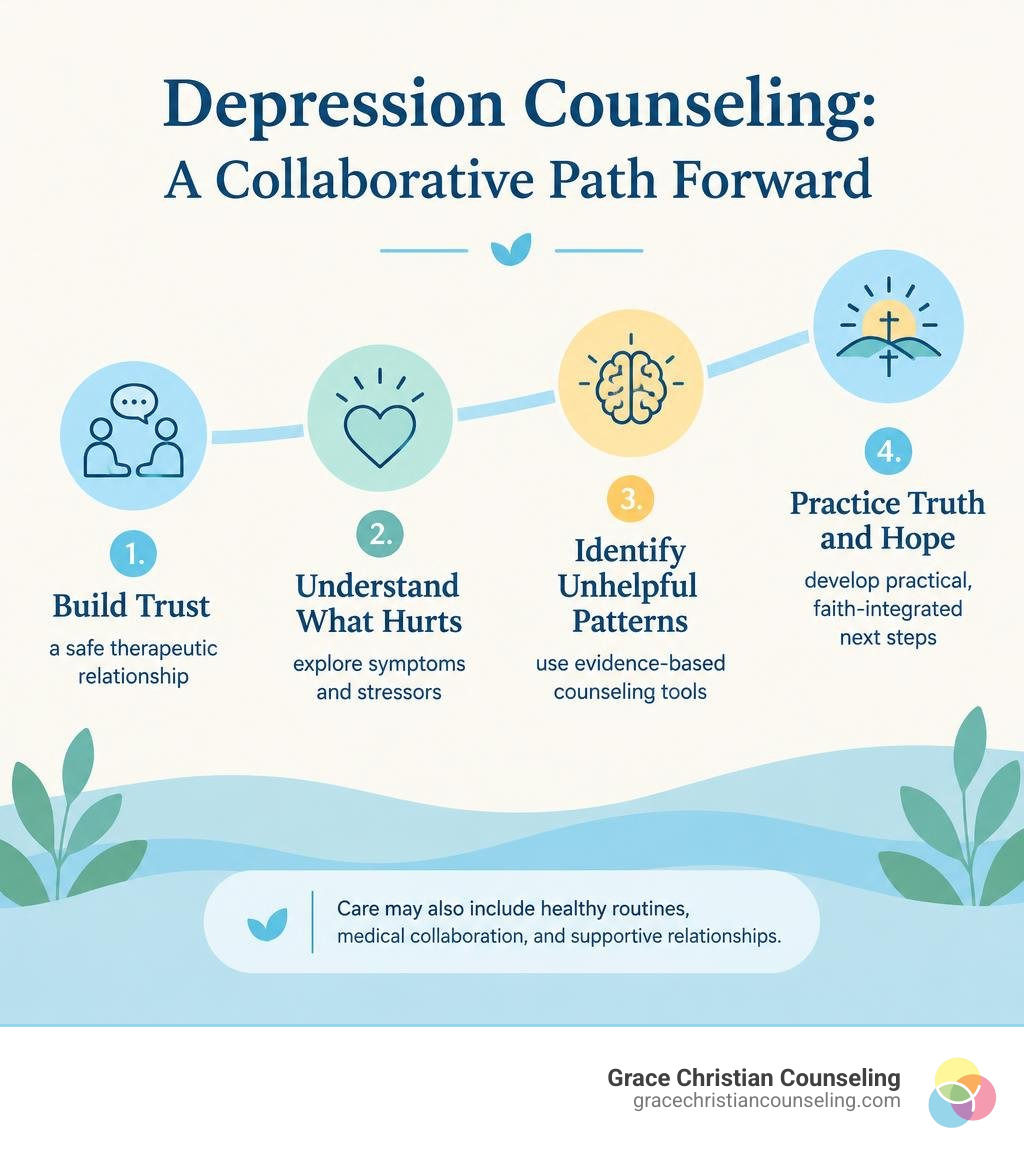
Holistic wellness also includes practical daily habits. Establishing consistent sleep hygiene, eating nourishing meals, spending time outside in natural sunlight, and incorporating gentle physical exercise (like walking through a local park) can help regulate the nervous system alongside formal counseling.
Evidence-Based Approaches in Depression Counseling
Modern psychotherapy provides structured tools to help individuals understand and alter the patterns that maintain depressive states:
- Cognitive Behavioral Therapy (CBT): Helps people recognize unhelpful patterns of thinking and develop healthier ways of responding to thoughts, emotions, and situations. In Christian counseling, these clinical skills can be integrated thoughtfully with biblical reflection, including the call in Romans 12:2 to be transformed by the renewing of the mind.
- Interpersonal Therapy (IPT): Examines relational patterns, role disputes, major life transitions, and unresolved grief to help rebuild healthy communication and social support.
- Behavioral Activation: Helps individuals systematically re-engage in meaningful, life-giving routines to overcome withdrawal and lack of motivation.
For residents seeking local, faith-integrated clinical care, our team offers structured Christian depression counseling in Pennsylvania that blends these modalities with compassionate, biblically grounded care.
The Role of Medication and Psychiatric Nurse Practitioners
For some people with depression, treatment may include both psychotherapy and medication. Antidepressants, including SSRIs, are among the medications that medical professionals may consider based on factors such as symptom severity, treatment history, other health conditions, potential side effects, and individual preferences. Medication decisions should be made with a qualified medical professional and can be coordinated with counseling when appropriate.
Psychiatric Mental Health Nurse Practitioners (PMHNPs) and medical doctors evaluate symptoms, prescribe medications when appropriate, and monitor for side effects. For Christians walking through this journey, discovering finding hope in Christ during depression often involves recognizing that medical care, counseling, and spiritual growth work hand in hand toward restoration.
In-Person Care, Teletherapy, and Family Support

Research supports telehealth as a viable way to deliver depression treatment for many people. A systematic review and meta-analysis of nine randomized trials involving 1,268 patients found no significant difference in depression severity immediately after treatment between real-time telehealth and face-to-face care. While the best format depends on the individual’s needs, preferences, clinical circumstances, and access to care, these findings support telehealth as a meaningful option for depression treatment.
Support from family and friends also plays a central role in long-term recovery. When supporting a loved one through depression, keep these principles in mind:
- Practice Active Listening: Offer a listening ear without immediately jumping to give unsolicited advice or easy answers.
- Assist with Daily Logistics: Help with routine tasks, scheduling appointments, or offering transportation to sessions when energy is low.
- Prevent Caregiver Burnout: Set healthy boundaries, maintain your own spiritual and physical wellness, and lean on support networks.
- Take Suicide Risk Seriously: If your loved one talks about suicide, expresses a desire to die, or shows other concerning warning signs, seek professional help rather than trying to manage the situation alone. Keep the 988 Suicide & Crisis Lifeline accessible, and call or text 988 for crisis support; call 911 or seek emergency medical care when there is an immediate danger.
How to Choose a Qualified Counselor and Begin Care
Choosing the right counselor is an important part of beginning care. Look for a licensed mental health professional with training and experience relevant to depression and the concerns you want to address. Depending on the clinician and state, credentials may include LPC, LCSW, LMFT, or associate-level licenses such as LAPC, with associate-level clinicians practicing under required supervision.
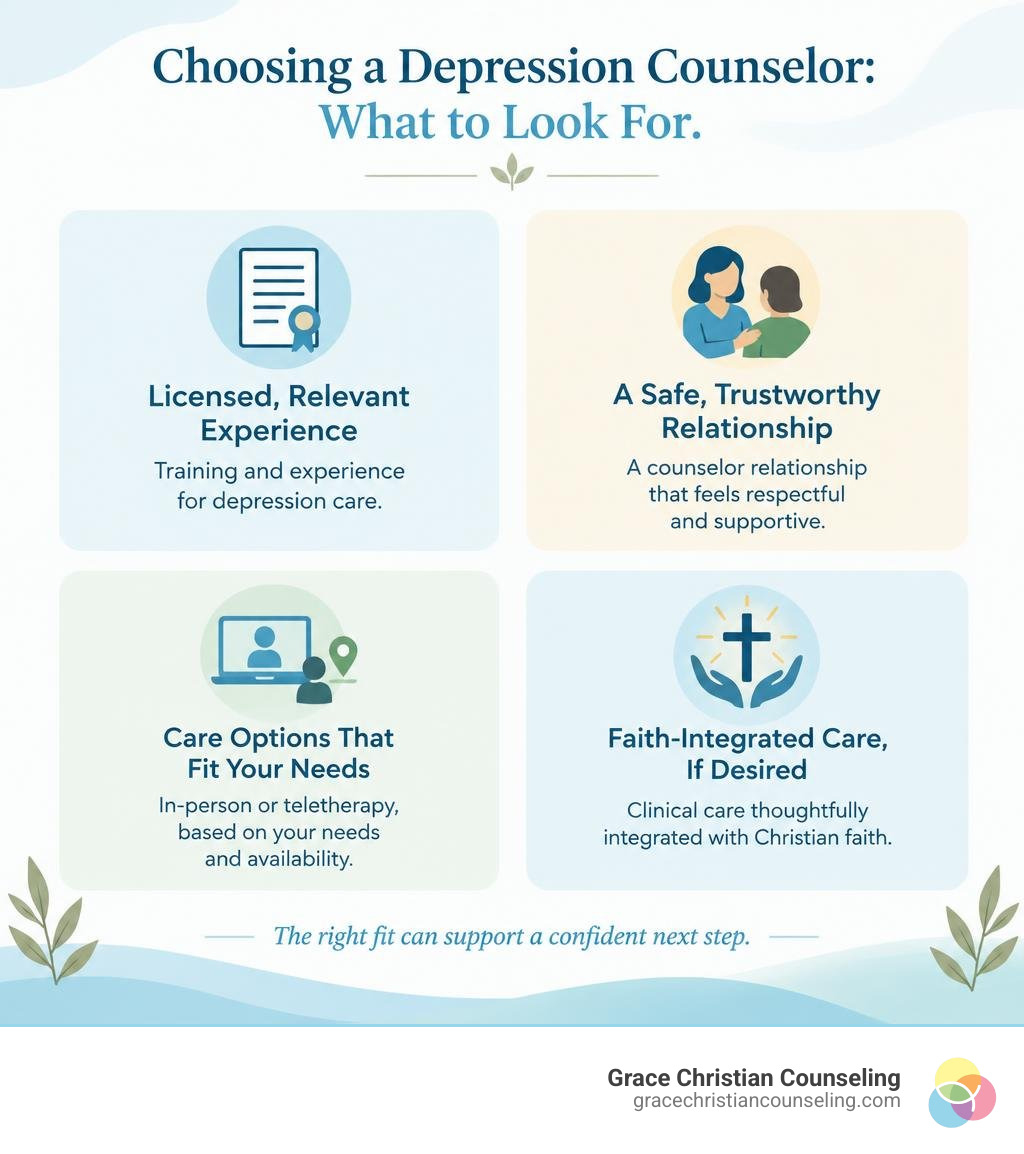
It is equally important to find a clinician with whom you feel a genuine sense of safety and therapeutic rapport. Across Western Pennsylvania, including communities such as Pittsburgh, North Huntingdon, Sewickley, Bethel Park, Penn Hills, Uniontown, and Mt. Lebanon, our counselors integrate clinical techniques like CBT with biblical truth and the gentle guidance of the Holy Spirit. Virtual options are also available through NuWellonline.com and our practice website.
What to Expect in Professional Depression Counseling Sessions
Beginning therapy can feel intimidating if you have never experienced it before, but knowing the process helps ease anxiety. Your initial session centers on a compassionate clinical intake where your counselor listens to your story, explores current symptoms, and reviews your medical and personal history.
Subsequent weekly sessions provide a confidential, non-judgmental environment to:
- Identify cognitive blind spots and unhelpful behavior cycles.
- Learn emotional regulation and stress-reduction techniques.
- Set collaborative, manageable goals tailored to your daily life.
- Explore how your faith and relationship with God can serve as an anchor during dark seasons.
Over time, counseling can become a steady place to process what you are carrying, practice new skills, and notice meaningful progress at a pace that respects your circumstances. Your counselor can help you revisit goals as your needs change, while offering compassionate support that integrates sound clinical care with the hope and truth of your faith.
Frequently Asked Questions About Depression Therapy
How long does counseling take to produce noticeable results?
There is no single timeline for depression counseling. Some people notice changes relatively early in treatment, while others benefit from longer-term support depending on symptom severity, how long symptoms have been present, co-occurring concerns, treatment approach, life circumstances, and individual goals. Your counselor can work with you to evaluate progress and adjust the treatment plan as your needs change.
Is online counseling as effective as in-person therapy for depression?
Yes, online counseling can be an effective option for many people experiencing depression. Research comparing real-time telehealth with face-to-face depression care has found similar outcomes in depression severity across the two formats. Whether online or in-person counseling is the better fit depends on your individual needs, preferences, safety considerations, and the clinician’s professional judgment.
How can family members best support someone undergoing depression treatment?
Family members can provide meaningful support by listening without judgment, learning about clinical depression, and encouraging patience with the treatment process. Rather than trying to solve every problem or insisting that a loved one “look on the bright side,” make room for honest conversation. Simple responses such as, “I’m here with you,” or, “Would it help to talk or sit quietly together?” can communicate safety and care when someone has little energy to explain what they are feeling.
Practical support can also reduce the daily strain that often accompanies depression. Offering to help with meals, childcare, transportation, household tasks, or scheduling an appointment may make it easier for a loved one to stay connected to care. It is helpful to ask before stepping in, respect their autonomy where possible, and follow through on small commitments rather than making broad promises that are hard to keep.
Family members should also take warning signs seriously. If a loved one talks about wanting to die, expresses hopelessness, begins giving away possessions, or seems unable to stay safe, seek immediate professional or emergency support. In the United States, call or text 988 for the Suicide & Crisis Lifeline, or call 911 when there is immediate danger. Supporters need care, too; healthy boundaries, rest, prayer, and trusted support can help you remain present without carrying the situation alone. Encouraging words rooted in 1 Thessalonians 5:11 can offer a steady reminder that compassionate presence and practical help both matter on the path toward healing.
A Hopeful Next Step Toward Healing From Depression

Depression can make you feel isolated, exhausted, and uncertain about the future, but you do not have to navigate it alone. Reaching out for counseling does not mean your faith has failed or that you simply need to try harder. Professional support can give you a place to understand what you’re experiencing, develop practical tools for moving forward, and explore how your faith can remain a source of hope in a difficult season.
At Grace Christian Counseling, our team of licensed Christian counselors and mental health professionals is dedicated to walking alongside individuals, couples, and families across Western Pennsylvania and through online counseling where our clinicians are authorized to practice. We blend evidence-based psychological tools with the timeless hope found in Scripture to guide you through life’s hardest seasons. If you are ready to take the next step toward emotional well-being, explore our dedicated Christian counseling for depression services and reach out to schedule an appointment today.
This article was researched with AI and heavily edited by Bekah McCrorey for accuracy and relevance.
Bekah McCrorey is a counselor at Grace Christian Counseling. She holds a Master’s degree in Counseling from Dallas Theological Seminary and a Bachelor’s degree in Christian Ministry from Chesapeake Bible College and Seminary. She is a provisionally licensed counselor working under supervision toward full licensure as a Licensed Professional Counselor (LPC) in Pennsylvania.
With over 12 years of full-time ministry experience supporting individuals, families, ministry leaders, and churches nationally and internationally, Bekah brings a deep understanding of emotional and spiritual struggles. As a counselor, she uses a client-centered, trauma-informed, and evidence-based approach. She is Level 1 trained in Restoration Therapy and is passionate about helping clients navigate anxiety, depression, grief, trauma, life transitions, and relational difficulties while integrating emotional and spiritual well-being.
This guide is for educational and spiritual encouragement and is not a substitute for personalized professional counseling. If you are in crisis, please reach out for immediate help.


