

When Grief Feels Too Heavy to Carry Alone
Faith based grief support combines the healing power of community, Scripture, and prayer with compassionate, professional care to help you process loss and find hope again.
Here is a quick look at what faith-based grief support offers:
- Scripture and prayer as anchors during overwhelming pain
- Group programs (in person and online) like GriefShare, where over 1 million people have found comfort
- Individual Christian counseling that blends evidence-based therapy with biblical truth
- Resources for children to help them grieve in age-appropriate, faith-centered ways
- Free and online resources through ministries like Focus on the Family
Grief is one of the hardest things a person can walk through. Whether you have lost a spouse, a parent, a child, or someone else you love deeply, the pain can feel impossible to put into words.
One grieving parent described it this way in a community forum: “My family just lost my stepdad and my kids are confused and hurting. I just want to help them however possible.” That kind of desperate, love-driven search for help is something many families know all too well.
The good news is you do not have to grieve alone. And you do not have to choose between your faith and quality care.
Faith-based grief support meets you in your sorrow and in your spiritual life, offering a path toward healing that honors the whole person.
Understanding Faith Based Grief Support
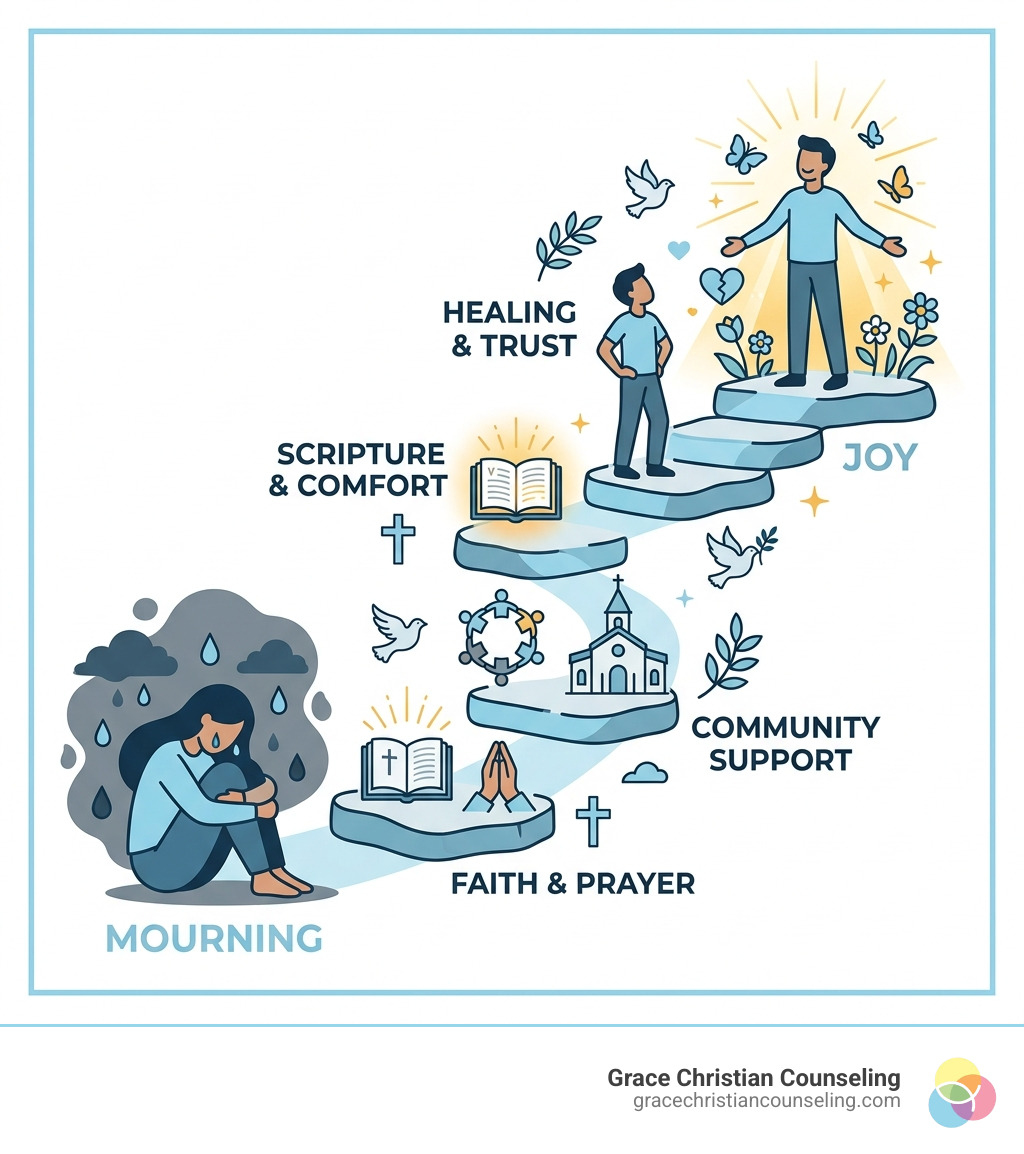
When we talk about faith based grief support, we are referring to a holistic approach to mourning that recognizes we are spiritual beings. While traditional counseling provides essential psychological tools to manage the symptoms of loss, faith-based care goes a step further by addressing the “why” and the “where is God?” questions that naturally arise during a tragedy.
In a biblical worldview, grief is not seen as a clinical disorder to be “cured,” but as a sacred response to the brokenness of our world. It is a journey that requires God’s divine presence, biblical truth, and spiritual care. This type of support is different because it views the Bible as the ultimate source of truth and the Holy Spirit as the primary Comforter.
Strong faith based grief support does not set biblical care against sound counseling practice. At Grace Christian Counseling, we see emotional, mental, and spiritual health as deeply connected, especially after a painful loss. Research and clinical experience both show that spiritual care can play a meaningful role in coping with grief for many people. When evidence-based counseling is integrated with biblical truth, prayer, and compassionate presence, care can address the whole person, not just the symptoms.
The Role of Scripture and Prayer in Healing
Scripture acts as an anchor when the waves of grief feel like they might pull us under. It provides a vocabulary for our pain. In the Bible, we see the concept of “lament,” which is a passionate expression of grief or sorrow. God does not ask us to put on a happy face; He invites us to bring our broken hearts to Him.
Several key verses often ground the healing process in hope and comfort:
- Psalm 34:18: “The Lord is close to the brokenhearted and saves those who are crushed in spirit.”
- Matthew 11:28: “Come to me, all you who are weary and burdened, and I will give you rest.”
- Revelation 21:4: “He will wipe every tear from their eyes. There will be no more death or mourning or crying or pain…”
Prayer is another essential tool. It is not just about asking for the pain to go away; it is about intercession and soul care. Through prayer, we experience the “peace that surpasses all understanding.” We also encourage “Christian mindfulness,” which is the practice of staying present in the moment with God while acknowledging our pain (without letting it consume our identity). This helps stop the cycle of negative thoughts that often accompany deep loss.
Why Faith Based Grief Support for Children Matters
Children process loss very differently than adults. They may experience “puddle jumping” grief, feeling intense sadness one moment and wanting to play the next. For a child, the loss of a loved one can shake their entire sense of security.
Faith based grief support for children focuses on providing age-appropriate theology. We help them understand that while death is sad, there is security in Christ. It is important to maintain familiar family patterns during this time to provide a sense of safety.
By using resources like those found in our Grief Counseling services, parents can help children build an emotional vocabulary. Instead of being “confused and hurting,” children learn to express their feelings through the lens of God’s love and the hope of heaven. Children also need a safe place to ask hard questions about where their loved one went and why God allowed it to happen.
Structured Programs for Faith-Integrated Healing
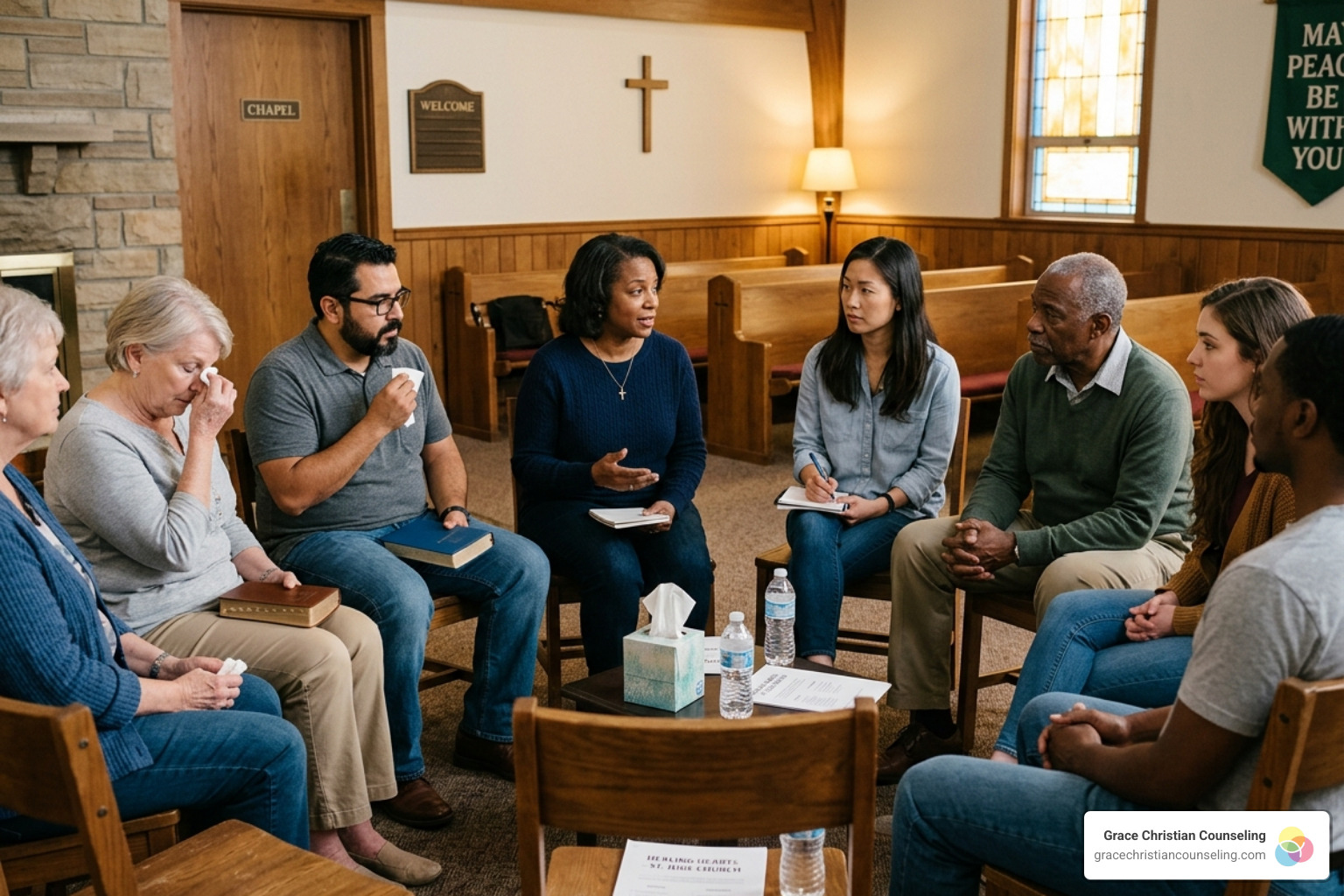
For many, the most effective way to process loss is through a structured program. These programs provide a roadmap for a journey that otherwise feels aimless and chaotic.
One of the most well-known programs is GriefShare. This ministry has been helping people for over 25 years, and more than 1 million people have found hope through its curriculum. GriefShare typically runs in a 13-week cycle and includes three key components:
- Video Seminars: 30-minute videos featuring experts, counselors, and real-life stories of people who have walked the path of grief.
- Group Discussion: A safe, no-pressure environment to talk about what you learned in the video.
- Participant Guides: Workbooks for personal study and “homework” that helps you process your emotions throughout the week.
Many local churches host these sessions. Because grief is unpredictable and doesn’t follow neat stages, the 13-week structure provides a much-needed sense of stability.
Benefits of Group Support vs. Individual Counseling
Both group support and individual counseling have their place in a healing plan. Many people find that a combination of both is the most effective way to move forward.
| Feature | Group Support | Individual Christian Counseling |
|---|---|---|
| Dynamic | Peer-to-peer sharing and encouragement. | One-on-one focused attention. |
| Focus | Normalizing grief through shared experiences. | Tailored strategies for your specific situation. |
| Environment | Sacred witnessing by a community of believers. | Private, confidential, and clinical. |
| Structure | Often follows a set curriculum or timeline. | Flexible and moves at your personal pace. |
| Spiritual Tool | Communal prayer and collective worship. | Personalized spiritual direction and intercession. |
Group support is powerful because it breaks the isolation of grief. Hearing someone else say, “I felt that too,” can be incredibly life-giving. On the other hand, individual counseling at Grace Christian Counseling allows us to dive deeper into complicated grief, trauma, or specific family dynamics that might be too sensitive for a group setting.
Tools for Daily Recovery: iCare and CheckYourCompass
Beyond weekly meetings, daily tools are necessary to navigate the “in-between” moments. These tools often include:
- Bible Journaling: A way to externalize pain by writing or drawing through specific scriptures.
- Self-Care Strategies: Practical tips on sleeping, eating, and managing stress from a biblical perspective.
- Externalization Activities: Exercises that help you move the grief from your inside to the outside, making it more manageable.
- Honor and Meaning-Making: Rituals such as candlelight ceremonies to honor the memory of a loved one while looking toward the light of Christ, can be both meaningful and comforting.
Navigating Specific Losses with Spiritual Strength

Grief is not a “one size fits all” experience. The loss of a spouse carries a different weight than the loss of a child or a parent. Faith based grief support recognizes these nuances. No matter your personal experience, professional Christian counseling is vital here to navigate the grief journey and find God’s grace in the midst of all the deep pain and unanswered questions.
- Loss of a Spouse: This often involves a sense of total identity loss and major disruption of daily routines. Faith-based support focuses on reclaiming hope and understanding that while the “one flesh” bond now looks different on earth, God remains a faithful and is close to the brokenhearted.
- Loss of a Child: This is often described as the most “out of order” type of grief. Whether it is an infant, an adult child, or a loss during pregnancy, the pain is searing. Faith-based support offers the hope of a heavenly reunion and the reminder that Jesus wept at the grave of His friend, validating our deep sorrow.
- Sudden Tragedy or Suicide: When a loss is sudden and unexpected or involves the loss of a loved one due to suicide, the grief is often complicated by the unknowns, unanswered questions, and even intense feelings of guilt.
Research also shows why tailored support matters. In the United States, about 1 in 12 children will experience the death of a parent or sibling by age 18, and grief can affect emotional health, school performance, and family stability in different ways depending on the loss and the person grieving. Studies also show that many bereaved adults report changes in both mental and physical health after a major loss, which is one reason specialized, compassionate care is so important.
Finding Peace During the Holidays
The holidays can be like a landmine for those who are grieving. Traditions that once brought joy can now bring deep pain. We often help our clients by navigating holiday grief with faith and finding new ways to handle the loss of loved ones during Christmas.
Some helpful strategies include:
- Surviving the Holidays and Events: Many GriefShare groups host one-time seminars specifically for the holiday season.
- Making A Memorial: Some use physical memorials where you can place the name and/or photo of a loved one, acknowledging their presence in your heart even in their absence.
- New Traditions: It is okay to change how you celebrate. Lighting a special candle or sharing a favorite story about the deceased can honor them without making the day feel unbearable.
Frequently Asked Questions about Faith Based Grief Support
How does faith-based counseling approach grief differently in practice?
In a faith-based setting, grief is not treated as something to rush past or “fix.” It is approached with compassion for the whole person, mind, body, emotions, relationships, and soul. That may mean exploring sadness, anger, guilt, or numbness while also asking where God feels present, distant, or confusing in the middle of loss.
Can faith-based counseling still be clinically sound?
Yes, good faith-based counseling does not replace skilled mental health care, it integrates it. A trained Christian counselor can use proven therapeutic methods while also respecting a client’s beliefs, values, and spiritual struggles. This can be especially helpful for people who want their faith to be part of the healing process, not left outside the counseling room.
Who tends to benefit most from faith-based grief support?
People often find this approach meaningful when their loss has raised spiritual questions, shaken their sense of purpose, or left them longing for comfort that connects with their beliefs. It can also help those who want a safe place to talk honestly about both grief and faith, including doubt, lament, and the hope they may not yet feel ready to hold.
How can families in local communities find immediate help?
One of the fastest places to start is your local church. Many churches can connect families with pastors, care teams, meal support, prayer groups, and trusted Christian counselors. Some also host grief groups or can point you to nearby options in your area.
What if my family needs help today, not weeks from now?
In that case, ask specifically for immediate support. A pastor, ministry leader, or church office may be able to arrange a same-week visit, prayer support, or a referral to a licensed counselor. If grief feels overwhelming or daily functioning is becoming difficult, it is wise to seek professional care as soon as possible.
How can schools, doctors, and community agencies help?
Families often forget that local pediatricians, primary care offices, hospices, chaplains, and school counselors can be additional strong first-contact supports. These professionals may know about nearby bereavement programs, child grief services, and crisis resources that fit your family’s needs while respecting your faith.
What if I do not belong to a church right now?
You can still reach out. Many Christian support groups and counseling practices welcome people from any church background, or no church background at all. Local community forums and neighborhood social media groups can also help you find faith-sensitive support close to home.
Your Journey Toward Restoration
Grief is a long valley, but you do not have to walk through it alone. Whether you find comfort in a 13-week GriefShare group, a daily devotional book, or the focused care of a licensed professional, there is a path forward.
At Grace Christian Counseling, we are committed to walking alongside you. We serve communities across Pennsylvania, including Pittsburgh, North Huntingdon, Uniontown, Penn Hills, Sewickley, and Bethel Park. Our licensed counselors blend evidence-based psychology with the timeless truths of the Bible to help you find “beauty for ashes.”
If you are looking for more info about Pittsburgh Christian Counseling or want to explore how our team can support your family, please reach out to us today. Healing is possible, and hope is waiting for you just beyond the next step.
Take the first step toward healing today. Contact Grace Christian Counseling to schedule an in-person or online session and begin your journey toward restoration in Christ.
This article was researched with AI and heavily edited by Bekah McCrorey for accuracy and relevance.
Bekah McCrorey is a counselor at Grace Christian Counseling. She holds a Master’s degree in Counseling from Dallas Theological Seminary and a Bachelor’s degree in Christian Ministry from Chesapeake Bible College and Seminary. She is a provisionally licensed counselor working under supervision toward full licensure as a Licensed Professional Counselor (LPC) in Pennsylvania.
With over 12 years of full-time ministry experience supporting individuals, families, ministry leaders, and churches nationally and internationally, Bekah brings a deep understanding of emotional and spiritual struggles. As a counselor, she uses a client-centered, trauma-informed, and evidence-based approach. She is Level 1 trained in Restoration Therapy and is passionate about helping clients navigate anxiety, depression, grief, trauma, life transitions, and relational difficulties while integrating emotional and spiritual well-being.
This guide is for educational and spiritual encouragement and is not a substitute for personalized professional counseling. If you are in crisis, please reach out for immediate help.
Grief Counseling


