

Biblical Principles Career Guidance for Meaningful Work
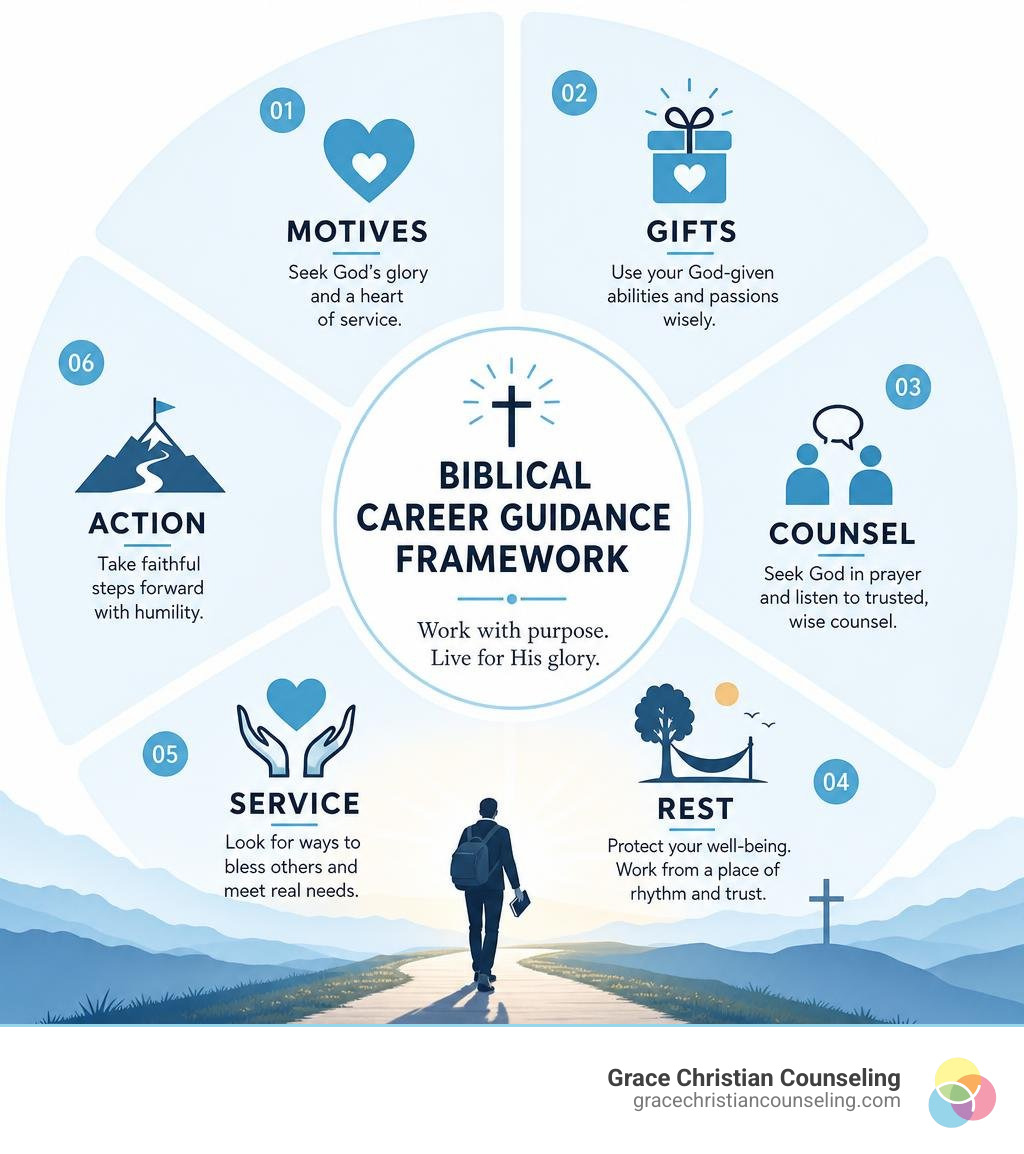
Biblical principles for career guidance begins with a simple shift: treat your work as a way to serve God and people, not only as a path to income, status, or approval. The Bible encourages diligence and excellence, while warning against ambition rooted in pride or self-interest.
A healthy Christian approach to career decisions can include:
- Examine your motive. Ask whether a goal supports service, integrity, and wise stewardship, or whether it is driven mainly by comparison and recognition.
- Use your gifts wisely. Consider your skills, interests, responsibilities, and the real needs around you.
- Seek God and trusted counsel. Prayer, Scripture, mature Christian community, and practical advice can bring perspective.
- Protect your well-being. Work stress, anxiety, burnout, and perfectionism can affect your faith, relationships, and health.
- Take faithful action. Trusting God does not require waiting for a perfect sign. It can mean making a thoughtful next step with humility.
Career pressure can feel especially heavy when you are already managing anxiety, depression, trauma, family needs, or uncertainty about the future. At Grace Christian Counseling, our licensed counselors, integrate biblical wisdom with evidence-based care. We support individuals, couples, and families throughout Western Pennsylvania and beyond through online counseling as they work through stress, decisions, and emotional challenges.
This guide explores how faith can shape career ambition without making your job the measure of your worth.
1. Distinguishing Godly Ambition from Selfish Ambition
Ambition itself is not inherently sinful; rather, scripture demonstrates that the motivation behind your drive determines its spiritual health. When your professional ambitions focus on honoring God, cultivating high performance, and serving your community, work becomes an act of worship. However, when career advancement becomes an instrument for personal pride or self-aggrandizement, it leads toward spiritual and emotional distress.
In Colossians 3:23, the Apostle Paul instructs believers to work wholeheartedly as working for the Lord rather than human masters. This passage provides a core foundation for workplace excellence; it reminds us that our true employer is Christ Himself. When you view daily corporate or creative tasks through this lens, routine duties gain sacred significance and long-term purpose.
By contrast, scripture warns directly against drive that stems from comparison or self-exaltation. In Philippians 2:3, we are exhorted to do nothing out of selfish ambition or vain conceit, but in humility to value others above ourselves. Distinguishing between godly ambition and selfish ambition is critical for preserving personal integrity and emotional health.
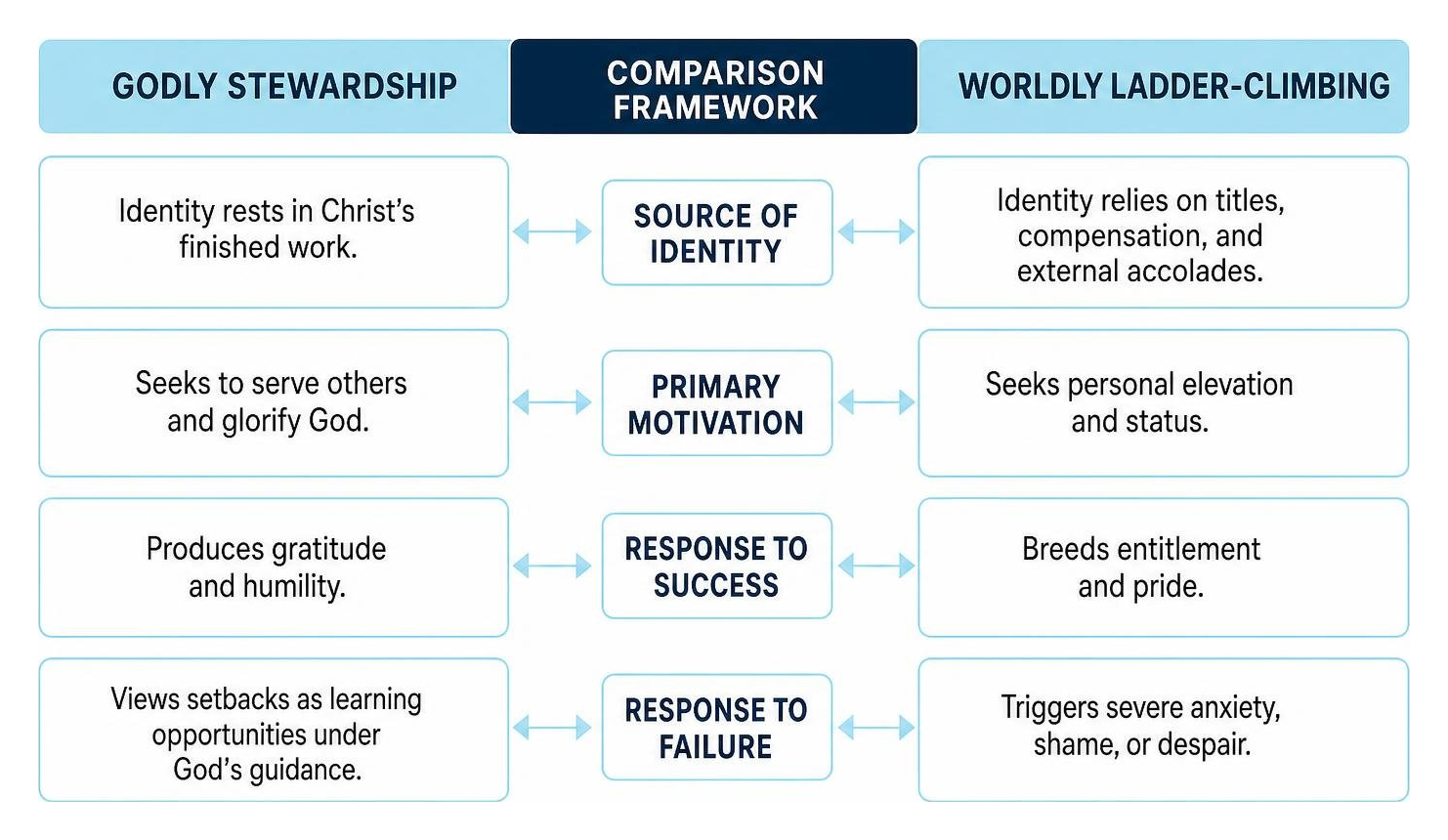
To better understand how these two forms of drive manifest in daily professional life, consider their primary differences:
- Source of Identity: Godly ambition rests securely in Christ’s finished work; selfish ambition relies on titles, compensation, and external accolades.
- Primary Motivation: Godly ambition seeks to serve others and glorify God; selfish ambition seeks personal elevation and status.
- Response to Success: Godly ambition produces gratitude and humility; selfish ambition breeds entitlement and pride.
- Response to Failure: Godly ambition views setbacks as learning opportunities under God’s guidance; selfish ambition triggers severe anxiety, shame, or despair.
When workplace drive turns inward, it frequently leads to performance anxiety, toxic office politics, and chronic stress. Many professionals across Western Pennsylvania struggle with Thriving Over Striving, falling into traps of overwork and emotional exhaustion. This inward pressure can also make it harder to receive feedback, rest without guilt, or make wise decisions from a place of peace. In counseling, we often help clients notice these patterns with compassion, then reconnect their work goals to faith, healthy boundaries, and a more secure sense of identity in Christ.
When workplace stress contributes to persistent anxiety or depression, the symptoms are not always obvious at first. Depression and career burnout may show up as chronic physical fatigue, unusual irritability, difficulty concentrating, unexplained muscle aches, emotional exhaustion, lack of motivation, hidden impairment in social or family responsibilities, or a desire to quit.
These concerns deserve careful attention, not dismissal, and they may indicate that a thorough clinical assessment with a licensed counselor would be beneficial. The American Psychological Association’s 2023 Work in America survey found that 77% of U.S. workers reported work-related stress in the previous month, and 57% reported negative effects associated with work-related stress. The World Health Organization also estimates that about 280 million people worldwide live with depression, which is one reason persistent symptoms should be taken seriously rather than treated as a simple lack of motivation or faith.
Evaluating Motivations and Kingdom Impact
Regularly auditing your professional motivations is an essential practice for maintaining spiritual health. This reflective process allows you to evaluate whether your daily energy serves long-term kingdom goals or short-term earthly status. Practicing servant leadership in management, team collaborations, and client care transforms routine work environments into places of grace and ethical integrity.
In our clinical work with professionals in communities like Pittsburgh, Mt. Lebanon, and Bethel Park, we often guide clients through a four-stage counseling model to process professional distress:
- Take Off the Mask: Admitting the authentic struggle, performance pressure, or career disillusionment you carry beneath a successful facade.
- Heal the Wounds: Addressing underlying emotional hurts, imposter syndrome, or historical anxieties that drive compulsive overwork.
- Remove the Toxins: Identifying and dismantling toxic core beliefs that link your ultimate human worth strictly to salary or title.
- Replace with Truth: Grounding your identity securely in God’s unconditional grace, biblical truth, and balanced living.
Measuring career success through faithful service, moral character, and community impact restores emotional peace. Addressing perfectionism and performance anxiety with evidence-based cognitive behavioral strategies, trauma-informed care, and reliance on the guidance of the Holy Spirit alongside Biblical truth allows you to pursue professional goals without sacrificing mental health.
2. Key Biblical Principles Career Guidance for Aligning Professional Goals
Applying biblical principles to career guidance requires recognizing that natural talents, professional skills, and time are valuable resources entrusted to us by God. The Parable of the Talents in Matthew 25:14-30 highlights the importance of active stewardship. God expects us to cultivate our abilities, take prudent risks, and apply our skills diligently rather than hiding them out of fear.
Proactive career development honors God when it aims to advance the common good. Reclaiming the creation mandate from Genesis 1:28 reminds us that human labor, innovation, and problem-solving reflect God’s creative design. Whether you work in healthcare, education, technology, local trades, or business administration, high-quality work serves as a practical expression of loving your neighbor.
Setting faith-aligned goals helps protect your family life, spiritual rhythms, and mental well-being from being overwhelmed by workplace demands. Integrating realistic planning with faith provides clear boundaries against workaholism, as detailed in our guide on Goal Setting and Mental Well-Being. Furthermore, resources like this Theology of Work calling study guide offer valuable perspectives on integrating Christian values into strategic business planning and team operations.
Applying Biblical Principles Career Guidance to Daily Work Rhythms
Establishing sustainable work-rest patterns is rooted in creation order. In Genesis 2:2-3, God modeled rest after completing His work, establishing a foundational principle for human health. Modern 24/7 connectivity often disrupts this balance, making intentional Sabbath principles essential for corporate, hybrid, and remote workers alike.
Protecting dedicated time for rest, family life, local church fellowship, and mental recovery prevents severe emotional burnout. Setting firm boundaries allows your mind and body to recover from daily demands. Implementing practical stress-reduction methods, such as those outlined in our article on 6 Proven Strategies to Conquer Workplace Stress and Boost Your Productivity, supports emotional resilience and workplace performance.
When the work involves emergency response and repeated exposure to crisis, faith-integrated support for emergency personnel can address the strain that ordinary work-life advice may miss.
The following table contrasts godly stewardship with worldly ladder-climbing across essential career dimensions:
| Core Career Dimension | Godly Stewardship Approach | Worldly Ladder-Climbing Approach |
|---|---|---|
| Primary Motivation | Glorifying God and serving neighbors | Securing high status, wealth, and power |
| Source of Worth | Unconditional identity in Jesus Christ | Professional titles, accomplishments, and praise |
| Work-Rest Rhythms | Prioritizes Sabbath rest and healthy limits | Sacrifices rest, health, and family for gain |
| Metric of Success | Moral integrity, faithfulness, and service | Executive rank, revenue growth, and fame |
| Handling Setbacks | Trusting God’s providence and learning | Experiencing panic, shame, and defensive anger |
Cultivating healthy work habits, prayer routines, and stress management techniques fosters daily peace. When career pressures create overwhelming anxiety, incorporating structured clinical guidance alongside faith practices helps restore emotional equilibrium. This kind of support can help you identify unhealthy patterns, set realistic boundaries, and pursue your work with greater clarity and spiritual steadiness.
Discerning Vocational Guidance Through Gifts and Desires

Discerning God’s vocational direction involves examining your internal gifts, spiritual strengths, and genuine heart desires alongside practical external needs. God equips every individual with distinct abilities intended for meaningful service. Identifying these gifts requires self-reflection, professional skill assessments, and prayerful discernment.
To systematically evaluate your vocational path, consider this four-part assessment process:
- Inventory Strengths: Identify your innate natural talents, specialized professional training, and spiritual gifts.
- Evaluate World Needs: Observe pressing problems in your local community, industry, or society that match your skill set.
- Examine True Desires: Reflect on tasks and environments that bring genuine joy, energy, and fulfillment.
- Seek Community Feedback: Validate your observations through objective feedback from trusted Christian mentors, colleagues, and counselors.
Matching personal strengths with real-world opportunities produces fulfilling work. Seeking wise counsel through mature Christian community and professional guidance helps prevent self-absorption. Balancing personal career satisfaction with responsibilities to family, local churches, and community groups ensures your professional trajectory remains aligned with God’s broader call on your life.
3. Practical Steps for Navigating Career Changes and Challenges
Career transitions, corporate downsizing, unexpected layoffs, or shifts in industry trends can create significant uncertainty. Learning to trust divine timing during these times requires both spiritual trust and practical action. In Proverbs 3:5-6, scripture encourages us to trust in the Lord with all our heart rather than leaning solely on our own understanding.
Managing transition anxiety involves combining faith with practical steps. While waiting on new doors to open, maintaining diligent job search habits, updating professional resumes, and expanding professional networks demonstrate responsible stewardship. Seeking wise counsel before making major career changes aligns with Proverbs 15:22, which notes that plans succeed when supported by many advisers.
During prolonged career crossroad periods, emotional fatigue or anxiety can arise. Reviewing practical principles like Do Things at Your Own Pace Life’s Not a Competition helps relieve external pressure. Furthermore, practical frameworks like the Wycliffe career transition strategies show how evaluating core values and underlying motives leads to greater clarity.
When transition uncertainty creates hidden impairment or persistent distress, seeking professional mental health support is a prudent step. Licensed counselors help individuals navigate career uncertainty, process emotional distress, and develop effective coping strategies grounded in evidence-based care.
Seeking Biblical Principles Career Guidance During Transitions
Structured decision-making frameworks offer clear guidance when facing complex career decisions. The D.E.C.I.S.I.O.N acronym provides a practical, faith-based methodology for evaluating potential career shifts:
- D – Discernment: Begin with structured prayer, seeking God’s wisdom regarding your ultimate career goals.
- E – Examination: Audit your motives, personal gifts, financial needs, and family obligations carefully.
- C – Counsel: Consult spiritually mature mentors, professional peers, and licensed counselors.
- I – Intent: Ensure your proposed career step aligns with ethical standards and Christian values.
- S – Scripture: Evaluate your options against biblical truth and command.
- I – Inner Peace: Pay attention to the presence or absence of God’s peace during reflection.
- A – Action: Take measured, proactive steps forward while remaining flexible to open or closed doors.
- N – Navigation: Continuously adjust your course as new information, opportunities, or feedback arrive.
This process can also help you slow down enough to separate fear-based urgency from wise, faithful next steps. Instead of reacting from panic, you can weigh spiritual conviction, practical responsibilities, and emotional health together. That kind of discernment often makes the next step clearer, even when the entire career path is not yet fully visible.
Combining prayerful reflection with clear evaluation helps clear confusion during career changes. Utilizing scriptural encouragement, such as resources found in Mind Over Matter Encouraging Scriptures for Mental Strength, builds mental resilience. Working with professional counselors across Pennsylvania, including communities like North Huntingdon, Penn Hills, Sewickley, and Uniontown, helps you navigate career shifts with confidence and peace.
Frequently Asked Questions About Biblical Principles Career Guidance
What Does the Bible Say About Career Ambition and Advancement?
Scripture supports hard work, diligence, and professional skill development, while teaching that ultimate promotion comes from God, as seen in Psalm 75:6-7. Working with heart and excellence as unto the Lord can honor God and may lead to professional advancement, but biblical ambition is not measured only by promotions, income, or visible success. It is also reflected in faithfulness, humility, integrity, wise stewardship, and the way your work serves others.
This perspective helps you pursue growth without letting your career become the foundation of your identity or peace, while still taking responsible steps toward meaningful goals. Scripture also warns against selfish ambition, ruthless self-promotion, toxic competition, and making financial gain your ultimate goal, including the caution in 1 Timothy 6:10.
How Can I Know If God Is Calling Me to Make a Career Change?
Discerning a career transition involves evaluating several key indicators:
- Internal Clarity: Experiencing consistent peace after prayer and reflection, rather than impulsive anxiety or escape-driven motives.
- Alignment with Gifts: Recognizing that a prospective role better utilizes your God-given talents and serves real-world needs.
- Wisdom and Counsel: Receiving consistent feedback from mature Christian mentors, trusted family members, or licensed counselors.
- Providential Circumstances: Observing clear open doors, job offers, or changes in your current organization.
If job stress, anxiety, or depression makes career discernment difficult, professional clinical support can help clarify your options. Symptoms such as ongoing concentration difficulties, irritability, or severe fatigue often signal that professional guidance would be beneficial.
Is There a Distinction Between Sacred and Secular Careers?
Scripture does not suggest that faithful work in corporate, technical, trade, artistic, educational, or caregiving settings is spiritually second-class to working in a ministry setting or pastoral role. A more biblically balanced view is that all legitimate, ethical work can become a place of worship, stewardship, neighbor-love, and witness when it is done with integrity before God.
In Matthew 5:13-14, Jesus calls His followers to be salt and light in the world. Operating with integrity, excellence, and compassion in secular office buildings, classrooms, hospital wards, job sites, and corporate settings brings light into daily life. Every ethical job offers a platform for Christian service and kingdom impact.
Moving Forward with Faith, Clarity, and Support

Integrating biblical principles career guidance into your professional life transforms work from a source of stress into a meaningful journey of stewardship and service. By evaluating motives, establishing healthy work-rest boundaries, using natural gifts wisely, and seeking wise counsel, you can pursue professional excellence while protecting your spiritual and mental well-being. True career fulfillment is found not in corporate titles or income levels, but in faithful service and peace with God.
If workplace stress, performance anxiety, career uncertainty, or burnout is impacting your daily health, relationships, or peace, you do not have to navigate it alone. At Grace Christian Counseling, our compassionate team of licensed counselors provides Christ-centered, evidence-based care tailored to your unique needs. We serve individuals, couples, and families across Western Pennsylvania, including Pittsburgh, North Huntingdon, Penn Hills, Uniontown, Bethel Park, Sewickley, and Mt. Lebanon, as well as statewide through convenient virtual appointments.
Take a proactive step toward clarity, emotional balance, and renewed purpose today. Explore our Online Christian Counseling Services or connect with our clinical team to schedule an initial consultation.
This guide is for educational and spiritual encouragement and is not a substitute for personalized professional counseling. If you are in crisis, please reach out for immediate help.
Healing the Heart with the Word
Christian counseling for life transitions in Pennsylvania


