
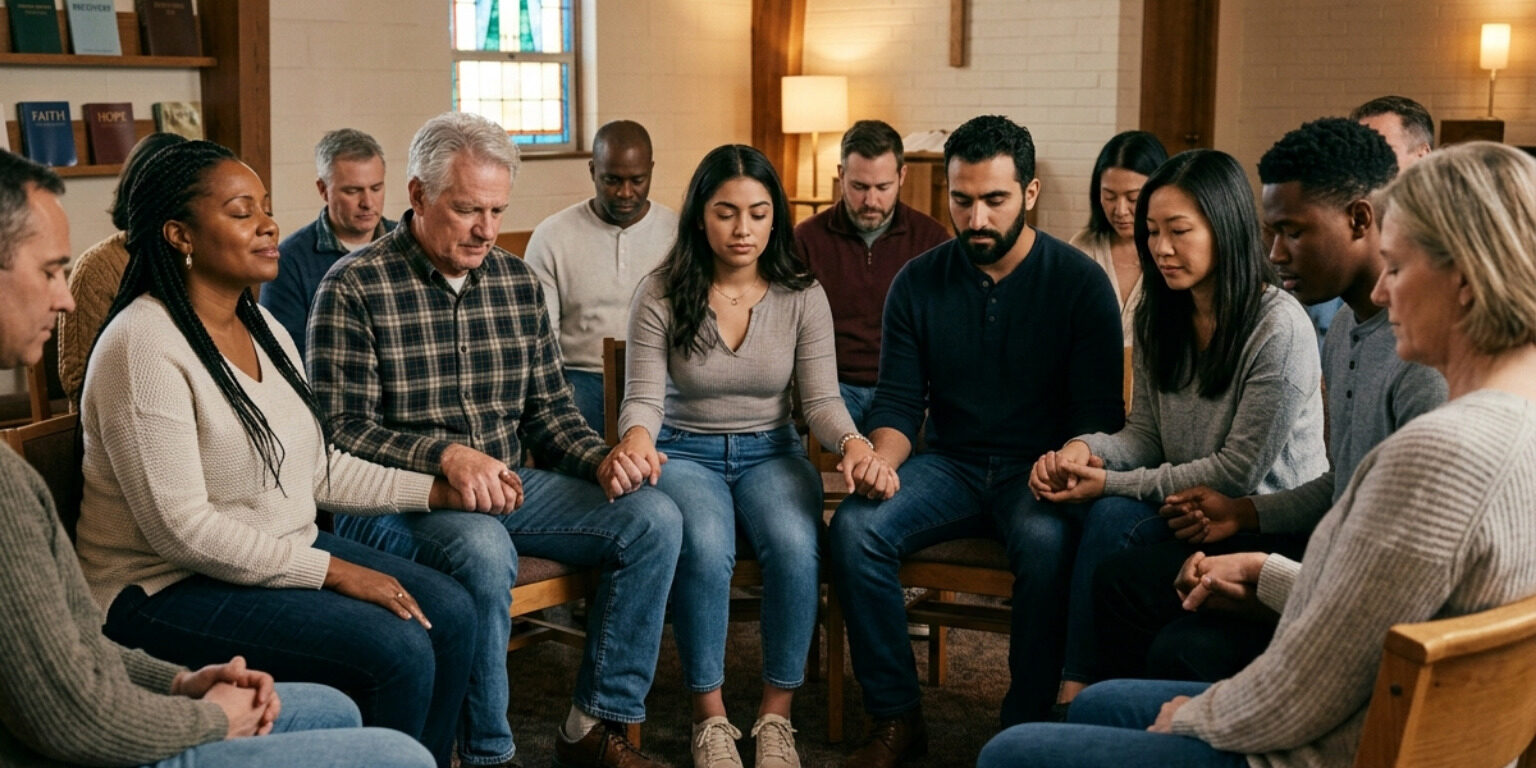
When Faith and Healing Meet: What Addiction Recovery Christian Therapy Can Do for You
Addiction recovery Christian therapy is a treatment approach that combines proven clinical methods with biblical principles, prayer, and spiritual support to help people overcome substance use and find lasting freedom.
Here’s what you need to know at a glance:
- What it is: Professional counseling that treats addiction through both evidence-based therapy and Christian faith
- Who it helps: Christians and faith-minded individuals struggling with alcohol, drugs, or behavioral addictions
- How it works: Integrates scripture, prayer, and spiritual community alongside clinical treatment
- Why it matters: Research shows faith is a positive factor in recovery in more than 84% of scientific studies
- What makes it different: Addresses the whole person (mind, body, and spirit) not just the physical symptoms of addiction
Addiction is one of the hardest things a person can face. It doesn’t just affect the body. It reaches into relationships, identity, and the deepest questions of purpose and worth. Many people find that standard treatment alone leaves a spiritual void that clinical tools alone can’t fill.
That’s where Christian therapy offers something genuinely different. It holds space for both the clinical and the spiritual components of the healing process.
The Holistic Impact of Addiction Recovery Christian Therapy
When we talk about addiction recovery and Christian therapy, we are looking at a model that refuses to compartmentalize the human experience. Secular models often view addiction primarily as a neurological or behavioral issue. While those factors are undeniably real, a Christian worldview recognizes that we are also spiritual beings. Addiction often exists in a place of “spiritual brokenness” and many experience feeling disconnected from God, others, and one’s true self.
Research points to a meaningful link between faith and recovery. In a national analysis from the Substance Abuse and Mental Health Services Administration, many people in treatment described spirituality as an important source of strength and support during recovery. Studies also continue to show that strong social support and a sense of purpose can improve long-term recovery outcomes. These are not just abstract trends, they reflect real people finding hope, stability, and a path back to their families and communities.
At Grace Christian Counseling, we believe that clinical excellence and biblical truth are not at odds. In fact, psychology often reflects God’s amazing design for how our minds and hearts function. By addressing the spiritual roots of struggle, we help clients identify the deeper battles they are facing. This holistic care is also essential for those whose addiction is intertwined with other mental health challenges, which is why we offer specialized Faith Based Therapy For Overcoming Depression.
Integrating Biblical Truth into Addiction Recovery Christian Therapy
One of the most effective tools in modern Christian counseling is Religiously Integrated Cognitive-Behavioral Therapy (RCBT). This method takes the standard “gold standard” of addiction treatment (CBT) and integrates it with spiritual truths and disciplines.
In traditional CBT, we look at how negative thought patterns lead to destructive behaviors. In RCBT, we take it a step further. We don’t just identify “unhelpful thoughts”; we compare them to the truth of Scripture. When a client feels hopeless, we don’t just try to “think positively”; we reflect on God’s promises of restoration. This integration includes:
- Scripture Reflection: Using verses to challenge lies about worthlessness or defeat.
- Prayer: Inviting the Holy Spirit into the session to provide peace and discernment.
- Mindfulness: Grounding oneself in the presence of God to manage cravings.
For many, addiction is a way to cope with deep-seated pain. Our Trauma Counseling services work alongside addiction treatment to heal these wounds. By pursuing Faith Based Trauma Healing Find Peace With God, clients can address the “why” behind their substance use, leading to more sustainable recovery.
The Role of Forgiveness, Redemption, and Identity in Christ
The weight of guilt and shame is perhaps the heaviest burden an individual in recovery carries. Shame says that you are the problem, not just your behavior. Addiction recovery and Christian therapy counters this lie with the concepts of grace and redemption.
Your identity is not “addict.” Galatians 2:20 says, “I have been crucified with Christ and I no longer live, but Christ lives in me.” This shift in identity is revolutionary. It moves the focus from a past of failure to a future of purpose.
Healing often requires Letting Go Of Past Traumas and the self-condemnation that follows. Through Unmasking Trauma The Power Of Christian Trauma Counseling, we help you see yourself through the lens of God’s mercy. Forgiveness, both receiving it from God and extending it to yourself and others, is the key that unlocks the door to long-term sobriety.
Key Benefits of a Faith-Rooted Recovery Approach
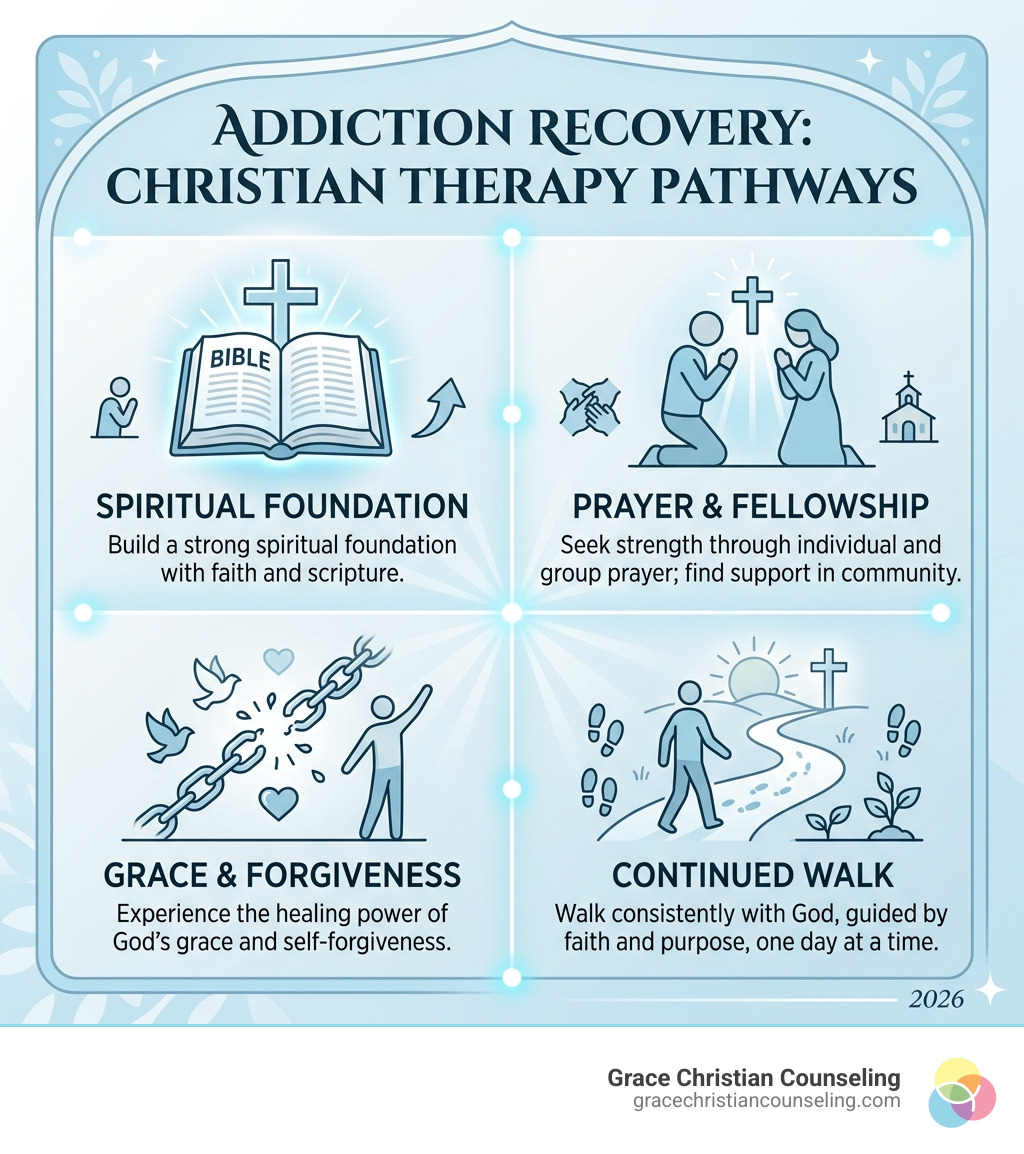
Choosing a Christian path to recovery offers support that reaches far beyond the therapy room. One of its clearest benefits is turning to Jesus Christ, not just a vague higher power, for daily strength, hope, and direction. In Christian therapy, recovery is rooted in a personal relationship with God, who knows you, loves you, and helps carry you when you feel too weak to keep going.
Another vital benefit is community. Recovery thrives in the light. Faith-based programs often connect individuals with church partnerships and fellowship groups, providing a level of accountability and empathy that is hard to find elsewhere. This community support is essential for Healing From Generational Trauma, where breaking the cycle of addiction requires a new “family” of believers. We utilize Effective Therapy Techniques For Healing Generational Trauma to ensure that the progress you make lasts for the next generation.
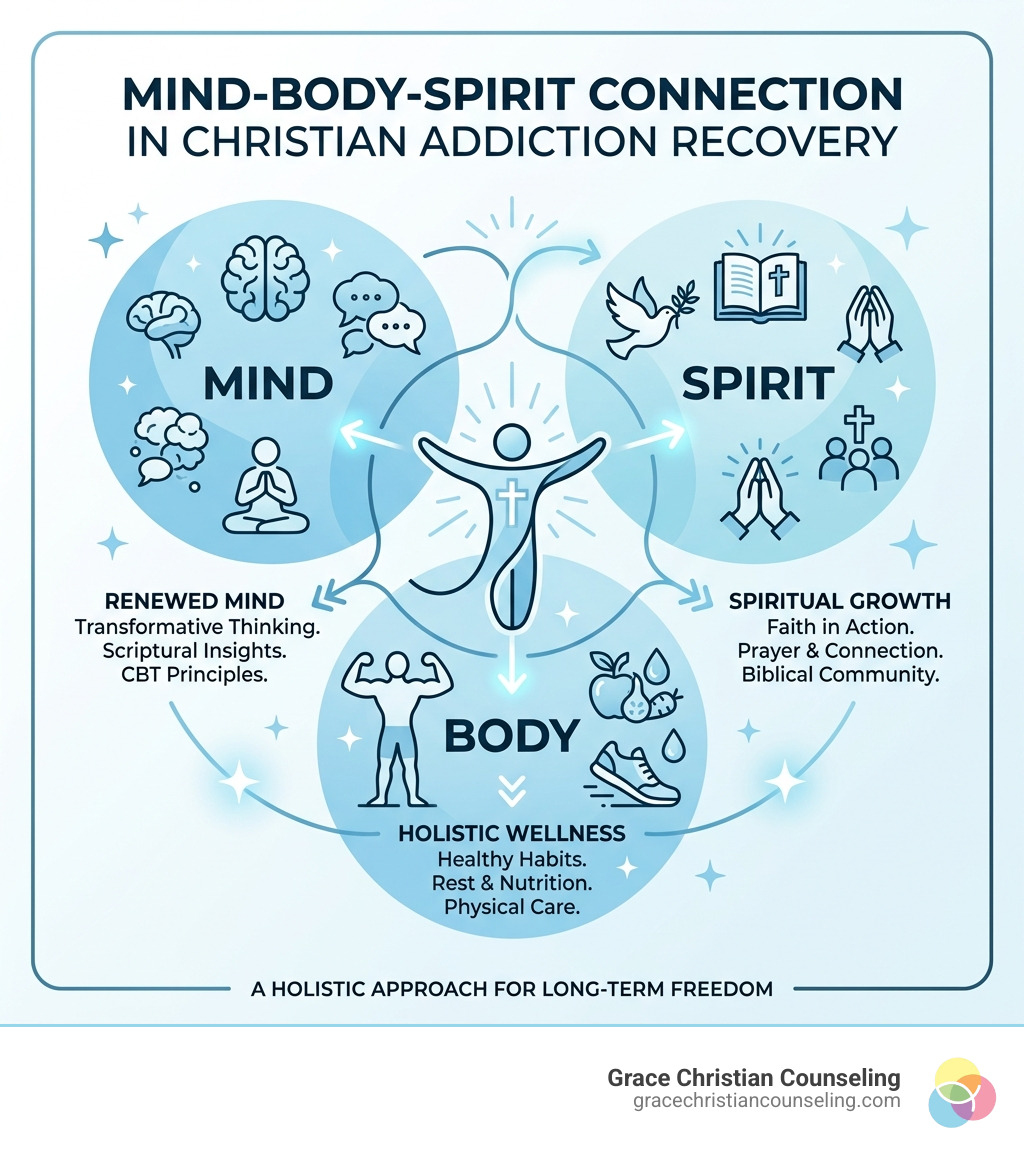
Addressing the Whole Person: Mind, Body, and Spirit
We often tell our clients that their body is a temple of the Holy Spirit. This isn’t just a nice sentiment; it’s a call to stewardship. Addiction ravages the body, clouds the mind, and isolates the spirit. Therefore, recovery must address all three.
- Mind: Addressing mental health and emotional triggers.
- Body: Restoring physical health through nutrition, sleep, and medical support.
- Spirit: Reconnecting with God through spiritual disciplines.
Many adults find that their struggles with substance use began as a response to Healing Childhood Trauma. By Addressing Childhood Traumas To Foster Healing In Adulthood, we treat the whole person rather than just the symptoms.
Sustaining Sobriety with Addiction Recovery Christian Therapy
Long-term sobriety isn’t just about “not using”; it’s about “living well.” To prevent relapse, we encourage the integration of daily spiritual disciplines. These acts serve as “spiritual armor” against the triggers of everyday life:
- Daily Devotionals: Starting the day with a focus on God’s Word.
- Worship: Shifting the focus from self-struggle to God’s greatness.
- Scripture Study: Building a foundation of truth to combat cravings.
Understanding How Christian Therapy Can Help Trauma provides clients with the tools to manage the emotional “storms” that often lead to relapse.
Types of Christian Addiction Treatment Programs Available in April 2026
The landscape of addiction recovery Christian therapy has expanded significantly. In 2026, there are more options than ever for those seeking faith-integrated care in Pennsylvania and beyond.
| Program Type | Description | Focus |
|---|---|---|
| Inpatient/Residential | 24/7 care in a dedicated facility. | Intensive healing and stabilization. |
| Outpatient (OP/IOP) | Scheduled therapy sessions while living at home. | Flexibility and real-world application. |
| Sober Living | Faith-based group homes for post-treatment support. | Accountability and community transition. |
| 12-Step (Faith-Based) | Programs like Celebrate Recovery or RU Recovery. | Spiritual growth and peer support. |
Research on faith-based residential treatment suggests that people in these programs may have better odds of staying abstinent over time. Specifically, peer-reviewed studies found a 55.4% higher chance at the six-month mark. Stronger faith involvement is linked with better short-term recovery outcomes.
Faith-Based 12-Step Options and Community Support
Programs like Celebrate Recovery and RU Recovery are widely used in Christian addiction recovery. Unlike secular models, these programs openly center recovery on biblical teaching, prayer, and spiritual support. They often use Scripture, the Beatitudes, and Christ-centered accountability to help people pursue healing, growth, and long-term sobriety.
The “Power of Connection” cannot be overstated. By Building Bridges To Trauma Recovery, these communities provide a safety net. Whether you are in Pittsburgh, Uniontown, or Bethel Park, finding a local church-based group can provide the lifelong accountability needed to stay sober.
Can Non-Christians Benefit from Christian Therapy?
A common question we hear is whether someone who isn’t sure about their faith can still find help here. The answer is a resounding yes!
The principles of addiction recovery Christian therapy such as compassion, honesty, forgiveness, and the search for meaning are universal human needs.
We welcome those who are exploring their faith or even those who are skeptical. Our counselors provide a non-judgmental environment where you can explore spiritual questions at your own pace while still receiving top-tier clinical care.
Practical Considerations: Insurance, Costs, and Choosing a Center

Navigating the logistics of treatment can be overwhelming, but it shouldn’t be a barrier to help. Most major insurance plans now recognize the value of integrated care. At Grace Christian Counseling, we work with various insurance providers and offer both in-person and virtual options to make care accessible across Pennsylvania.
Questions to ask a potential counselor or center:
- Are the counselors state-licensed and also trained in biblical integration?
- How do you combine evidence-based practices like CBT with spiritual support?
- Do you accept my specific insurance or offer cost-sharing options?
- What does your aftercare planning look like?
- How do you involve the family in the recovery process?
How to Find and Choose a Christian Recovery Center Near You
When looking for a program in Western Pennsylvania, look for centers that prioritize both clinical accreditation and spiritual alignment. A good program will have a clear plan for aftercare, recognizing that the journey doesn’t end when the program does.
Frequently Asked Questions about Christian Addiction Recovery
What insurance options are available for faith-based rehab?
Many insurance plans may cover faith-based rehab or Christian counseling when services are provided by licensed professionals. Some people also use health care sharing ministries or private pay options to help manage costs, especially for higher levels of care like residential treatment.
How does Christian therapy help prevent relapse?
It provides a “triple threat” against relapse: clinical coping skills, a supportive community of believers, and a deepened relationship with God. By replacing the “void” of addiction with spiritual fulfillment, the urge to return to substance use is significantly diminished.
Lasting Hope Through Christian Addiction Recovery
Recovery is a journey of a thousand steps, but you don’t have to take them alone. At Grace Christian Counseling, we are dedicated to providing the residents of Pennsylvania and beyond with a path to healing that honors their faith. Whether you prefer to meet us in person at one of our locations like Pittsburgh or Punxsutawney, or you need the convenience of online therapy, our licensed counselors are here to help.
There is hope. There is restoration. And there is a life of freedom waiting for you in Christ. If you are ready to take that first step toward addiction recovery with Christian therapy, we would be honored to walk with you.
Find Christian Counseling in Pittsburgh and Western PA
This guide is for educational and spiritual encouragement and is not a substitute for personalized professional counseling. If you are in crisis, please reach out for immediate help.
How to Access Faith Centered Anxiety Help Across Western PA
Pennsylvania Online Christian Counseling


