

When Betrayal Feels Like the End: What Marriage Counseling for Infidelity Can Actually Do
Marriage counseling for infidelity is a specialized form of therapy that helps couples process betrayal, rebuild trust, and decide on a clear path forward, whether that means reconciliation or a respectful separation.
Here is what it can do for you:
- Stabilize the crisis so both partners stop making decisions out of panic or raw pain
- Create a safe space for the betrayed partner to express shock, anger, and grief without conflict escalating
- Hold the unfaithful partner accountable while also uncovering the deeper vulnerabilities in the relationship
- Rebuild trust through structured steps, radical transparency, and consistent effort
- Guide you to clarity if you are unsure whether the marriage can or should continue
Infidelity is one of the most painful things a couple can go through. It does not just break trust; it can shatter a person’s entire sense of reality. Many couples feel like the damage is permanent and that no amount of conversation or counseling could fix it.
But that is not the full picture.
In our counseling work with couples throughout Western Pennsylvania, we have seen that the first few weeks after discovering an affair are often the most emotionally volatile. Many betrayed spouses describe difficulty sleeping, loss of appetite, panic attacks, or obsessive thoughts about the betrayal. At the same time, the unfaithful partner is often overwhelmed by shame, fear, and uncertainty about how to repair the damage. These reactions are common in betrayal trauma, and recognizing them early helps couples understand that they are not “crazy” or uniquely broken. A structured therapeutic process gives both people a roadmap during a season that otherwise feels emotionally chaotic.
Couples work is not the only starting point; individual support for the betrayed partner can focus first on stabilization, boundaries, and emotional safety.
Research shows that couples who complete a structured course of infidelity-focused therapy can reach the same level of relationship satisfaction as couples who never experienced an affair. The key word here is specialized. Not all counseling approaches are created equal, and finding the right kind of support makes a real difference.
At Grace Christian Counseling, we work with couples across Western Pennsylvania, including Pittsburgh, North Huntingdon, Penn Hills, and surrounding communities, as well as online, to bring both evidence-based care and Biblical truth to this deeply painful journey. Healing is hard. But it is possible.
Understanding Specialized Marriage Counseling for Infidelity
When a couple walks into an office after an affair has been discovered, they are not just looking for “communication tips.” They are often in a state of acute trauma. This is why marriage counseling for infidelity is very different from the work we do with couples who are simply struggling with frequent conflict.

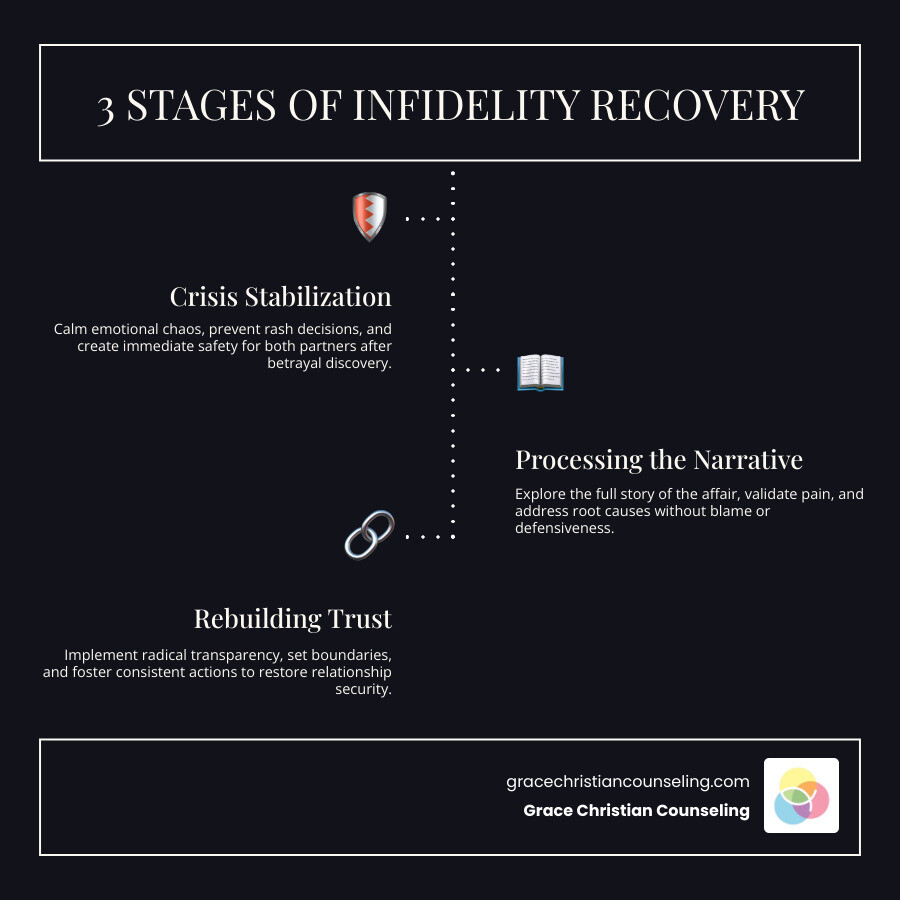
In the early stages, the primary goal is crisis containment. Think of it like an emergency room visit; before we can discuss long-term health habits, we have to stop the bleeding. Specialized counselors focus on creating emotional safety so that the betrayed partner can breathe again and the unfaithful partner can begin the work of honest disclosure.
One helpful way to begin this process is to understand your specific situation. Every affair is different, ranging from a one-time physical lapse to a long-term emotional entanglement. Using a careful clinical assessment helps us understand the many variables involved in these cases. If you are wondering where to start, learning how to prepare for couples counseling can help you walk into that first session with a sense of purpose rather than just fear.
The Difference Between General Marriage Counseling and Infidelity Counseling
Many couples are surprised to learn that graduate schools for therapists often provide very little specific training on infidelity. General marriage counseling often focuses on conflict resolution or improving intimacy. While those are valuable goals, they can be insufficient, and sometimes even harmful, when applied too early to betrayal trauma.
Specialized infidelity counseling uses trauma-informed care. At Grace Christian Counseling, our therapists often use structured recovery models that focus on stabilization, emotional processing, and trust rebuilding in distinct phases rather than rushing couples toward immediate forgiveness. This phased approach helps reduce emotional flooding and creates measurable progress over time. We also integrate evidence-based relationship research alongside Biblical counseling principles so that couples receive both practical tools and spiritual guidance throughout the healing process. This means the counselor understands that the betrayed spouse may be experiencing symptoms similar to PTSD, such as intrusive thoughts, hypervigilance, and emotional flooding. A specialized protocol recognizes that the first priority is not “fixing the marriage,” but stabilizing each person and establishing a baseline of honesty.
Why General Therapists Struggle with Betrayal Cases
We often hear stories from couples who went to a general therapist only to feel more discouraged. One of the biggest pitfalls is the “cause-and-effect” approach. This happens when a therapist implies that the affair happened because the marriage was failing or because the betrayed spouse was not meeting certain needs.
This kind of framing can feel deeply damaging to the injured spouse. At Grace Christian Counseling, we believe that while every relationship has vulnerabilities that may need attention, the decision to be unfaithful is a personal choice and the responsibility of the unfaithful partner. Counselors who lack a structured framework for infidelity may also rush a couple toward forgiveness before the pain has been fully processed, leading to a shallow recovery that does not last.
The Reality of Recovery: Statistics and Success Rates
Is it actually worth the effort? This is a question we hear often in our offices. The pain is so intense that it can feel like the relationship is broken beyond repair. However, both clinical experience and published research point to a more hopeful reality.

Research by Peggy Vaughan and others has highlighted some important trends in counseling. In a recent study, 57% of people found general counseling “mostly frustrating.” One major reason was that many counselors did not focus directly on the affair, instead pivoting too quickly to general marital problems.
However, when the counselor dealt with the issue directly, the success rates for healing and staying together increased significantly. This is one reason how professional christian marriage counseling saves relationships often begins by addressing the betrayal head-on. Naming the wound clearly is often the first step toward real healing.
How Long Does Marriage Counseling for Infidelity Take?
In our world, everyone wants to know the timeline. As of May 2026, the clinical consensus remains that true recovery is a marathon, not a sprint. Many couples begin to see measurable improvement within 10 to 15 sessions, but a fuller repair process often takes longer.
Some couples benefit from an initial 12-week structure that helps them move through crisis stabilization and narrative-building. Even so, the path is rarely linear. You may have weeks where you feel hopeful, followed by a trigger, such as a song, date, or location, that brings the pain rushing back. This does not mean therapy is failing. It means healing is unfolding in layers, and we help you navigate those setbacks with wisdom and grace.
Signs That Infidelity Therapy is Working
How do you know if you are actually making progress? It is not just the absence of fighting. In fact, sometimes there is more honest conversation, and more tears, as you move deeper into the work. Here are some signs that the process is working:
- Radical transparency: The unfaithful partner offers passwords, schedules, and truthful answers willingly.
- Reduced triggers: Triggers still happen, but they no longer derail your entire week.
- Emotional vulnerability: Both partners begin sharing fears and hurts rather than staying stuck in defensiveness or shutdown.
- Shared responsibility for the future: While the affair is one person’s fault, both spouses begin working together to build a healthier “new marriage.”
If you are seeing these signs, it is a strong indicator that the therapy is taking hold. If you are still unsure, reviewing the signs you need couples counseling can help you assess the health of your current dynamic.
Navigating the Emotional Minefield of Betrayal
Betrayal is a “breach of worldview.” Everything the betrayed partner thought was true about their life has been called into question. This often results in vivid intrusive images and a constant state of “walking on eggshells.”
At Grace Christian Counseling, we recognize that this is a spiritual battle as much as an emotional one. We lean on the Holy Spirit to provide comfort that transcends human understanding. We often encourage our clients to spend time in personal prayer and reflection, as God is the ultimate healer of broken hearts.
Processing Pain in a Safe Environment
In the heat of discovery, conversations at home often turn into “interrogation and defensiveness” cycles. These “blowups” cause further damage. In therapy, we provide a “contained” environment.
We use active listening and validation to ensure the betrayed partner’s hurt is heard—not just “replied to.” For those who cannot make it to our physical locations in Western PA, we offer NuWell Online to provide that same safe, professional environment from the privacy of your own home. Sometimes, being in your own space can actually make it easier to open up about the deep shame and rage that infidelity brings to the surface.
Accountability vs. Identifying Root Causes
A major part of how to rebuild a marriage after infidelity is finding the balance between accountability and understanding.
- Accountability: Healing usually cannot begin until the unfaithful partner clearly owns what happened. That means no blaming, minimizing, or shifting responsibility onto the relationship. A healthier starting point sounds like, “I chose to do this, and it deeply hurt you and broke trust.”
- Root Causes: After accountability is in place, counseling can explore the factors that may have increased risk, without excusing the affair. That might include emotional disconnection, poor boundaries, conflict avoidance, or learned patterns from earlier life that made secrecy, escape, or self-protection feel familiar.
Identifying these vulnerabilities is not about excusing the affair; it’s about “affair-proofing” the future. We look at the “why” so that we can close the door on it forever. This process aligns with the biblical concept of repentance, not just saying sorry, but turning away from old patterns and moving in a new, God-honoring direction.
Frequently Asked Questions about Infidelity Therapy
Can a marriage survive if one partner is unsure about staying together?
Yes. We often work with “mixed-agenda” couples where one person wants to save the marriage and the other is “leaning out.” In these cases, we may use “discernment counseling.” This is a short-term process designed to help you move from a state of panic to a state of clarity. The goal isn’t to force you to stay together, but to help you make an intentional decision about the future of your family rather than a reactive one. Whether you choose to reconcile or pursue a compassionate separation, we are here to provide the support you need.
What happens if the relationship ends despite therapy?
Sometimes, despite the best efforts of both partners and the counselor, a marriage ends. This does not mean the therapy was a waste of time. Therapy provides a structured way to manage shame, process the trauma of the betrayal, and gain closure. It helps you walk away with your dignity intact and ensures that you don’t carry the “baggage” of the betrayal into your next chapter of life. We believe that every person deserves to find personal healing, regardless of the relationship’s outcome.
How can we affair-proof our relationship after recovery?
Protecting your relationship after recovery takes ongoing, intentional care. It often includes:
- Clear boundaries: Agreeing on what is and is not appropriate with coworkers, friends, online contacts, or former partners, so trust is not left to guesswork.
- Regular emotional check-ins: Setting aside time to talk about disconnection, stress, temptations, and unmet needs before they grow into secrecy or resentment.
- Consistent, self-giving love: Choosing daily acts of honesty, kindness, and prayer that help both partners feel valued, safe, and emotionally connected.
We often point couples to Philippians 4:6-7: “Do not be anxious about anything, but in every situation, by prayer and petition, with thanksgiving, present your requests to God. And the peace of God, which transcends all understanding, will guard your hearts and your minds in Christ Jesus.” When you bring your relationship before God, He provides a peace that guards your marriage from future storms.
Conclusion
At Grace Christian Counseling, we know that the road to recovery after an affair is long and winding. But we also know that with the right help, “Rain showers can bring deeper roots.” You don’t have to navigate this hard work alone.
Our team of licensed counselors, is dedicated to providing Christ-centered, evidence-based care. Whether you are in Pittsburgh, North Huntingdon, Penn Hills, Uniontown, Bethel Park, Sewickley, Mt. Lebanon, or anywhere else in Pennsylvania, we are here for you. We offer the expertise needed to handle the complexities of betrayal while holding fast to the hope found in the Gospel.
If you are ready to take the first step toward healing, we invite you to explore our christian marriage counseling services. Trust can be rebuilt. Hearts can be healed. And your marriage can become a testament to the redeeming power of God’s love.
This guide is for educational and spiritual encouragement and is not a substitute for personalized professional counseling. If you are in crisis, please reach out for immediate help.
How to Improve Communication in Marriage: A Guide to Reconnecting


