
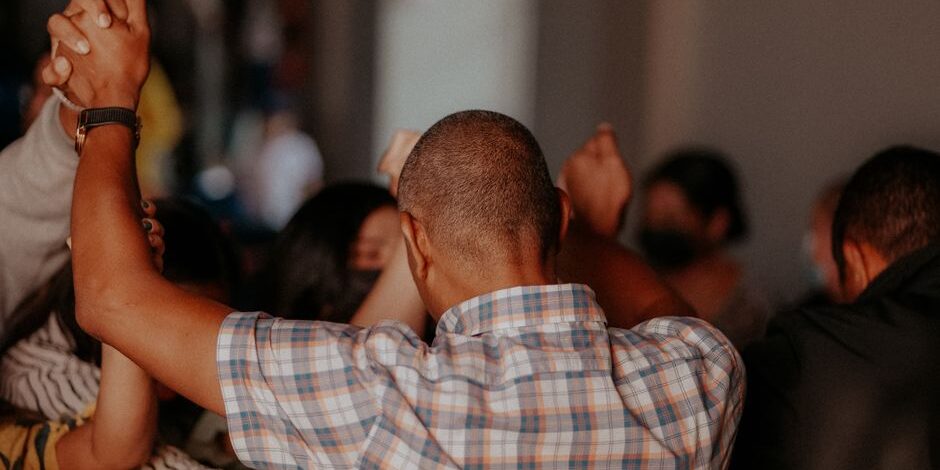
Why a Biblical Men’s Support Group Could Change Your Life
A Biblical men’s support group is a faith-centered community where men gather regularly to grow spiritually, confess struggles honestly, and hold one another accountable through Scripture and prayer. For men in Western Pennsylvania and those seeking online Christian counseling, it can also be one part of a larger healing process that includes Christ-centered, clinically excellent care through Grace Christian Counseling.
If you are looking for one, here is a quick overview:
- What it is: A structured group of Christian men meeting weekly or monthly for Bible study, prayer, accountability, and honest discussion.
- Who it is for: Men dealing with sexual sin, addiction, emotional numbness, trauma, isolation, or spiritual dryness.
- How it works: Meetings typically include Scripture reading, testimony sharing, group discussion, and prayer; most require a commitment of 10 to 15 weeks or longer.
- How Grace Christian Counseling can help: Our licensed and provisionally licensed counselors integrate evidence-based care, trauma-informed support, CBT-informed tools when appropriate, biblical truth, and prayerful dependence on the Holy Spirit to help men address the deeper wounds and patterns beneath their struggles.
Many Christian men carry heavy burdens in silence. They look fine on the outside, but inside they are struggling with shame, disconnection, or patterns of sin they cannot seem to break. They may attend church faithfully and still feel completely alone.
That gap between outward faith and inward pain is exactly what a Biblical men’s support group is designed to close. At Grace Christian Counseling, we often see that men need both safe brotherhood and personalized counseling support, especially when trauma, anxiety, depression, addiction, marital pain, or long-standing emotional patterns are involved. These groups create a safe space where men can be honest, receive grace, and experience real transformation rooted in God’s Word.
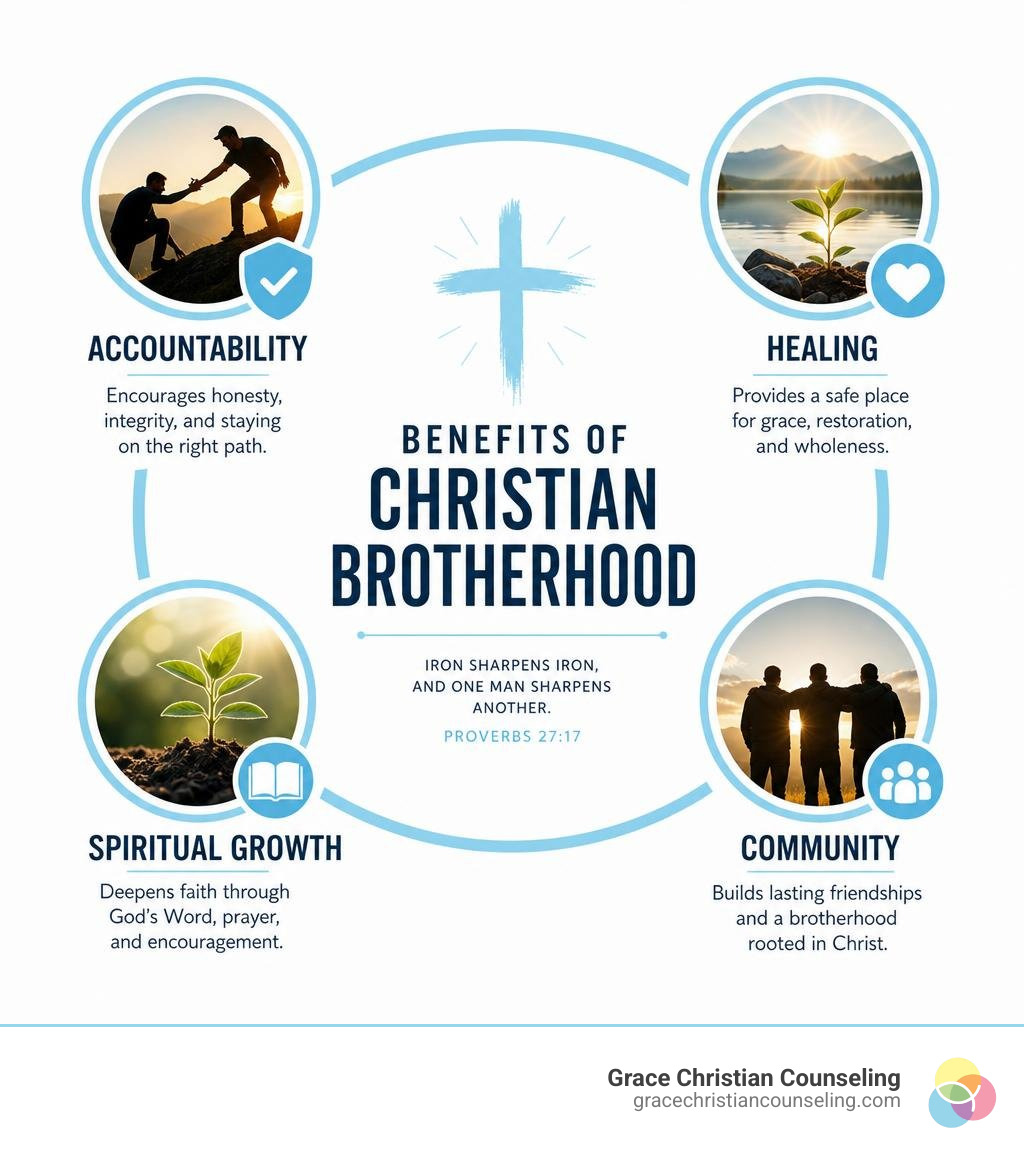
Understanding the Role of a Biblical Men’s Support Group
At its core, a Biblical men’s support group serves as a vital engine for spiritual growth and discipleship. It is not merely a social club or a casual gathering to discuss sports; it is an intentional space where men can drop their defenses and seek the Lord together. In today’s world, many men suffer silently under the weight of expectations, stress, and unconfessed struggles.
We believe that God never intended for men to carry these burdens alone. By gathering in a structured, faith-based environment, men can find the strength needed to lead their families, serve their churches, and impact their communities. This communal approach to faith helps move truth from a head-level understanding to a heart-level reality.
Clinical research also supports the importance of connection. A review published in Current Opinion in Psychology found robust links between social support and lower loneliness, and public health organizations such as the CDC note that loneliness and social disconnection are associated with poorer mental and physical health outcomes. For Christian men, this does not replace the spiritual call to brotherhood, but it does affirm that isolation can affect the whole person, emotionally, relationally, physically, and spiritually.
Furthermore, these groups establish a culture of mutual accountability that is often missing in modern life. When we share our lives with other believers, we allow them to encourage us when we are weary and gently correct us when we drift. This relational safety net helps prevent isolation, which is often where temptation and emotional numbness thrive.
How It Differs from Secular Groups and Bible Studies
It is common to wonder how a faith-based support group differs from a secular support group or a typical church Bible study. Secular groups often provide excellent coping strategies and emotional validation, yet they lack the transcendent power of the Gospel. They may focus heavily on self-improvement, whereas a Christian group focuses on surrender to Jesus Christ and the transforming work of the Holy Spirit.
On the other hand, a typical church Bible study is primarily educational, focusing on theological knowledge and text analysis. While studying Scripture is essential, these settings do not always leave room for deep, personal vulnerability regarding active struggles. A support group bridges this gap by combining biblical truth with direct, personal application and emotional processing.
For instance, some groups focus heavily on recovering authentic manhood through structured daily spiritual disciplines; they merge traditional Christian practices with rigorous personal accountability. This unique combination ensures that men are not just learning facts about God, but are actively allowing His Word to reshape their daily habits, relationships, and emotional health.
The Core Pillars of a Biblical Men’s Support Group
To build a thriving, safe environment, a Biblical men’s support group must rest on several foundational pillars. The first pillar is grace, which ensures that no man is met with condemnation when he chooses to be honest about his failures. The second pillar is truth, which provides the objective standard of God’s Word to guide men out of confusion and compromise.
Confidentiality and trust form the third and fourth pillars. Without an ironclad commitment to privacy, men will never feel safe enough to share their deepest wounds or most embarrassing struggles. When these four pillars are firmly in place, the group becomes a sanctuary where real healing can begin.
Many structured programs have spent decades developing leaders by utilizing these exact principles. By balancing high-challenge expectations with high-support relationships, they help men step out of passive patterns and into their God-given identities.
Addressing the Silent Struggles of Christian Men
Many men who sit in church pews every Sunday are fighting quiet, exhausting battles. They struggle with sexual sin, pornography, emotional numbness, trauma, and various forms of addiction. Because Christian culture sometimes inadvertently rewards looking “perfect,” these men often feel they must hide their pain to remain accepted.

This pressure to perform leads to a deep sense of hypocrisy and loneliness. Over time, hiding these struggles can drain a man’s spiritual vitality and damage his relationships with his wife, children, and friends. Men may also notice symptoms such as fatigue, irritability, concentration difficulties, physical aches, hidden impairment, or a sense that they are functioning outwardly while struggling deeply inwardly. The National Institute of Mental Health notes that men may be more likely to seek care for physical symptoms than emotional ones, and that symptoms such as anger, irritability, changes in energy, and changes in appetite can be part of men’s mental health concerns.
That is why a thorough clinical assessment matters. At Grace Christian Counseling, we help men look at the whole person, integrating spiritual care with physical, emotional, relational, and mental well-being, as discussed on NuWellonline.com. A support group can be a meaningful place for honesty and encouragement, and counseling can help identify the deeper patterns, wounds, symptoms, or family dynamics that need focused care.
When a support group addresses these struggles openly, it breaks the power of secret sin. Men realize they are not the only ones struggling, which immediately reduces the toxic shame that keeps them stuck in destructive cycles.
Breaking the Cycle of Isolation and Shame
Scripture warns us about the dangers of pulling away from community. In Proverbs 18:1, we read that whoever isolates himself seeks his own desire and breaks out against all sound judgment. Isolation is the enemy’s favorite playground; it is where small temptations grow into overwhelming strongholds.
By stepping into a Biblical men’s support group, a man makes a conscious decision to break this cycle. Confession brings secret struggles into the light, where the grace of God and the support of brothers can begin to heal the wounds. Counseling can complement that process by helping men name what is happening beneath the surface, practice healthier coping skills, and receive Christ-centered care for trauma, anxiety, depression, grief, addiction, or relational pain.
Integrating the Counseling Blueprint for Deep Healing
At Grace Christian Counseling, we utilize a structured approach called the Counseling Blueprint to help men navigate their healing journey. This framework fits naturally within the context of a men’s support group, while also giving counseling sessions a clear path for deeper, personalized growth.
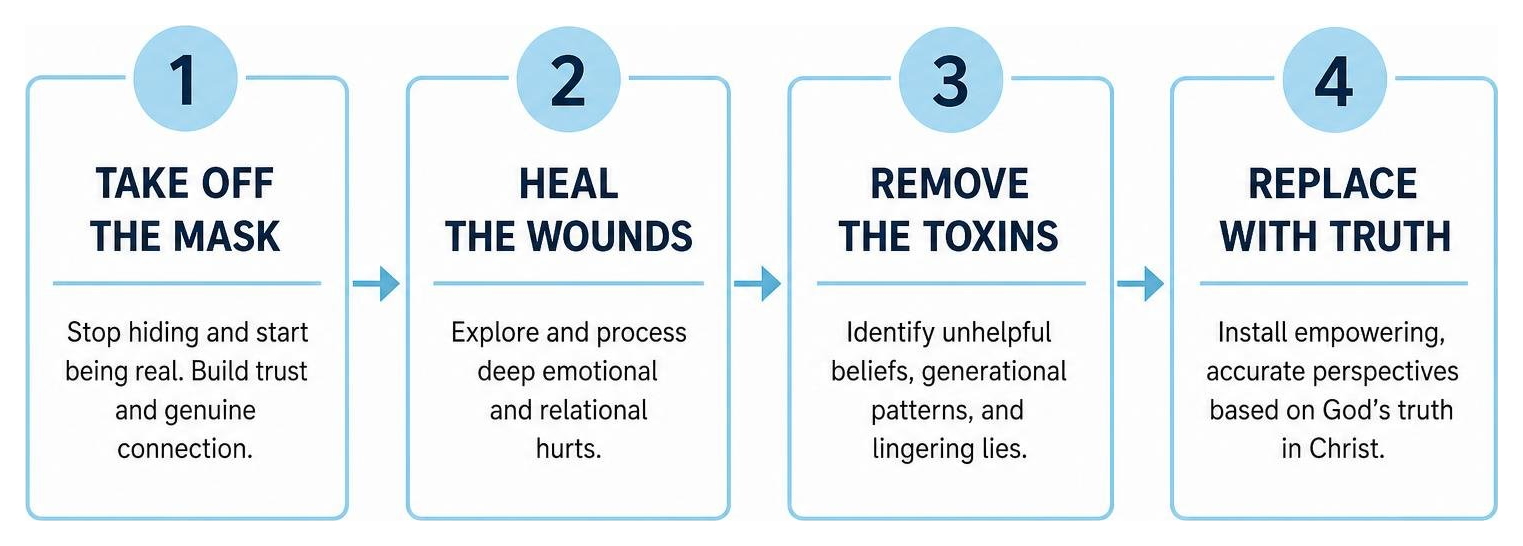
The first stage is Take Off the Mask. In this phase, men learn to stop pretending that everything is fine; they build genuine rapport and trust with their brothers and counselor by sharing their actual reality. The second stage is Heal the Wounds, which involves exploring the deep emotional and relational hurts that often drive unwanted behaviors or emotional numbness.
Next, men enter the Remove the Toxins stage, where they identify unhelpful beliefs, generational patterns, and lingering lies they have believed about themselves. Finally, in the Replace with Truth stage, we install empowering, accurate perspectives based on God’s truth about who they are in Christ. This systematic approach helps men move beyond behavior management toward deep, lasting heart change.
The Structure and Format of Faith-Based Brotherhood
A successful Biblical men’s support group relies on a clear, predictable structure to maintain safety and momentum. Most groups meet weekly or bi-weekly, utilizing a specific curriculum to guide their discussions. Meetings typically open with prayer and Scripture, transition into a time of sharing, and close with focused prayer partners or small breakout groups.
Research-informed care also recognizes the value of structured group support. SAMHSA describes group therapy in substance use treatment as a setting where clients can learn and practice recovery strategies, build interpersonal skills, and strengthen social support networks. A Biblical men’s support group is not the same as clinical group therapy unless it is led by a qualified professional, but this research helps explain why consistent, well-facilitated community can be such a meaningful part of change.
To help you understand how these formats differ, we have compared the three primary types of men’s groups below:
| Group Type | Primary Focus | Facilitator | Commitment Level |
|---|---|---|---|
| Traditional Support Group | Peer accountability, confession, and prayer | Lay leader or mentor | Moderate (typically 10 to 15 weeks) |
| Discipleship / Leadership Group | Spiritual growth, theological study, and leadership | Pastor or mature elder | High (often 6 months to a year) |
| Trauma-Informed Group | Emotional processing, healing deep wounds, and regulation | Licensed counselor (LPC, LAPC, LSW, LCSW, etc.) | High (structured weekly sessions) |
Finding the Right Biblical Men’s Support Group for You
Choosing the right group depends on your current spiritual and emotional needs. If you are looking for virtual connection and leadership development, organizations like Men on Purpose offer highly structured online communities. If you prefer local, church-based options, you might look for ministries like the Men’s Wednesday Connection Group at Creekside Church or the men’s ministry at The Bridge.
Establishing Healthy Boundaries and Accountability
Accountability only works when it is built on clear, healthy boundaries. In Galatians 6:2, we are commanded to bear one another’s burdens, and so fulfill the law of Christ. This does not mean we take ownership of another man’s choices; rather, we walk alongside him, offering prayer, encouragement, and honest feedback.
True biblical accountability also requires us to follow the instructions in James 5:16, which tells us to confess our sins to one another and pray for one another, that we may be healed. When we establish clear guidelines for confidentiality and mutual respect, we create a structured environment where men can practice these commands safely.
Frequently Asked Questions About Men’s Ministry
What should I expect during my first meeting?
During your first meeting, you can expect a warm, low-pressure environment. Most groups begin with a brief time of informal fellowship, followed by an opening prayer and a reading of the group’s guidelines. You will not be forced to share your deepest secrets right away; instead, you will have the opportunity to listen, observe, and decide if the group is a good fit for you.
How do these groups handle confidentiality?
Confidentiality is the cornerstone of any effective support group. What is shared in the room must stay in the room. Leaders establish clear boundaries from day one, emphasizing that breaking confidentiality destroys trust and compromises the safety of the entire group.
Can a support group replace professional counseling?
While a Biblical men’s support group offers meaningful community and encouragement, it is not a replacement for professional clinical therapy. Support groups are helpful for peer accountability, prayer, and general encouragement, but deep trauma, severe depression, anxiety, addiction, marital distress, or complex family patterns often require the specialized care of a licensed professional counselor, such as an LPC, LCSW, LAPC, LSW, or LMFT.
Grace Christian Counseling serves men, couples, and families through Christ-centered, evidence-based counseling in Western Pennsylvania and through online counseling options. For specific struggles like profound loss, specialized support groups like GriefShare can be incredibly helpful. However, if you find yourself stuck in deep-seated emotional pain, combining a peer support group with professional, faith-integrated counseling is often the most effective path to wholeness.
How can Grace Christian Counseling support men beyond a group setting?
Our counselors help men address the emotional, relational, spiritual, and behavioral patterns that often surface in a support group. Depending on your needs, counseling may involve trauma-informed care, CBT-informed strategies, family or marriage support, grief work, addiction-related support, anxiety and depression care, and biblical guidance rooted in the hope of the Gospel.
We serve men in Pittsburgh, North Huntingdon, Penn Hills, Uniontown, Bethel Park, Sewickley, Mt. Lebanon, and surrounding Western Pennsylvania communities, with online Christian counseling available for clients who need a more flexible option. If a support group helps you recognize that you need deeper support, counseling can provide a confidential place to continue that work with focused, personalized care.
Take the Next Step Toward Healing and Brotherhood
Stepping out of isolation and into a Biblical men’s support group is one of the most courageous decisions a man can make. You do not have to carry your burdens, shame, or silent struggles alone anymore. True strength is not found in pretending we have it all together; it is found in the humble surrender of our weaknesses to God alongside trusted brothers who will point us back to the Cross.

At Grace Christian Counseling, we are dedicated to helping men heal, grow, and lead with both biblical wisdom and clinically excellent care. We provide professional, faith-integrated counseling for individuals, couples, and families, both in person across Western Pennsylvania, including Penn Hills, Sewickley, Uniontown, Pleasant Hills, Bethel Park, Ligonier, Belle Vernon, Punxsutawney, North Huntingdon, and Mt. Lebanon, and virtually through online counseling options.
If you are ready to take off the mask, heal your wounds, and step into the vibrant life God has planned for you, we are here to walk with you. Schedule online Christian counseling in PA with us today, or visit our counselors page to learn more about our team and find support that fits your needs.
This guide is for educational and spiritual encouragement and is not a substitute for personalized professional counseling. If you are in crisis, please reach out for immediate help.
Christian counseling for men in Pennsylvania
Finding Hope With Christian Support for Depression and Anxiety


