
Why Art Therapy for Stress Is Worth Taking Seriously
Art therapy for stress is one of the most accessible and scientifically supported ways to calm an overwhelmed mind and body. Whether you are a busy parent in Pittsburgh, a teen navigating school pressure, or someone carrying the weight of anxiety or grief, creative expression can offer real, measurable relief.
Quick answer: How does art therapy help with stress?
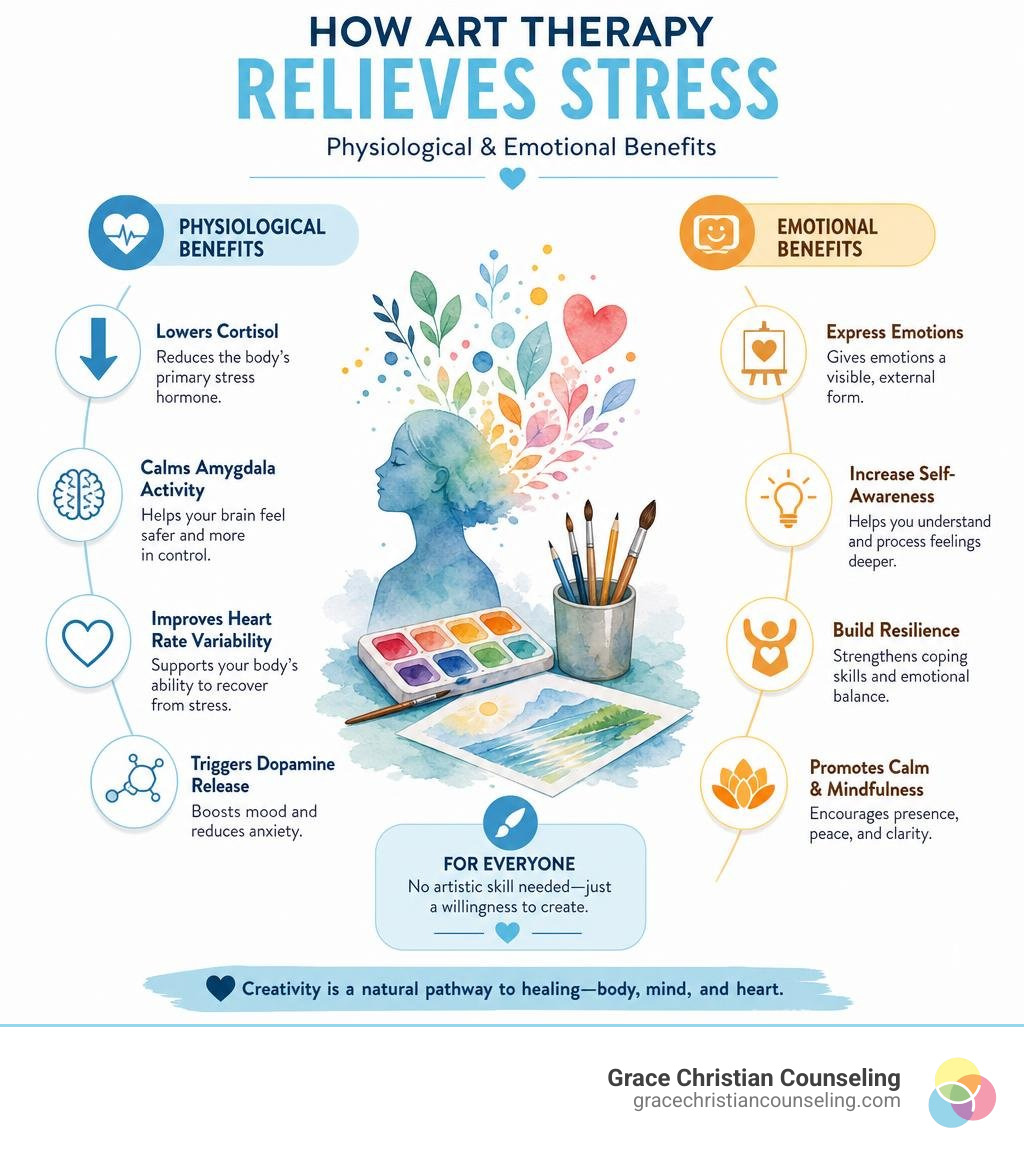
- It lowers cortisol, the body’s primary stress hormone, often within a single 45-minute session;
- It triggers dopamine release, improving mood and reducing anxiety;
- It calms amygdala activity in the brain, helping you feel safer and more in control;
- It improves heart rate variability, a key marker of how well your body recovers from stress;
- It gives emotions a visible, external form, making them easier to process and understand;
- It works regardless of artistic skill or prior experience.
Research from Drexel University found that 75% of participants showed reduced cortisol levels after just 45 minutes of making art, with no correlation to their prior art experience. As one participant put it, “It was very relaxing. After about five minutes, I felt less anxious.” That kind of rapid physiological shift is hard to ignore.
Art therapy is not just casual creative time. It is a structured, evidence-based approach used in hospitals, schools, mental health clinics, and counseling practices to help people of all ages process difficult emotions, build resilience, and find peace. At Grace Christian Counseling, we also see it as something deeper: an invitation to engage the God-given creativity within each person as part of genuine healing.
This guide will walk you through everything you need to know, from the science behind how art heals, to specific techniques, to when working with a credentialed therapist makes the most sense.
What is Art Therapy and How Does It Differ from Leisure Art?
Many people wonder if they can achieve the same benefits of art therapy simply by picking up a sketchbook or painting a canvas at home. While drawing, knitting, or coloring for fun are wonderful ways to unwind, there is a distinct difference between self-directed leisure art and professional art therapy. Leisure art is often focused on the final product or simple distraction; art therapy focuses entirely on the creative process as a gateway to self-discovery and emotional processing.
The defining factor of professional art therapy is the therapeutic alliance established with a credentialed art therapist. These professionals, often holding credentials such as Registered Art Therapist (ATR) or Board Certified Art Therapist (ATR-BC), are trained in both clinical psychology and the therapeutic use of art media. In a clinical setting, the therapist guides you through specific exercises designed to access thoughts and feelings that might be too painful or complex to put into words.
This process facilitates deep self-awareness, allowing you to externalize internal conflicts, look at them with objectivity, and begin to heal. It provides a unique form of visual communication, helping you speak when words fall short. To explore this distinction further, you can read about the surprising benefits of art therapy and how it differs from everyday crafting.
Additionally, we must address a common misconception: art therapy is not just for young children. While kids benefit immensely from creative play, adults of all ages find profound relief through these methods. If you are hesitant to try it because you think you lack talent, the clinical process is about expression, not aesthetic perfection. You can read more about this in our article debunking the myth that art therapy is only for children.
The Science of Healing: How Art Therapy for Stress Affects the Brain and Body
The benefits of utilizing art therapy for stress are grounded in physiological and neurological changes. When we experience chronic stress, our bodies enter a state of high alert, depleting our physical and mental resources. Art therapy acts as a natural brake system for this overactive state, helping to restore balance to the autonomic nervous system.
At the brain level, creative expression alters neurochemistry and neural activity in several ways:
- Cortisol Reduction: Studies consistently show that engaging in creative activities reduces salivary cortisol, the body’s primary stress hormone. This reduction occurs regardless of your artistic background.
- Dopamine Release: Creating art activates the brain’s reward pathways, triggering the release of dopamine. This neurotransmitter helps elevate mood, reduce anxiety, and combat feelings of depression.
- Calming the Amygdala: The amygdala is the brain’s alarm system, initiating the survival response. Art therapy helps quiet this hyperactive area, signaling to your body that you are safe.
- Activating the Prefrontal Cortex: By engaging in structured creative tasks, you stimulate the prefrontal cortex; this area of the brain is responsible for emotional regulation, decision-making, and executive functioning.
Physiological research supports these neurological shifts. For instance, a notable PLOS One study on neurocognitive mechanisms explored how art therapy affects women with anxiety disorders. The researchers discovered that art therapy led to a higher resting heart rate variability (HRV), which is a key indicator of a healthy, flexible autonomic nervous system. Participants also reported significant improvements in their daily executive functioning, such as better emotional control and working memory.
When stress strikes, it often triggers a physical alarm. To understand how your body reacts to these pressures, it is helpful to explore the mechanics of understanding the fight or flight response. Art therapy helps soothe this survival response, allowing the body to return to a state of rest and recovery.
The clinical benefits of this approach are also evident in high-stress work environments. A recent study on healthcare professional burnout evaluated a six-week group art therapy program for hospital staff in acute settings. The randomized controlled trial showed significant, sustained reductions in emotional exhaustion, depersonalization, and perceived stress, proving that even brief, structured art therapy interventions can prevent occupational burnout.
The Expressive Therapies Continuum: How Materials Shape the Healing Process
In professional art therapy, therapists do not choose art supplies at random. Instead, they utilize a clinical framework known as the Expressive Therapies Continuum (ETC). This model explains how different art materials and processes access different levels of brain function to promote healing and emotional regulation.
The ETC is structured around three primary levels of processing, each representing a different way of interacting with the world and our emotions:
- The Kinesthetic-Sensory Level: This level focuses on physical movement and tactile sensation. Working with highly fluid, resistive, or sensory-rich materials like clay, wet paint, or finger paints helps release physical tension and grounds the body.
- The Perceptual-Affective Level: This level emphasizes visual forms and emotional expression. Using bright colors, oil pastels, or watercolors helps you identify, express, and sit with complex emotions without needing to label them immediately.
- The Cognitive-Symbolic Level: This level involves analytical thinking, problem-solving, and metaphor. Creating collages, constructing structured models, or working with fine-tip pens allows you to organize thoughts, gain perspective, and assign meaning to your experiences.
The choice between fluid and resistive media is a key clinical decision. Fluid materials, like watercolors or soft clay, encourage emotional release and can help break down rigid defenses. Resistive materials, such as colored pencils, markers, or collage papers, offer more control and structure, which is highly beneficial if you are feeling overwhelmed or disorganized.
By matching the material to your current emotional state, an art therapist helps you process stress safely. This structured approach reminds us of the importance of slowing down and doing things at your own pace, allowing your mind and body to heal without pressure or rush.
Evidence-Based Art Therapy Techniques for Acute and Chronic Stress Relief
If you are looking to incorporate creative practices into your routine, several specific art therapy protocols have demonstrated strong evidence for relieving both acute and chronic stress:
The Safe Place Collage
This technique involves gathering images, textures, and words from magazines or papers that represent safety, comfort, and peace. You arrange and glue these elements onto a card or page, creating a visual sanctuary. This exercise engages the cognitive-symbolic level of the ETC, helping you externalize your internal concept of safety. It is particularly useful for managing daily anxieties or as a grounding tool during times of transition.
Mandala Coloring and Drawing
Creating or coloring within a circular boundary, known as a mandala, has been shown to reduce anxiety and induce a meditative state. The structured boundary of the circle provides a sense of containment and safety, making it an excellent tool for acute stress relief. It requires minimal cognitive effort, allowing the analytical mind to rest while the brain enters a state of flow.
Free-Form Drawing and Scribbling
Sometimes, stress is too chaotic to shape into a clear picture. Free-form scribbling with oil pastels or markers allows you to release raw, pent-up energy onto the paper. After scribbling, you can look at the lines to see if any shapes, symbols, or patterns emerge, using them as a starting point to talk through what you are feeling.
Clay Sculpting
Squeezing, pounding, and shaping clay is a highly kinesthetic activity. The physical resistance of the clay helps release physical anger, frustration, and muscle tension. It is a powerful way to ground yourself when your mind is racing with worry.
These creative tools are highly effective when integrated into a broader stress-management plan. If you are feeling overwhelmed by professional demands, you can combine these creative exercises with 6 strategies to conquer workplace stress to protect your mental well-being. Additionally, practicing these grounding techniques is a wonderful way of avoiding holiday burnout when seasonal expectations begin to pile up.
Traditional vs. Digital Artmaking: Navigating Sensory Engagement in a Modern World
In our increasingly digital age, many people turn to tablets, styluses, and digital illustration apps for creative expression. This raises an important question: does creating art on a digital screen offer the same stress-relief benefits as working with traditional, tactile materials?
A comprehensive MDPI study on digital vs traditional artmaking explored this exact question. Researchers compared the psychological and physiological stress-reduction outcomes of adults drawing with traditional oil pastels versus those using a digital tablet and stylus.
The study revealed that both traditional and digital mediums resulted in significant, comparable reductions in state anxiety after a stress-induction task. However, the study also highlighted key differences in sensory feedback and tactile engagement.
| Feature / Dimension | Traditional Art Materials (e.g., Oil Pastels, Clay) | Digital Tablet Artmaking (e.g., iPad, Stylus) |
|---|---|---|
| Tactile Feedback | High; direct physical contact with textures, resistance, and paper grain. | Low; smooth glass surface with simulated resistance. |
| Cleanliness & Mess | Can be messy; requires cleanup, setup, and dedicated physical space. | Clean; zero physical mess, instant setup, and easy storage. |
| Mistake Correction | Requires physical erasing or working mistakes into the design; encourages acceptance. | Instant “undo” button; can lead to perfectionism or over-editing. |
| Portability | Limited; requires carrying physical supplies, papers, or canvases. | High; thousands of brushes and colors contained in one portable device. |
| Sensory Grounding | Strong sensory engagement; highly effective for kinesthetic grounding. | Moderate; relies primarily on visual and light motor feedback. |
While digital art tools offer incredible portability and convenience, they lack the rich, tactile sensory feedback of traditional media. For individuals who need physical grounding to manage severe anxiety or trauma, the physical resistance of clay or the texture of paper is often indispensable.
However, for individuals who experience sensory sensitivities or feel anxious about making “messy” mistakes, the clean, low-stakes environment of a digital tablet can actually make creative expression feel safer and more accessible.
Practical Guidelines: Self-Directed Creative Expression vs. Professional Art Therapy
Engaging in self-directed creative expression at home is a wonderful form of self-care. Keeping an art journal, sketching your thoughts, or spending time coloring are simple, restorative practices. These activities can spark the ripple effect of self-care, where taking a few quiet moments for yourself positively impacts your relationships, work, and daily outlook.

However, self-directed art has its limits, especially when you are dealing with deeper emotional struggles. It is important to recognize when it is time to transition from home-based crafting to working with a credentialed professional:
- Self-Directed Art: Best for daily relaxation, light stress relief, general self-care, and creative play. It is self-paced, unstructured, and does not require clinical oversight.
- Professional Art Therapy: Recommended when you are dealing with clinical anxiety, depression, chronic burnout, unresolved trauma, or deep-seated grief.
A credentialed therapist provides a safe, trauma-informed space and maintains clinical boundaries. They help you navigate difficult emotions that may surface during the creative process, ensuring you do not feel overwhelmed or re-traumatized by what you create.
If you are looking for professional clinical support for your family, you can explore our specialized services by introducing Adrienne’s art therapy services, which blend clinical expertise with a warm, faith-consistent approach for children, individuals, and families.
Frequently Asked Questions about Art Therapy for Stress
Can I practice art therapy for stress at home without a therapist?
Yes, you can absolutely practice self-guided creative exercises at home to support your mental well-being. Keeping a personal sketchbook, using adult coloring books, or dedicating time to intuitive painting are excellent ways to find emotional release and quiet your mind.
However, it is helpful to set safety boundaries for your self-guided practice. Focus on themes of comfort, relaxation, and grounding, and save the exploration of deep, painful memories or traumatic experiences for a structured session with a licensed counselor.
How does Christian counseling integrate art therapy for stress?
At Grace Christian Counseling, we believe that our desire to create is a reflection of being made in the image of a creative God. We integrate biblical principles with evidence-based art therapy to foster both emotional and spiritual healing. During a session, art-making can be paired with prayerful reflection, scripture meditation, and quiet listening.
When stress makes it difficult to pray or find words, creating art can become a non-verbal prayer, helping you release your worries to God. This practice aligns beautifully with the encouragement found in Philippians 4:6-7, which invites us to bring our anxieties to God so that His peace, which surpasses all understanding, can guard our hearts and minds.
What should I expect during my first professional art therapy session?
Your first session is designed to be warm, welcoming, and entirely pressure-free. Your counselor will begin with a gentle intake assessment to understand your goals, current stressors, and background. You will be welcomed into a comfortable, non-judgmental space where absolutely no artistic skill or prior experience is required.
In our practice, we guide you through our Counseling Blueprint, which begins with the phase to Take Off the Mask. This initial stage is all about building genuine trust and rapport, ensuring you feel completely safe and supported before we ever ask you to put brush to paper.
Conclusion: Embracing Your God-Given Creativity for Lasting Peace
Stress is an inevitable part of life, but it does not have to control your days or exhaust your spirit. Art therapy for stress offers a beautiful, scientifically proven pathway to quiet the noise, lower your body’s stress hormones, and process emotions that are difficult to put into words. By engaging your natural, God-given creativity, you can discover new avenues for healing, resilience, and lasting peace.
At Grace Christian Counseling, we are dedicated to walking alongside you on this journey. We provide compassionate, professional, and Christ-centered care across Western Pennsylvania, with convenient counseling locations in communities like Penn Hills, Sewickley, Uniontown, Pleasant Hills, Bethel Park, Ligonier, Belle Vernon, Punxsutawney, North Huntingdon, and Mt. Lebanon. We also offer online Christian counseling statewide, ensuring you can access support from the comfort of your own home.
Through our structured Counseling Blueprint, we blend clinical psychological expertise with biblical wisdom to help you heal from the inside out. You do not have to carry the weight of stress and anxiety alone. If you are ready to experience the restorative power of creative expression and professional guidance, schedule an art therapy session today and take your first step toward lasting peace.
This article was researched with AI and heavily edited by Bekah McCrorey for accuracy and relevance.
Bekah McCrorey is a counselor at Grace Christian Counseling. She holds a Master’s degree in Counseling from Dallas Theological Seminary and a Bachelor’s degree in Christian Ministry from Chesapeake Bible College and Seminary. She is a provisionally licensed counselor working under supervision toward full licensure as a Licensed Professional Counselor (LPC) in Pennsylvania.
With over 12 years of full-time ministry experience supporting individuals, families, ministry leaders, and churches nationally and internationally, Bekah brings a deep understanding of emotional and spiritual struggles. As a counselor, she uses a client-centered, trauma-informed, and evidence-based approach. She is Level 1 trained in Restoration Therapy and is passionate about helping clients navigate anxiety, depression, grief, trauma, life transitions, and relational difficulties while integrating emotional and spiritual well-being.
This guide is for educational and spiritual encouragement and is not a substitute for personalized professional counseling. If you are in crisis, please reach out for immediate help.


