
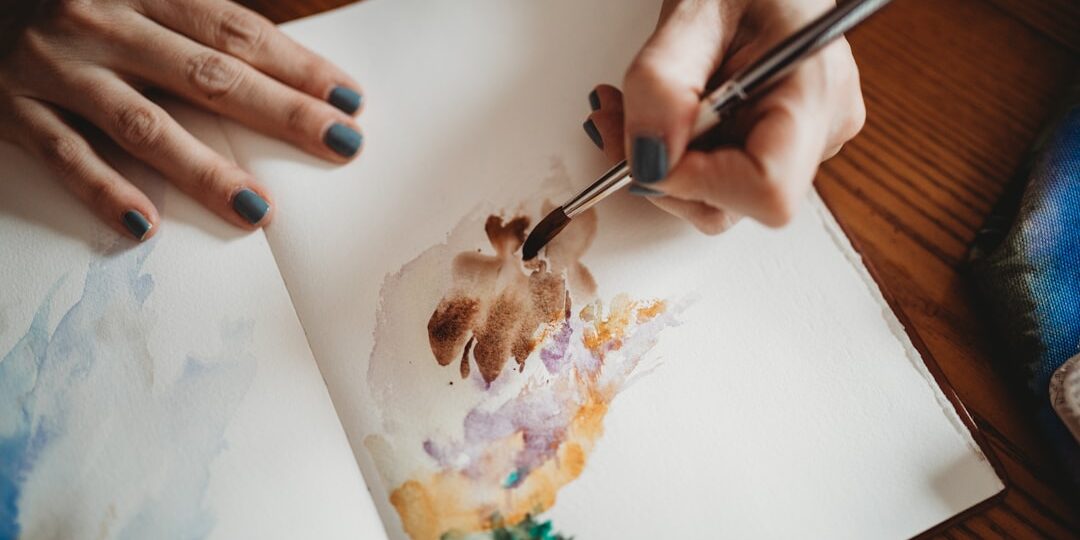
Why Art Therapy and Mental Health Are More Connected Than You Think
Art therapy and mental health are deeply linked, and the science behind that connection is stronger than most people realize. Creative expression can help calm the body’s stress response, give shape to emotions that are hard to explain, and support healthier ways of coping. For many people, making art in a therapeutic setting creates a bridge between what they feel internally and what they can begin to understand, process, and heal.
What is art therapy for mental health?
- Art therapy is a clinical mental health profession that uses active art-making, guided by a credentialed therapist, to help people express emotions, process trauma, and reduce symptoms of anxiety, depression, PTSD, and more.
- It is not the same as an art class or hobby. A trained art therapist applies psychological theory alongside the creative process.
- You do not need any artistic skill to benefit from it.
- Research shows it can lower cortisol (the stress hormone), improve mood, boost self-esteem, and even change brain activity in measurable ways.
- It is recognized as evidence-based by the Society of Clinical Psychology, Division 12 of the American Psychological Association.
At Grace Christian Counseling, we believe that creativity is not accidental. It reflects something woven into us by God. Art therapy, paired with biblical truth and evidence-based clinical care, can be a powerful part of the healing journey for individuals, couples, and families across Western Pennsylvania and online.
What is Art Therapy and How Does It Work?
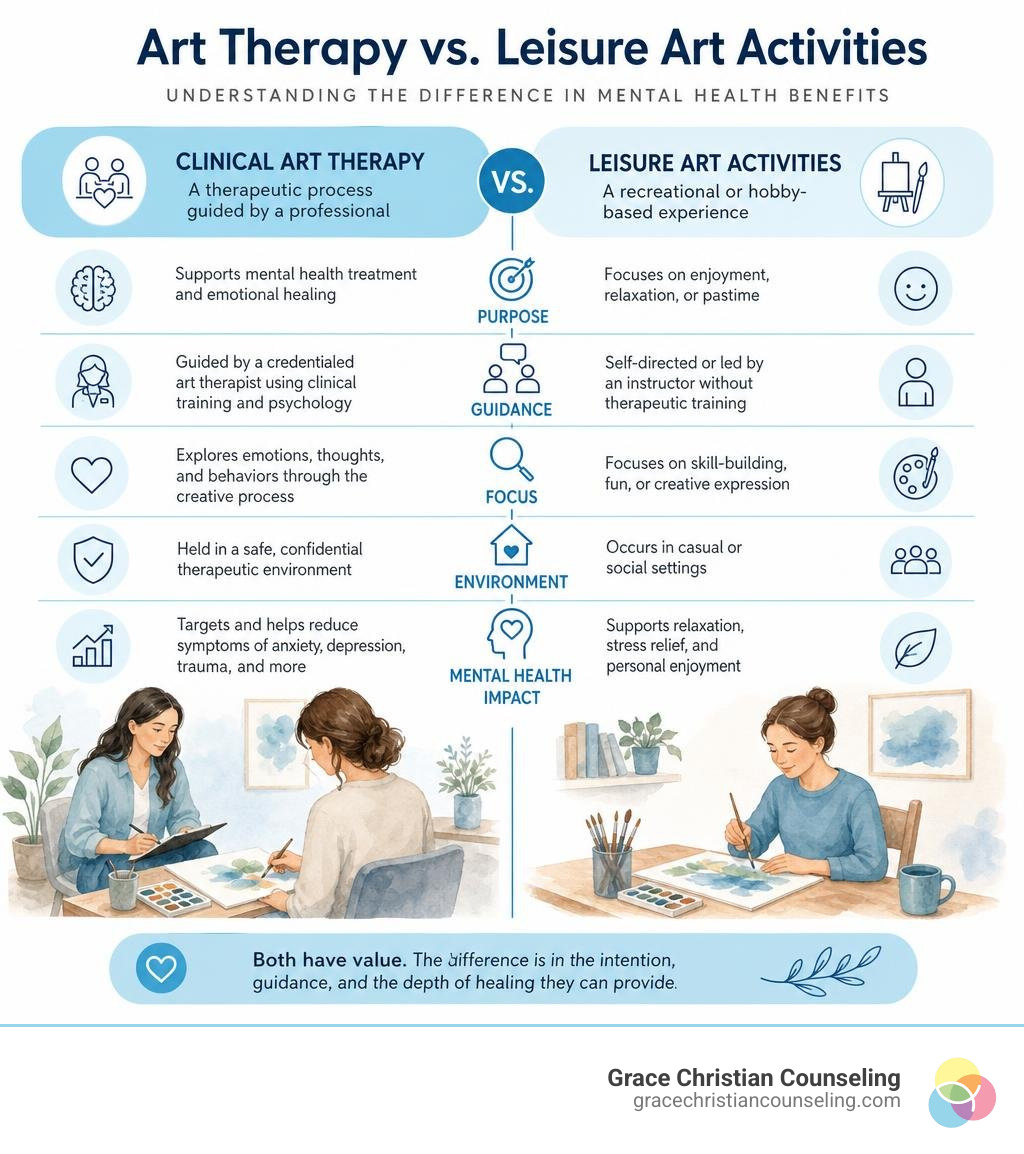
To understand how art therapy works, we must first clear up a common misconception; art therapy is not simply an arts and crafts class, nor is it a passive recreational activity. It is an integrative mental health profession that enriches lives through active art-making, the creative process, applied psychological theory, and human experience within a psychotherapeutic relationship.
When you participate in art therapy, you are not trying to paint a masterpiece for a gallery. Instead, you are using materials like clay, paint, colored pencils, or collage to explore your inner world. The focus is entirely on the process of creation rather than the final product. This active creation engages your mind, body, and spirit in ways distinct from verbal communication, allowing you to externalize emotions, thoughts, and behaviors that might otherwise remain buried.
Defining Art Therapy and Mental Health Integration
The integration of art therapy and mental health treatment relies heavily on sensory engagement and nonverbal communication. When people experience trauma or severe stress, the speech centers of the brain, such as Broca’s area, can actually shut down or become less active. This makes it incredibly difficult to talk about what happened.
By using visual arts, individuals can bypass the limitations of language. A splash of dark paint, a fragmented clay sculpture, or a carefully structured collage can communicate complex emotional states instantly. This sensory engagement helps regulate the nervous system, allowing clients to safely explore difficult memories and emotions without becoming overwhelmed. If you would like to explore how we structure these sessions, you can read more about our art therapy services.
The Role of a Credentialed Art Therapist
A critical component of this process is the presence of a credentialed professional. A clinical art therapist holds a Master’s level degree or higher, and they may practice under associate licenses like LAPC and LSW while working toward full clinical licensure. These professionals typically hold credentials such as ATR (Registered Art Therapist) or ATR-BC (Board Certified Art Therapist).
In our practice, therapists blend clinical psychological expertise with art therapy and faith-based principles. A trained therapist does not just hand you paint and walk away; they guide the experience, help you select appropriate media, provide a safe containment for difficult emotions, and assist you in reflecting on the finished product. To learn more about professional standards and to find credentialed practitioners, you can visit the American Art Therapy Association or explore local resources through the Pennsylvania Art Therapy Association.
The Science Behind Art Therapy and Mental Health
The healing value of art is more than a comforting idea, it is supported by growing biological and neurological research. Studies suggest that creative activity can influence stress chemistry, attention, memory, and the way different brain networks communicate. This helps explain why art therapy can feel calming in the moment, while also giving people a structured way to notice, organize, and respond to difficult inner experiences.
One of the most consistently cited physiological findings in arts research is the relationship between creative activity and stress regulation. In a study published in Art Therapy: Journal of the American Art Therapy Association, 75% of participants experienced reduced cortisol levels after just 45 minutes of art-making, regardless of prior artistic experience (Kaimal et al., 2016). Cortisol is a hormone involved in the body’s stress response, and lower levels are commonly associated with improved emotional regulation and reduced physiological stress. More recent reviews suggest that arts engagement may support mental well-being through multiple pathways, including emotional expression, attention regulation, social connection, and reward processing rather than a single neurochemical effect.
Neurobiological Mechanisms of Creative Expression
When we create art, our brains undergo complex neural network reconfigurations. Neuroscientists studying these mechanisms have identified three primary brain networks that are heavily modulated during art therapy:
- The Default Mode Network (DMN): This network is active during self-reflection, autobiographical memory, and daydreaming. Art therapy helps reconfigure the DMN, allowing individuals to construct a more integrated, coherent sense of self-identity and process personal narratives.
- The Salience Network (SEN): This network detects personally relevant and emotionally biting stimuli. The sensory nature of art-making engages the SEN, directing attention to internally generated emotions before recruiting cognitive control.
- The Central Executive Network (CEN): Responsible for focus, working memory, and decision-making, the CEN is recruited as we make choices about colors, shapes, and structural placement in our artwork.
Researchers continue studying how creative expression influences large-scale brain networks involved in self-reflection, attention, and emotional regulation. While the mechanisms are still developing, current evidence suggests that therapeutic art-making may support greater emotional awareness and flexible coping. To dive deeper into these neuro-psycho-cultural dynamics, refer to the scientific research on neuro-psycho-cultural mechanisms.
Transdiagnostic Benefits Across Mental Health Conditions
Rather than only targeting one specific diagnosis, art therapy activates transdiagnostic mechanisms. This means it addresses core psychological vulnerabilities, such as poor emotional regulation, cognitive stagnation, and social isolation, which are common across many different conditions.
| Mechanism | How Art Therapy Activates It | Clinical Outcome |
|---|---|---|
| Emotional Regulation | Externalizing feelings onto a canvas; creating a physical boundary for internal chaos. | Reduced anxiety and panic symptoms. |
| Cognitive Stimulation | Navigating spatial relationships; making decisions with physical media; tactile problem-solving. | Improved working memory and executive function in dementia and stroke patients. |
| Social Connection | Sharing creative space in group therapy; nonverbal relational resonance. | Decreased loneliness; improved social functioning in schizophrenia. |
| Self-Efficacy | Taking control of a blank canvas; seeing a physical representation of personal agency. | Increased self-esteem and resilience in trauma survivors. |
Clinical Evidence: Treating Specific Mental Health Conditions
Art therapy is increasingly included within broader evidence-informed behavioral health models because it can improve engagement and provide nonverbal pathways for emotional processing. The American Art Therapy Association describes art therapy as a mental health profession that combines active art-making, psychological theory, and therapeutic relationship to support assessment and treatment goals. Clinical reviews suggest the strongest evidence currently exists for reducing distress, improving emotional expression, and supporting coping skills alongside (not replacing) standard mental health treatment.
Art Therapy for Depression and Anxiety
Depression often brings a sense of heavy, stagnant isolation, while anxiety keeps the nervous system in a state of constant, exhausting hyper-arousal. Art therapy acts as an active, somatic intervention that disrupts these negative states. Clinical research shows that art therapy significantly reduces depressive symptoms in diverse groups, including prison populations, elderly individuals in residential care, and cancer patients undergoing painful treatments.
By engaging in a structured creative process, individuals can gently move their mental focus away from painful internal stimuli, fostering a sense of control and self-awareness. For a detailed review of clinical applications, you can read the scientific review of art therapy for mental disorders. It is also worth noting that this therapy is highly effective across all life stages; to clear up a common misconception, check out our article Myth Buster: Art Therapy is Only for Children.
Processing Trauma and PTSD Through Visual Art
Trauma leaves a deep physical imprint on the body and mind. For military veterans, survivors of abuse, or individuals recovering from sudden tragedy, traditional talk therapy can sometimes feel overwhelming if they are asked to verbalize memories before they are ready. Art therapy offers another path, using images, colors, and symbols to help clients express painful experiences at a safer pace. With the support of a trained therapist, the creative process can create distance from the trauma, which often makes it easier to begin processing what happened.
Trauma researchers note that traumatic memories are often stored with strong sensory and emotional components, which can make purely verbal processing difficult for some individuals. Structured expressive approaches may help clients organize experiences into a more coherent narrative while maintaining emotional safety and therapeutic pacing. This is one reason art therapy is frequently used as an adjunctive (not stand-alone) support within trauma-informed care.
Art therapy provides a nonthreatening, indirect way to approach these wounds. In clinical studies, such as those conducted with military personnel, activities like mask-making allowed individuals to paint “two faces”; the external mask they show to the world, and the internal pain they carry. This physical externalization helps survivors process fragmented, traumatic memories, safely restructuring their narrative and achieving psychological closure.
Supporting Schizophrenia, Dementia, and Serious Mental Illness
For individuals living with serious mental illnesses, art therapy serves as a low-risk, high-benefit intervention that minimizes symptoms and maximizes daily functioning.
- Schizophrenia: Group art therapy has been shown to have a positive effect on negative symptoms, such as social withdrawal and limited emotional expression, while supporting self-efficacy and general social function.
- Dementia and Alzheimer’s Disease: Structured painting activities may help reduce anxiety, support quality of life, and stimulate immediate and working memory in people experiencing cognitive decline.
- Serious Mental Illness: For people living with long-term or complex mental health conditions, art therapy can offer a safe, structured way to build coping skills, express difficult emotions, and strengthen social connection.
A systematic review examining these applications highlighted how group art therapy is not only clinically effective but also highly cost-effective compared to standard wait-list care. You can read more about these economic and clinical findings in the clinical and cost-effectiveness of group art therapy study.
The Faith-Integrated Approach: Art Therapy in Christian Counseling
At Grace Christian Counseling, we believe that true healing must address the whole person, mind, body, and spirit. By blending evidence-based clinical practices with timeless biblical truth, we help clients experience deep, lasting restoration.
Embracing God-Given Creativity for Healing
We are made in the image of a Creator. The very first verse of Scripture, Genesis 1:1, introduces God as an artist shaping the universe out of chaos. Because we carry the divine spark of our Creator, we possess an innate, God-given creative tendency.
Using art in therapy is not a modern, secular invention; it is a reclamation of our natural design. When we create, we connect with the peaceful, restorative presence of the Holy Spirit. In moments of deep anxiety, engaging this creative design can help us quiet our minds and anchor ourselves in God’s promises of peace, as beautifully described in Philippians 4:6-7. For parents interested in how we apply this gentle, creative approach to younger hearts, you can read about our featured therapist, Introducing Adrienne: Art Therapy and Faith-Based Counseling for Children.
The Counseling Blueprint and Art Therapy and Mental Health
In our practice, we guide clients through a structured, four-stage healing journey known as the Counseling Blueprint. Art therapy integrates seamlessly into each of these stages:
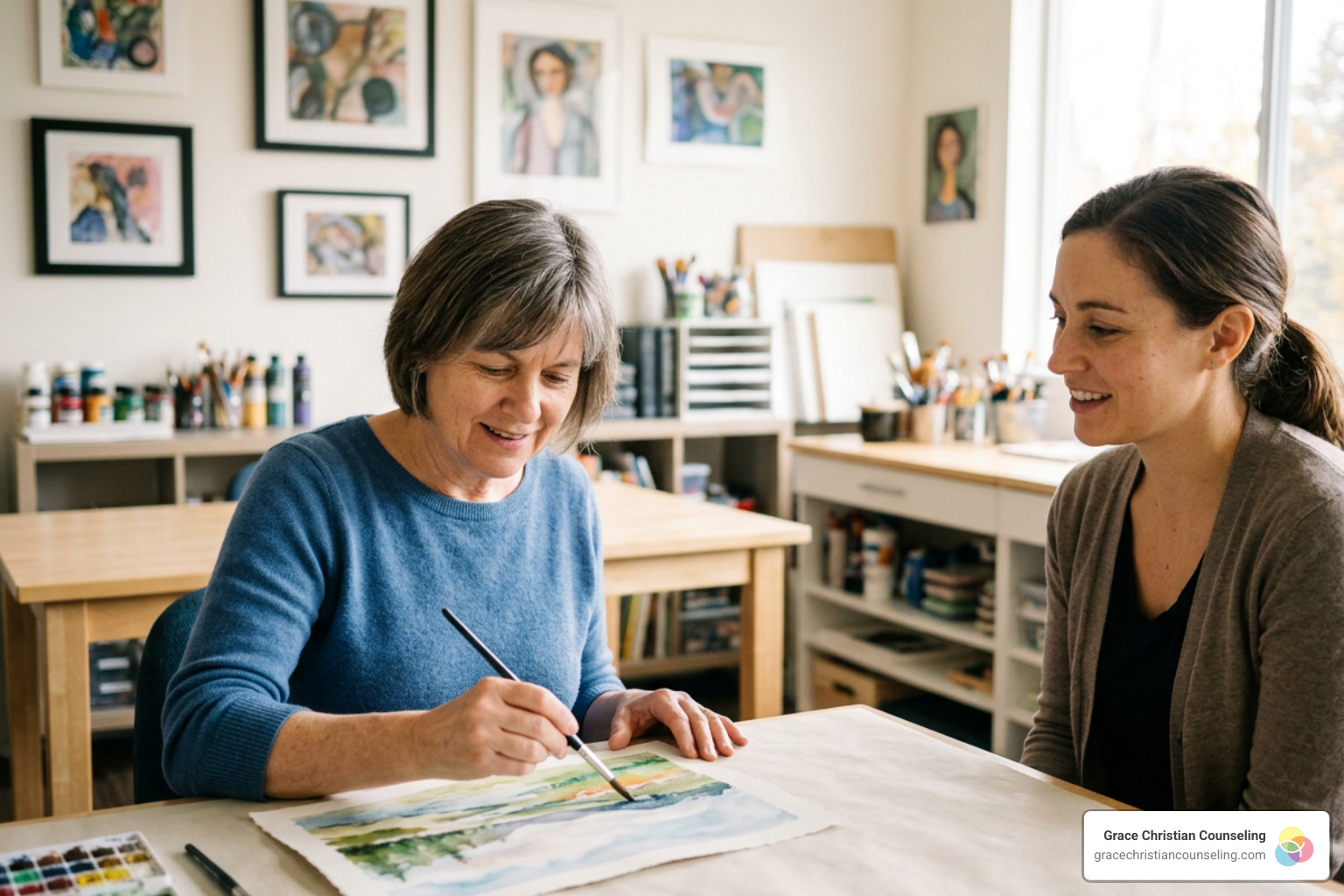
- Take Off the Mask: In a safe, non-judgmental environment, clients use simple art media to express their current emotional state, helping to build genuine trust and drop their defensive walls.
- Heal the Wounds: We use active art-making to explore deep emotional and relational hurts, allowing the visual medium to speak for the pain when words are too difficult to find.
- Remove the Toxins: Through guided creative exercises, we identify unhelpful, toxic beliefs and lingering lies that are holding the client back, externalizing them onto paper where they can be examined objectively.
- Replace with Truth: Finally, the client uses their creative expression to visualize and install God’s truth about their identity, worth, and future, creating a tangible, visual reminder of their healing.
Practical Applications: Integrating Art into Daily Life for Mental Wellness
While formal art therapy must be guided by a credentialed therapist, you can easily incorporate creative, self-directed practices into your weekly routine to manage everyday stress and build emotional resilience.
Daily Creative Practices for Stress Reduction
You do not need to set aside hours of your day to experience the mental health benefits of art. Simple, daily habits can make a massive difference:
- Mindful Doodling: Keep a small sketchpad on your desk. Spending just five to ten minutes doodling abstract patterns during a stressful workday can help ground your nervous system.
- Visual Journaling: Instead of writing your thoughts, try using colors, shapes, and collaged images to express how your day felt.
- Clay Modeling: Keeping a small piece of modeling clay nearby can provide a wonderful tactile outlet for physical tension and anxiety.
These simple habits build what researchers call the “arts exposome”; the cumulative, positive exposure to arts activities that protects our long-term mental health. To learn more about how arts-based community prescribing programs improve mental well-being over time, check out this study on arts and health.
Outdoor Experiential and Expressive Arts
Combining creative expression with the healing power of God’s creation can amplify your recovery. Spending time in green spaces is naturally linked to lower rates of physical and mental exhaustion, while natural sunlight provides vital Vitamin D to aid sleep and lift depressive moods.
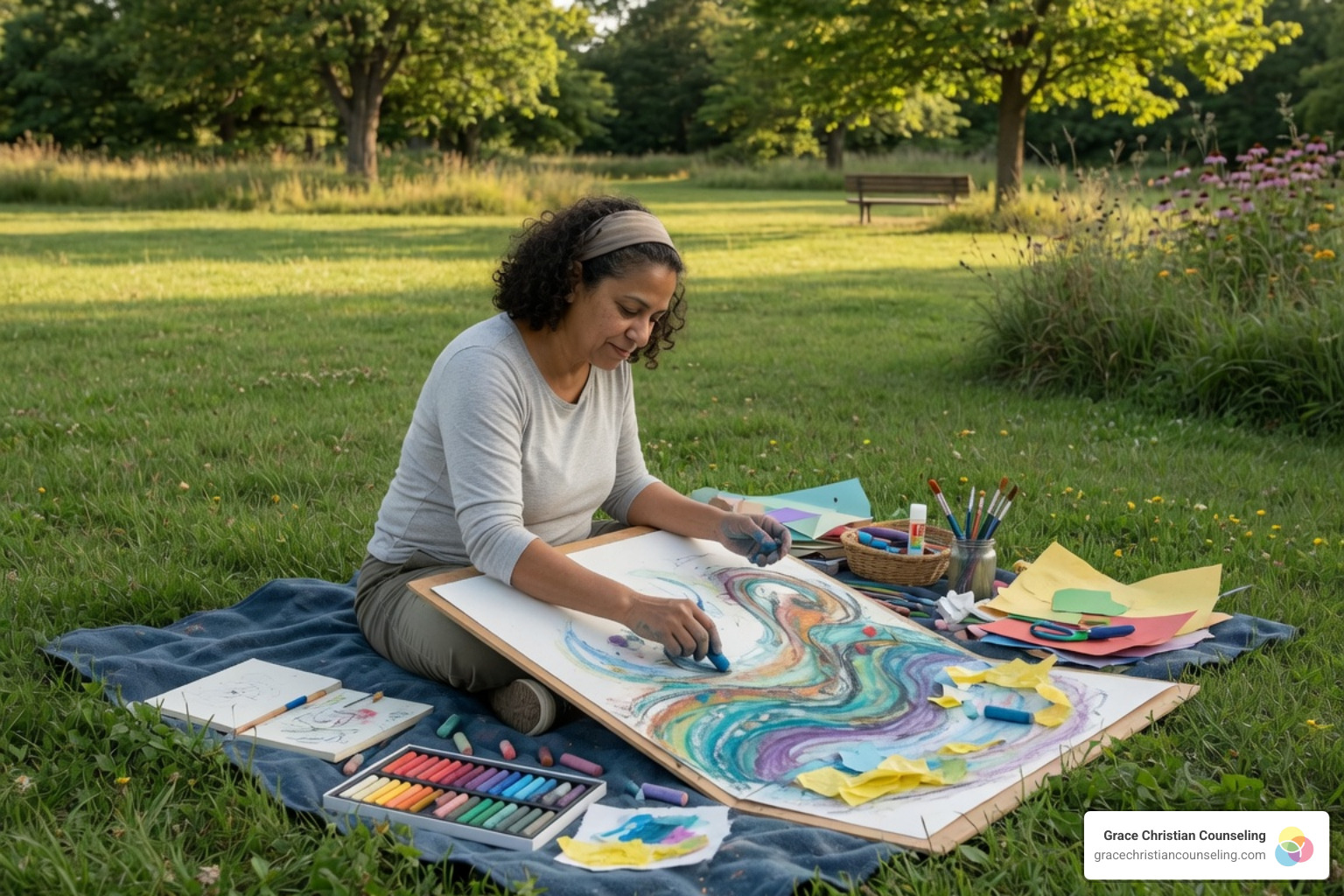
You can practice outdoor expressive arts by taking a sketchbook to a local park, sitting near a quiet lake, or collecting natural elements like leaves, twigs, and stones to create temporary outdoor sculptures. This practice of “nature-based mindfulness” helps lower stress hormones and restores physical vitality.
Frequently Asked Questions about Art Therapy
Do I need to be good at art to participate in art therapy?
Not at all. This is perhaps the most common barrier keeping people from trying art therapy. You do not need any prior artistic training, skill, or talent. The goal of art therapy is self-expression and emotional processing, not aesthetic perfection. Your therapist is there to guide you through the process, helping you find comfort in the materials regardless of how the final product looks.
How does art therapy differ from regular arts and crafts?
While regular arts and crafts can be incredibly relaxing and serve as a wonderful hobby, they lack the clinical framework of formal art therapy. Art therapy takes place within a professional, psychotherapeutic relationship with a credentialed therapist. The therapist uses applied psychological theory to establish specific therapeutic goals, helping you interpret, process, and find meaning in your creations.
Is art therapy safe for individuals processing severe trauma?
Yes, when guided by a trained, licensed counselor, art therapy is an exceptionally safe and gentle way to process severe trauma. Because art allows for indirect, nonverbal expression, it provides a safe psychological distance. You only have to discuss the details of your trauma when you feel completely ready, making it a highly effective, trauma-informed intervention.
Finding Hope and Healing Through Art Therapy
The journey of healing is rarely a straight line; it requires patience, support, and the willingness to explore new paths. By connecting the clinical science of art therapy and mental health with the restoring power of Christian faith, we can discover new avenues of hope and peace.
Whether you are navigating anxiety, processing deep-seated trauma, or seeking a creative way to strengthen your family’s mental wellness, you do not have to walk this path alone. Grace Christian Counseling is proud to offer compassionate, professional, and Christ-centered care. We serve families across Western Pennsylvania with convenient physical offices and statewide virtual options.
If you are ready to take the next step in your healing journey, you can schedule a free discovery call with us today. We would be honored to walk alongside you!
This guide is for educational and spiritual encouragement and is not a substitute for personalized professional counseling. If you are in crisis, please reach out for immediate help.
Letting Go Of Past Traumas


