

When Faith and Healing Meet: Finding Licensed Christian Trauma Counselors
Licensed Christian trauma counselors are state-licensed mental health professionals who combine proven, evidence-based therapy with a biblical worldview, helping you heal from trauma without leaving your faith at the door.
Here’s what to know quickly:
- Our licensed counselors provide Christ-centered, trauma-informed care grounded in sound clinical practice
- We integrate evidence-based approaches, such as EMDR and CBT when clinically appropriate, with biblical truth, prayer, and each client’s faith goals
- We support individuals and families navigating PTSD, childhood wounds, spiritual abuse, betrayal trauma, anxiety, and relationship pain
- We offer in-person counseling throughout Western Pennsylvania, including the Pittsburgh area, plus online counseling options
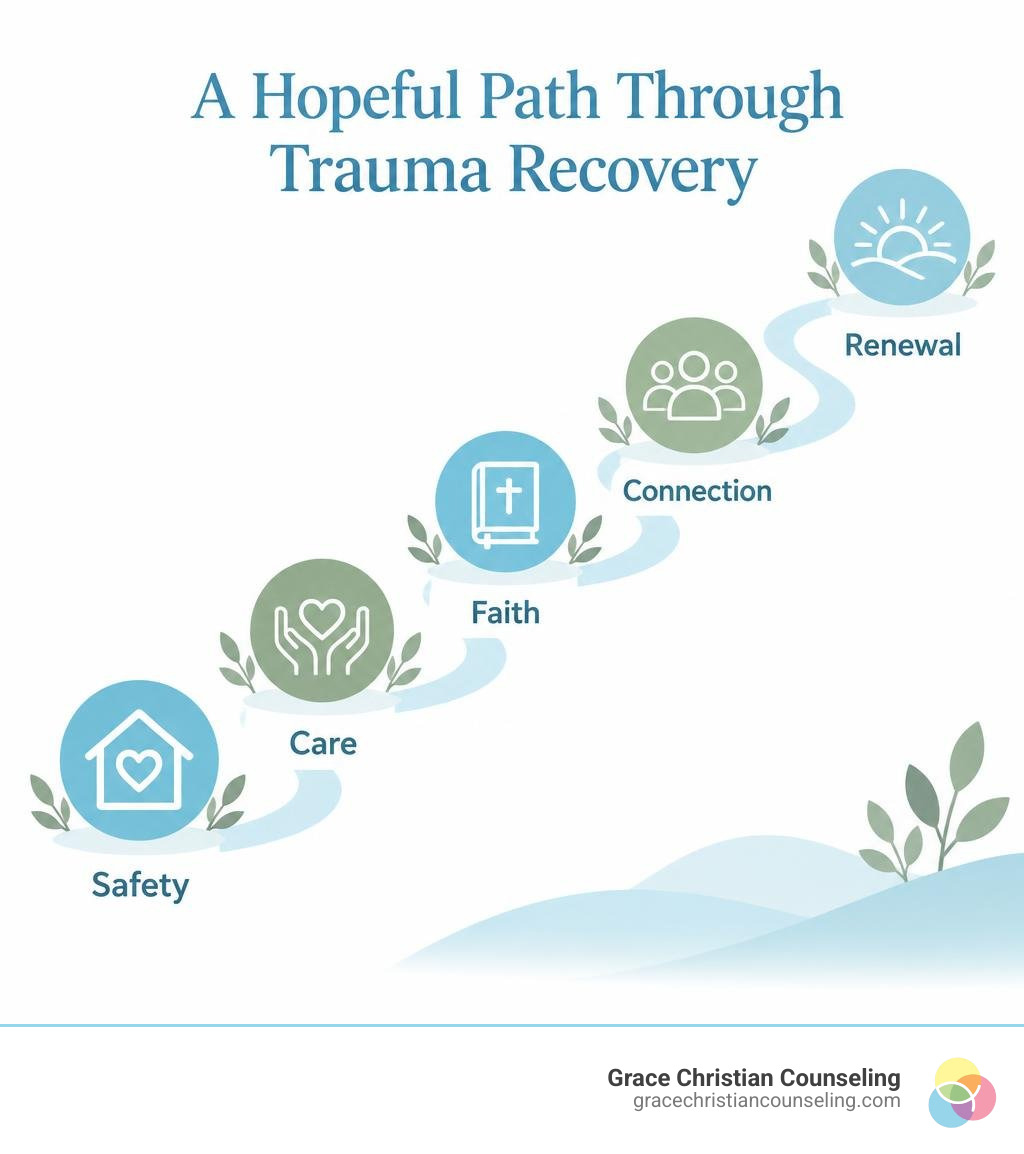
- Our Counseling Blueprint offers a compassionate, four-stage path to build trust, address wounds, identify harmful beliefs, and replace them with truth
Trauma doesn’t just wound the mind. It can shake your sense of identity, your relationships, and even your faith. Many Christians feel caught between two worlds, told to “just pray more” on one side, and offered purely secular therapy on the other.
The good news? You don’t have to choose.
A growing community of licensed, clinically trained counselors are doing both, bringing rigorous therapeutic skill and a pastoral heart into the same room.
Understanding the Role of Licensed Christian Trauma Counselors

When we talk about Trauma Counseling, we are discussing a specialized field that addresses the deep seated impact of distressing events on a person’s psyche and spirit. Licensed Christian trauma counselors operate from a unique vantage point: they view the human person as a holistic being, body, soul, and spirit, created in the image of God.
Evidence-based trauma therapy can address emotional, cognitive, behavioral, relational, and physical effects of traumatic experiences. Christian trauma counseling brings an additional faith-integrated perspective, creating space to explore how trauma may also affect a person’s relationship with God, spiritual identity, and sense of meaning. A licensed Christian counselor can address these concerns alongside appropriate clinical treatment while recognizing the comfort, hope, and restoration found through the Holy Spirit.
Clinical Standards and Faith Integration
Licensed Christian mental health professionals must meet the education, supervised experience, examination, and other requirements established for their particular profession and license in the state where they practice. Depending on the clinician’s profession, credentials may include licenses such as:
- LPC — Licensed Professional Counselor
- LCSW — Licensed Clinical Social Worker
- LMFT — Licensed Marriage and Family Therapist
- LPCC — Licensed Professional Clinical Counselor
- Associate or provisional licenses, such as LAPC, LSW, or other state-specific credentials, for clinicians practicing under required supervision
Beyond state licensure, clinicians may pursue additional training in trauma-focused treatment approaches based on their professional interests and the needs of the clients they serve. At Grace Christian Counseling, ongoing clinical consultation, professional development, and continued learning help our clinicians strengthen their ability to provide thoughtful, faith-integrated care.
Addressing the Roots of Traumatic Stress
Trauma isn’t always a single, catastrophic event. It can be the “little t” traumas of repeated neglect or the “Big T” traumas of violence. Trauma is common, but experiencing trauma does not automatically mean someone will develop PTSD. According to the National Center for PTSD, a nationally representative study of more than 36,000 U.S. adults found that approximately 6% experienced PTSD at some point in their lives, while about 5% experienced PTSD within a given year. These numbers are a reminder that trauma responses vary considerably from person to person and that treatment should be individualized rather than based on a one-size-fits-all approach.
Our counselors are trained to handle a wide spectrum of issues, including:
- PTSD: Navigating the flashbacks and hyper-vigilance that follow life-threatening events.
- Childhood Abuse: Healing the wounds left by those who were supposed to protect us.
- Domestic Violence: Finding safety and rebuilding self-worth after physical or emotional assault.
- Betrayal Trauma: Processing the deep pain of infidelity or broken trust in a marriage.
If you are searching for Relationship Trauma Therapy Near Me or Trauma Therapy Pittsburgh, you are looking for someone who understands that these experiences require more than just “positive thinking.” They require a deep, compassionate dive into the roots of the pain.
Evidence-Based Methods Used by Licensed Christian Trauma Counselors

We believe that sound clinical care and Christian faith do not have to compete. Our counselors draw from evidence-based and trauma-informed approaches according to each client’s symptoms, history, goals, and clinical needs. For PTSD specifically, treatments with particularly strong research support include Cognitive Processing Therapy (CPT), Prolonged Exposure (PE), and EMDR. The National Center for PTSD identifies these among the most strongly supported trauma-focused treatments.
The evidence for trauma-focused psychotherapy is substantial. A large network meta-analysis examined 98 randomized controlled trials involving 5,567 adults with PTSD and found significant reductions in PTSD symptoms across several psychotherapies, including CPT, EMDR, cognitive therapy, narrative exposure therapy, prolonged exposure, and CBT. The researchers also emphasized that treatment decisions should be tailored to the individual’s needs, characteristics, and the clinician’s expertise.
Depending on the counselor’s training and the client’s needs, treatment may also draw from approaches such as:
- Cognitive Behavioral Therapy (CBT): Helping clients recognize and respond differently to unhelpful patterns of thinking and behavior associated with distress.
- Internal Family Systems (IFS): Exploring different internal experiences or parts with curiosity and compassion when this approach is appropriate for the client’s needs.
- Somatic and Grounding Strategies: Helping clients notice physical responses to stress and practice ways of reconnecting with the present moment.
- Narrative Approaches: Helping clients explore how traumatic experiences have affected the stories they tell about themselves while developing a fuller understanding of their identity, values, and future.
The Power of EMDR in a Christian Context
Eye Movement Desensitization and Reprocessing (EMDR) is an evidence-based trauma-focused therapy with strong research support for PTSD. During EMDR, clients briefly focus on aspects of a traumatic memory while engaging in bilateral stimulation, such as guided eye movements or sounds, with the goal of reducing distress and helping the memory become less disruptive in the present. The National Center for PTSD identifies EMDR as one of the most strongly recommended treatments for PTSD.
When faith integration is desired by the client, Christian counseling can also create space to explore spiritual questions, Scripture, prayer, and the person’s relationship with God during trauma recovery. These elements should be incorporated thoughtfully rather than assuming every client will experience God, healing, or a traumatic memory in the same way.
Integrating Scripture and Prayer into Clinical Practice
For many of our clients, faith is an important part of healing. Our licensed counseling team makes room for Scripture, prayer, and Christian values when these are meaningful to you, without using them to minimize pain or bypass the clinical work trauma recovery can require.
- Biblical meditation: Reflecting on God’s promises as one supportive practice for calming an anxious nervous system.
- Prayerful reflection: Inviting the Holy Spirit into the healing process while respecting each client’s comfort level and goals.
- A redemptive perspective: Exploring suffering, identity, and hope through Scripture, including Romans 8:28, while making space for honest questions and gradual healing.
Our Licensed Christian Trauma Counselors and Professional Affiliations
At Grace Christian Counseling, we pride ourselves on a team that is as clinically sharp as they are spiritually grounded. Our licensed Christian trauma counselors are dedicated to the idea that you deserve the best care possible. We don’t just “wing it”; we follow established protocols and engage in regular supervision and consultation to ensure our clients receive top-tier treatment.
Leading Networks for Faith-Based Care
We are part of a larger movement of Christian mental health professionals. We draw resources and training from several prestigious organizations:
- American Association of Christian Counselors (AACC): The world’s largest organization for Christian clinicians, providing ongoing education and conferences.
- Christian Trauma Healing Network (CTHN): An organization specifically focused on equipping “people-helpers” with Christ-centered trauma care.
- Christian Care Connect: A directory that helps believers find providers who share their values.
Many of our staff have completed specialized training like the CCTCP Level 1 Certification, which focuses on the basics of counseling past trauma using biblical principles.
Accessibility Through Online Counseling
We understand that not everyone lives near our physical offices in places like Pittsburgh, North Huntingdon, or Sewickley. That is why we have prioritized Christian counseling through telehealth. While Grace Christian Counseling is rooted in Pennsylvania and also serves clients in West Virginia, Ohio, Georgia, and Florida through online counseling where available, we know that readers in other states may be looking for faith-centered support. For those outside our service areas, we recommend our sister company, NuWell Online, a pastoral counseling resource that offers a compassionate, Christ-centered place to begin exploring next steps. Whether you live in a rural community or a larger city, you deserve support that respects both your emotional well-being and your faith.
Navigating the Practicalities of Trauma Recovery
Starting the journey of trauma recovery is a brave step, but it often comes with practical questions. We want to make the process as transparent and stress-free as possible.
Financial Considerations and Getting Started
We believe that financial concerns should never be the primary barrier to healing.
- Session Costs: Counseling rates vary depending on the clinician, service, and type of appointment. Contact Grace Christian Counseling for current rates and available options.
- Affordability Options: If cost is a concern, ask our team about available options when scheduling your first appointment.
- Insurance and Payment: Insurance participation and reimbursement options can vary by clinician and plan. Our team can help you understand current payment options and any documentation that may be available for insurance purposes.
- Initial Appointments: Your first session is about “fit.” It’s an opportunity to share your story, ask questions about our approach, and see if you feel comfortable with your counselor.
The Role of the Church in the Healing Journey
We don’t believe counseling should happen in a vacuum. The local church plays a vital role in trauma recovery. While a pastor may provide spiritual guidance, a licensed counselor provides clinical intervention. We love collaborating with ministry leaders to create a “community of care.”
Churches can be safe havens where survivors find support groups, such as those for chronic pain or grief. When the church and the counselor work together, the survivor is surrounded by a robust network of support.
Addressing Co-occurring Mental Health Challenges
The effects of trauma can overlap with other emotional, behavioral, and relational concerns. Depending on the person and their experiences, these may include:
- Anxiety and Depression: Trauma-related distress can occur alongside symptoms of anxiety or depression, although these conditions can have many contributing factors.
- Grief: Processing the loss of what “should have been.”
- Marital Problems: Trauma can make it difficult to trust or communicate with a spouse.
- Substance Use and Addictive Behaviors: Some people may turn to substances or other behaviors in an effort to cope with painful emotions or traumatic experiences.
Our approach is holistic, considering the whole person rather than reducing someone’s experience to a single diagnosis or symptom.
Frequently Asked Questions about Licensed Christian Trauma Counselors
What is the difference between a licensed counselor and a biblical counselor?
A licensed Christian mental health professional has completed the education, supervised clinical experience, examinations, and other requirements necessary for their specific state-issued mental health license. Depending on their profession and scope of practice, licensed clinicians may assess and treat mental health conditions and use evidence-based approaches such as EMDR or other trauma-focused therapies for which they are appropriately trained.
The term biblical counselor does not necessarily indicate a state mental health license. Training and credentials can vary considerably, with biblical counseling generally emphasizing Scripture and Christian discipleship in addressing personal and relational concerns. At Grace Christian Counseling, our licensed clinicians integrate professional mental health care with a commitment to biblical truth, allowing clients to address both clinical and spiritual concerns when appropriate.
How much does a typical session with a Christian trauma counselor cost?
Counseling costs vary based on the clinician, service, session length, and other factors. When contacting Grace Christian Counseling, you can ask about current rates, payment options, and whether any lower-cost options are available so you can make an informed decision before beginning care.
Can I receive effective trauma therapy through online or virtual sessions?
Yes, online trauma therapy can be an appropriate and effective option for some clients. Research supports the use of certain trauma-focused treatments delivered through telehealth, although whether virtual care is appropriate depends on the individual’s needs, circumstances, safety considerations, and the clinician’s professional judgment. Grace Christian Counseling offers secure telehealth services for clients in locations where the treating clinician is authorized to practice.
A Hopeful Next Step Toward Healing
Healing from trauma is a journey, not a destination. It requires patience, courage, and the right support. At Grace Christian Counseling, we are honored to walk alongside our brothers and sisters in Pennsylvania, offering a hand to hold and a clinical roadmap to follow.
We believe that no matter how deep the wound, the grace of God is deeper still. By combining professional restoration with the hope found in Christ, we help you move from a place of survival to a place of thriving.
If you’re struggling with the echoes of the past, our team of licensed Christian trauma counselors is here to walk with you. You don’t have to carry this burden alone. Start your journey toward healing today and discover the peace that surpasses all understanding.
This article was researched with AI and heavily edited by Bekah McCrorey for accuracy and relevance.
Bekah McCrorey is a counselor at Grace Christian Counseling. She holds a Master’s degree in Counseling from Dallas Theological Seminary and a Bachelor’s degree in Christian Ministry from Chesapeake Bible College and Seminary. She is a provisionally licensed counselor working under supervision toward full licensure as a Licensed Professional Counselor (LPC) in Pennsylvania.
With over 12 years of full-time ministry experience supporting individuals, families, ministry leaders, and churches nationally and internationally, Bekah brings a deep understanding of emotional and spiritual struggles. As a counselor, she uses a client-centered, trauma-informed, and evidence-based approach. She is Level 1 trained in Restoration Therapy and is passionate about helping clients navigate anxiety, depression, grief, trauma, life transitions, and relational difficulties while integrating emotional and spiritual well-being.
This guide is for educational and spiritual encouragement and is not a substitute for personalized professional counseling. If you are in crisis, please reach out for immediate help.


