
When Words Aren’t Enough: How Art Therapy for Families Opens New Doors to Healing
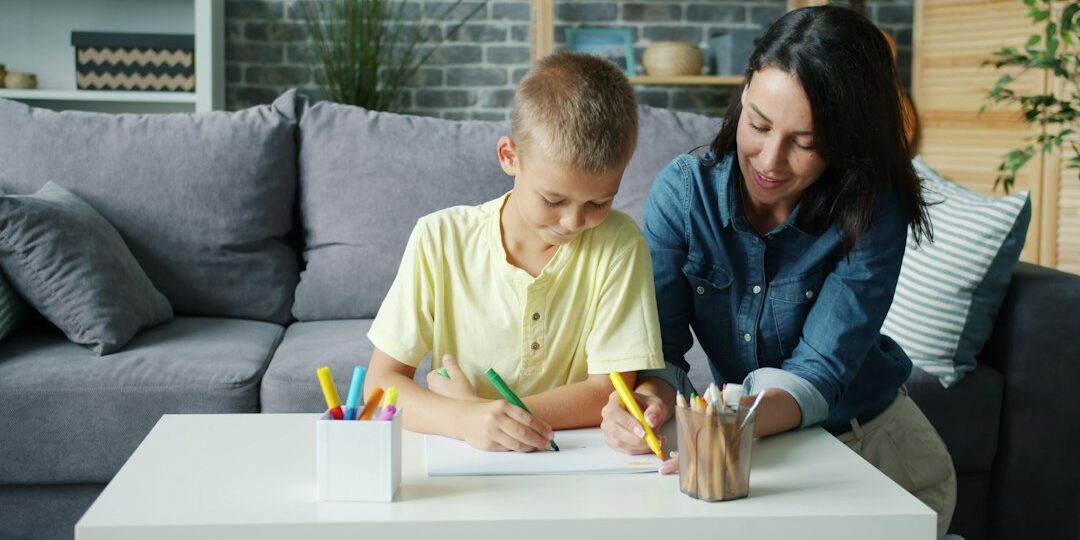
Art therapy for families is a form of psychotherapy that uses creative activities, such as drawing, painting, sculpting, and collage, to help family members express emotions, improve communication, and strengthen their bonds, especially when talking feels too hard.
Here is a quick summary of what you need to know:
- What it is: A guided therapeutic process where families create art together under the care of a trained therapist, focusing on the process of making, not the quality of the result.
- Who it helps: Families of all shapes and sizes, including blended families, single-parent homes, and multi-generational households, regardless of age or artistic skill.
- Why it can help: Art offers another way to communicate experiences that may be difficult to put into words, giving families opportunities to explore emotions, relationships, and experiences through creative expression.
- What it addresses: Conflict, grief, trauma, divorce, life transitions, and everyday communication breakdowns.
- Where to start: A licensed counselor or registered art therapist can guide your family through structured activities in a safe, non-judgmental space.
Family life is beautiful, but it is also hard. Even families with deep faith and genuine love for one another can hit walls where words simply run out, or feel too risky to say out loud. A parent may not know how to explain their grief. A child may not have the vocabulary for their fear. A teenager may shut down entirely before a conversation even begins.
That is exactly where creative expression steps in.
For children especially, words are not always the easiest way to communicate what they are experiencing. Art therapy gives young people another way to express themselves while allowing a trained therapist to use creative activities as part of the therapeutic process. A systematic review examining 37 studies of art therapy for children and adolescents found positive psychosocial outcomes across a variety of approaches, although researchers also noted substantial differences in how art therapy was delivered. More recent research continues to find promising results for young people, while the evidence base is still developing.
At Grace Christian Counseling, serving families across Western Pennsylvania, including Pittsburgh, North Huntingdon, and surrounding communities, we believe that healing happens in relationship. And sometimes, the most powerful relationship-building tool is not a conversation. It is a paintbrush.
Understanding Art Therapy for Families and Its Core Principles
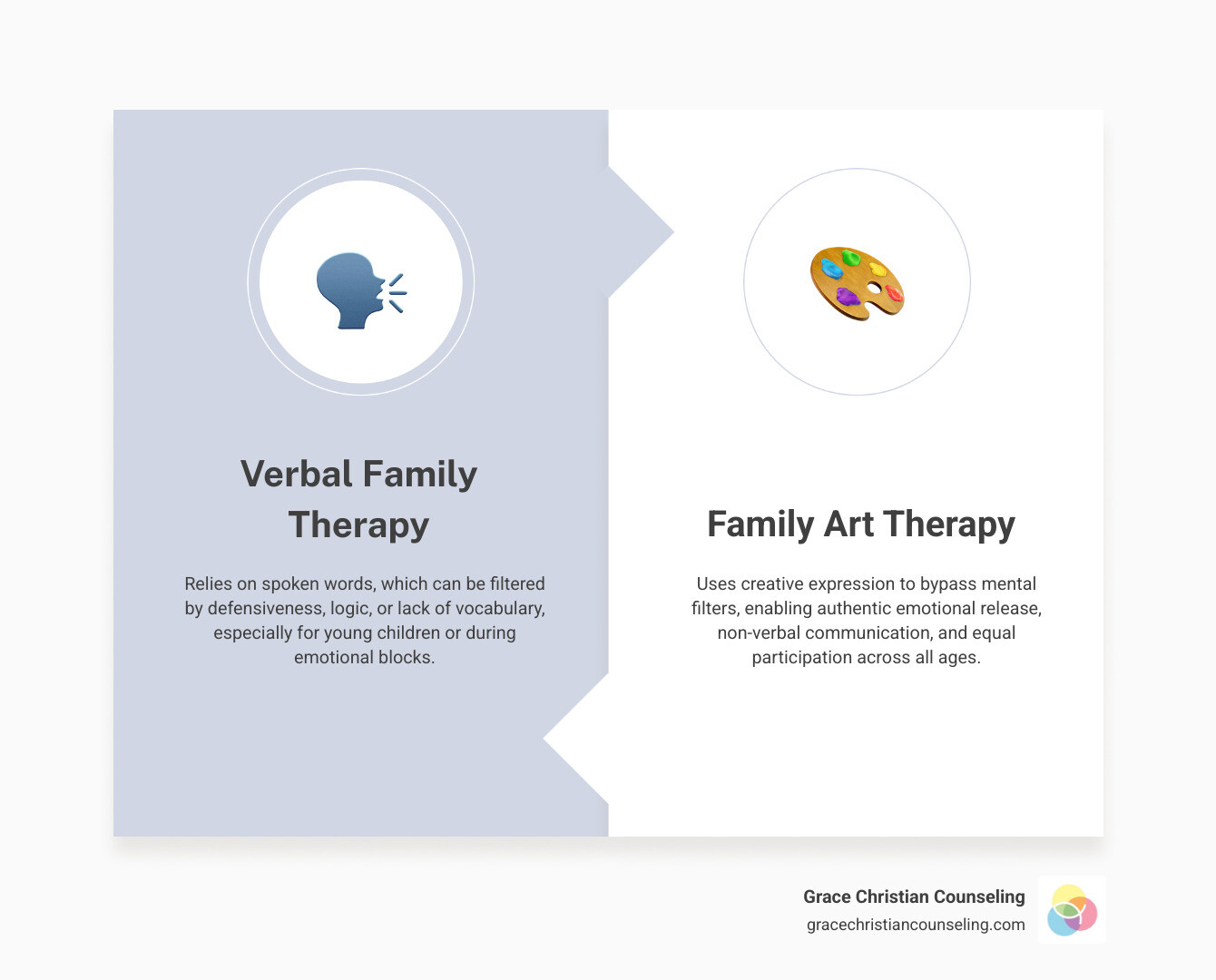
When we think of therapy, we often picture people sitting on a sofa, talking through their problems. While talk therapy is incredibly valuable, art therapy for families introduces a different “conduit” for connection. It is an expressive therapy that shifts the focus from an intellectual, logical approach to a creative and spontaneous one.
The core principles of this work are rooted in emotional safety and symbolic expression. In our sessions at Grace Christian Counseling, we emphasize the “process over the product.” This means we aren’t worried about whether your painting looks like a Van Gogh or if your clay sculpture is lopsided. What matters is what happened while you were making it. Did you laugh? Did you argue over which color to use? Did you find a way to work together?
By creating a non-threatening environment, we allow family members to lower their defensive barriers. In traditional settings, families often construct “censors” or defensive walls to protect themselves from conflict. Art-making can offer another avenue for expression. Colors, images, shapes, and other creative choices may help family members communicate experiences or emotions that are difficult to explain with words alone.
For more detailed information on how these creative tools can help, you can explore our Art Therapy services.
How Art Therapy for Families Differs from Traditional Family Therapy
In traditional family therapy, the “Identified Patient” (often a child or teen exhibiting behavioral issues) can sometimes feel like they are under a microscope. Art therapy for families shifts that focus. Instead of talking about the problem, the family works on a project together. This highlights systemic interactional problems rather than pinning everything on one person.
One of the biggest differences is the level of sensory engagement. Traditional therapy is linear—one person speaks, then another. Art therapy is “all at once.” A single picture can provide a wealth of detail about family dynamics, boundaries, and alliances that might take weeks to uncover through talking alone. It also builds cognitive and sensorimotor skills, especially in children, which is a key part of developmental health.
There is a common misconception that this type of work is just for the little ones. However, as we discuss in our post Myth Buster Art Therapy Is Only For Children, adults stand to gain just as much. While children naturally communicate through play, adults often need the creative process to reconnect with parts of themselves that have become rigid or overly logical.
The Role of Non-Verbal Communication in Emotional Expression
Communication is about much more than the words we choose. It involves tone, facial expressions, and the energy we bring into a room. In a family setting, non-verbal messages are often passed down through generations—patterns of how we show love, how we handle anger, or how we keep secrets.
Art therapy makes these invisible patterns visible. For example, if a family is asked to draw a joint mural, the therapist might notice:
- Who takes the lead without asking?
- Who stays in their own corner and doesn’t cross into others’ space?
- Who “erases” or paints over another person’s work?
These visual metaphors reveal the family’s “script.” By seeing these dynamics on paper, the family can begin to address them without the immediate heat of a verbal argument. It facilitates emotional regulation by giving a physical outlet for internal pressure.
Why Art Therapy for Families is Effective Across All Ages
One of the most beautiful aspects of art therapy for families is its inclusivity. It acts as a bridge between different developmental stages. A toddler, a teenager, and a grandparent can all sit at the same table and contribute to a shared project. This is particularly effective because research shows that play helps children develop cognitive, affective, and sensorimotor skills, while also providing a “level playing field” for communication.
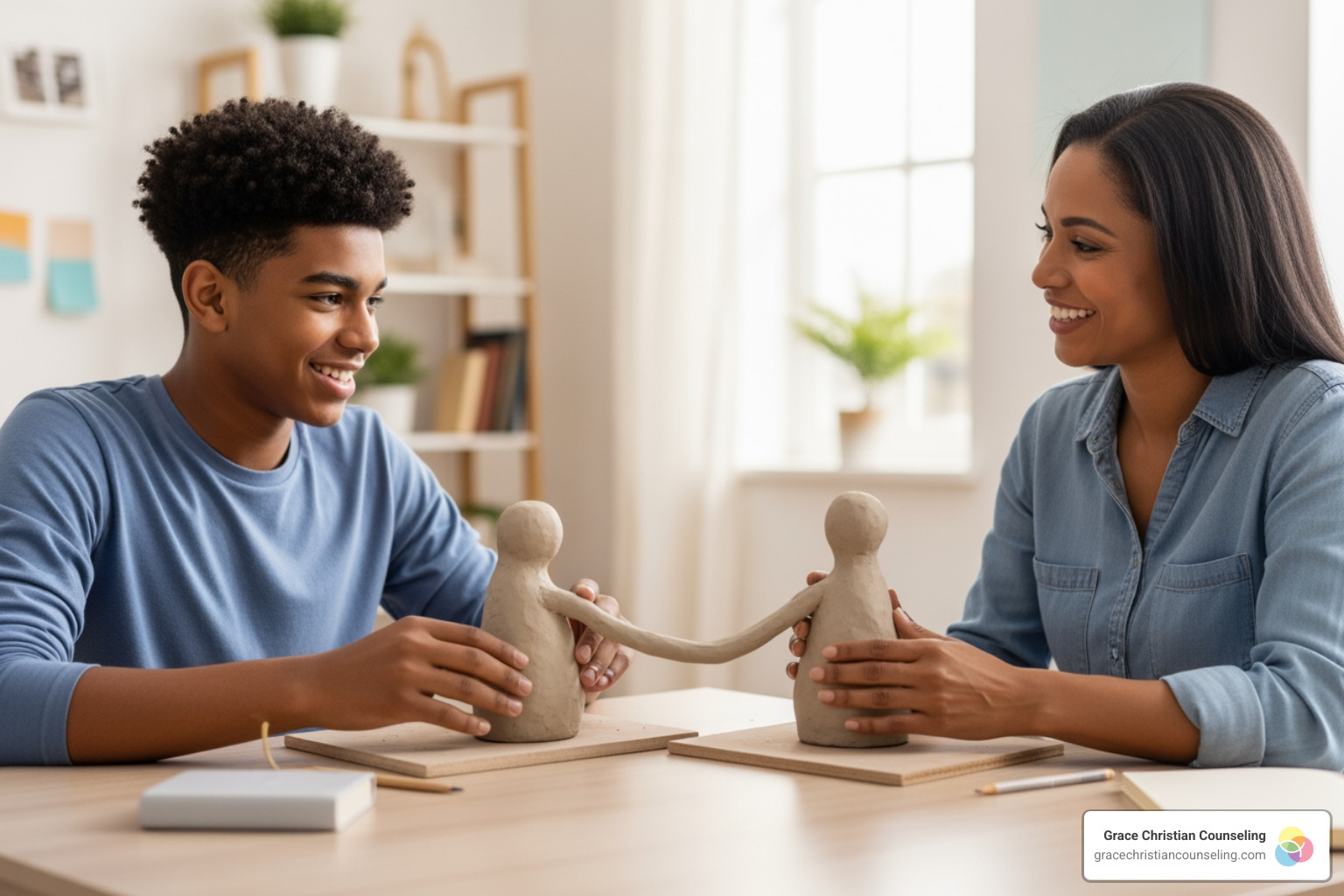
In our practice, we see how this approach validates every member of the family. You can learn more about our specific approach to younger family members in our article Introducing Adrienne Art Therapy And Faith Based Counseling For Children. By using materials like clay, markers, or collage, we meet each person where they are developmentally.
Overcoming Adult Resistance to “Child’s Play”
It is very common for parents or older adults to feel a bit “silly” when first handed a box of crayons. Many adults view art as “playtime” or something reserved for those with “talent.” This resistance often stems from a fear of looking vulnerable or a worry that they will be judged for their lack of skill.
Our licensed counselors are trained to help families work through these feelings. We normalize the discomfort and explain the clinical benefits. We might explain that “play” is the primary language of children, and by joining them in that language, parents are showing their children that their world is important.
When adults let go of the need to be “good” at art, they often find a surprising sense of relief. It allows them to express frustrations or hopes that they didn’t even know they were carrying. By exploring these misgivings as vulnerabilities, the therapy actually goes deeper, faster.
Adapting Art Therapy for Families for Blended and Extended Structures
Modern families come in many forms. Whether you are part of a blended family, a foster or adoptive home, or a multi-generational household in Western PA, art therapy can be tailored to your specific needs.
For blended families, art can be a powerful tool for role visualization. Creating a “Family Crest” or a “Family Tree” from scratch (rather than using a template) allows new family members to define their places and contributions. It helps identify “non-verbal” messages and boundaries that may be causing friction during the transition.
In foster and adoptive structures, art provides a safe way to explore identity and belonging. For multi-generational homes, it can bridge the gap between seniors and younger members, allowing for the sharing of life stories through visual media like “Story Quilts.” In all these cases, we aim to build new foundations in Christ, recognizing that every family member is an important part of the whole.
Practical Art Therapy Exercises to Strengthen Your Family Bond
If you are curious about how this looks in practice, there are several structured exercises we use to help families visualize their dynamics. These activities are designed to build unity and encourage teamwork.
| Activity Type | Focus | Best For |
|---|---|---|
| Collaborative Mural | Teamwork & Compromise | High-conflict families needing to practice cooperation. |
| Individual Mandalas | Personal Identity | Exploring how each person fits into the larger family unit. |
| Emotion Sculpture | Emotional Intelligence | Families struggling to name or express “big” feelings. |
| Family Portrait | Perceptions | Understanding how each member “sees” the others. |
The Family Puzzle and Collaborative Story Quilts
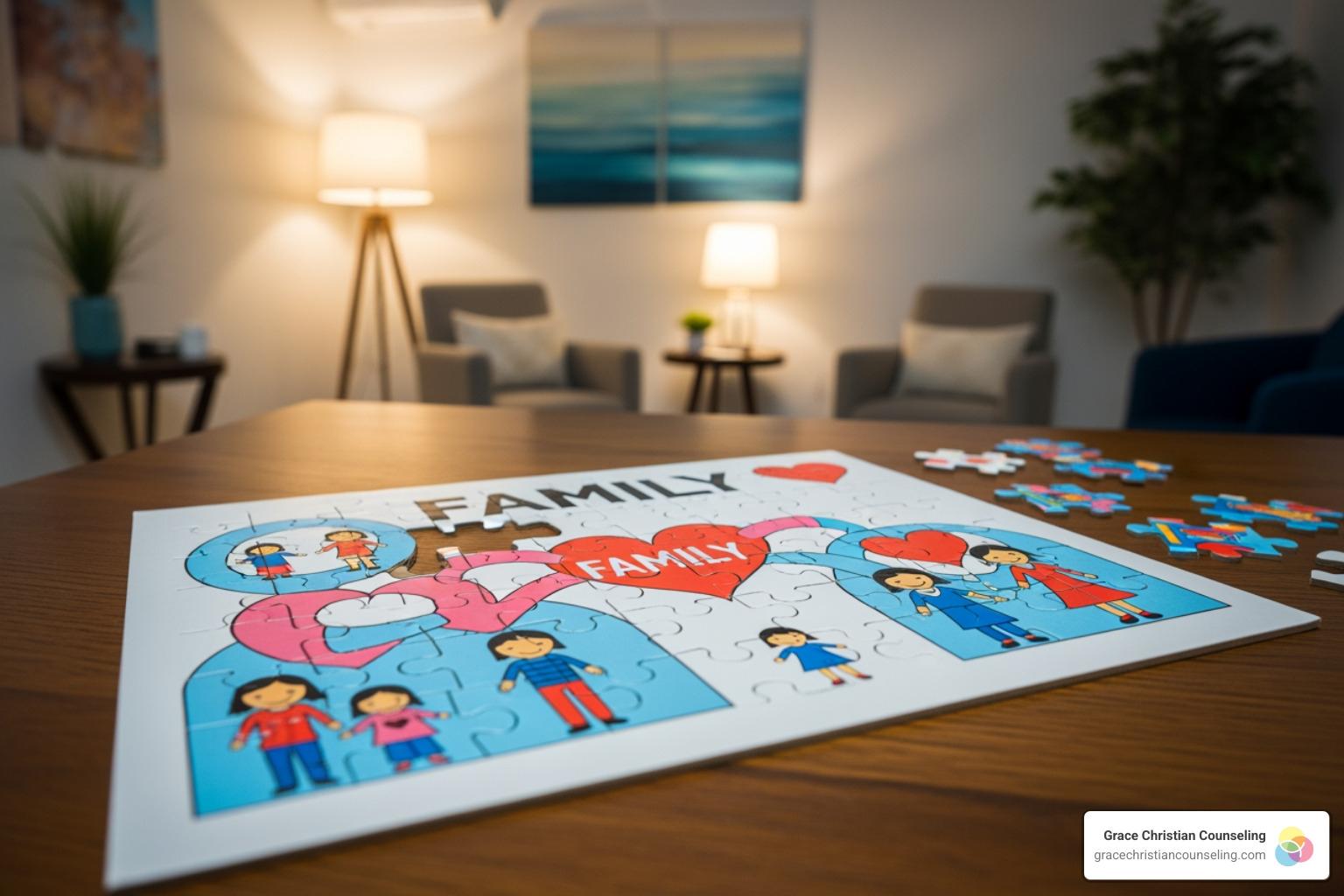
The “Family Puzzle” is a favorite intervention. We take a single sheet of paper and cut it into random, puzzle-like pieces—one for each family member. Each person is assigned the name of another family member and asked to decorate their piece with colors, patterns, and 2-4 positive contributions that person brings to the family.
When the pieces are reassembled, it creates a powerful metaphor: the family is a single, cohesive unit made up of distinct, valuable individuals. This exercise is excellent for building self-esteem and mutual respect.
Similarly, “Collaborative Story Quilts” involve each member illustrating a significant family memory on a square of fabric or paper. Joining them together helps the family celebrate their shared history and memories. These tasks are part of our broader Family Counseling Services, where we focus on restoring the “well-oiled machine” of the family unit.
Using the Boat-Storm-Lighthouse Technique for Assessment
The Boat-Storm-Lighthouse activity can give families a creative starting point for talking about challenges, emotions, safety, and support. Rather than assuming that a particular image has one fixed psychological meaning, the counselor can invite each family member to explain what the different parts of the picture mean to them.
For example:
- The Boat: What does the boat mean to you? Who, if anyone, is in it?
- The Storm: What is happening around the boat, and how does it make you feel?
- The Lighthouse: Does the lighthouse represent help, hope, safety, or something else to you?
In Christ-centered counseling, these conversations may also create opportunities to explore where family members experience God’s presence, hope, and support during difficult seasons.
In our Christ-centered care, we often use this to help families identify the “Lighthouse” in their faith. It provides a glimpse into how each person handles danger and where they look for help. It’s a beautiful way to discuss how we can lean on the Lord and each other during the storms of life.
Addressing Complex Challenges: From Trauma to Life Transitions
Life in Western Pennsylvania, from the busy streets of Pittsburgh to the quiet neighborhoods of Ligonier and Belle Vernon, brings its own set of stresses. Families often face heavy challenges like intergenerational trauma, addiction, or the grief of losing a loved one.
Art therapy is particularly effective for these complex issues because it provides a “conduit” that bypasses verbal censorship. When a family is dealing with trauma, words can feel too heavy or even re-traumatizing. Art allows for the externalization of these feelings. By putting the trauma “on the paper,” it becomes something the family can look at together, rather than something that lives inside them.
For families in this situation, our guide on How to Resolve Family Conflict offers additional strategies that complement creative work.
Conflict, Divorce, and Grief: Creative Tools That Help
During a divorce or a major life transition, children often feel caught in the middle. They may feel they have to “choose sides” or hide their feelings to protect their parents. Art therapy creates a neutral, safe place where their voice can be heard.
For families in bereavement, creating a memorial collage or a “Memory Box” can be an important part of the healing process. It allows the family to honor their lost loved one while also processing their own individual paths of grief.
We also find that teenagers, who are often in the midst of Teenage Identity Development, respond well to art because it gives them a sense of control and “ownership” over their personal material. Whether they are dealing with the pressure to perform or the “erosion” of attention caused by digital distractions, art gives them a way to unplug and reconnect with their family.
Frequently Asked Questions about Art Therapy for Families
What qualifications should we look for in a family art therapist?
Art therapy is a specialized mental health profession, not simply the use of art activities during counseling. The American Art Therapy Association recommends looking for a credentialed art therapist, such as someone holding the ATR or ATR-BC credential. Registered Art Therapists have completed specialized graduate-level art therapy education and supervised post-graduate experience. Depending on your family’s needs and your state’s requirements, you may also want to ask about the therapist’s licensure, experience working with families, and training in family systems.
At Grace Christian Counseling, our therapists combine clinical standards with a deep commitment to Biblical truth. It is important to find someone who demonstrates cultural competence and understands the specific dynamics of your community, whether you are in Penn Hills, Sewickley, Uniontown, or beyond.
Do we need to be “good at art” to participate in sessions?
Absolutely not! This is perhaps the most important thing to remember. Art therapy for families is about the heart, not the hand. We often tell families that if they can make a mark on a piece of paper, they can do art therapy. The focus is on experimentation and expression in a non-judgmental atmosphere. In fact, sometimes being “bad” at art leads to the most honest and healing breakthroughs because you aren’t trying to hide behind a polished image.
How can we integrate art therapy into our home routine?
While professional sessions provide the deepest work, you can bring the spirit of creative healing home. Here are a few ideas:
- Art Journals: Keep a family journal where anyone can draw a picture of their day or a prayer request.
- Nature Mandalas: Take a walk in one of our beautiful Pennsylvania parks and collect leaves, stones, and twigs to create a temporary “circle of thanks” on the ground.
- Vision Boards: Once a year, sit down as a family and cut out images from magazines that represent your goals and values for the coming season.
For additional faith-integrated support, we recommend NuWellonline.com, a pastoral counseling resource.
Conclusion: Building a Masterpiece of Healing
At Grace Christian Counseling, we know that your family is your most precious “ongoing masterpiece.” Every challenge you face and every brushstroke of grace you apply is part of a larger story of resilience and redemption.
Whether you are in Pittsburgh, North Huntingdon, Penn Hills, Uniontown, Bethel Park, Sewickley, or Mt. Lebanon, we are here to support you. Our approach blends evidence-based psychology with the timeless wisdom of Biblical principles, so your family receives whole-person, Christ-centered care.
We invite you to remember the words of Philippians 4:6-7: “Do not be anxious about anything, but in every situation, by prayer and petition, with thanksgiving, present your requests to God. And the peace of God, which transcends all understanding, will guard your hearts and your minds in Christ Jesus.”
Sometimes, presenting those “requests to God” happens through a prayer; other times, it happens through a painting. Our licensed counselors are ready to help you trade the frustration of “talk” for the healing power of the paintbrush.
Start your family’s healing today and discover the beauty that emerges when you create together.
This guide is for educational and spiritual encouragement and is not a substitute for personalized professional counseling. If you are in crisis, please reach out for immediate help.


