
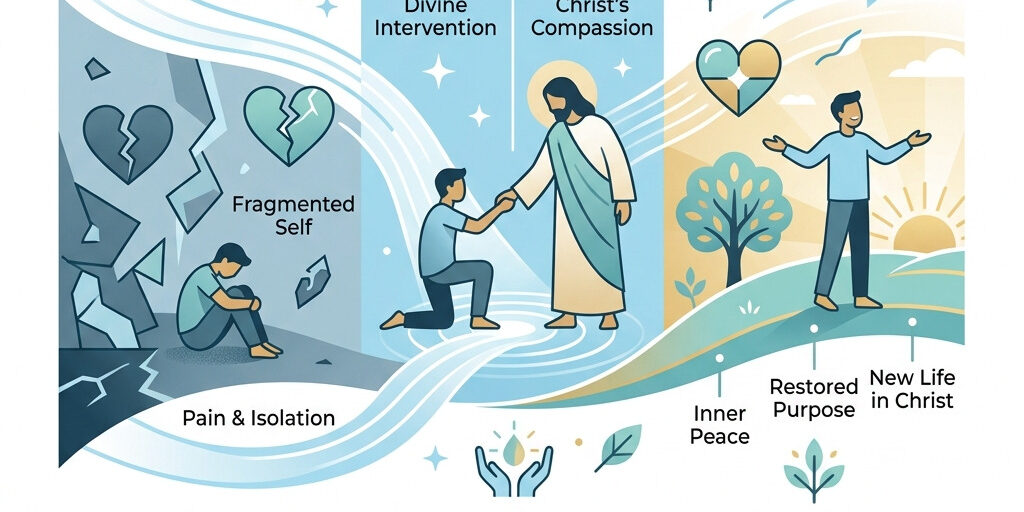
When the Wound Goes Deeper Than Words: How Christ Heals Emotional Trauma
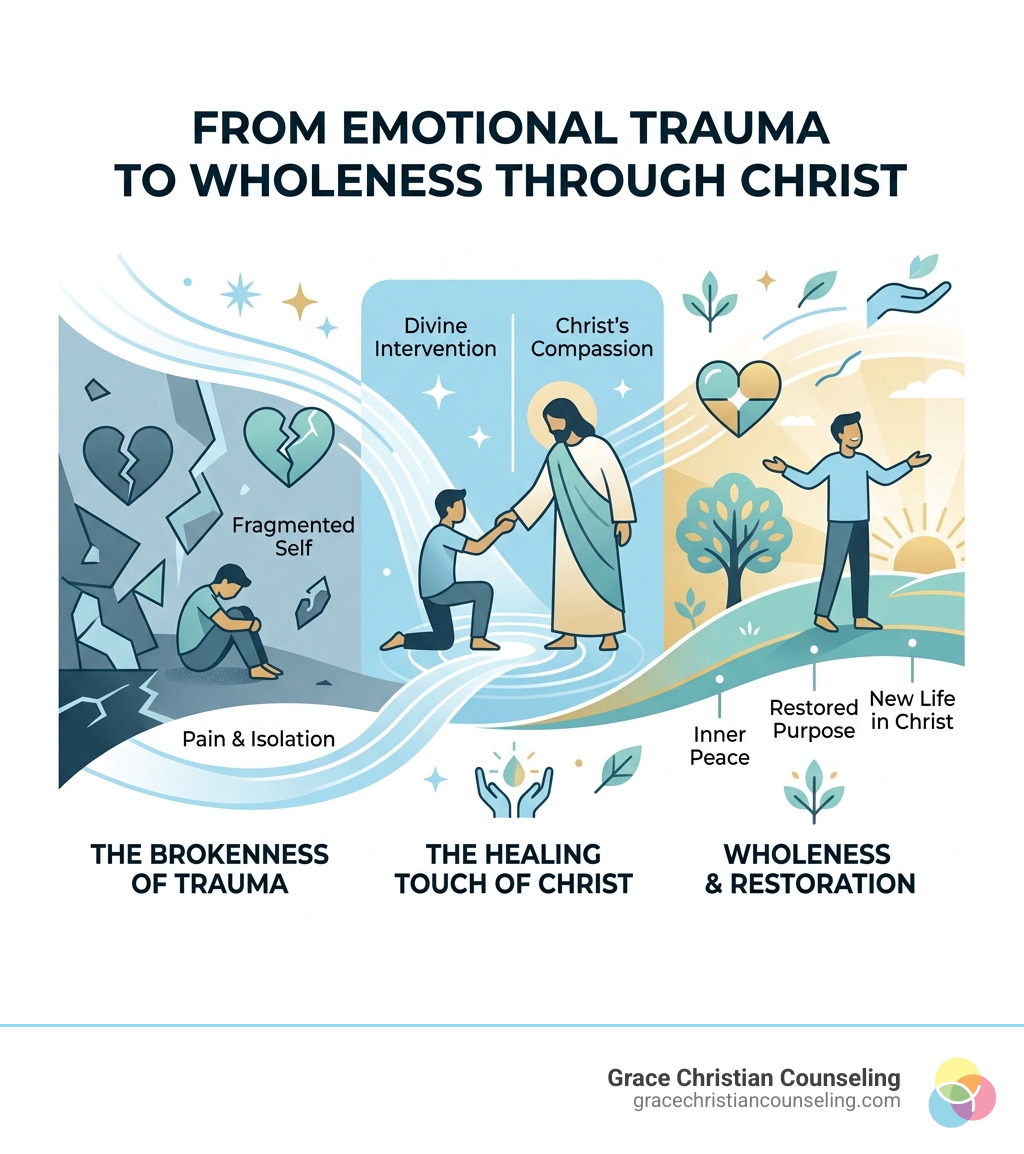
Christ healing emotional trauma is not just a nice idea. It is something we see throughout Scripture, and it is something many believers have experienced as Jesus brings real healing, renewed hope, and deeper wholeness.
How does Christ heal emotional trauma?
- He empathizes with your pain: Jesus wept with the grieving (John 11:35) before He acted. He does not skip past your suffering.
- He addresses the root: Christ targets shame, broken identity, and false beliefs, not just surface-level symptoms.
- He restores through relationship: Healing comes through intimacy with God, not just information about Him.
- He works through community: Scripture, prayer, trusted believers, and counseling are all part of His design.
- He transforms your story: What trauma used to define about you, Christ uses to refine you.
This is not a one-time event. It is a journey, and you do not have to walk alone.
Emotional pain is one of the most universal human experiences. Abandonment, betrayal, loss, abuse, and chronic fear leave marks that do not simply fade with time or willpower. Many Christians feel caught between two worlds: well-meaning voices saying “just pray more” and secular approaches that leave faith out entirely. The truth is, you do not have to choose.
Jesus’ mission, as He declared in Luke 4:18, was to bring good news, freedom, and healing to the brokenhearted. This was not a side task; it is at the very heart of why He came.
Understanding Emotional Trauma: A Biblical and Psychological Perspective
To understand how Christ healing emotional trauma works, it helps to start with a clear definition. Clinically, the DSM-5 connects trauma to events like threatened death, serious injury, or sexual violence. In everyday life, trauma can also come from ongoing harm or the absence of needed care. In our Trauma Counseling work in Western Pennsylvania, we often see trauma as experiences that leave a person feeling unsafe, powerless, overwhelmed, or deeply alone.
From a biblical perspective, we live in a fallen world, and that brokenness affects many things including our relationships, sense of safety, and emotional health. Trauma can leave deep wounds in the mind and heart after experiences like betrayal, abuse, chronic neglect, or abandonment. Clinically, these experiences may shape core beliefs such as “I am not safe,” “I am unworthy,” or “No one can be trusted.” These core beliefs often become part of how a person sees themselves, others, and God.
From a clinical perspective, trauma can narrow a person’s “window of tolerance,” the range where the mind and body can handle stress without becoming overwhelmed. It can affect brain and body systems involved in emotion regulation, threat detection, and memory processing. After trauma, many people cycle between hyperarousal (marked by anxiety, fear, or constant alertness) and hypoarousal (marked by numbness, fatigue, or shutdown). That is why “just getting over it” rarely works; pain is often carried in both the nervous system as well as the inner thoughts and emotions.

Seeing Christ Healing Emotional Trauma in Scripture
Jesus did not stand at a distance from human suffering. He is described as the “Man of Sorrows,” one who was “acquainted with grief” (Isaiah 53:3). His ministry was a masterclass in divine compassion and empathy. He didn’t come to just fix people; He personally experienced and understands deep suffering. In Christ, there is true and deep comfort, healing, and peace.
In Luke 4:31-44, Jesus responds to suffering with personal care. He heals those who are spiritually and physically oppressed, laying hands on the sick one by one and showing attention, compassion, and divine authority. For anyone walking through trauma, this matters. Christ sees and understands pain up close. His healing presence is never distant or careless.
The Restoration of Peter: A Model for Christ Healing Emotional Trauma
One of the most profound examples of Christ healing emotional trauma is found in the restoration of the Apostle Peter. Peter’s trauma was one of shame and betrayal. After boasting he would never leave Jesus, he denied Him three times by a “charcoal fire” (John 18:18).
Modern neuroscience suggests that trauma can be tied to sensory cues such as smells, sounds, and sights, which is why reminders can quickly bring painful memories to the surface. Research on traumatic memory supports this link between sensory triggers and distress responses, as discussed by the U.S. Department of Veterans Affairs. In John 21, Jesus cooks breakfast over a charcoal fire. That detail matters. He appears to bring Peter near the memory of his deepest failure, but now in a setting of safety, truth, and grace.
Through asking the question, “Do you love me?” three times, Jesus allowed Peter to reprocess his trauma. He overwrote Peter’s shame with a new identity and a fresh commission: “Feed my sheep.” This is exactly what we aim for in Online Christian Counseling: leaning on the truth of Christ to re-define the story of your past.
Deliverance and Dignity: Christ Healing Emotional Trauma in the Gospels
Jesus’ healing ministry frequently addressed the social and emotional isolation caused by trauma. Consider the man in Mark 5:1-20. This man lived among tombs, cutting himself and howling in pain, a picture of extreme mental and spiritual trauma. After Jesus healed him and delivered him from the oppression of demons, the man was found “clothed and in his right mind.” Jesus restored his dignity and sent him back to his community.
We see a similar pattern with the woman with the issue of blood and Jairus’ daughter. In Mark 5:21-43, Jesus tells a terrified father, “Do not be afraid; just believe.” He challenges the “noise” of the mourning crowd to create a space of peace. For those needing Spiritual Warfare Counseling, these stories prove that no matter how “dead” or “unclean” a situation feels, Christ’s authority can bring restoration, regeneration, hope, and freedom.
Practical Steps for Pursuing Emotional Wholeness
While the experience of Christ healing emotional trauma can involve miraculous moments, it is often a process of moment-by-moment choices. Here is how you can practically engage in this journey:
- Scripture Meditation: Don’t just read the Word; let it dwell in you. Use it to challenge cognitive distortions. If you feel abandoned, meditate on the truth that He will never leave you nor forsake you.
- Engage in Healing Prayer: This involves inviting Jesus into the “memory spaces” of your trauma. Ask Him, “Jesus, where were you in this moment?” and “What is the truth you want me to know?”
- The Divine Exchange: In prayer ministry, we practice giving our “ashes” (pain, shame, fear) to Jesus in exchange for His “beauty” (peace, joy, purpose).
- Renouncing Lies: Identify the ungodly beliefs you formed during trauma (e.g., “I am unsafe”). Renounce them and replace them with “heart-level knowing” of God’s truth.
- The Forgiveness Process: Forgiveness isn’t about saying what happened was okay. It’s about handing the “judgment seat” over to God so the bitterness doesn’t consume you.
If you are struggling with persistent dark thoughts, our Anxiety Depression Counseling services can help you navigate these steps with a professional guide.
Integrating Faith with Trauma-Informed Care
At Grace Christian Counseling, we believe that all truth is God’s truth. That is why we integrate modern trauma-informed care with biblical principles. One helpful model is SAMHSA‘s 4 Rs of trauma-informed care, which we consider through a lens of faith:
- Realize: We understand that trauma can affect the whole person, mind, body, emotions, relationships, and spiritual life.
- Recognize: We identify trauma responses with care, noticing patterns in thoughts, behaviors, relationships, and felt safety.
- Respond: We use trauma-informed, evidence-based care, such as CBT, while inviting Christ-centered prayer and dependence on the Holy Spirit.
- Resist Re-traumatization: We create a safe, respectful, and welcoming counseling space that helps reduce triggers and rebuild trust.
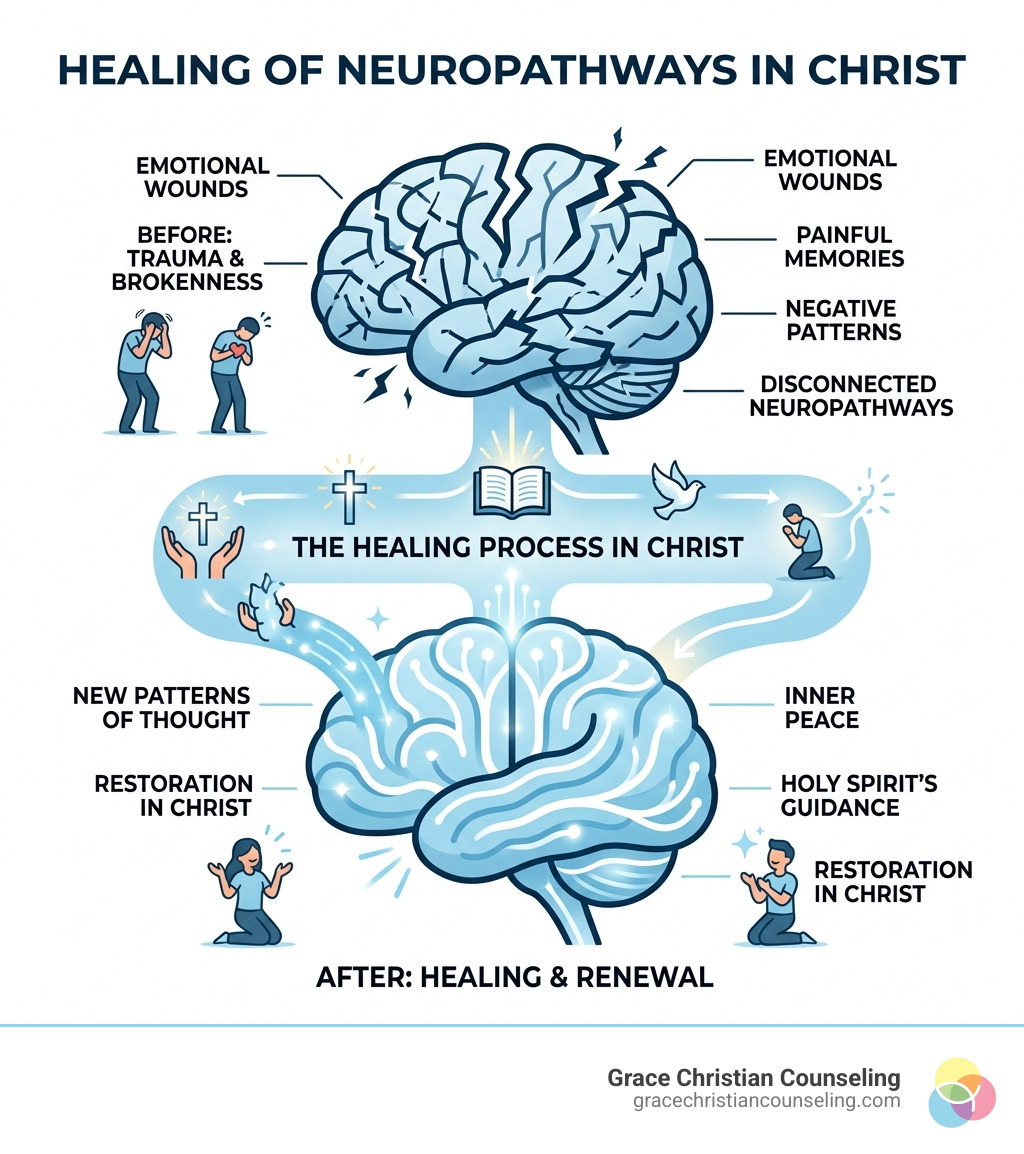
Neurobiology shows that childhood trauma can rewire the “Default Mode Network” of the brain, leading to constant negative self-talk. This is one reason trauma survivors often feel trapped in shame-based thoughts even when the danger has passed. However, through the “renewing of the mind” (Romans 12:2) and Healing from Generational Trauma, these pathways can be healed.
Frequently Asked Questions About Emotional Healing
Is emotional healing an instant event or a process?
When Christ heals emotional trauma, you may experience sudden relief, but healing is often a process. Deep wounds usually heal over time as Jesus meets us in layers of pain, fear, and shame. Through prayer, truth, wise support, and daily surrender, He restores what trauma disrupted and gently leads us toward lasting wholeness.
How does forgiveness play a role in trauma recovery?
Forgiveness is the key to emotional healing and freedom. When we hold onto resentment and bitterness, we stay “chained” to the person who hurt us. By modeling Christ’s forgiveness, we release the debt and allow God to be the judge. This doesn’t mean you must remain in an abusive situation; it means the trauma no longer defines your future.
What are the common barriers to receiving healing from Christ?
Common barriers include shame, isolation, and unbelief. Sometimes, Church Hurt Counseling is necessary because the very place that should have been a safe refuge for the soul became a place of wounding. Overcoming these barriers is something that requires a safe community and the grace of Christ.
Conclusion: Your Journey Toward Restoration
If you are carrying the weight of the past, please know that you can experience Christ healing emotional trauma in your life. You were not meant to carry these burdens alone. At Grace Christian Counseling, we offer a bridge between clinical excellence and deep faith.
Whether you are in Pittsburgh, North Huntingdon, Penn Hills, Uniontown, or anywhere across Pennsylvania via our virtual platform, our licensed experts are ready to walk with you. We provide Christ-centered care that respects your story and honors your faith.
Take the first step toward your “charcoal fire” restoration today.
Book a Session | Find healing through our Trauma Counseling services
This guide is for educational and spiritual encouragement and is not a substitute for personalized professional counseling. If you are in crisis, please reach out for immediate help.
Healing the Heart through Christian Counseling
Relationship Trauma Therapy Near Me: Find Hope & Healing


