

To understand why we struggle in our current relationships, we often have to look back at our earliest ones. Attachment theory, pioneered by psychologists John Bowlby and Mary Ainsworth, suggests that the bond between a child and their primary caregiver creates a “blueprint” for all future connections.
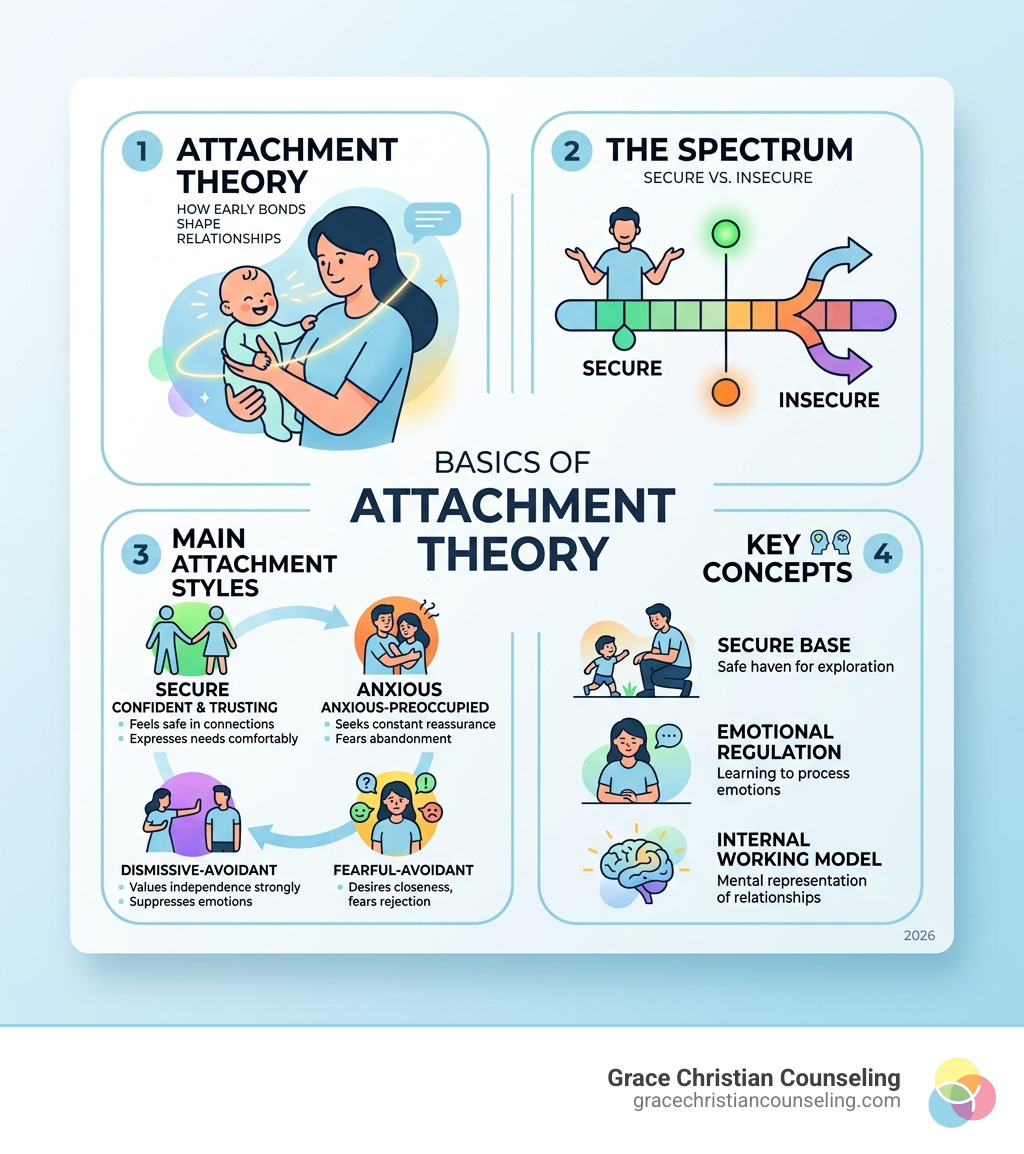
Anxious attachment often begins in relationships where care feels unpredictable. A caregiver may be attentive and comforting at times, then emotionally unavailable, distracted, or inconsistent at others. For a child, that kind of uncertainty can train the nervous system to stay on alert. Instead of feeling settled, they may become preoccupied with keeping connection close. Clinically, this is often described as hyperactivation of the attachment system, a pattern where the child intensifies bids for closeness, through crying, clinging, or seeking reassurance, because they are trying to prevent disconnection and get their needs noticed.
These childhood adaptations are not “disorders” but rather brilliant ways a child’s nervous system tries to stay safe. However, as adults, these same strategies often lead to a constant fear of abandonment. We become like a smoke detector that is too sensitive, going off at the slightest hint of a “draft” in a relationship, even when there is no fire.
Secure vs. Anxious Attachment: A Comparison
| Feature | Secure Attachment | Anxious Attachment |
|---|---|---|
| View of Self | Generally positive; feels worthy of love. | Often struggles with low self-esteem; feels “too much.” |
| View of Others | Trusting; believes others are reliable. | High alert; fears others will leave or change their minds. |
| Conflict | Approaches with a desire to solve the problem. | Fears conflict means the end of the relationship. |
| Intimacy | Comfortable with closeness and independence. | Craves extreme closeness; fears distance. |
| Communication | Direct and clear about needs. | Indirect; uses “protest behaviors” to get attention. |
If you recognize these anxious patterns in yourself, you aren’t alone. Many people find that attachment therapy provides the missing piece of the puzzle in their emotional healing journey.
Signs You May Need Professional Counselor
Living with anxious attachment can feel like being on a permanent emotional rollercoaster. One moment you feel loved and secure, and the next, a short text message (or a lack of one) sends you spiraling into panic.

Common signs that it’s time to speak with an anxiety attachment style counselor include:
- Reassurance Seeking: You find yourself constantly asking, “Are we okay?” or “Do you still love me?” because the internal “okayness” doesn’t last long.
- Hypervigilance: You are an expert at reading body language, tone of voice, and micro-expressions, often interpreting a partner’s bad mood as a sign they are losing interest in you.
- People-Pleasing: You sacrifice your own needs and boundaries to keep the peace, fearing that saying “no” will cause someone to walk away.
- Low Self-Esteem: You believe that if people truly knew the “real” you, they wouldn’t stay.
- Emotional Reactivity: Small triggers lead to huge reactions (e.g., tears, anger, or frantic efforts to reconnect).
Identifying Patterns with an Anxiety Attachment Style Counselor
In counseling, we don’t just talk about your week; we look for the “threads” that connect your current triggers to your past. An anxiety attachment style counselor helps you identify your specific relational triggers. For example, you might realize that when your spouse gets quiet after work, it triggers the same feeling of “danger” you felt when a parent withdrew emotionally years ago.
By overcoming anxiety and fear through pattern recognition, you move from “reacting” to “responding.” You learn to tell your nervous system, “I am safe right now. This is a memory, not a current threat.”
How Attachment-Based Therapy Works for Adults
Many people worry that therapy will just be “blaming others” for an hour every week. In reality, modern attachment-based therapy is far more dynamic and solution-focused. Its aim is to build a “secure base” within the counseling relationship itself. Research shows that a strong therapeutic bond is closely linked to better outcomes across treatment methods.
Our counselors provide a consistent, non-judgmental space where you can experience what it feels like to be truly seen and heard. This “corrective emotional experience” actually helps rewire the brain. We utilize several evidence-based approaches:
- Cognitive Behavioral Therapy (CBT): We work to challenge the “distorted” thoughts that fuel anxiety (e.g., “If they don’t text back in ten minutes, they are leaving me”).
- EMDR (Eye Movement Desensitization and Reprocessing): This is highly effective for processing the “attachment trauma” or painful memories that keep your nervous system stuck in high alert.
- Somatic Therapy: Since attachment is felt in the body (that “pit in your stomach” or racing heart), we use body-based techniques to help you calm your nervous system in real-time.
- The IPF Method (Ideal Parent Figure): This visualization technique helps “fill in the gaps” of what was missing in childhood, building new neural pathways for security.
If you are looking for attachment-based therapists in Pennsylvania, it is essential to find someone who understands that healing happens through connection, not just information.
Therapeutic Techniques Used by an Anxiety Attachment Style Counselor
Working with an anxiety attachment style counselor involves practical “inner work.” This includes “re-parenting” your inner child (i.e., learning how to give yourself the validation and comfort you once sought from others). We also focus heavily on boundary setting. For an anxiously attached person, boundaries can feel like “mean” walls, but we teach you that boundaries are actually the “gates” that make a relationship feel safe and sustainable.
For West Virginia adults whose attachment anxiety overlaps with rescuing, people-pleasing, or loss of self, online Christian counseling for healthier relationship patterns may be a helpful next step.
Our approach to anxiety and depression counseling ensures that we address the whole person, helping you move from a state of survival to a state of thriving.
Integrating Faith and Clinical Excellence in Healing
At Grace Christian Counseling, we believe that you are not just a collection of psychological patterns to be analyzed and “fixed.” You are a beloved child of God, created for connection. While secular psychology provides wonderful tools for understanding the mind, we believe true restoration comes when those tools are used in the light of Biblical truth.
Scripture tells us that “perfect love casts out fear” (1 John 4:18). Often, our anxious attachment style bleeds into our relationship with God. We might view Him as an unpredictable or distant “Caregiver” who is only happy with us when we are performing perfectly.
Healing involves shifting your identity from “anxious and unworthy” to “secure in Christ.” We weave prayer, Scripture, and the guidance of the Holy Spirit into our sessions, helping you experience God as the ultimate “Secure Base” who promised, “I will never leave you nor forsake you” (Hebrews 13:5). For many, learning how to deal with anxiety as a Christian means discovering that it is okay to be a “work in progress” while resting in God’s finished work.
Why Choose a Christian Counselor?
Choosing a Christian anxiety attachment style counselor means you don’t have to leave your faith at the door. We serve communities across Western Pennsylvania—from Pittsburgh to Uniontown, and Sewickley to Pleasant Hills and offer a space where your spiritual values are valued and utilized as a source of strength.
We believe that psychology reflects God’s amazing design for the human heart. By overcoming anxiety through Christian counseling, you are participating in God’s plan for your restoration. We aren’t just looking for “symptom management”; we are looking for the “peace that surpasses all understanding” (Philippians 4:7).
Practical Strategies for Moving Toward Secure Attachment
While therapy provides the opportunity for deep work, there are practical steps you can take every day to manage your anxiety and build a more secure attachment style.

- Box Breathing: When you feel a “spike” of relationship panic, inhale for 4 seconds, hold for 4, exhale for 4, and hold for 4. This tells your nervous system there is no immediate physical danger.
- 5-4-3-2-1 Grounding: Name 5 things you see, 4 you can touch, 3 you hear, 2 you can smell, and 1 you can taste. This pulls you out of your anxious thoughts and back into the present moment.
- Self-Soothing Journaling: Instead of “protest texting” a partner when you feel anxious, write a letter to yourself. Acknowledge the fear (“I feel scared right now because he hasn’t called”) and then provide the secure truth (“He has shown me he is reliable, and I am okay even if he is busy”).
- “I” Statements: Practice communicating your needs directly. Instead of saying “You never prioritize me,” try “I feel a little disconnected today, could we spend 20 minutes talking tonight?”
Finding Christian support for depression and anxiety can give you the community and tools needed to make these strategies a habit rather than a one-time effort.
Frequently Asked Questions about Attachment Therapy
How long does it typically take to see improvements with anxious attachment counseling?
Healing is a journey, not a sprint. However, research is very encouraging. One study found that Cognitive Behavioral Therapy (CBT) significantly reduced attachment anxiety in just 10 weeks of consistent work. While deep-seated patterns may take longer to fully “re-wire,” most clients report feeling a sense of relief and increased clarity within the first few months of working with an anxiety attachment style counselor.
Can anxious attachment be fully overcome, or is it about moving toward secure attachment?
In the clinical world, we talk about “earned secure attachment.” This means that even if you didn’t start with a secure base in childhood, you can “earn” it as an adult through therapy and healthy relationships. Your brain has incredible neuroplasticity. While you may always have a “tendency” toward anxiety, you can learn to manage it so effectively that it no longer dictates your life or your happiness.
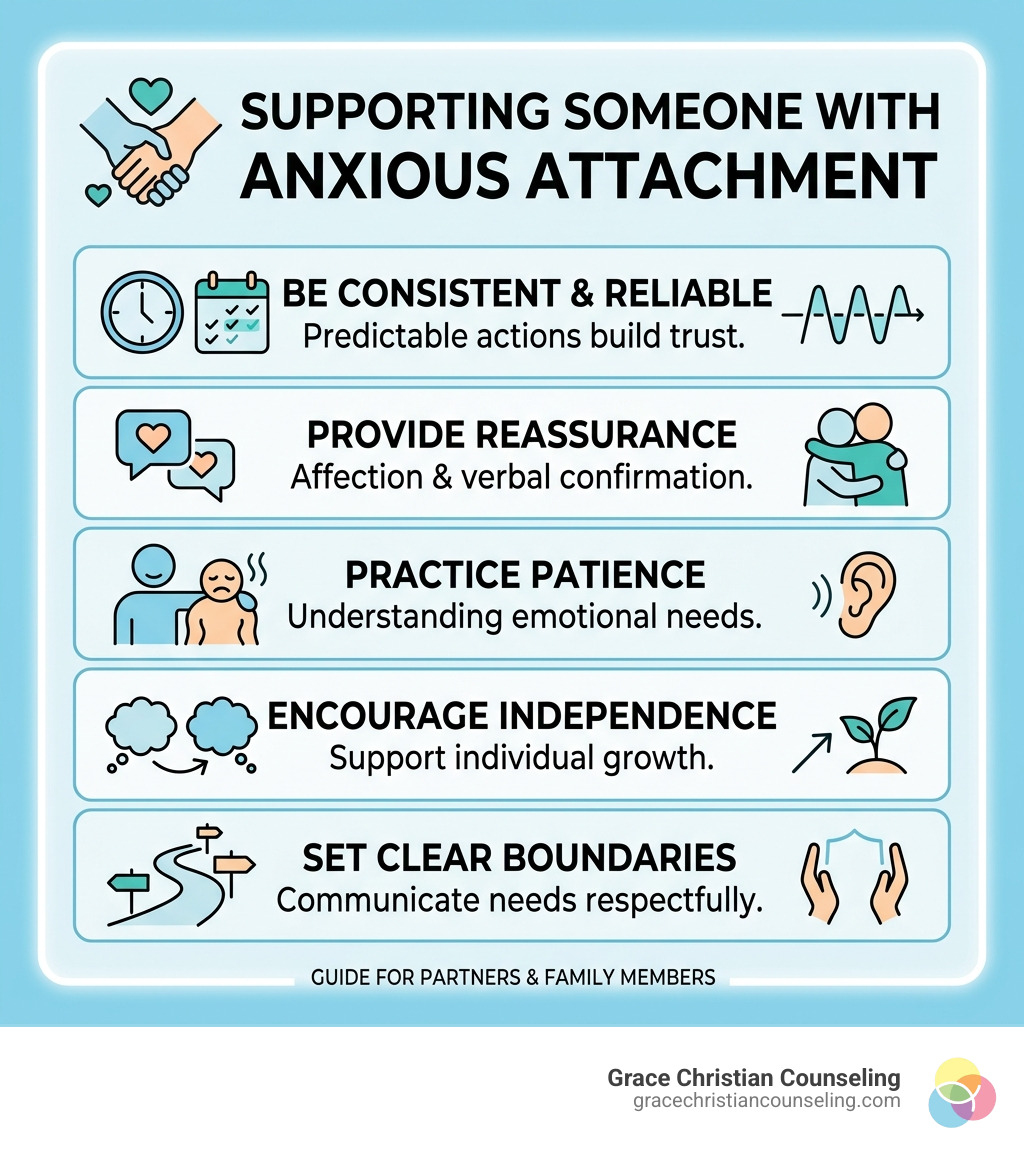
How can partners or family members support someone with anxious attachment?
If you love someone with an anxious style, the best thing you can do is provide “consistent visibility.” This means being reliable in your communication and offering validation. If you’re going to be busy and can’t text, a quick “Hey, I’m heading into meetings for 4 hours, talk soon!” can prevent hours of spiraling for an anxious partner. Encouraging their independence and supporting their therapy journey also goes a long way.
Conclusion: Your Journey Toward Restoration
If you’ve spent years feeling like you’re “too much” or waiting for the other shoe to drop in your relationships, please know there is hope. Healing an anxious attachment style is about deeper emotional healing and restoration in Christ. It is learning, often with support, that you can become more secure, more grounded, and more able to receive love without living in constant fear of rejection.
You were created for deep, peaceful, and secure connection—with others, with yourself, and with your Creator.
At Grace Christian Counseling, we are honored to walk this path with you. Whether you are in Pittsburgh, Penn Hills, Sewickley, or anywhere across Pennsylvania via our online services, our team is ready to help you trade your spirit of fear for a spirit of power, love, and a sound mind.
Ready to take the first step? Start your journey with attachment therapy today. Our licensed counselors are here to help you build the secure, lasting relationships you were meant to have.
This guide is for educational and spiritual encouragement and is not a substitute for personalized professional counseling. If you are in crisis, please reach out for immediate help.
How to Help a Teenager with Anxiety: A Parent’s Guide
From Peter to You: Finding Emotional Recovery in Christ


