

Before You Say I Do: Top Premarital Counseling Tips
Preparing for marriage is one of the most exciting seasons of your life, but it also requires intentional preparation. The most important conversations you will ever have before marriage happen face to face, guided by professional expertise rather than self-guided checklists. Strong premarital counseling helps you slow down, ask better questions, and prepare for marriage with wisdom.
Here is a quick look at the essential areas engaged couples need to cover to get the most out of their premarital counseling experience. These premarital counseling tips are not meant to replace therapy, but they can help you notice which conversations deserve more attention before the wedding. A licensed counselor can then help you move from surface-level answers into honest, practical growth.
- Communication skills, including active listening and conflict resolution
- Family dynamics, including in-law boundaries and attachment patterns
- Finances, including budgeting, debt, and spending habits
- Spiritual alignment, including shared values and church involvement
- Expectations, including parenting, intimacy, and roles in the home
While basic questionnaires can help you start thinking about these premarital counseling topics, a licensed counselor brings real-time feedback, clinical insight, and a safe space to work through what you discover. This is especially important when couples uncover differences around family, money, faith, communication, or past wounds. Christian premarital counseling can also help couples connect these practical conversations to biblical wisdom and spiritual maturity.
At Grace Christian Counseling, our licensed counselors work with engaged couples across Western Pennsylvania, including Pittsburgh, North Huntingdon, Bethel Park, and surrounding areas, as well as online. We blend evidence-based clinical methods with biblical truth to help you build a marriage on a foundation that lasts. Our goal is to help couples enter marriage with clarity, humility, and practical tools for loving each other well.
Research consistently shows that couples who address their differences before marriage are far better prepared for the real challenges ahead. The Gottman Institute notes that 69% of relationship conflicts are perpetual problems, meaning they may stem from enduring personality differences, lifestyle preferences, or values rather than issues that fully disappear. The goal is not to eliminate conflict but to build the skills and shared vision to navigate it together.
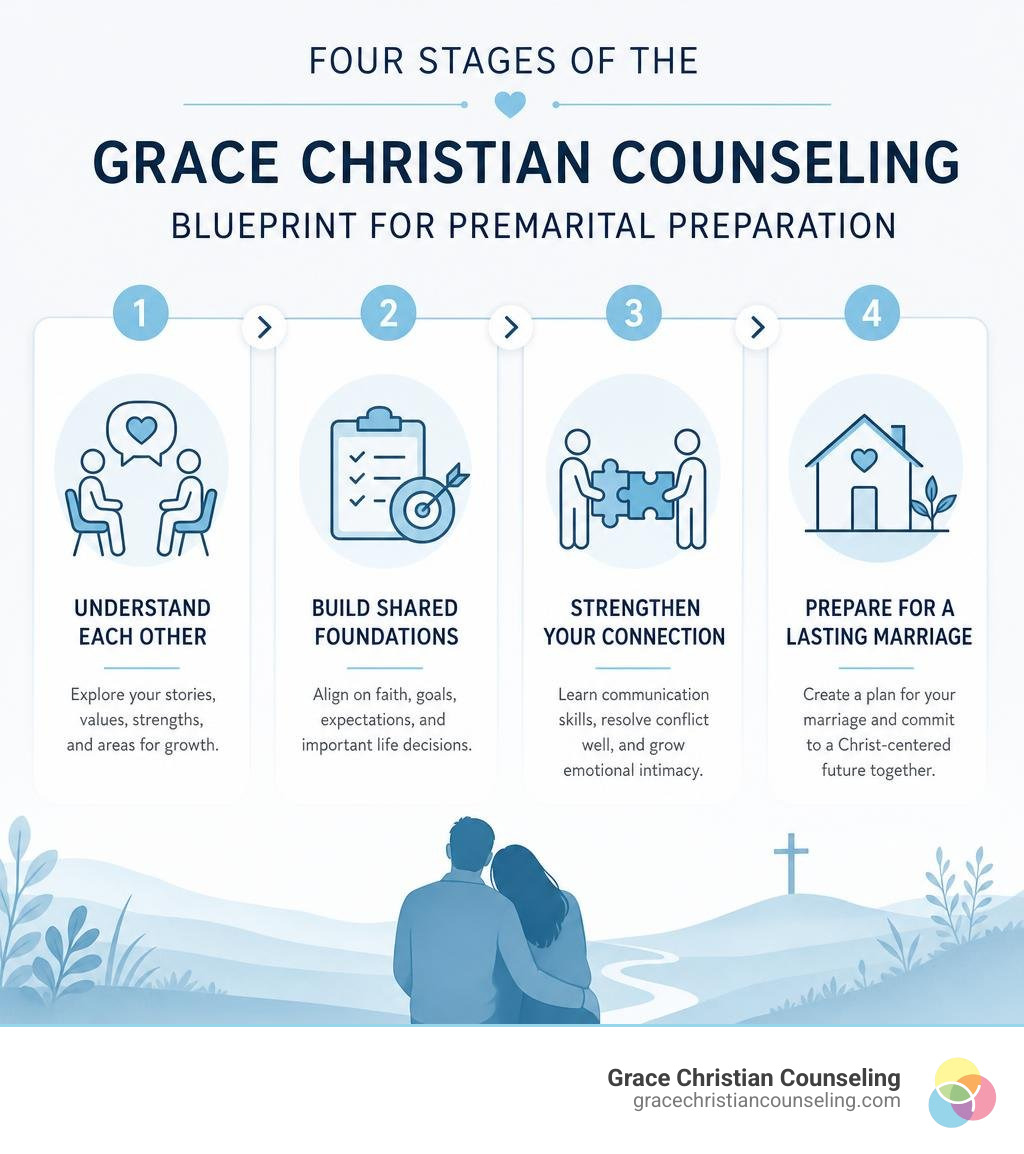
Before we dive into the premarital counseling tips, here is a bird’s-eye view of how our approach works. The process is designed to help couples move from honest self-awareness into healthier patterns of connection. Each stage gives you a way to prepare for marriage with both spiritual grounding and practical relational skills.
Why Real Conversations Matter in Premarital Preparation
While self-guided preparation tools are convenient, they cannot replace the relational dynamic of sitting down with a trained professional. A static guide can prompt a conversation; however, it cannot help you navigate the emotional tension that arises when your opinions differ. Real relationship growth happens when you learn to navigate these moments together in a safe, clinically guided environment.
The Limits of Self-Guided Checklists
Static worksheets are excellent for gathering basic data; however, they cannot adapt to your unique relational history. A generic template often skips over complex issues like deep-seated family patterns, digital boundaries, or specific mental health struggles. Without clinical feedback, couples might fill out a premarital counseling questionnaire without actually resolving the underlying differences it uncovers.
Relying solely on self-guided kits can create a false sense of security, leaving couples unprepared for real-world friction. A worksheet may help you name a concern, but it cannot watch how you respond when your partner feels hurt, defensive, or misunderstood. If you want to explore these topics more deeply, you can read our guide on Must Have Christian Premarital Counseling Kits And Resources.
Transitioning to Christ-Centered Therapy
To build a resilient marriage, we guide couples through our structured Counseling Blueprint. This clinical journey begins with the Take Off the Mask stage, where we establish genuine trust and emotional safety. Working with our licensed professional counselors allows you to move past superficial answers and address the heart of your relationship.
A licensed therapist can identify subtle communication blocks, assess interaction patterns, evaluate relationship strengths, and develop an individualized counseling plan that a workbook simply cannot provide. In Christian premarital counseling, that insight is paired with biblical truth, prayerful reflection, and practical relational tools. If you are ready to transition to professional Christian premarital counseling, learn How To Prepare For Couples Counseling to make the most of your first session.
In our clinical experience, the issues couples bring to premarital counseling are often different from the issues that actually require the most attention. A disagreement about finances, wedding planning, or household responsibilities may initially seem like the primary concern, but careful assessment often reveals deeper patterns involving communication, attachment, conflict avoidance, unrealistic expectations, or unresolved family dynamics. One of the counselor’s roles is to help couples distinguish between the topic they are arguing about and the relational pattern that keeps the disagreement repeating.
Over years of counseling engaged couples, we’ve also found that healthy relationships are not defined by the absence of conflict but by the ability to repair after conflict. During sessions, licensed counselors observe how partners communicate in real time, whether each person feels heard, how disagreements escalate or de-escalate, and whether unhealthy interaction patterns emerge. These observations help shape an individualized treatment plan that strengthens communication, emotional safety, and problem-solving skills before marriage rather than after problems become entrenched.
How Licensed Counselors Evaluate Relationship Readiness
Premarital counseling is not simply a series of conversations. In our practice, licensed counselors continually assess how couples communicate, regulate emotions, solve problems, and respond to differences throughout the counseling process. We pay attention to interaction patterns, emotional safety, conflict styles, and each partner’s ability to listen, compromise, and repair after disagreements.
Rather than assuming every engaged couple needs the same guidance, we individualize recommendations based on our clinical assessment. When appropriate, counselors may incorporate structured relationship inventories, attachment-informed assessment, family systems concepts, and evidence-based communication interventions to help couples address concerns before they become long-term marital patterns.
Top Tips for Navigating Family Dynamics and In-Law Relationships
Every couple brings family history into marriage, including expectations about holidays, communication, privacy, parenting, money, and how involved parents or extended family should be. Premarital counseling gives you a safe place to talk through those expectations before they become conflict. Helpful questions include: What does “leaving and cleaving” (Genesis 2:24) mean to each of us? How often will we visit each side of the family?
Healthy in-law boundaries do not mean dishonoring your family or cutting people off. They mean learning how to form a new household with clarity, unity, and respect. A counselor can help you identify where each partner may feel pulled between loyalty to family and loyalty to the future marriage, then create practical agreements for holidays, family visits, advice, financial help, and conflict resolution.
For older couples, couples who have been married before, or couples bringing children into the marriage, these conversations may need extra care. Remarriage can involve co-parenting, former spouses, stepchildren, legal or financial obligations, grief, and different family traditions. At Grace Christian Counseling, we help couples approach these dynamics with biblical wisdom and practical tools so they can protect their new marriage while still relating to extended family with honesty, compassion, and peace.
Mastering Communication and Conflict Resolution Before the Wedding

Healthy communication is the lifeblood of a successful marriage; however, it requires intentional practice. In premarital counseling, couples learn active listening techniques, such as mirroring, where you repeat back what your partner said to ensure accurate understanding. We also teach couples how to make constructive behavior change requests rather than relying on vague complaints.
Using “I feel” statements helps partners express vulnerable emotions without placing blame or triggering defensiveness. These statements work best when they are specific, honest, and paired with a clear request for change. For a deeper look at these foundational dialoguing skills, read The Ultimate Guide To Christian Counseling For Relationships.
Identifying the “Four Horsemen” of the Marital Apocalypse
The Gottman Institute identifies criticism, contempt, defensiveness, and stonewalling as the “Four Horsemen”, four highly destructive conflict patterns that can predict marital distress. Contempt, which includes sarcasm and ridicule, is especially damaging because it communicates superiority rather than love, respect, or repair. When arguments escalate, partners may experience physiological flooding, a state where the nervous system is overwhelmed and rational dialogue becomes impossible.
To combat this, we teach couples to take structured time-outs to calm down. Additionally, holding a simple 20-second body hug can trigger the release of oxytocin, helping to soothe your nervous system and restore emotional connection. These practices are simple, but they can help couples interrupt escalation before a disagreement becomes a painful pattern.
Managing Emotional Reactions with the A-B-C Model
To help couples manage intense emotions, we utilize the cognitive behavioral A, B, C model. This framework breaks down how an Adversity (A) triggers certain Beliefs (B), which then lead to emotional and behavioral Consequences (C). By identifying and reframing unhelpful beliefs, couples can change their emotional reactions to stressful situations.
Throughout counseling, we regularly review each couple’s progress, monitor recurring conflict patterns, and adjust interventions as new strengths and challenges emerge. This ongoing clinical monitoring allows treatment to remain individualized rather than following a fixed curriculum.
Identifying Your Primary Love Language Dialect
Expressing affection effectively requires understanding how your partner gives and receives love. The five love languages include words of affirmation, acts of service, quality time, physical touch, and giving and receiving gifts. Misunderstandings occur when partners speak different dialects, such as one offering physical touch when the other needs acts of service.
This concept is closely tied to how couples handle bids for connection, which are everyday attempts to gain attention or affection. In very happy couples, partners exchange more than 100 bids in a ten-minute conversation. Conversely, distressed couples exchange only 20 to 30 bids per hour, and husbands in marriages headed for divorce ignore their wives’ bids 82% of the time.
Aligning Your Finances, Expectations, and Spiritual Vision
Money and financial planning are consistently cited as major stress areas and primary causes of marital conflict throughout marriage history. Premarital preparation provides a neutral space to discuss your financial values, current debts, and savings goals. We encourage couples to establish a clear budget and agree on discretionary spending limits, which is a set amount either partner can spend without consulting the other.
Taking the time to align your financial habits before the wedding prevents monetary stress from overshadowing your early years together. Couples should discuss debt, saving, giving, spending habits, and whether they plan to combine or separate accounts. To protect your financial future, read our practical guide on how to Dont Break The Bank Before The Big Day With Premarital Counseling.
Navigating High-Conflict Areas: Money, Sex, and Parenting
To help you compare your expectations in key areas of married life, we have outlined the common differences couples face. These examples are not meant to label one partner as right or wrong. Instead, they show where honest conversation and wise compromise may be needed before marriage.
| Relational Area | Common Expectation A | Common Expectation B | Counseling Goal |
|---|---|---|---|
| Finances | Combine all accounts completely | Keep separate discretionary accounts | Clarify financial decision-making together |
| Intimacy | Frequent physical connection | Focus on emotional intimacy first | Discuss intimacy expectations with care |
| Parenting | Structured, highly disciplined style | Flexible, gentle parenting style | Identify shared parenting values |
| In-Laws | Weekly family dinners and visits | High boundaries and holiday rotation | Set healthy family boundaries |
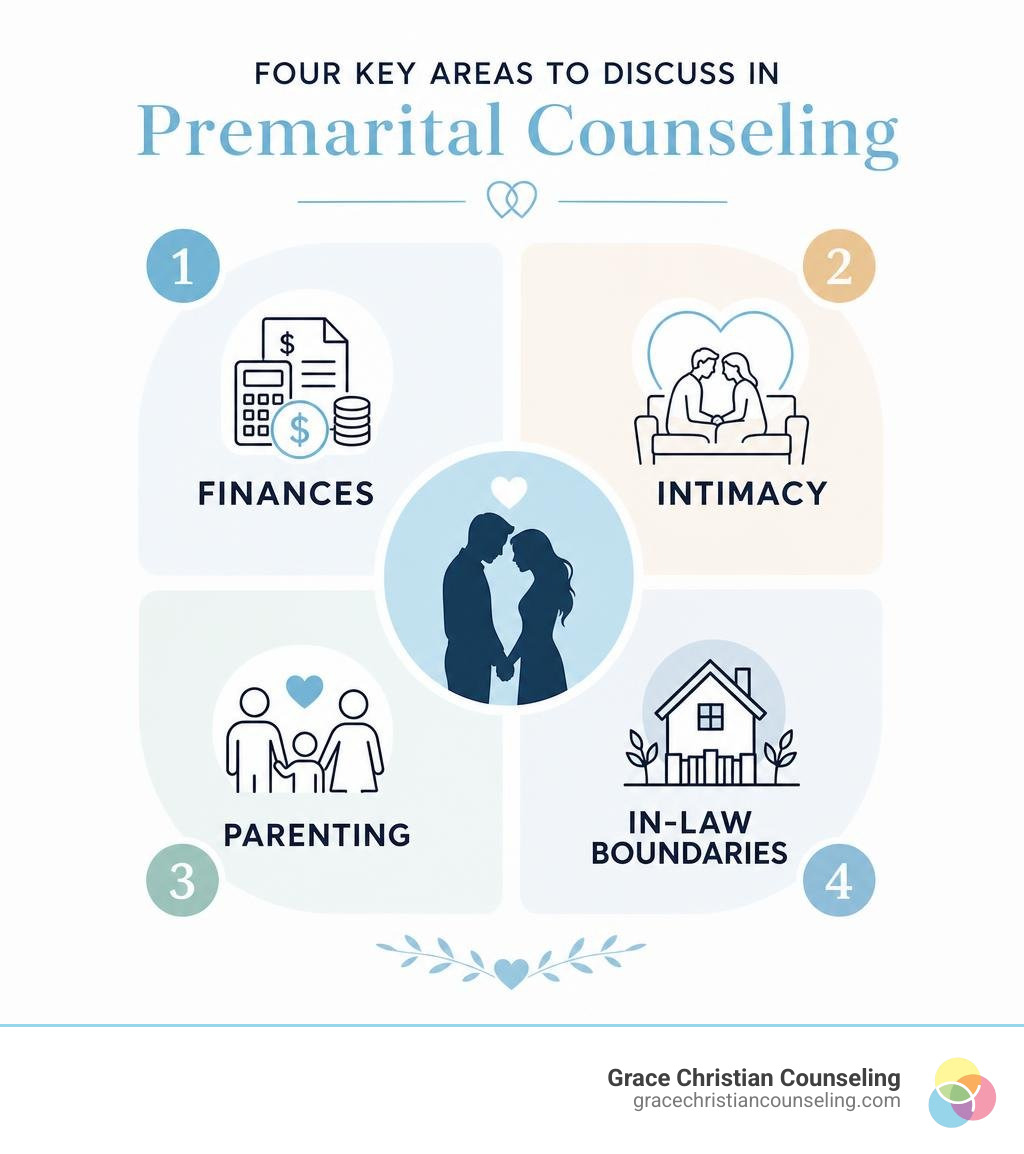
Addressing these high-conflict areas requires complete honesty and a willingness to compromise. For cross-cultural marriages, these discussions are even more vital, as family roles, communication styles, and cultural values can vary significantly. Working through a structured Premarital approach can help you navigate these differences.
Creating a Shared Spiritual Vision and Covenant
For Christian couples, a marriage is not merely a legal contract; it is a sacred covenant before God. We help couples explore what spiritual headship and being equally yoked look like in daily practice. This includes discussing your expectations for church involvement, family prayer, tithing, and how you will nurture your spiritual lives together.
A covenant marriage is built on unconditional commitment, whereas a contract marriage is based on mutual performance. Building a shared spiritual vision ensures that your household is anchored in Christ. This kind of alignment is an important part of Christian premarital counseling, as discussed in Starting Your Marriage On A Firm Foundation Of Faith.
Frequently Asked Questions about Premarital Preparation
How many premarital counseling sessions do most couples need?
Most couples benefit from 6–10 premarital counseling sessions, although the exact number depends on your relationship, goals, and any concerns that arise during the process. In our experience, couples who allow enough time to work through communication, conflict, finances, family dynamics, and spiritual expectations gain much more than those trying to “check the box” before the wedding. Starting counseling several months before your wedding gives you time to practice new skills instead of rushing through important conversations.
What if we disagree on important issues before we’re married?
Disagreement is not necessarily a warning sign. In fact, premarital counseling is designed to uncover differences while there is still time to address them thoughtfully. In our clinical experience, the healthiest couples are not those who agree on everything, but those who learn how to discuss difficult topics with honesty, respect, and curiosity. A counselor helps identify whether disagreements reflect differences in preferences, values, expectations, or deeper relational patterns that deserve additional attention before marriage.
Is premarital counseling only for couples who are having problems?
Not at all. Many of the couples we work with have healthy, loving relationships and simply want to build a stronger foundation before marriage. Premarital counseling is proactive rather than reactive. It provides an opportunity to strengthen communication, clarify expectations, develop healthy conflict-resolution skills, and address potential challenges before they become ongoing sources of stress. Even couples with strong relationships often discover important conversations they had not considered until working with a licensed counselor.
How do we handle cross-cultural differences in marriage?
Cross-cultural couples must explicitly discuss their cultural profiles, as assumptions about gender roles, eye contact, emotional expression, and extended family involvement can differ. In premarital counseling, we help couples identify these underlying assumptions and create a blended family culture that respects both backgrounds. This process requires humility, active listening, and a mutual commitment to understanding your partner’s unique worldview.
Why is a post-wedding counseling session recommended?
Couples are often in a state of romantic bliss right before the wedding, making it difficult to anticipate real-world challenges. A follow-up session around the six-month mark is highly recommended because it occurs after the initial honeymoon phase has settled. At this stage, couples are living in their daily routines, making them highly receptive to practical counseling to address newly formed habits, communication blocks, and household adjustments.
Build a Stronger Marriage Before the Wedding
Premarital counseling is one of the most valuable ways that you can significantly invest in your future as you prepare for marriage. While self-guided tools can help you start thinking about these topics, working with a licensed counselor provides the personalized guidance, safety, and clinical expertise needed to build a resilient, lifelong relationship. These premarital counseling tips can help you begin, but the deepest growth often happens in guided conversation.
At Grace Christian Counseling, our licensed counselors (LAPC, LSW) are dedicated to helping couples in Western Pennsylvania and statewide via online sessions. Through our Counseling Blueprint, we walk alongside you to heal past hurts, remove unhelpful patterns, and replace them with biblical truth. Our approach to Christian premarital counseling is designed to help couples prepare spiritually, emotionally, and practically for marriage.
If you are ready to build your marriage on a firm foundation, contact us today to learn more about our Christian Marriage Counseling services and schedule your first session. A counselor can help you ask the right questions before marriage, work through hard topics with grace, and establish healthier patterns early. You do not have to prepare for marriage alone.
This guide is for educational and spiritual encouragement and is not a substitute for personalized professional counseling. If you are in crisis, please reach out for immediate help.
How to Resolve Conflict in Family: Finding a Path Back to Each Other


