

When the Wounds Go Deeper Than Words: What You Need to Know About Christian Trauma Counseling
Christian trauma counseling is a specialized form of therapy that combines evidence-based clinical treatment with biblical truth to help people heal from traumatic experiences, body, mind, and spirit together.
If you are looking for a trusted Christian trauma counselor, here is what to know right away:
- What it is: Faith-integrated, clinically grounded therapy for people who have experienced trauma and want their Christian faith to be part of the healing process.
- Who it helps: Individuals, couples, teens (ages 13+), and families dealing with past or ongoing trauma, including childhood wounds, spiritual abuse, grief, PTSD, and more.
- What to look for in a counselor: Licensed credentials (such as LPC or LSW), training in trauma-focused modalities like EMDR or TF-CBT, and a genuine biblical worldview, not just surface-level faith language.
- How it works: Through a structured process of building safety, processing painful memories, and replacing harmful beliefs with God’s truth.
- Where to get started: At Grace Christian Counseling, we serve individuals and couples across Western Pennsylvania, including Pittsburgh and surrounding communities, and we also offer online counseling throughout Pennsylvania.
At least 70% of Americans have experienced a traumatic event in their lifetime. Yet for many Christians, the wounds go beyond what typical talk therapy can reach. Trauma does not just live in your thoughts; it lives in your body, your relationships, and even your relationship with God. It can make prayer feel hollow, Scripture feel distant, and hope feel out of reach.
That is exactly why Christian trauma counseling exists. It takes both the clinical science of trauma healing and the deep truths of Scripture seriously, because real restoration requires care for the whole person.
As one clinical framework puts it, healing from trauma can feel like “a lifelong journey where finding safety, grieving wounds, and believing in a joyful future can feel out of reach” without the right support. But with the right support, healing is possible.
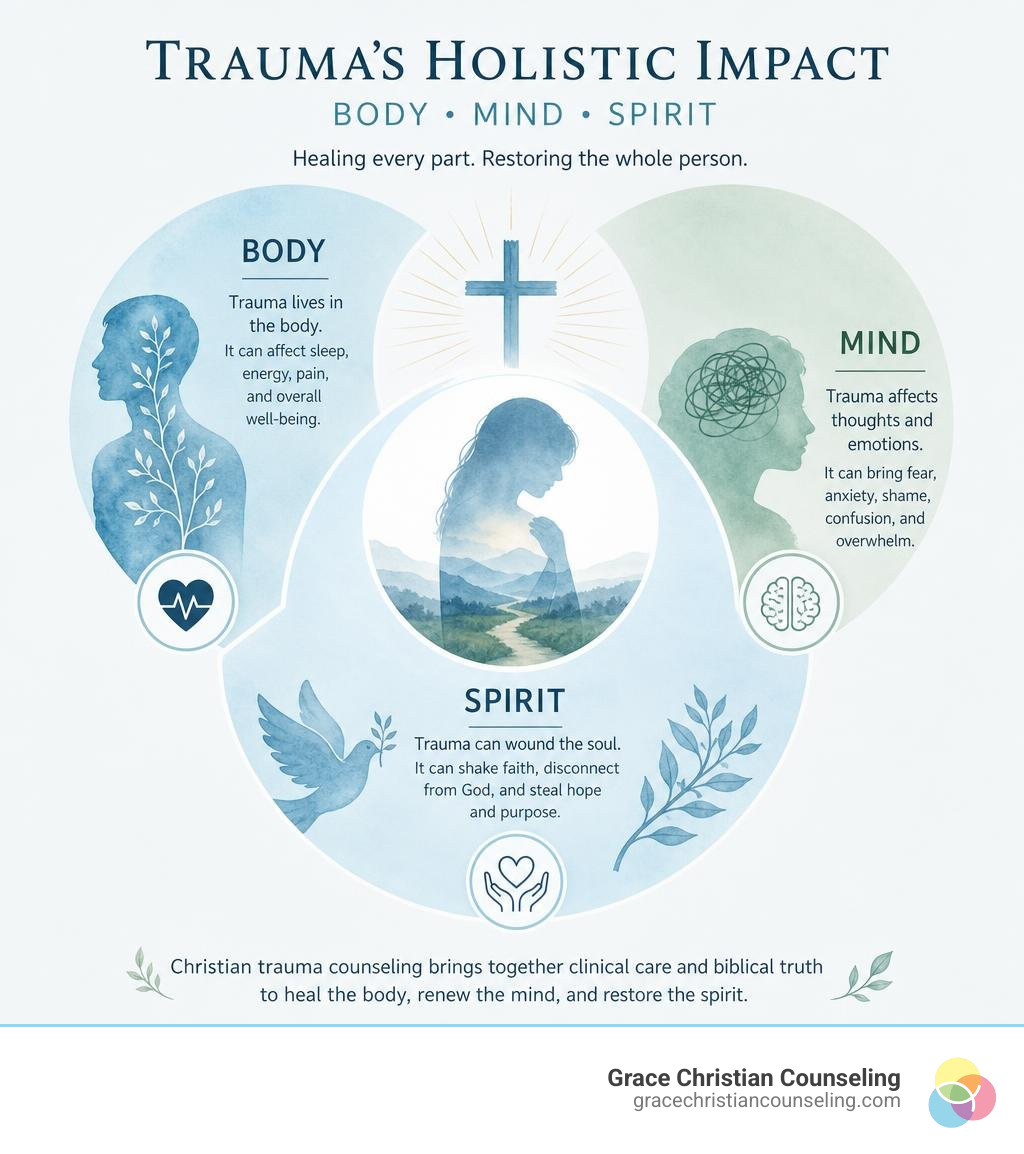
What is Christian Trauma Counseling?
At its core, christian trauma counseling is a compassionate, holistic approach to healing that refuses to separate your psychological well-being from your spiritual vitality. When you experience a overwhelming event, it often sparks a profound spiritual crisis; you might find yourself asking where God was, why He allowed the pain, or how you can ever trust Him again. Rather than ignoring these heavy questions, faith-integrated therapy welcomes them into the room. We understand that clinical tools are incredibly valuable, but they are amplified when combined with the restorative power of the Holy Spirit.
By choosing this path, you do not have to leave your faith at the door when you seek professional mental health support. We explore the profound connection between psychological recovery and spiritual renewal, helping you process deep-seated emotional pain while simultaneously rebuilding your relationship with God. If you want to understand how this integration works, you can read more about Unmasking Trauma The Power of Christian Trauma Counseling to see how we build this therapeutic bridge.
This specialized care addresses the underlying wounds of the heart, recognizing that your emotional, physical, and spiritual systems are completely intertwined. When trauma fractures your sense of safety, we look to both clinical wisdom and biblical guidance to bring restoration. For a closer look at this integrated approach, you can explore How Christian Therapy Can Help Trauma to learn how we help clients navigate their healing journeys.
The Core Differences Between Secular and Christian Trauma Counseling
Secular trauma therapy relies primarily on clinical psychology, focusing on cognitive restructuring, behavioral changes, and somatic regulation. While we utilize many of these exact same evidence-based tools, we operate from a foundational biblical worldview. We believe that clinical scientific discoveries about the brain and body are forms of God’s common grace; they are valuable gifts meant to help us heal, but they are not the ultimate source of truth or transformation.
In our sessions, we do not view you as merely a collection of neural pathways or evolutionary survival mechanisms. We see you as an image-bearer of God who has been deeply hurt by the brokenness of this world. This means our ultimate goal is not just symptom reduction, but complete spiritual reconciliation and restoration. We actively integrate faith and clinical practice, ensuring that every psychological technique we use aligns perfectly with biblical truth.
How Faith and Scripture Integration Facilitates Healing
Integrating Scripture and prayer into trauma therapy is not about using spiritual platitudes to bypass your pain; instead, it is about anchoring your nervous system in the unchanging character of God. Engaging with Scripture has a measurable impact on our lives. Research shows that Christians who engage with Scripture four or more times per week experience 62% lower odds of viewing pornography, 59% lower odds of drinking to excess, and 31% lower odds of struggling with loneliness. This “spiritual tipping point” demonstrates how deeply God’s Word can stabilize our minds and choices.
During moments of intense emotional distress, we look to the comforting promises of Scripture to soothe our souls. We find solace in verses like Psalm 34:18, which reminds us that the Lord is close to the brokenhearted, and Romans 8:28, which reassures us of His redeeming purposes. We also practice the peace described in Philippians 4:6-7, bringing our anxieties to God in prayer to guard our hearts and minds. To discover how this practical faith integration can transform your recovery, read our guide on Faith-Based Trauma Healing Find Peace with God.
Types of Trauma Addressed in Faith-Based Therapy
Trauma is not a one-size-fits-all experience, and we tailor our care to match the specific nature of your wounds. Some people seek counseling after a single, shocking event, while others carry the weight of chronic, long-term distress.

To help you understand the different ways trauma manifests, we have broken down the two primary clinical categories below:
| Trauma Type | Description | Common Examples |
|---|---|---|
| Single-Incident Trauma | A one-time, unexpected, and overwhelming event that threatens your safety. | Car accidents, natural disasters, medical emergencies, or being a victim of a sudden crime. |
| Complex Trauma | Ongoing, repeated interpersonal trauma that occurs within a relationship or system. | Childhood neglect, long-term domestic abuse, chronic emotional manipulation, or spiritual abuse. |
Childhood, Generational, and Relationship Trauma
Many of the emotional struggles we face as adults have roots that stretch back into our childhoods or even our family trees. Developmental wounds, such as childhood neglect or family instability, can warp how we view ourselves and how we relate to others. When these patterns are left unaddressed, they can turn into generational cycles of pain. To understand how these patterns are passed down and how to break them, you can read our resources on A Comprehensive Guide to Therapy for Generational Trauma and explore practical steps for Healing from Generational Trauma.
Healing from these deep-seated childhood wounds requires a gentle, structured approach. If you are ready to address these early experiences, we offer specialized guidance on Healing Childhood Trauma. Furthermore, relationship trauma can take many forms, including the devastating aftermath of narcissistic abuse or the painful lingering effects of a difficult breakup. We provide targeted support to help you recover from these relational wounds, which you can read about in Trauma Therapy for Healing from Narcissistic Abuse, Relationship Trauma Therapy Near Me, and Healing from Post Breakup Syndrome.
Spiritual Trauma and Church Hurt
Spiritual trauma is a unique and deeply painful clinical category of trauma. It occurs when spiritual authority is misused, leading to experiences that damage your relationship with faith, the church, or God Himself. When the place that was supposed to be a safe haven becomes a source of betrayal and manipulation, the emotional and spiritual confusion can feel completely overwhelming.
We recognize that church hurt is a real, devastating wound that requires careful, compassionate processing. You do not have to navigate this spiritual confusion alone; we offer dedicated spaces to help you heal, which you can learn about through our Church Hurt Counseling services. Additionally, we address the broader spiritual battles that often accompany trauma, providing insight and support through Spiritual Warfare Counseling.
Clinical and Spiritual Modalities for Healing
True recovery requires a beautiful partnership between rigorous clinical expertise and sensitive spiritual care. We do not ask you to choose between modern neuroscience and biblical faith; instead, we integrate both to help you find lasting freedom.

Evidence-Based Techniques in Christian Trauma Counseling
In our sessions, we utilize some of the most highly researched and effective trauma-focused therapies available today. These include Eye Movement Desensitization and Reprocessing (EMDR), which uses bilateral stimulation to help the brain reprocess stuck traumatic memories, and Trauma-Focused Cognitive Behavioral Therapy (TF-CBT), which helps identify and restructure negative thought patterns. We also use Cognitive Processing Therapy (CPT) to help you evaluate and change unhelpful beliefs related to your trauma.
These clinical tools are adapted to remain biblically faithful and Holy Spirit-led, viewing neurological science as a gift from God. By helping your brain recognize that the past threat is over, we can reduce symptoms of anxiety, panic, and hypervigilance. To see how these clinical connections build a bridge to your recovery, explore The Power of Connection Building Bridges to Trauma Recovery and learn more about the process of Letting Go of Past Traumas.
The Role of the Body and Nervous System in Christian Trauma Counseling
Trauma is not just a psychological issue; it is a deeply physical one. When you experience trauma, your nervous system’s threat-response system is altered, often leaving you stuck in a state of fight, flight, or freeze. Somatic approaches and nervous system regulation are essential to help your body feel safe again. We teach you how to identify your optimal zone of nervous system arousal and utilize physiological self-soothing techniques to calm physical anxiety.
Interestingly, spiritual practices can have profound physiological benefits. For example, singing Scripture or Psalms aloud acts as an embodied self-soothing mechanism, combining controlled breathing, physical vocal vibration, and cognitive redirection to calm a racing heart. For a wonderful biblical guide on walking faithfully with sufferers while understanding the physical impact of trauma, you can read the review of When It’s Trauma: A Biblical Guide to Understanding Trauma and Walking Faithfully with Sufferers; The Gospel Coalition.
The Four-Stage Counseling Blueprint for Healing
To guide you through the complex journey of recovery, we utilize a structured, faith-integrated framework called the Counseling Blueprint. This four-stage journey is designed to pace your therapy carefully, ensuring you never feel rushed or overwhelmed as you process your past.
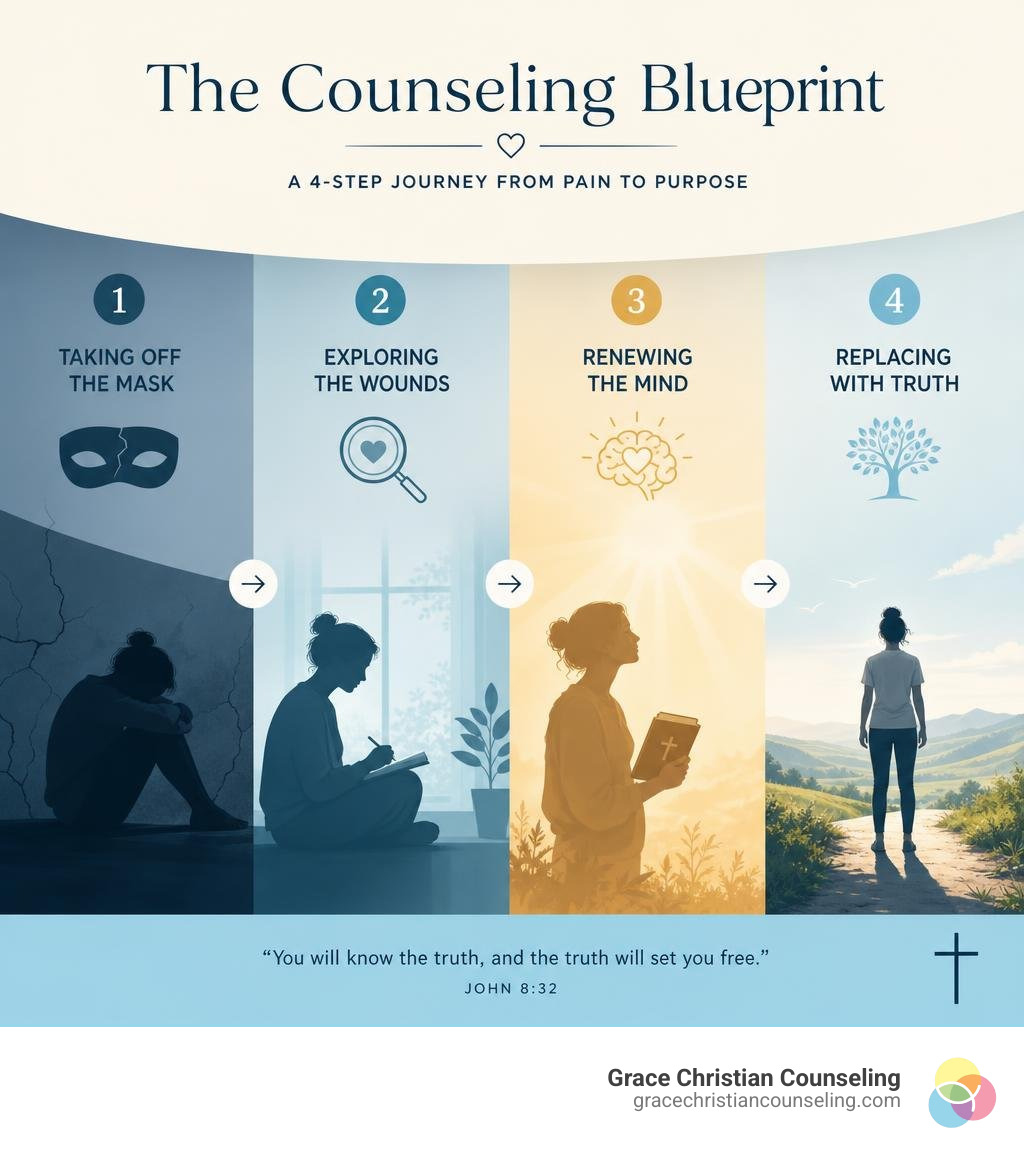
This blueprint ensures we address both your immediate emotional safety and your long-term spiritual growth. To understand the biblical foundations of this healing journey, you can read more about Biblical Healing Trusting God With Your Past Hurts and explore how we approach Healing the Heart Through Christian Counseling.
Phase 1 and 2: Taking Off the Mask and Healing the Wounds
The first stage of our blueprint, Take Off the Mask, is entirely focused on safety, stabilization, and building genuine rapport. Many trauma survivors carry a heavy mask of perfectionism or emotional numbness just to survive daily life; we invite you to gently lay that mask down in a shame-free space. We will not rush into deep trauma processing until we have established a strong foundation of trust and coping skills.
Once safety is established, we move into the second stage, Heal the Wounds. Here, we gently explore your emotional and relational hurts, using trauma-informed therapies to process what happened to you. This phase is about honoring your grief and allowing the Holy Spirit to bring comfort to the broken places. To understand how we navigate these deeper emotional layers, read our article on Healing the Hidden Wounds.
Phase 3 and 4: Removing Toxins and Replacing with Truth
In the third stage, Remove the Toxins, we work together to identify the lingering lies and unhelpful beliefs that trauma left behind. These “toxins” often sound like, “It was my fault,” “I am permanently damaged,” or “God has abandoned me.” We use cognitive restructuring strategies to examine these painful beliefs and expose them to the light of reality.
Finally, in the fourth stage, Replace with Truth, we install empowering, accurate perspectives about yourself, others, and the world based on God’s Word. We replace the toxic lies of trauma with the beautiful, unchanging truths of Scripture. This consolidation phase helps you walk forward with a durable, honest faith, confident in your identity as a beloved child of God.
Frequently Asked Questions about Trauma Therapy
Navigating the path to trauma recovery can bring up many practical and spiritual questions. Below, we have answered some of the most common concerns clients have when seeking a faith-based counselor.
What credentials should I look for in a Christian trauma counselor?
When searching for a trusted professional, it is crucial to look for someone who holds both recognized state clinical credentials and specialized trauma training. You should look for a licensed professional counselor (LPC), licensed associate professional counselor (LAPC), licensed social worker (LSW), licensed clinical professional counselor (LPCC), or licensed mental health counselor (LMHC). These credentials ensure your therapist has met rigorous state standards for clinical education and practice.
In addition to state licensing, look for counselors who have specific training in trauma-focused modalities, such as EMDR certification or Trauma-Focused CBT training. They may also hold biblical counseling certificates from trusted institutions, ensuring they can seamlessly integrate clinical psychology with Scripture.
How does Christian trauma counseling address difficult questions about God and suffering?
A common misconception is that having doubts or asking hard questions about God is a sign of weak faith. In our counseling rooms, we believe that honest lament is a deeply biblical response to genuine suffering. We do not offer superficial theological platitudes or rush you past your pain; instead, we create a safe space to ask, “Where was God?” or “Why did this happen?”
We look to the Psalms, which are filled with raw, honest cries to God, to show us that He can handle our anger, grief, and confusion. Our goal is not to restore a simple, pre-trauma faith as if nothing happened, but to help you build a more honest, resilient, and durable faith on the other side of your experience.
Is online Christian trauma counseling as effective as in-person therapy?
Yes, online trauma counseling is highly effective and offers incredible accessibility for those who may have busy schedules, physical limitations, or live in more remote areas. Research shows that virtual therapy utilizing modalities like EMDR and CBT yields clinical outcomes comparable to in-person sessions.
When Healing Feels Possible Again
Healing from trauma takes courage, and you do not have to walk that road without clinically excellent, Christ-centered support. At Grace Christian Counseling, we help individuals, couples, and families process painful experiences with care that honors the whole person: mind, body, relationships, and faith. Our goal is to help you move toward safety, restoration, and renewed hope at a pace that feels compassionate and grounded.
We serve clients throughout Western Pennsylvania, including Pittsburgh, Penn Hills, Sewickley, Uniontown, Pleasant Hills, Bethel Park, Ligonier, Belle Vernon, Punxsutawney, North Huntingdon, and Mt. Lebanon. We also offer secure online Christian counseling across Pennsylvania, so you can receive professional support from a place that feels safe and accessible. If trauma has affected your peace, relationships, or sense of connection with God, compassionate help is available.
Schedule a Consultation with Grace Christian Counseling to begin your healing journey.
This guide is for educational and spiritual encouragement and is not a substitute for personalized professional counseling. If you are in crisis, please reach out for immediate help.
Healing Broken Bonds: Christ-Centered Attachment Trauma Healing


