
When Your Marriage Feels Broken: What Christ Centered Marriage Counseling Can Do
Christ-centered marriage coaching is one of the most powerful tools a struggling couple can access today. Clinical research in the Journal of Marital and Family Therapy consistently shows that structured couples interventions are associated with significant improvements in relationship satisfaction, particularly when treatment targets emotional responsiveness and communication patterns rather than surface-level conflict alone.
What is Christ-centered marriage coaching?
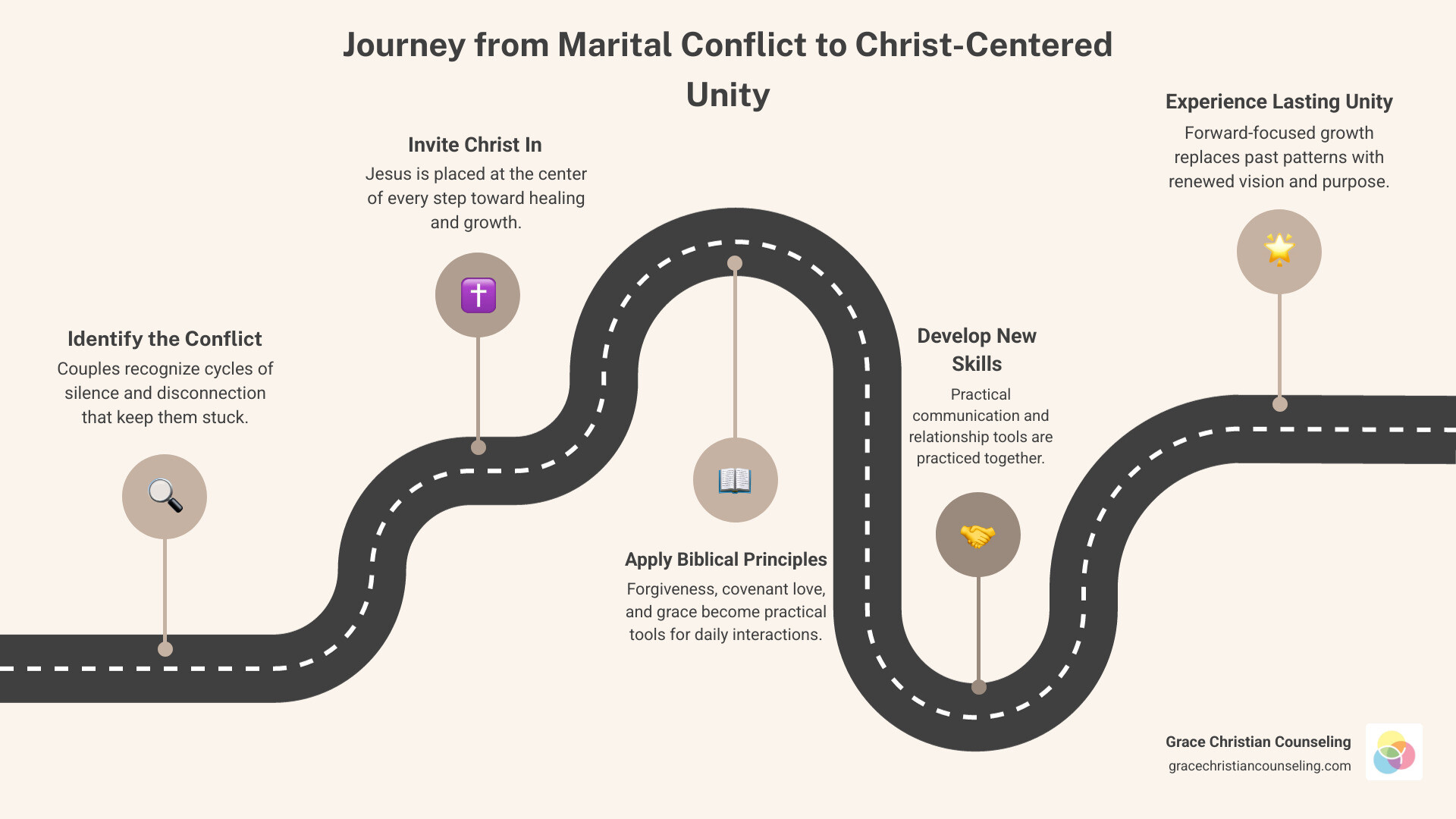
- A structured, faith-based process that places Jesus Christ at the center of every step toward marital healing
- Combines biblical principles (like forgiveness, covenant love, and grace) with practical communication and relationship skills
- Focuses on forward movement and growth, not just solving past problems
- Available through licensed Christian counselors, coaches, and intensive retreat programs
- Effective for couples in crisis, couples who want to grow, and even individuals whose spouse is not yet ready to participate
Marriage is hard. Even couples who love each other and share the same faith can find themselves stuck in cycles of conflict, silence, or quiet disconnection. If you have tried talking it out on your own, or even tried traditional counseling, and still feel like something is missing, you are not alone.
Many couples describe reaching a point where hope feels out of reach. One couple who attended a faith-based marriage intensive said they arrived after years of counseling and hopelessness, and left with renewed vision for their future together. That kind of turnaround is not unusual when Christ is genuinely placed at the center of the process.
At Grace Christian Counseling, serving couples throughout Western Pennsylvania including Pittsburgh, North Huntingdon, Uniontown, and surrounding communities, we see this kind of transformation regularly. Our licensed counselors integrate clinical tools with biblical truth and the guidance of the Holy Spirit, because we believe real healing addresses the whole person, not just the surface conflict.
This guide walks you through everything you need to know about Christ-centered marriage coaching: what it is, how it works, who it helps, and how to take your first step.
What We Commonly See When Couples First Come In (Clinical Intake Patterns)
In our clinical work with couples seeking Christ-centered marriage coaching, we consistently see a few recurring patterns during the first intake sessions. Many couples arrive not because they lack love, but because their communication has become reactive or avoidant. One spouse often describes feeling “constantly criticized or misunderstood,” while the other reports feeling “emotionally alone even in the same house.” These are not isolated experiences. They are some of the most common dynamics we see in marital distress presentations.
Another frequent pattern is what clinicians often describe as a pursue–withdraw cycle. One partner presses for conversation or resolution, while the other shuts down to avoid escalation. Over time, both partners begin interpreting the other’s behavior as rejection rather than protection or overwhelm.
We also routinely observe that couples underestimate the impact of unresolved stress outside the relationship (work burnout, financial pressure, sleep deprivation, and parenting fatigue) often intensify conflict inside the marriage. From a clinical standpoint, these patterns are not signs of a “failed marriage,” but indicators of a relationship under strain that has lost effective repair tools. In most cases, once couples learn to slow down the cycle, name what is happening in real time, and respond with structure instead of reactivity, communication begins to shift within a relatively short period of consistent work.
Understanding Christ Centered Marriage Coaching and How It Differs from Counseling

When couples seek help, they often ask, “Is this just regular counseling with a few Bible verses added in?” The answer is no. Christ centered marriage coaching is a distinct approach that focuses on movement, action, and discipleship. It helps couples name what is broken, then take practical, faith-rooted steps toward a healthier way of loving each other.
Traditional counseling often spends significant time looking backward to understand past wounds, patterns, and trauma. Coaching is more future-oriented, it asks, “Where is God leading us, and what needs to change next?” Research on Emotionally Focused Therapy is one of the most studied couples therapy models and shows that about 70 to 75% of couples move from distress to recovery when treatment is completed, with lasting improvement in relational security (according to the ICEEFT research summary).
In a coaching environment, we focus on goal-setting and proactive growth. We treat the marriage not just as a contract to be managed, but as a biblical discipleship journey. If traditional counseling is like a doctor’s visit to heal a wound, coaching is more like a personal trainer helping you run a marathon. We work with you to identify where you are now and where Christ needs you to be in the future.
| Feature | Traditional Marriage Counseling | Christ-Centered Marriage Coaching |
|---|---|---|
| Primary Focus | Dysfunction and past pathology | Growth, goals, and future calling |
| Role of Faith | Often secondary or absent | Central; the foundation of all advice |
| Session Style | Exploratory and diagnostic | Action-oriented and skill-based |
| Duration | Often open-ended weekly sessions | Frequently structured programs or intensives |
| End Goal | Symptom relief and stability | Relational thriving and Kingdom impact |
How Christ Centered Marriage Coaching Equips You to Be Your Own Counselor
One of our primary goals in Christ centered marriage coaching is to work ourselves out of a job. We believe that a healthy marriage is one where the couple has the spiritual maturity to apply Scripture to their own lives without needing a third-party present for every disagreement.
By teaching you the art of self-governance under the authority of God’s Word, we empower you to handle future challenges independently. We provide the tools for scriptural application so that when a conflict arises at 10:00 PM on a Tuesday, you don’t have to wait for your next appointment to find peace. You can learn more about how we facilitate this growth through our Christian Marriage Counseling services.
Moving from Crisis to Calling
Many couples come to us in “crisis mode.” They are just trying to get through the week without another major blow-up. We absolutely address those immediate fires, but we also want to help you move toward your calling, because every Christian marriage has a purpose-driven mission to reflect the relationship between Christ and the Church.
That shift takes more than good intentions. Physiological stress research from Harvard Health explains that conflict can activate a 2-part stress system, first through the sympathetic nervous system, then through the 3-part HPA axis involving the hypothalamus, pituitary gland, and adrenal glands. In that state, at least 4 key functions can rise, heart rate, pulse, blood pressure, and breathing, which makes calm reasoning and healthy communication harder. That is why structured pauses, emotional regulation, and prayerful reflection often need to come before productive conversation.
Relational stewardship means recognizing that your marriage is a gift to be invested, not just a burden to be endured. When you move beyond symptom management, you begin to see how your restored relationship can have a massive Kingdom impact on your children, your church, and your community.
Core Biblical Principles That Guide the Coaching Process
The foundation of any Christ centered marriage coaching program is the Word of God. We don’t rely on the latest cultural trends or secular “wisdom” that changes with the wind. Instead, we build on the immovable rock of the Covenant.
In Ephesians 5, we see the blueprint for marriage: sacrificial love and mutual respect. This isn’t a 50/50 deal where I do my part only if you do yours. It is a 100/100 covenant where both spouses seek to out-serve and out-love the other, modeled after how Jesus gave Himself up for us. Grace-based interaction means that even when your spouse fails, you respond with the same unmerited favor that God has shown you. You can read more about applying these truths in our guide on Navigating Marriage Challenges.
How Change Actually Happens in Marriage Coaching (Clinical + Behavioral Lens)
While biblical principles provide the foundation for Christ centered marriage coaching, meaningful change in couples also follows identifiable behavioral and emotional processes. In practice, we often see that insight alone is not enough to shift a marriage pattern.
Many couples already know what Scripture teaches about forgiveness, patience, and communication, yet still find themselves repeating the same arguments. This is because stress responses in the nervous system often activate faster than cognitive reasoning. For this reason, coaching work typically focuses on three levels of change: awareness of triggers, interruption of reactive cycles, and rehearsal of new communication behaviors in real time.
Clinically, couples tend to show the most progress when they begin recognizing their escalation patterns early (before criticism, shutdown, or defensiveness takes over). At that stage, even small interventions such as pausing, naming emotion, or slowing tone can significantly reduce conflict intensity. Over time, repetition of these structured responses helps couples replace automatic reactions with intentional, values-driven communication rooted in both emotional regulation and biblical conviction.
The 4G Model of Gospel-Centered Restoration
At Grace Christian Counseling, we often utilize the “4G Model” to help couples navigate the messy process of reconciliation. This model, rooted in the book of Ephesians, provides a roadmap for healing:
- Glorifying God: Is our goal to “win” the argument, or to make God look great through our responses?
- Guilty before God: Instead of pointing the finger at our spouse, we start by looking at our own sin and need for a Savior.
- Grace from God: We embrace the reality that salvation and sanctification are gifts of grace, which allows us to extend grace to our partner.
- Growth through God’s Spirit: We rely on the Holy Spirit to produce fruit (love, joy, peace, patience) that we cannot manufacture on our own.
This framework is a cornerstone of How Professional Christian Marriage Counseling Saves Relationships.
Establishing Christ as the Center
For a marriage to thrive, Christ must be the functional authority in the home, not just a figurehead. This involves developing a shared prayer life and practicing biblical submission—which is a mutual yielding to one another out of reverence for Christ.
Our licensed counselors, including our LSW and LAPC professionals, are experts at integrating clinical wisdom with the guidance of the Holy Spirit. We use evidence-based psychological tools like Cognitive Behavioral Therapy (CBT) but always filter them through the lens of spiritual authority. We believe that true lasting change happens quickly and naturally when Jesus is invited into the broken places of the heart.
Rebuilding Trust and Overcoming Marital Struggles

Trust is the foundation of every strong marriage. When it is broken (whether through the trauma of infidelity, years of poor communication, or emotional distance) it can feel impossible to rebuild. However, we have seen that no marriage is beyond restoration when both parties are willing to do the work. Research from the Gottman Institute highlights that trust is rebuilt over time through consistent small interactions, what researchers describe as “sliding door moments,” rather than single conversations or apologies alone.
Rebuilding trust requires radical honesty, humility, and accountability. In Christ centered marriage coaching, we create a safe space for communication breakthroughs. We help couples establish emotional safety and transparency, ensuring that the “unhealed places” (which some experts suggest account for 95% of marital issues) are finally brought into the light. For those specifically dealing with the aftermath of betrayal, our resource on How to Rebuild a Marriage After Infidelity offers a path forward.
What Trust Repair Looks Like in Real Counseling Work
Trust repair in marriage is rarely a single moment of apology or forgiveness. In counseling practice, it is usually a gradual process that unfolds through repeated experiences of consistency, honesty, and emotional safety.
We often explain to couples that trust is rebuilt less through intensity and more through predictability over time. This includes small but meaningful behaviors such as following through on commitments, responding calmly during conflict, and allowing space for emotional repair after disagreements.
When trust has been significantly damaged (whether through betrayal, chronic dishonesty, or emotional withdrawal) we typically see that both partners experience heightened sensitivity. One partner may scan for signs of further hurt, while the other may feel constant pressure to “prove” change. Without structure, this dynamic can unintentionally prolong insecurity on both sides.
In clinical terms, trust is not restored through reassurance alone, but through repeated corrective emotional experiences. As these accumulate, the nervous system begins to register safety again, which allows relational intimacy to gradually return.
Addressing Emotional and Spiritual Intimacy
Intimacy is about far more than what happens in the bedroom. It is a “soul connection.” Many couples live like roommates—sharing a mortgage and a calendar but never sharing their hearts. Coaching helps you move toward vulnerability.
We guide you in creating a shared vision for your life together. Heart transformation occurs when you stop trying to change your spouse and start asking God to change you. This shift in perspective often resolves long-standing conflicts. If you’re struggling to even start these conversations, check out our tips on How to Improve Communication in Marriage.
Restoring Physical Oneness Biblically
God designed physical intimacy to be a sacred celebration of the marriage covenant. Unfortunately, shame, past trauma, or years of resentment can turn this blessing into a source of stress.
In a Christ-centered framework, we address physical oneness by first healing the emotional and spiritual breaches. We teach selfless love that prioritizes the other’s needs and helps couples overcome shame through the gospel. For couples needing a dedicated “reset,” our Christian Marriage Intensive Programs provide an immersive environment to focus exclusively on restoration.
The Structure and Benefits of Christ Centered Marriage Coaching Programs
One of the reasons Christ centered marriage coaching is so effective is its structure. Unlike traditional weekly therapy that can sometimes feel like it’s “spinning its wheels,” coaching programs are often designed with high-impact formats:
- Multi-day Intensives: These 3-to-5-day retreats allow couples to dive deep into issues that might take months to address in one-hour increments.
- Weekly Virtual Sessions: For busy families in places like Sewickley or Bethel Park, online coaching offers flexibility without sacrificing depth.
- Structured Curriculum: Many programs use a set syllabus covering emotional intelligence, conflict navigation, and financial stewardship.
- Accountability Partners: Coaching often includes community support, ensuring you don’t walk the path alone.
The benefits are clear: couples who participate in these structured programs report significantly higher levels of satisfaction and improved conflict resolution skills. You can explore our specific Christian Marriage Intensive options to see which format fits your needs.
What Outcomes We Commonly Observe in Coaching Cases
While every couple’s journey is unique, we consistently observe several common outcomes among couples who fully engage in structured Christ-centered marriage coaching. Couples who actively participate in structured sessions, complete between-session practices, and commit to applying communication tools typically report reduced escalation during conflict within the first several weeks of consistent practice. Over time, many also describe improved emotional safety and a greater ability to discuss difficult topics without immediate withdrawal or defensiveness.
It is important to note that progress is rarely linear. Most couples experience cycles of improvement followed by setbacks as old patterns resurface under stress. In counseling practice, these setbacks are not interpreted as failure, but as part of the restructuring process of relational habits. The most durable improvements tend to occur when couples maintain consistency outside of sessions, particularly in how they repair after conflict and how quickly they return to connection after rupture.
Who Should Seek Christ Centered Marriage Coaching?
You don’t have to be on the brink of divorce to benefit from coaching. In fact, many of our most successful clients are “power couples” who simply want to take their marriage from good to great. Ideal candidates include:
- Engaged Couples: Building a stable foundation before the wedding is the best investment you can make. See Why Every Christian Couple Needs Counseling Before the Wedding.
- High-Conflict Pairs: Those stuck in a loop of “constant fighting” who need new tools to break the cycle.
- Empty Nesters: Couples rediscovering their identity after the children have left the home.
- Driven Professionals: High-performers who want their marriage to be as successful as their careers.
Partnering with Local Churches and Ministries in Western Pennsylvania
We are deeply committed to the local church. We believe that counseling and coaching should happen in partnership with your spiritual community. We frequently work with pastors in Pittsburgh, North Huntingdon, and Uniontown to provide referrals and aftercare.
If you are a ministry leader, we want to help you strengthen the families in your care. Our counseling locations across Western PA are strategically placed to serve your members with professional, licensed care that honors your church’s theological convictions.
Practical Steps to Begin Your Journey Toward Healing
Taking the first step is often the hardest part. If you are ready to move toward a healthier marriage, we suggest a simple process:
- Readiness Assessment: Are you both willing to commit to the process? Even if one of you is hesitant, taking a “Clarity Call” or an initial assessment can help lower the pressure.
- Goal Alignment: What do you hope to achieve? Be specific, whether it’s “rebuilding trust after an affair” or “learning to talk without yelling.”
- Finding the Right Coach: At Grace Christian Counseling, we match you with a licensed professional who fits your personality and specific needs.
Whether you prefer in-person sessions in Ligonier or online Christian counseling options, we are here to support you.
Preparing for Your First Session
To get the most out of Christ centered marriage coaching, come prepared. We recommend spending time in prayer before your first meeting, asking the Holy Spirit to soften your heart.
Identify your primary “pain points” but also try to identify one thing you appreciate about your spouse. A commitment to personal change is more important than a list of your spouse’s flaws. For those in the premarital stage, we offer Must-Have Christian Premarital Counseling Kits and Resources to help you hit the ground running.
Sustaining Progress Through Aftercare
The “mountain top” experience of a coaching intensive or a great session is wonderful, but the real work happens in the valleys of everyday life. Sustaining progress requires ongoing discipleship.
We encourage couples to stay integrated into their local church community and maintain spiritual disciplines like daily prayer and Bible study. Many of our programs include monthly check-ins or “aftercare” coaching to ensure that the new habits you’ve formed become a permanent part of your marital DNA.
Frequently Asked Questions about Christ Centered Marriage Coaching
What if my spouse is unwilling to participate in coaching?
This is a common concern. While it is ideal for both spouses to participate, “individual transformation” can still have a massive impact on a marriage. When you change how you respond, the “dance” of the relationship naturally changes. We have seen many cases where one spouse’s willingness to “go first” eventually inspired the other to join the process. We offer individual support to help you find peace even in an unbalanced relationship.
How long does a typical coaching program last?
Timelines vary based on the level of distress and your specific goals. Some couples find what they need in a 3-day intensive, while others benefit from a 60-day structured program or a year of ongoing support. We customize our approach to fit your family’s needs and schedule.
Is coaching effective for marriages dealing with deep trauma?
Yes, but it requires a specific approach. Because our team at Grace Christian Counseling includes licensed professionals (LSW, LAPC), we provide trauma-informed care. We understand the clinical complexities of trauma and how it affects the brain and body, and we integrate that knowledge with the healing power of Christ. We maintain professional boundaries and will refer to specialized clinical care if an individual’s mental health needs require it.
Building a Marriage That Reflects Jesus
Your marriage is not just a social contract; it is a living testimony of God’s love. Whether you are in a season of deep struggle or simply want to strengthen your bond, Christ centered marriage coaching offers a path to lasting transformation.
There is hope for your future, and there is a legacy worth building for the generations that follow you. You don’t have to navigate this journey alone. Our team at Grace Christian Counseling is ready to walk with you toward the thriving, God-honoring marriage you were meant to have.
Contact Grace Christian Counseling to book a free discovery call.
This article was researched with AI and heavily edited by Bekah McCrorey for accuracy and relevance.
Bekah McCrorey is a counselor at Grace Christian Counseling. She holds a Master’s degree in Counseling from Dallas Theological Seminary and a Bachelor’s degree in Christian Ministry from Chesapeake Bible College and Seminary. She is a provisionally licensed counselor working under supervision toward full licensure as a Licensed Professional Counselor (LPC) in Pennsylvania.
With over 12 years of full-time ministry experience supporting individuals, families, ministry leaders, and churches nationally and internationally, Bekah brings a deep understanding of emotional and spiritual struggles. As a counselor, she uses a client-centered, trauma-informed, and evidence-based approach. She is Level 1 trained in Restoration Therapy and is passionate about helping clients navigate anxiety, depression, grief, trauma, life transitions, and relational difficulties while integrating emotional and spiritual well-being.
This guide is for educational and spiritual encouragement and is not a substitute for personalized professional counseling. If you are in crisis, please reach out for immediate help.
Why Marriage Counseling for Infidelity is Not a Waste of Time


