

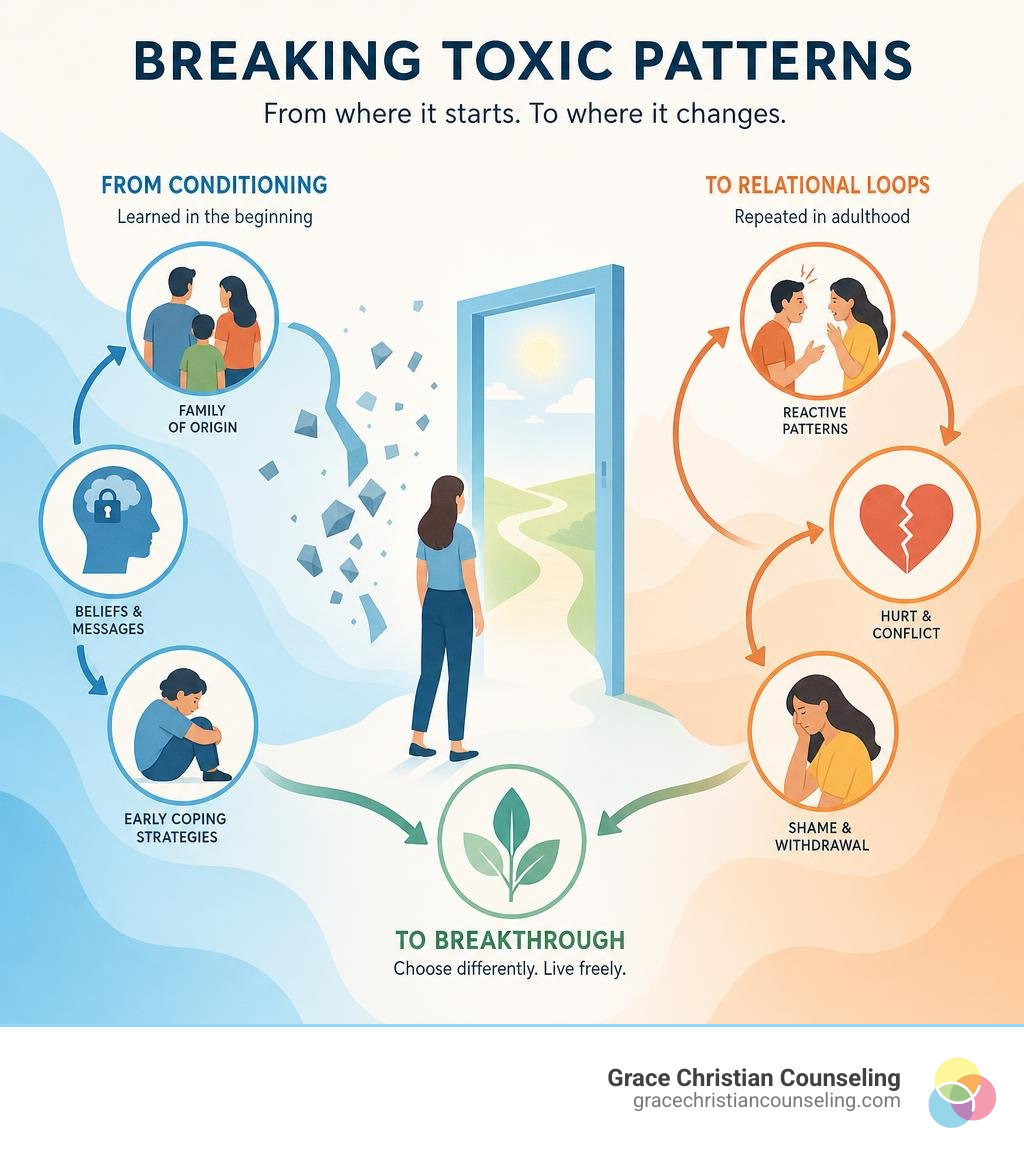
Breaking toxic patterns often begins with understanding why certain relational loops feel so familiar. The environments we grow up in act as our first training ground for human connection. When family dynamics involve emotional volatility, high criticism, neglect, or conditional love, our developing brains adapt to survive. These survival mechanisms often follow us directly into adulthood.
Many people continue to get involved in negative relationships as an unconscious attempt to repair a trauma that occurred in childhood. Unprocessed emotions related to trauma are one of the most significant causes of relationship reenactments. When early emotional pain remains buried, our minds may quietly search for familiar dynamics in adult partners, hoping that this time we can earn a better outcome.
Furthermore, prolonged stress from early painful dynamics can keep our autonomic nervous system stuck in hyper-vigilance. Trauma often shows up in nervous system states like fight, flight, freeze, or fawn. To explore how family legacies shape modern relationships, read our guide on Effective Therapy Techniques for Healing Generational Trauma.
Childhood adversity is also more common than many people realize. According to the CDC’s research on Adverse Childhood Experiences, about 61% of adults surveyed across 25 U.S. states reported experiencing at least one adverse childhood experience, while about 16% reported experiencing four or more. These experiences can include abuse, neglect, or household challenges such as substance misuse or violence. Experiencing an adverse childhood experience does not mean someone is destined to develop unhealthy relationship patterns, but understanding these experiences can provide important context for emotional and relational struggles later in life.
How Childhood Trauma and Attachment Styles Shape Adult Cycles
Attachment theory can help explain why people respond differently to emotional closeness, rejection, conflict, and separation. Early caregiving experiences may influence expectations about relationships, but attachment patterns do not permanently determine a person’s future. Adult experiences and relationships can also shape how people understand trust, closeness, and emotional safety. A review of adult attachment research describes how attachment processes influence emotional responses and relationship experiences throughout adulthood.
Those who develop an anxious attachment style often experience a deep fear of abandonment. They may over-function in relationships, constantly monitoring their partner’s mood changes and compromising their own boundaries to keep the peace. You can read more in The Ultimate Guide to Healing Your Anxious Attachment Style.
Conversely, individuals exposed to unpredictable or frightening caregiving environments may develop a disorganized attachment style, oscillating between an intense longing for emotional connection and a self-protective pull toward distance. For a deeper understanding of this complex attachment dynamic, explore From Chaos to Connection: A Guide to Disorganized Attachment Style.
Biochemical Traps: Intermittent Reinforcement and Trauma Bonds
It is common to wonder why walking away from harmful dynamics feels so difficult. The primary barrier is often not lack of intelligence or desire, but a powerful physiological reaction known as a trauma bond. Clinical and trauma-informed research suggests that these bonds can strongly influence a person’s emotional attachment to a harmful partner, even after physical separation.
Trauma bonds can make harmful relationships especially difficult to leave. One reason is the unpredictable cycle that can develop when periods of affection, apology, or calm are followed by criticism, control, rejection, or abuse. Those moments of relief can create powerful hope that the relationship will return to the “good times,” even when the overall pattern remains harmful. This is one reason someone may continue feeling deeply attached to a person who is also hurting them.
Recognizing Red Flags and Psychological Manipulation

Spotting manipulative tactics early is crucial to breaking toxic patterns. Manipulative behaviors are often designed to gain control, build dependency, and increase isolation. Toxic dynamics use repeated harmful behaviors to normalize dysfunction and erode your sense of self over time.
When emotional mistreatment becomes normalized, you might find yourself constantly walking on eggshells or apologizing for problems you did not cause. Over time, this can make it harder to trust your memory, instincts, and spiritual discernment. Recognizing these behaviors clearly is the first step toward regaining your internal strength. If you are working through an abusive relationship, our resources on Therapy for Overcoming Emotional Abuse offer guidance.
Spotting Gaslighting, Future Faking, and Emotional Calculus
Manipulative tactics can take many forms, ranging from subtle psychological slights to grand, empty promises. Some are obvious in hindsight, while others are confusing because they are mixed with affection, apology, or spiritual language. Knowing how to identify these patterns protects your emotional well-being and helps you respond with greater clarity.
- Gaslighting: A tactic where a person denies reality, distorts facts, or insists your memory is faulty, causing you to second-guess your own sanity and instincts.
- Future Faking: Making elaborate promises about future trips, marriage, or personal behavioral changes to keep you invested during moments of conflict.
- Emotional Calculus: Constantly monitoring another person’s mood and changing your behavior to prevent conflict or an emotional outburst.
- Empathic Projection: Assuming that a manipulative partner processes relationships with the same empathy, conscientiousness, and honesty that you do.
To learn more about ending manipulative cycles, explore this Psychology Today guide on ending toxic tactics. This outside resource can be a helpful supplement, but it should not replace personalized support when manipulation, abuse, or safety concerns are present. A licensed counselor or qualified advocate can help you sort through what is happening and consider next steps.
Practical Steps for Breaking Toxic Patterns in Your Life
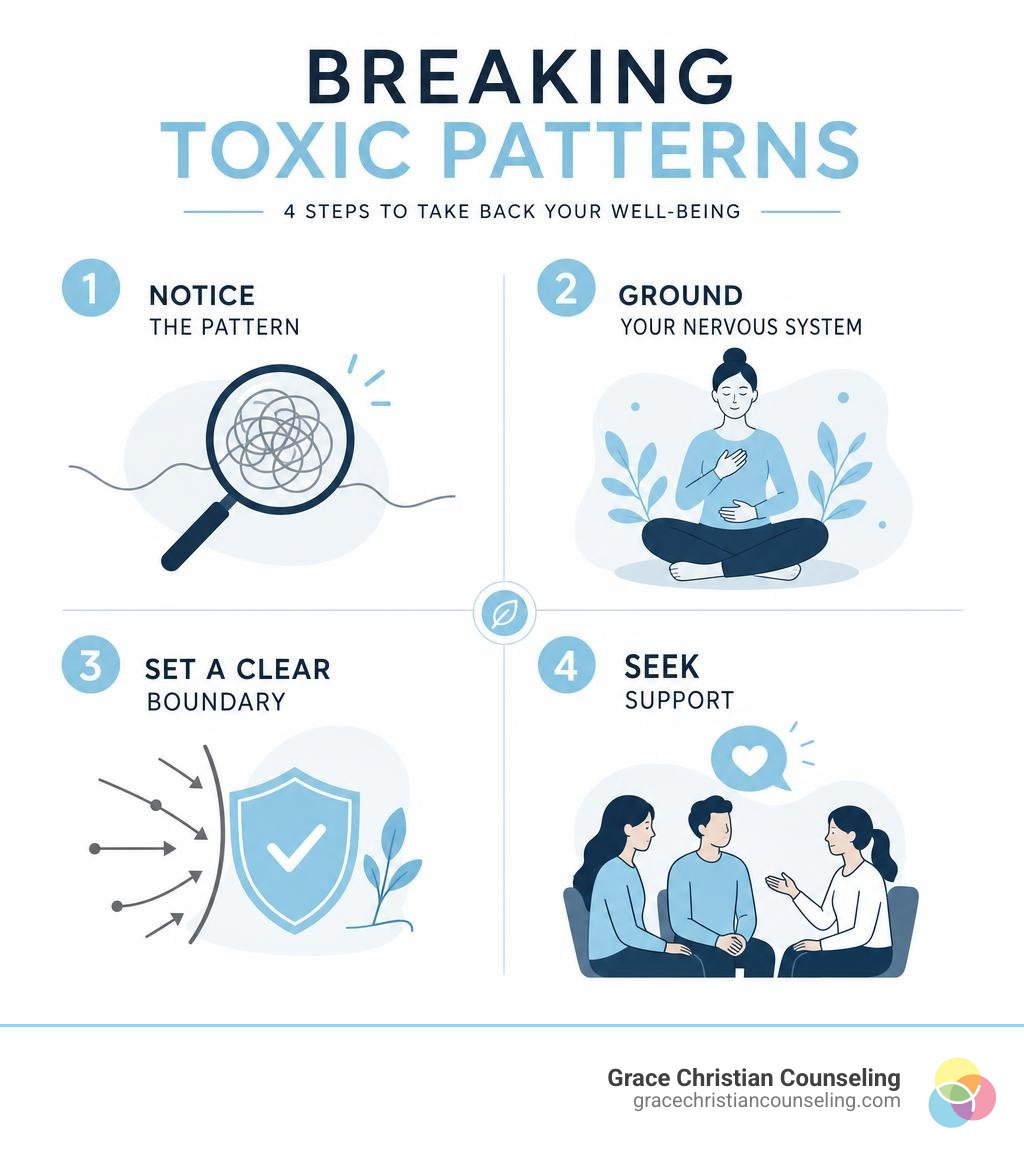
Breaking toxic patterns requires moving past intellectual understanding into intentional action. Unhealthy loops repeat because autopilot responses are deeply ingrained in our daily habits. Shifting these dynamics requires deliberate effort and self-reflection.
Rather than making drastic ultimatums or trying to force a manipulative partner to change, shift your focus to what you can control: your own participation in the dynamic. When you alter your default reactions, the established toxic loop loses its hold. This does not mean you are responsible for another person’s harmful choices, it simply means your healing can begin with the responses, supports, and boundaries available to you.
Step 1: Documenting Reality and Shifting Your Participation
When dealing with gaslighting, keeping an objective record of events is essential for preserving your mental clarity. Consider writing down notes, keeping private journal entries, or safely emailing detailed summaries of interactions to yourself right after conflict occurs. Reviewing these timestamped records helps ground you in truth when someone tries to distort what happened.
Next, identify your “GLIMMER” moments: that tiny pause between an emotional trigger and your default reaction. This pause may be brief at first, but noticing it can help you practice a new response instead of repeating an old survival pattern. In that moment, choose a new path:
- Stop Explaining: Avoid re-explaining basic respect or arguing over distorted facts with someone who refuses to listen.
- The Gray Rock Method: Keep communication brief, neutral, and focused on practical matters rather than engaging in escalating arguments. This approach is not appropriate for every relationship, and it should not replace a safety plan when abuse or threats are present.
- Alter Participation: Refuse to engage in circular arguments or defend yourself against false accusations.
Step 2: Breaking Toxic Patterns Through Somatic Healing and Boundary Enforcement
Trauma can affect both emotional experiences and physical stress responses. When someone feels threatened, the body’s stress response can produce symptoms such as muscle tension, rapid breathing, increased heart rate, or difficulty thinking clearly. Grounding techniques, paced breathing, gentle movement, and other regulation strategies can help some people manage these reactions. For ongoing or severe symptoms, however, these techniques work best as part of a broader treatment plan rather than as a stand-alone solution.
Simultaneously, establish clear, actionable boundaries to protect your mental health. Boundaries are not attempts to control another person’s heart or behavior, they are commitments about what you will participate in and what steps you will take when harm continues. They work best when they are specific, realistic, and supported by wise counsel.
- Name your non-negotiables: Identify what behaviors you will no longer participate in, such as yelling, threats, name-calling, or repeated blame shifting.
- Create a relationship playbook: Decide in advance how you will respond when a boundary is crossed, including when you will pause a conversation, leave the room, or seek support.
- Practice consistency: Boundaries become effective when they are calmly repeated and paired with predictable action.
- Seek wise support: A counselor, pastor, trusted mentor, or safe friend can help you reality-test decisions and stay grounded.
When Safety Comes First: Crisis Support and Emergency Help
If you are dealing with threats, physical violence, stalking, coercive control, sexual violence, or fear for your safety, the goal is not simply to communicate better with the other person. Safety comes first. In these situations, boundary-setting advice, journaling, or relationship communication tools may not be enough, and they should not replace immediate protection or a personalized safety plan.
If you are in immediate danger in the United States, call 911 or go to the nearest emergency room. If you are experiencing suicidal thoughts, emotional crisis, or fear that you may harm yourself, call or text 988 for the Suicide & Crisis Lifeline. If you are experiencing domestic violence, you can contact the National Domestic Violence Hotline at 1-800-799-7233, text START to 88788, or use their online chat at thehotline.org. If sexual assault is part of the situation, you can contact RAINN at 1-800-656-HOPE (4673) or visit rainn.org.
A safety plan may include identifying a safe place to go, keeping important documents accessible, setting aside emergency money if possible, arranging transportation, packing essential medications, and choosing a trusted person who can help you leave or call for help. If technology monitoring is a concern, use a safer device, clear browser history only if doing so will not increase risk, and avoid storing plans where the unsafe person may find them.
A licensed counselor, qualified domestic-violence advocate, or crisis professional can help you think through your options based on your specific circumstances. At Grace Christian Counseling, we can provide trauma-informed support as part of the healing process, but emergency services and domestic-violence professionals are the right first step when there is immediate danger.
The Role of Trauma-Informed Counseling and Spiritual Growth

Navigating complex emotional loops on your own can feel overwhelming. Professional, trauma-informed clinical counseling offers a safe environment to process deep-seated wounds, clarify confusion, and build effective coping strategies. Therapies like Cognitive Behavioral Therapy (CBT) help identify and restructure negative thought patterns, while somatic tools address physical stress responses.
Psychotherapy has a substantial evidence base for treating many mental health concerns. The National Institute of Mental Health notes that psychotherapy can help people identify and change troubling emotions, thoughts, and behaviors. CBT is one commonly used approach, although the most appropriate treatment depends on the person’s symptoms, goals, history, and clinical needs.
Integrating evidence-based clinical practices, such as CBT and trauma-informed care, with Biblical truth and the guidance of the Holy Spirit creates a strong foundation for lasting restoration. To learn more about care for recovery after relational trauma, visit our page on Trauma Therapy for Healing from Narcissistic Abuse.
Breaking Toxic Patterns Without Guilt: A Faith-Based Perspective
Christians often struggle with setting limits due to misplaced guilt, mistakenly believing that setting boundaries is unloving or unscriptural. However, biblical truth encourages us to guard our hearts with Proverbs 4:23. Setting healthy limits is not an act of hostility; it is a responsible step toward wise self-care.
Biblical boundaries align with loving others well while honoring personal accountability:
- Distinguishing Forgiveness from Reconciliation: Scriptural forgiveness is freely extended from the heart, but relational trust must be rebuilt over time through consistent, verified behavior.
- Loving Without Enabling: Allowing someone to experience the natural consequences of their choices is often the most compassionate response available.
- Emotional Differentiation: Recognizing that you are responsible to others, but not responsible for another adult’s choices or emotional regulation.
For an in-depth biblical study on this topic, read our article on How to Set Boundaries Without Feeling Like a Bad Christian. You can also visit NuWellonline.com for additional wellness resources and options for pastoral counseling and coaching anywhere in the US.
Frequently Asked Questions About Breaking Unhealthy Cycles
Why do empaths frequently struggle with setting and enforcing boundaries?
People who are highly sensitive to the emotions of others may sometimes struggle with boundaries, particularly when they feel responsible for keeping everyone around them comfortable. Strong empathy can be a valuable quality, but it can become exhausting when someone consistently takes responsibility for another person’s emotions, reactions, or choices. In unhealthy relationships, this can leave a caring person over-functioning while their own needs, limits, and safety are pushed aside.
Additionally, empaths often carry a strong desire to fix or heal others, which can bleed into enabling behavior. They may experience intense guilt when saying “no,” fearing that setting a boundary will lead to conflict or abandonment. Counseling can help compassionate people learn the difference between loving support and carrying responsibility that belongs to someone else.
What is future faking, and how can I spot it early?
Future faking occurs when someone paints an attractive picture of the future, promising trips, marriage, lifestyle improvements, or deep behavioral changes, to gain trust or distract from present poor behavior. The promise may feel convincing because it speaks directly to your longing for security, commitment, or repair. However, a promised future is not the same as consistent present-day repentance, accountability, and change.
You can spot future faking by comparing a person’s words directly with their current patterns over time. If grand promises are repeatedly made during arguments or early dating stages, but consistently lack matching real-world action, future faking is likely present. A trusted counselor, pastor, or safe friend can help you evaluate the pattern more clearly when your emotions feel pulled in different directions.
How long does it typically take to heal from a severe trauma bond?
Healing from a trauma bond is an individual journey without a set timeline. There is no standard timeline for healing from a trauma bond or recovering from an abusive relationship. Recovery requires time, self-compassion, and consistent effort. The process can depend on the length and severity of the relationship, the person’s support system, previous trauma, current mental health, and whether they are still exposed to the harmful dynamic.
Counseling, supportive relationships, healthy boundaries, and practical safety planning can all play a role in recovery. Some people notice relief after distance and support are in place, while others need longer-term trauma-informed care to rebuild trust, stability, and confidence. What matters most is not rushing the process, but taking steady, wise steps toward safety, truth, and healing.
Moving Forward With Clarity, Courage, and Support
Breaking toxic patterns requires self-awareness, clear boundary enforcement, nervous system regulation, and grounded spiritual wisdom. Recognizing that an unhealthy cycle exists is not a sign of failure; it is the essential first step toward meaningful life change.
You do not have to navigate this path alone. At Grace Christian Counseling, our team of licensed counselors offers Christ-centered, evidence-based care tailored to your unique story. We help individuals, couples, and families heal from anxiety, depression, trauma, and relational strain.
We provide both in-person counseling across Western Pennsylvania, including Pittsburgh, North Huntingdon, Penn Hills, Uniontown, Bethel Park, Sewickley, and Mt. Lebanon, and convenient online counseling options throughout the states of PA, WV, FL, GA, and OH.
If you are ready to take your next step toward emotional health, visit our page to Start your journey toward healing generational trauma or contact our team today to schedule an intake appointment.
This guide is for educational and spiritual encouragement and is not a substitute for personalized professional counseling. If you are in crisis, please reach out for immediate help.


