
When Betrayal Breaks a Marriage: What Christian Counseling for Infidelity Can Do
Christian counseling for infidelity gives couples and individuals a structured, faith-grounded path to heal after an affair, whether the goal is full marital restoration or finding personal wholeness when reconciliation is not possible.
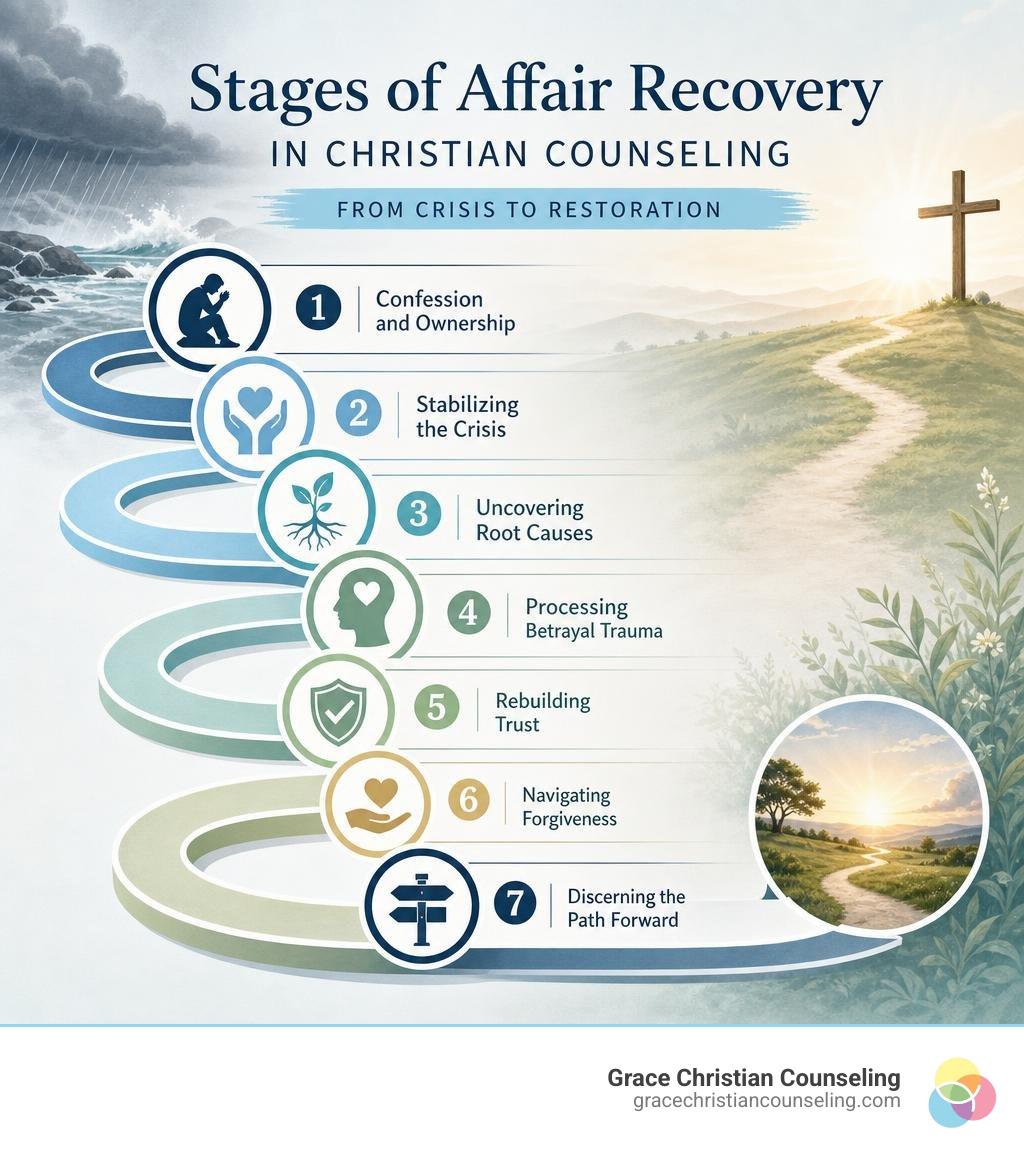
Here is what the recovery process typically involves:
- Confession and ownership; the unfaithful spouse takes full responsibility without blame-shifting.
- Stabilizing the crisis; both partners establish emotional safety before making long-term decisions.
- Uncovering root causes; a counselor helps identify the hidden heart issues that contributed to the affair.
- Processing betrayal trauma; the injured spouse receives support for PTSD-like symptoms such as intrusive thoughts, numbness, and emotional swings.
- Rebuilding trust; transparency, accountability, and consistent action replace broken patterns over time.
- Navigating forgiveness; forgiveness is pursued as a gradual process, not an immediate demand.
- Discerning the path forward; couples decide together, with pastoral and clinical guidance, whether reconciliation is safe and possible.
Sexual infidelity is one of the deepest forms of betrayal a person can experience inside a marriage. Research suggests that nearly 25% of couples will face infidelity at some point, and the emotional damage it causes can feel impossible to undo. The shock, the grief, the rage, and the desperate need for answers can hit all at once, leaving both partners feeling lost and unsure of where to turn.
The good news is that healing is possible. Many couples who do the hard, honest work of recovery report that their marriage eventually becomes stronger than it was before the affair. But that outcome rarely happens without outside help and a clear path forward.
At Grace Christian Counseling, we walk alongside couples and individuals throughout Western Pennsylvania, including Pittsburgh and surrounding communities, as well as online, offering Christ-centered counseling that blends biblical truth with evidence-based clinical care.
The Biblical Foundation of Covenant and Healing
To understand how to heal a marriage after betrayal, we must first look at the design God established for marriage. It is not merely a social contract or a legal convenience; it is a sacred covenant. When infidelity occurs, it is not just a breach of trust; it is a direct tear in a spiritual union.
Understanding the Sacred Marriage Covenant
In the Scriptures, marriage is described as a reflection of Christ’s love for the Church. When two people marry, they enter into a sacred bond where they become one flesh, as noted in Matthew 19:6. This spiritual union is built on sacrificial love, mutual respect, and a lifetime marital commitment.
Because God designed marriage to be permanent, Jesus explained in Matthew 19:9 that sexual unfaithfulness is one of the few biblical grounds for divorce. However, while the Bible permits divorce in cases of unrepentant adultery, it does not demand it. God’s heart is always oriented toward redemption, healing, and reconciliation whenever both partners are willing to do the hard work. If you are standing at this painful crossroads, you can read More info about restoring struggling couples to understand how God can restore even the most broken relationships.
Navigating Grace and Truth in Christian Counseling for Infidelity
True healing cannot occur in the dark. In our counseling practice, we emphasize that recovery requires a delicate balance of both grace and truth. Truth demands an honest confession without excuses, minimization, or defensive spin; grace provides the safe environment where that confession can lead to genuine repentance rather than crushing shame.
For the unfaithful spouse, the temptation is often to hide the details or rush the healing process. For the betrayed spouse, the temptation can be to use the truth as a weapon. Through christian counseling for infidelity, we help couples bring the hidden things into the light, allowing the Holy Spirit to begin the process of spiritual healing. To learn more about how we structure this faith-integrated approach, you can explore More info about Christian marriage counseling.
Uncovering the Root Causes: The Sinkhole Metaphor
To understand how a marriage collapses into infidelity, we can look at a powerful real-world event. In the 1990s, a massive sinkhole opened up in Allentown, Pennsylvania, swallowing a large corporate plaza. The collapse seemed sudden, but engineers discovered that the ground had been quietly eroding for years due to a drop in the local reservoir water level.
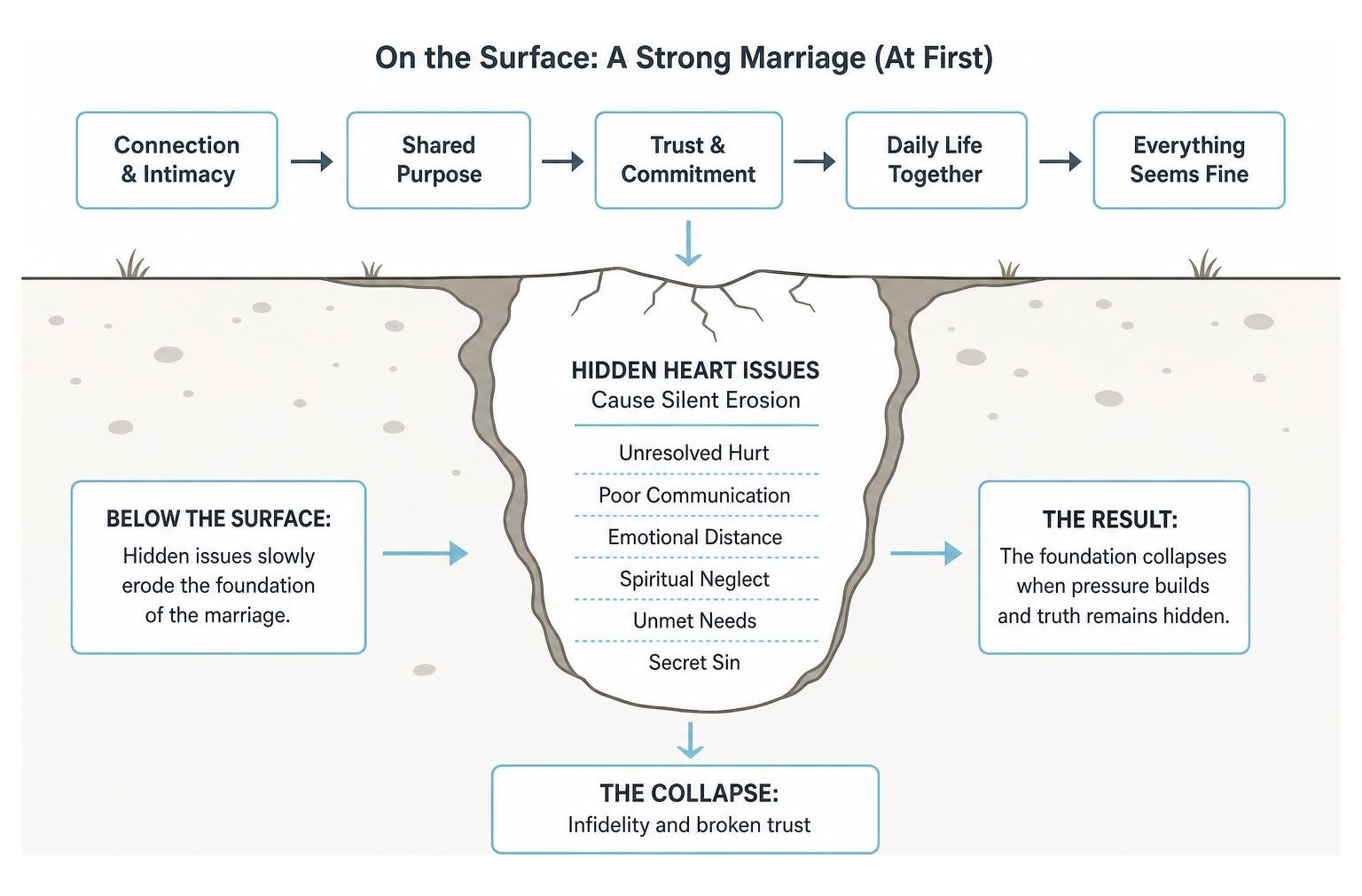
Marital infidelity works the exact same way. It is rarely a sudden, random event; instead, it is usually the result of long-term, hidden erosion occurring beneath the surface of the relationship.
Identifying Hidden Heart Issues
While the act of cheating is a conscious, sinful choice, it is always a symptom of deeper, unobserved “heart problems” that have gone unaddressed. Through careful self-examination, couples must look at the spiritual neglect and emotional distance that allowed the erosion to begin.
Often, a spouse who strays has stopped tending to their personal relationship with God. When spiritual disciplines fade, we become highly vulnerable to temptation. If you are wondering why seeking outside help is so critical to uncovering these underground issues, read More info about why counseling is not a waste of time.
Addressing Entitlement, Pride, and Neglect
The primary underground “sinkholes” that lead to an affair are pride, entitlement, and neglect. Pride convinces a person that they can handle temptation on their own, or that they will never get caught. Entitlement whispers the lie that they deserve more attention, more excitement, or a temporary escape from the stresses of daily life.
Marital neglect also plays a significant role. When couples stop practicing sacrificial love and kindness, emotional distance grows. While this distance never justifies the choice to commit adultery, identifying these behavioral patterns is essential if the couple hopes to rebuild a foundation that will never collapse again.
The Path to Restoration: Rebuilding Trust Step-by-Step
Rebuilding a marriage after the devastation of an affair is a slow, step-by-step journey. It cannot be rushed, and it requires both partners to adopt entirely new ways of relating to one another.

The Role of Repentance and Ownership
The very first step toward healing is for the unfaithful spouse to take complete, un-blaming ownership of their actions. This means confessing the truth without pointing fingers at the other spouse’s shortcomings or blaming marital stress.
True repentance is marked by godly sorrow, which is a deep grief over the pain caused to the spouse and the offense committed against God. It is also marked by active empathy. The unfaithful partner must be willing to listen to the betrayed spouse’s hurt, anger, and questions without getting defensive or impatient. For practical guidance on starting this journey, you can access More info about rebuilding a marriage after infidelity.
Rebuilding Trust Through Christian Counseling for Infidelity
Trust is broken in a moment, but rebuilding it takes consistent, transparent action over a long period. The unfaithful spouse must commit to absolute transparency, which includes sharing passwords, locations, and schedules without being asked.
Accountability must be welcomed, not resisted. Our licensed counselors, such as our Licensed Associate Professional Counselors (LAPC) and Licensed Social Workers (LSW), work with couples to establish healthy boundaries that protect the marriage from future harm. Over time, these daily acts of honesty rebuild the broken foundation. You can read More info about how professional counseling saves relationships to see how structured therapy facilitates this process.
Navigating Betrayal Trauma and Emotional Pain
Discovering that your spouse has been unfaithful is a traumatic event. The mind and body react to this level of deception in profound ways, often mimicking the symptoms of Post-Traumatic Stress Disorder (PTSD). You may feel like your sense of safety has been shaken, even in ordinary moments that used to feel familiar and secure. This is why compassionate, trauma-informed care can be so important, giving you space to slow down, name what happened, and begin healing without pressure to rush your grief.
Processing PTSD-Like Symptoms of Betrayal
Betrayed spouses frequently experience intense emotional shock, numbness, sudden panic, and intrusive thoughts. These reactions are not “overreacting”; they are the natural response of a nervous system that has had its sense of safety completely shattered.
During this stage, the brain is constantly searching for threats, which can lead to obsessive questions and emotional dysregulation. In our sessions, we help clients stabilize their nervous systems and process this pain in a healthy, controlled environment. For additional resources on managing trauma and anxiety with pastoral counseling, coaching, and other wellness programs, we recommend visiting NuWellonline.com. You can also read More info about healing the heart to find comfort in God’s promises during seasons of grief.
The Difference Between Forgiveness and Reconciliation
One of the most common points of confusion in Christian circles is the relationship between forgiveness and reconciliation. They are not the same thing:
- Forgiveness is a personal transaction between the betrayed spouse and God. It involves releasing the debt of the offense to God, letting go of bitterness, and refusing to seek revenge. Forgiveness can happen immediately, even if the unfaithful spouse is not repentant.
- Reconciliation, however, is a mutual process. It requires both forgiveness and the systematic rebuilding of trust. Reconciliation cannot occur unless the unfaithful partner is safe, transparent, and actively working to repair the damage.
Setting healthy boundaries is a biblical concept, and God does not expect you to remain in proximity to ongoing deceit or harm. For help navigating these difficult distinctions, read More info about navigating marriage challenges.
When Reconciliation Is Not Possible: Grace in Hard Seasons
While we always hope for the restoration of every marriage, we must face the reality that reconciliation is not always possible. If the unfaithful spouse remains unrepentant, continues the affair, or refuses to stop deceptive behaviors, the marriage cannot be rebuilt.
In these painful seasons, the priority shifts to ensuring the safety and emotional health of the betrayed spouse and any children involved. God’s grace is fully sufficient to carry you through the grief of a divorce or separation. If you find yourself in a situation where your marriage is ending, please know that your identity and value are still firmly secure in Christ. You can find comfort and guidance by reading More info about trusting God with past hurts.
Frequently Asked Questions about Christian Counseling for Infidelity
Navigating the aftermath of an affair brings up many difficult questions. Here are some of the most common concerns we address with couples in Western Pennsylvania and online. For advice on finding the right therapist for your specific needs, you can read More info about choosing a counselor online.
Can a Christian marriage truly survive an affair?
Yes, absolutely. While sexual infidelity is a devastating betrayal, the majority of couples who experience an affair choose to stay married. With professional, faith-integrated counseling and a mutual commitment to do the hard work, many couples build a relationship that is far more honest, resilient, and spiritually vibrant than it was before the crisis.
What if my spouse refuses to attend counseling?
If your spouse refuses to participate in couples therapy, you can still attend individual therapy. Individual counseling will help you process your grief, manage betrayal trauma, establish healthy boundaries, and find your footing in Christ. If you are considering taking this step, read More info about preparing for counseling.
Even when your spouse will not participate, betrayal trauma counseling focused on your own healing can help you process grief, strengthen boundaries, and consider next steps.
How long does the healing process typically take?
Healing from infidelity is a non-linear process that can take many months or longer; one Christian counseling recovery resource describes affair healing as a gradual process that requires time, honesty, accountability, and consistent rebuilding steps. There will be good weeks and difficult weeks, and triggers can cause temporary setbacks. Patience, emotional stabilization, and a long-term commitment to the process are essential for both partners.
A Hopeful Next Step Toward Restoration

Recovering from the pain of infidelity is one of the most challenging journeys a couple can ever undertake, but you do not have to walk this path alone. God is a restorer of broken things, and His grace is capable of healing even the deepest of wounds.
At Grace Christian Counseling, our licensed counselors, including LPC, LAPC, LCSW and LSW professionals, are dedicated to providing compassionate, clinically excellent, and biblically faithful care. We serve couples throughout Western Pennsylvania, with convenient physical locations in Pittsburgh, Sewickley, Penn Hills, Uniontown, Bethel Park, and North Huntingdon, as well as statewide virtual options.
In our practice, we guide couples through our Counseling Blueprint, a four-stage healing journey designed to bring lasting restoration:
- Take Off the Mask: We build genuine rapport and trust, allowing you to speak honestly about the pain without fear of judgment.
- Heal the Wounds: We explore the deep emotional and relational hurts caused by the betrayal, giving space for grief and trauma processing.
- Remove the Toxins: We identify unhelpful beliefs, defensive patterns, and lingering lies that keep you stuck in conflict.
- Replace with Truth: We install empowering, accurate perspectives about yourself, your spouse, and your marriage based on God’s eternal truth.
Whether you are looking to rebuild your marriage together or seeking personal healing after a devastating betrayal, we are here to support you. To take your first step toward hope and restoration, Learn more about our Christian Marriage Intensive or reach out to our team today to schedule an appointment.
This guide is for educational and spiritual encouragement and is not a substitute for personalized professional counseling. If you are in crisis, please reach out for immediate help.
Can Biblical Conflict Resolution Counseling Save Your Marriage?


