

Finding the Right Christian Marriage Counselor Online in 2026
Finding a Christian marriage counselor online has never been more accessible, and if you’re looking for a quick answer, here’s what you need to know:
Top options for finding a Christian marriage counselor online:
- Search Christian counseling directories like Psychology Today that can filter for your needs and preferences.
- Ask your church community for referrals to licensed, faith-based therapists.
- Look for platforms that combine HIPAA-compliant video sessions with licensed, theologically grounded counselors.
- Verify credentials by looking for licensed therapists (LPC, LMFT, etc.) with both clinical training and a biblical worldview.
- Schedule a free consultation to find a counselor who is the right fit for your relationship and your faith
Marriage is hard. Even deeply committed Christian couples face seasons where communication breaks down, trust is broken, or the spark quietly fades. The good news? You don’t have to leave your couch (or your faith) at the door to get real help.
Online Christian marriage counseling brings together professional clinical care and biblical truth in a format that fits real life. Whether you’re in a rural area, juggling a packed schedule, or simply more comfortable opening up from home, virtual sessions offer the same quality of care as sitting in an office with a counselor who shares your values.
As Scripture reminds us in Proverbs 15:22, “Plans fail for lack of counsel, but with many advisers they succeed.” Seeking help isn’t a sign of weakness — it’s wisdom in action.
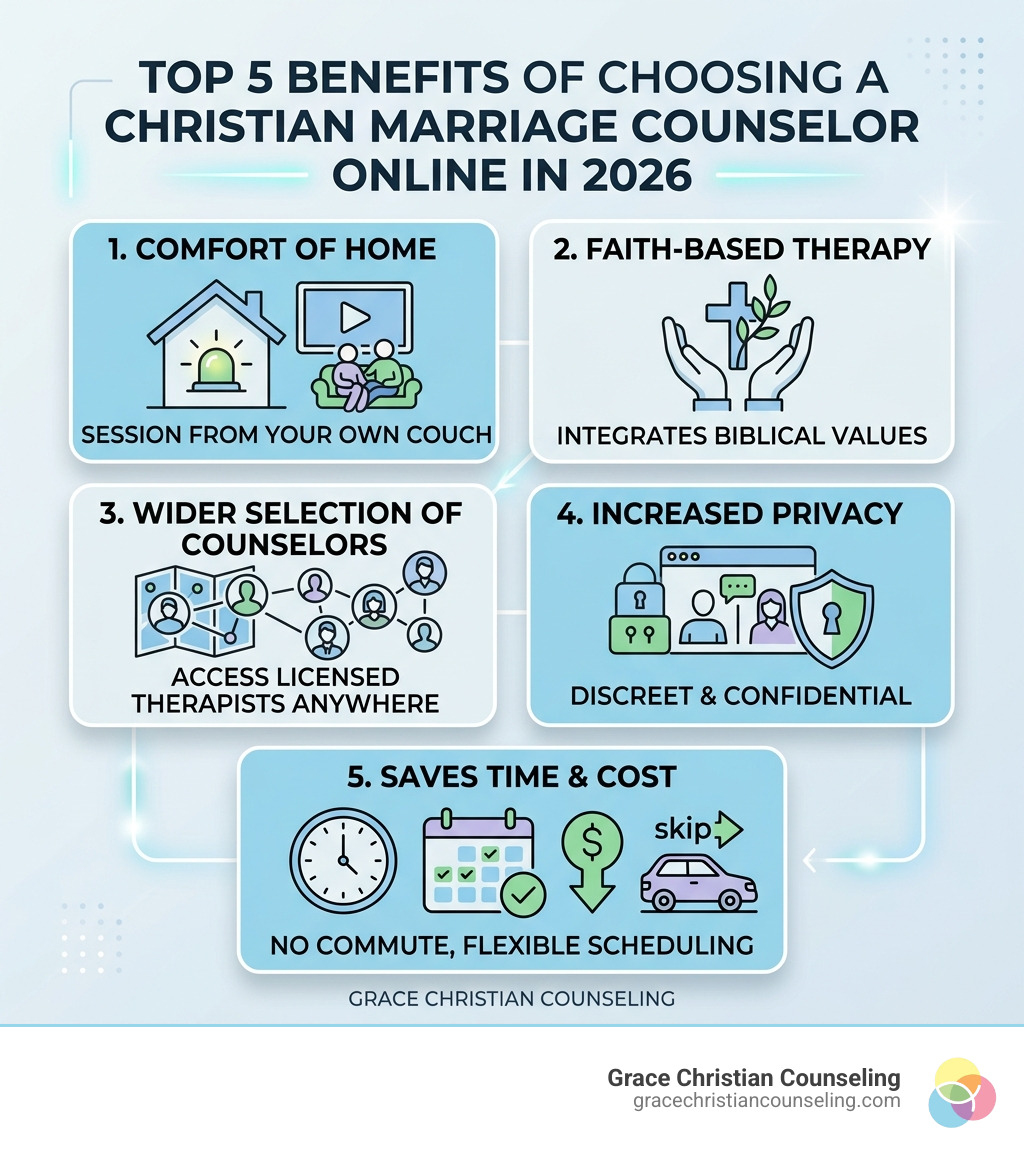
Understanding the Benefits of Online Christian Marriage Counseling
When we talk about choosing a Christian marriage counselor online, we aren’t just talking about a more convenient way to chat. We are talking about a specialized form of care that bridges the gap between clinical excellence and a solid Biblical worldview. In 2026, the landscape of telehealth has matured to the point where virtual sessions are often preferred over traditional office visits.
One of the primary benefits is the integration of faith and science. Many of our clients are looking for more than just “self-help” tips; they want a counselor who understands that God designed our nervous systems and our spirits to work in harmony. Research into Neuroscience Informed Christian Counseling (NICC) shows a staggering 93.6% success rate, with clients reporting real transformation. This approach honors the way God wired us while applying evidence-based psychological tools.
Beyond the spiritual alignment, the practical benefits are hard to ignore:
- Convenience and Accessibility: You don’t have to fight traffic in Pittsburgh or find a babysitter in Uniontown. You can log in from your living room. This is especially vital for those in rural parts of Western Pennsylvania where specialized Christian therapists might be miles away.
- Emotional Safety and Anonymity: For some, walking into a physical office feels exposed. Being in your own home provides a sense of “home court advantage,” making it easier to open up about sensitive topics.
- Proven Effectiveness: Studies have shown that online video conferencing can reduce psychiatric-related hospitalizations by 25%. Furthermore, online treatment has been found to be equally as effective as face-to-face sessions for issues like depression and generalized anxiety.
There is another reason many couples choose online counseling that often gets overlooked: consistency. Research on therapy outcomes repeatedly shows that attending sessions regularly and building a strong relationship with the counselor (called the therapeutic alliance) are meaningful predictors of progress across different therapy approaches. Studies have estimated that the therapeutic alliance contributes to roughly 5–10% of overall improvement in therapy outcomes, regardless of the specific method used. Virtual counseling can remove practical barriers like commute time, scheduling conflicts, and childcare logistics, making it easier for couples to stay engaged in the process over time. For many Christian couples, that consistency creates more opportunities to practice healthier communication, rebuild trust, and apply both clinical tools and biblical principles in everyday life.
For those looking for high-quality, secure care, the options continue to expand across state lines, provided the counselor is licensed in your jurisdiction. At Grace Christian Counseling, we are dedicated to providing this specialized support through our secure virtual platform, ensuring you receive professional care regardless of your location.
Common Issues Addressed by a Christian Marriage Counselor Online

We often see couples who feel like they’ve reached a dead end. They love each other, but they are “stuck.” A Christian marriage counselor online is equipped to handle the same heavy-hitting issues that an in-person therapist would, often with a unique focus on the spiritual covenant of marriage.
Communication Breakdowns
This is the most common reason couples seek us out. When “discussions” turn into “depositions,” a counselor helps you move from being adversaries to being allies. We teach couples how to speak with kindness and listen with patience, reflecting the heart of Christ in their dialogue.
Infidelity and Trust Restoration
Can a marriage survive an affair? Absolutely. We have seen marriages restored after decades of betrayal. It requires a willingness to walk through the pain and apply deep biblical grace. Specialized practitioners in this field boast success rates as high as 98.5%, proving that even the most broken trust can be rebuilt.
The High Cost of Divorce
It is a sobering reality that the average person loses 77% of their net worth in a divorce. Beyond the financial hit, which can include legal costs exceeding $10,000, the emotional toll on children and the spiritual fallout are immense. Investing in counseling is not just a “cost”; it is a protective measure for your family’s future and legacy.
Other Key Areas of Focus:
- Premarital Preparation: Building a foundation on the Rock before the storms hit.
- Blended Family Challenges: Navigating the complexities of “his, hers, and ours” with wisdom.
- Sexual Intimacy: Addressing physical connection through a lens of holiness and mutual joy.
- Parenting Alignment: Getting on the same page so the kids don’t “divide and conquer.”
What to Look for in a Qualified Professional
Not all online counseling is created equal. When you are looking for a Christian marriage counselor online, you want to ensure they aren’t just a “nice person from church,” but a highly trained professional.
We recommend looking for the following helpful markers:
- Professional Licensure: Ensure they are a Licensed Professional Counselor (LPC), Licensed Marriage and Family Therapist (LMFT), or another appropriately licensed mental health professional in your state.
- Faith Alignment: Formal theological education can be a meaningful asset, but it is not the only way a counselor can provide Christ-centered care. Look for someone who respects Scripture, understands your Christian values, and can thoughtfully integrate faith into counseling when appropriate.
- HIPAA Compliance and Session Privacy: Your “couch” might be private, but it is important that your connection is private and secure too. You can also ask the counselor directly about the video platform that they use and how your session is protected on their end. The best way to protect your own privacy is by using a secure home Wi-Fi network instead of public Wi-Fi, joining from a private room, using headphones, and making sure session links are not shared with anyone else.
- Clinical Experience: The best fit is often someone with strong counseling experience, specialized training in couples work, and a clear commitment to ethical, compassionate care. Ask about their background, approach, and experience helping couples with concerns like yours.
Selecting a Qualified Christian Marriage Counselor Online
When narrowing down your choice, ask how the counselor integrates faith into the counseling process. You don’t necessarily need to be from the same denomination, and your counselor does not always need formal theological credentials to offer quality care. What matters is that you share enough core beliefs and expectations for the work to feel spiritually safe and clinically sound. Check for Success Metrics and Client Testimonials. While every journey is unique, seeing a track record of restored marriages provides the hope you need to start.
The Process: How Virtual Sessions Work
If you’ve never done a video session, it might feel a bit awkward at first, but most couples find that after ten minutes, they forget they are looking at a screen.
- The Platform: Most counselors use secure, HIPAA-compliant video conferencing software or specialized telehealth portals. This ensures that what is said in your session stays in your session.
- Session Length and Frequency: Typical sessions run between 45 and 90 minutes. In the beginning, we usually recommend weekly meetings to build momentum.
- The Integration: A typical session might include a check-in on your week, a deep dive into a specific conflict, the application of a Biblical principle (like forgiveness or sacrificial love), and closing in prayer.
- Cost Structures: Pricing for a Christian marriage counselor online varies based on the counselor, session type, insurance coverage or reimbursement rates, and whether you qualify for a reduced fee. Some clients pay a standard private-pay rate, while others may use insurance benefits or receive a sliding-scale rate when available. The best next step is to ask about fees, insurance options, and reduced-rate availability during the initial consultation.
Getting Started with a Christian Marriage Counselor Online
The first step is to contact our care team so they can help match you with a counselor and schedule either an intake appointment or an optional consultation, depending on what is the best fit for your situation. You’ll fill out intake forms (often via a secure portal) and set clear goals. Do you want to stop the fighting? Rebuild trust after an affair? Or simply reconnect spiritually? Setting these goals early keeps the process focused.
Effectiveness and Suitability for Your Relationship
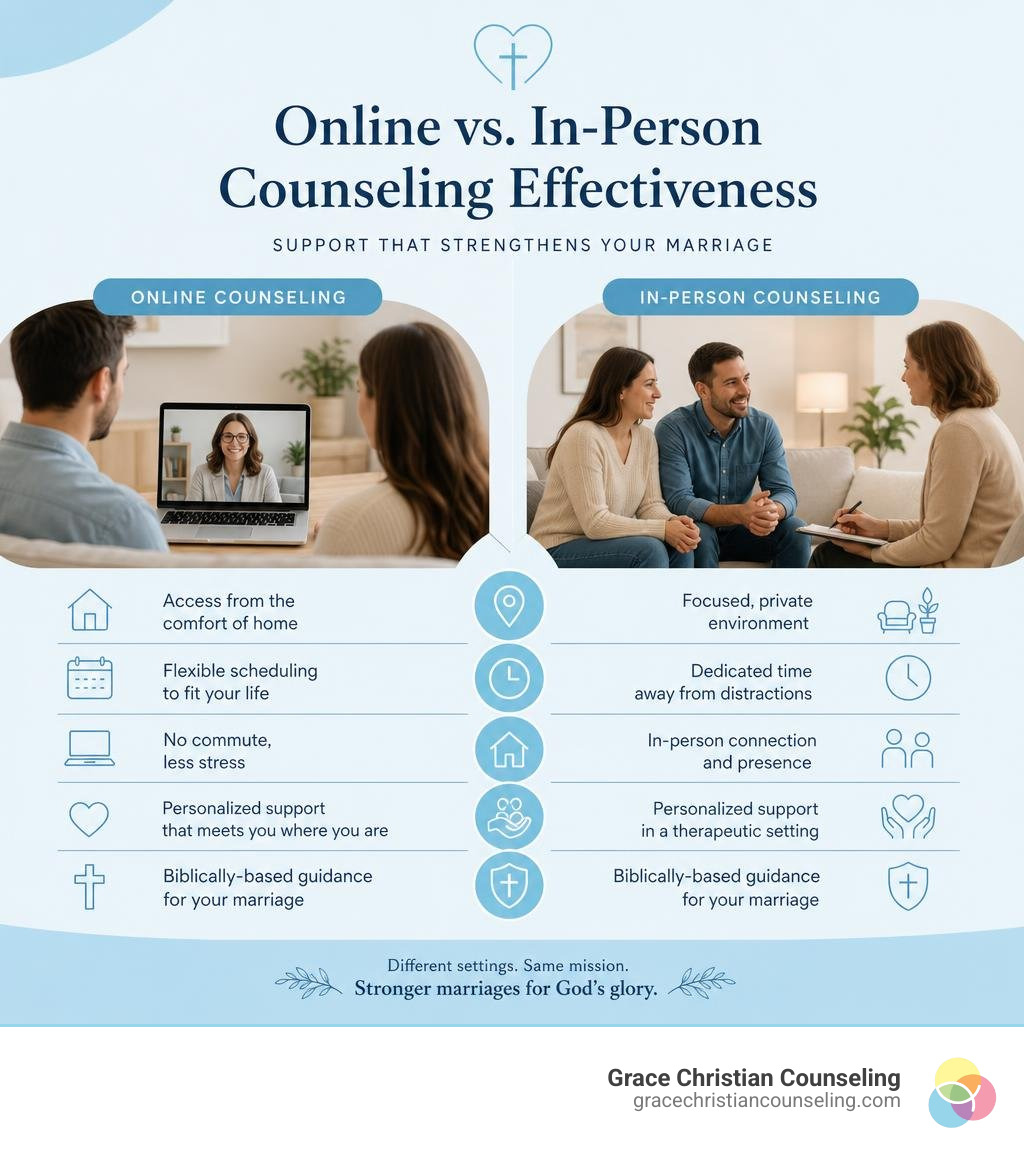
Is online counseling actually as good as sitting in a room together? The data says yes. In many cases, the comfort of being at home actually allows for deeper vulnerability.
When Online Counseling May Not Be Suitable
While virtual sessions can be a helpful and effective option for many couples, online-only counseling is not the best fit for every situation. Some concerns require immediate, local, or higher-level support before ongoing virtual marriage counseling can be helpful.
We do not recommend online-only counseling as the primary form of care in situations involving:
- Active crises: If you or your spouse is experiencing suicidal thoughts, thoughts of harming someone else, or an immediate safety concern, call or text 988 Suicide & Crisis Lifeline in the United States, call 911, or go to the nearest emergency room.
- Severe domestic violence or coercive control: If one partner is in danger, afraid to speak freely, being threatened, or being monitored, couples counseling may not be safe until a safety plan is in place. You can contact The National Domestic Violence Hotline for confidential support and safety planning.
- Major psychiatric episodes or urgent mental health needs: If someone is experiencing psychosis, mania, severe substance withdrawal, or symptoms that require medical stabilization, an in-person crisis team, emergency department, or local mental health provider may be the right first step.
- Substance use concerns requiring specialized care: When substance use is creating immediate safety risks or disrupting daily functioning, a specialized treatment program may be needed alongside or before marriage counseling. The SAMHSA National Helpline and FindTreatment.gov can help you locate support in your area.
In these situations, seeking crisis or local support first is not a failure of faith or commitment to your marriage. It is a wise step toward safety, stabilization, and the kind of care that can make deeper relational healing possible. Once immediate safety needs are addressed, online Christian counseling may still become part of the ongoing healing process for the couple or for each spouse individually.
Frequently Asked Questions about Online Christian Counseling
Is online Christian marriage counseling as effective as in-person therapy?
Yes. Research across multiple journals (like the Journal of Affective Disorders) confirms that online treatment is just as effective as face-to-face treatment for depression, panic disorders, and general anxiety. For marriage specifically, the ability to practice new communication skills in the very environment where you live (your home) can actually accelerate progress.
Virtual care can also make it more realistic for both spouses to attend consistently, which is often an important part of building trust, practicing new communication patterns, and making steady progress over time. Whether you prefer in-person support or the flexibility of online sessions, the goal is the same: compassionate, Christ-centered care that helps your marriage move toward healing.
Do we need to belong to the same denomination to see a Christian counselor?
Not at all. While your counselor will operate from a biblical worldview, most are trained to work with couples from various denominational backgrounds. The focus is on shared faith in Christ and the application of universal biblical principles to your relationship.
How do we know if our marriage issues are too severe for virtual sessions?
If you are both willing to show up and do the work, almost no issue is “too severe” for the virtual format. Whether it’s a “speed bump” after 18 years of marriage or a “dark place” where you are considering separation, a Christian marriage counselor online can provide the tools to turn things around. The only exceptions are active safety crises as mentioned above.
Take the Next Faithful Step Toward a Healthier Marriage
Your marriage is a sacred covenant, a reflection of Christ’s love for the Church. While the world might suggest that walking away is the easiest path, we believe that with the right guidance, your best days in marriage are still ahead of you.
At Grace Christian Counseling, we are honored to serve the people of Pennsylvania, from Pittsburgh and North Huntingdon to Sewickley, Uniontown, Philadelphia and couples across the state through our virtual platform. We combine the best of modern clinical psychology with the timeless truths of Scripture and the guidance of the Holy Spirit.
We serve clients both in person and virtually, and our team has seen how online counseling can help to remove practical barriers that keep couples from getting help sooner, including distance, scheduling limitations, childcare concerns, and anxiety about walking into an office. For many couples, being able to meet from a familiar setting makes it easier to begin honest conversations without adding another stressful commute or logistical hurdle.
If you are ready to stop the cycle of hurt and start the journey of healing, we are here to walk with you. You don’t have to figure this out alone.
More info about marriage counseling services
This guide is for educational and spiritual encouragement and is not a substitute for personalized professional counseling. If you are in crisis, please reach out for immediate help.
Marriage Counseling Online: Does It Actually Work?


