

Foundational Pillars: Christ Centered Relationship Advice for a God-First Partnership
For Christian couples seeking to grow together in faith, Christ-centered relationship advice begins with understanding God’s design for relationships. A Christ-centered relationship is grounded in covenant love rather than temporary emotional highs or personal fulfillment alone. Instead of expecting a partner to meet every emotional or spiritual need, couples look to Christ as their foundation and allow their shared faith to shape how they love, communicate, handle conflict, and make decisions together. This kind of partnership grows through mutual commitment, grace, honesty, forgiveness, and sacrificial love.
Shared faith practices can give couples meaningful ways to stay connected, not only to God, but also to each other. Research has found a connection between shared religious participation and relationship quality. Another study examining spiritual and marital intimacy included 5,720 married adults and found meaningful associations among spiritual intimacy, marital intimacy, spiritual meaning, and well-being. These findings do not mean that spiritual practices automatically create a healthy relationship, but they support the value of examining how a couple’s shared faith and relational connection interact. Also, these practices do not need to be complicated or time-consuming. Couples might pray together before bed, attend church together, talk about what God is teaching them, or turn to Scripture together during a difficult season.
| Worldly Relationship Mindset | Christ-Centered Relationship Approach | Biblical Reference |
|---|---|---|
| Foundation: Prioritizing personal fulfillment and what you receive from the relationship | Foundation: Practicing covenant commitment, sacrificial love, and mutual care anchored in Christ | Ephesians 5:25-33 |
| Primary Goal: Making personal happiness or self-fulfillment the ultimate measure of the relationship | Primary Goal: Growing together in love, faithfulness, spiritual maturity, and God’s purposes | 1 Thessalonians 4:3-4 |
| Conflict Resolution: Focusing on being right, defending yourself, or withdrawing when conflict becomes uncomfortable | Conflict Resolution: Seeking understanding, repentance, forgiveness, and speaking truth in love | Colossians 3:12-14 |
| Source of Identity: Looking to your partner to provide your ultimate worth, security, or validation | Source of Identity: Grounding your identity in Christ while receiving healthy love and support from your partner | Galatians 2:20 |
| Spiritual Community: Becoming overly self-contained as a couple or disconnected from Christian community | Spiritual Community: Building supportive relationships and actively participating in a healthy church community | Hebrews 10:24-25 |
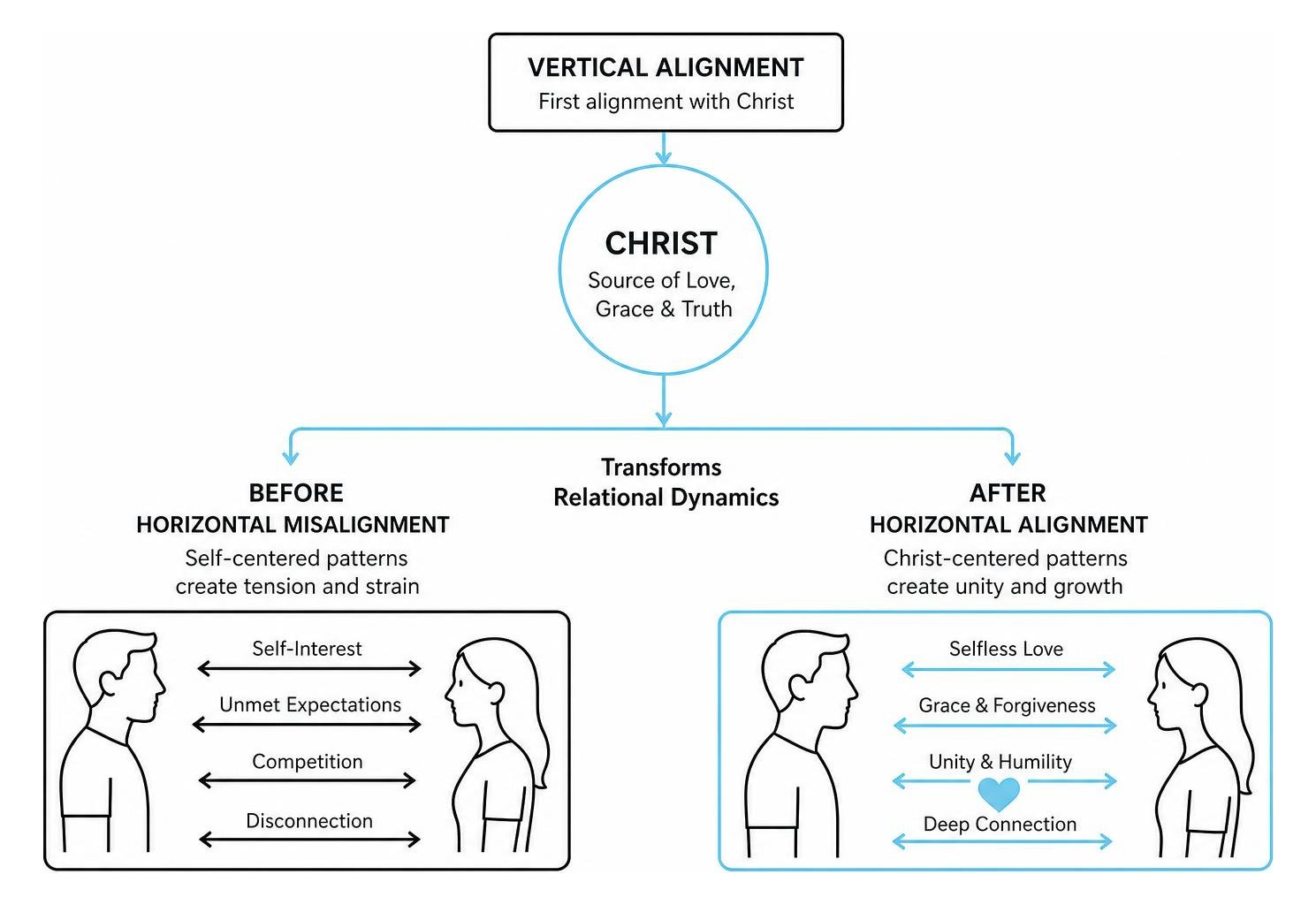
As explored by the Biblical Counseling Coalition, placing human beings at the absolute center of our desires inevitably leads to emotional exhaustion. True stability occurs when Jesus holds supreme preeminence in both hearts.
Shifting from Person-Centered Idolatry to Christ’s Supremacy
One of the most subtle pitfalls in dating and marriage is relational idolatry. This occurs when we expect our significant other to provide the ultimate joy, security, peace, and purpose that only God can supply. Relational idolatry can develop when a partner begins looking to the relationship for a level of identity, security, or fulfillment that no other person can consistently provide. Over time, ordinary disappointments may begin to feel much more threatening, contributing to anxiety, resentment, reassurance-seeking, or attempts to control the relationship.
Christian counseling can help couples recognize when healthy dependence and connection have become unbalanced. Rather than labeling every close or emotionally dependent relationship as ‘codependent,’ counseling can help partners explore their attachment patterns, expectations, boundaries, and sources of identity while strengthening their relationship with Christ. Depending on a spouse for love, comfort, encouragement, and support is not the same as making that person an idol.
God created people for relationship, and healthy couples learn to both give and receive care. The goal is not emotional independence, but healthy interdependence: partners can become deeply connected and responsive to one another without asking the relationship to carry the full weight of their identity, worth, or ultimate security.
In our guide, The Ultimate Guide to Christian Counseling for Relationships, we emphasize that healthy intimacy requires two individuals whose identities are already anchored in Jesus. When both partners find their primary security in the Lord, they can freely love without placing unrealistic emotional demands on each other.
Balancing Individual Faith Disciplines with Shared Spiritual Habits
A flourishing spiritual connection between two people cannot bypass personal spiritual maturity. You cannot export to your partner what you have not cultivated with God in private. A shared spiritual life cannot replace each partner’s personal relationship with God. Each person needs space to seek God individually through prayer, Scripture, reflection, and other spiritual practices rather than depending on a partner to carry the responsibility for their spiritual growth.
At the same time, Christian relationships are not simply two individual spiritual lives happening side by side. God created people for relationship, and couples can both give and receive encouragement, comfort, accountability, affection, wisdom, and care. Personal spiritual maturity and shared spiritual connection can grow together as couples seek God individually and encourage one another in their faith.
Simultaneously, establishing shared spiritual rhythms knits hearts together. Consider these practical disciplines:
- Setting aside five minutes before bedtime to pray aloud for each other’s burdens.
- Reading through a book of the Bible together, such as the Gospel of Mark or James, discussing practical takeaways.
- Sharing weekly reflections over dinner about what the Holy Spirit is teaching each of you.
- Keeping a shared prayer journal to record answered prayers, celebrating God’s provision over time.
By starting your marriage on a firm foundation of faith, you establish healthy patterns that sustain your union during challenging seasons of life.
Essential Christ Centered Relationship Advice for Modern Couples
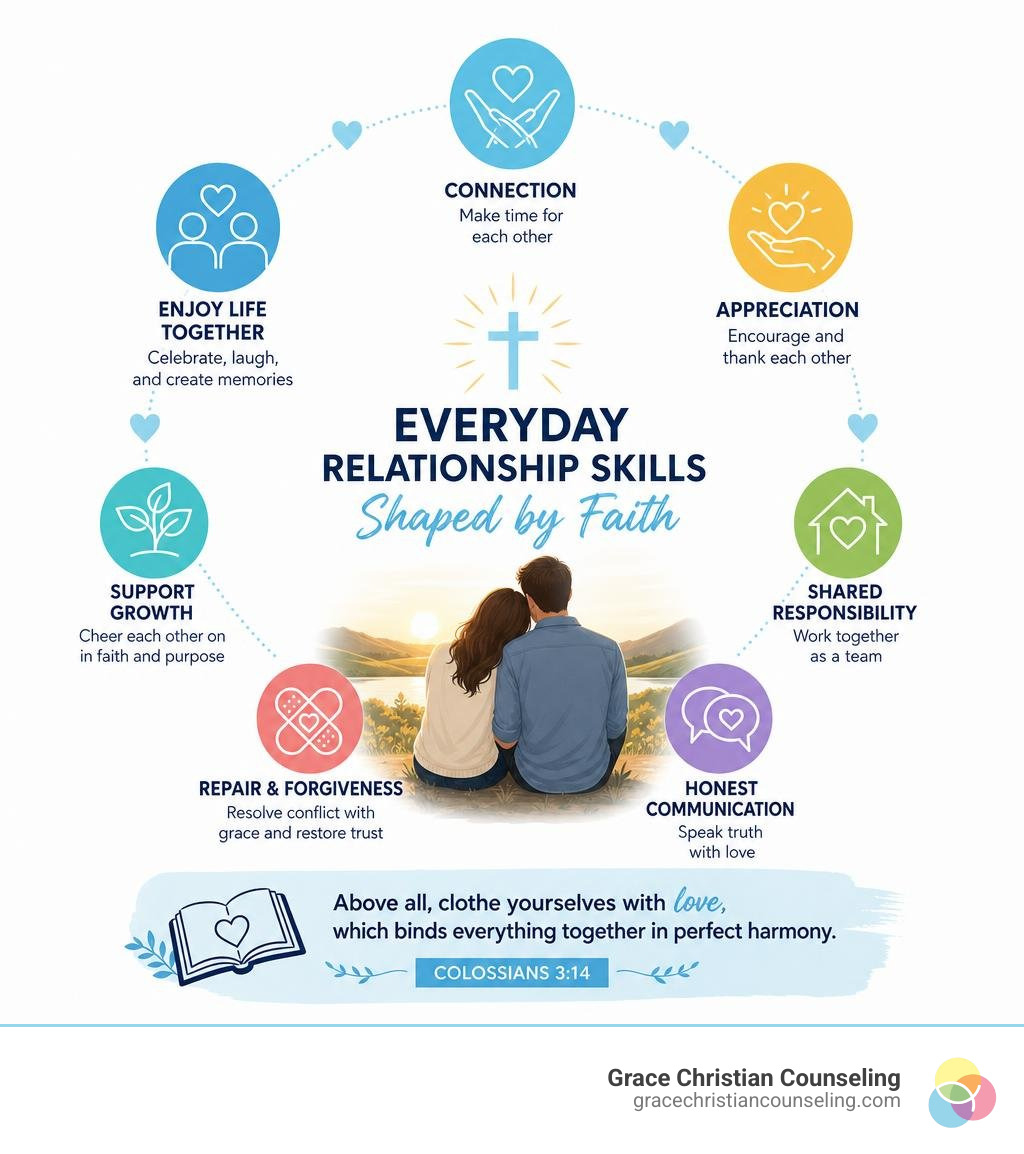
Applying Godly wisdom to modern dating and marriage requires intentional effort in an increasingly distracted culture. Maintaining a God-centered relationship in a secular world requires prioritizing spiritual practices over cultural pressures. Couples must deliberately curate their time, media intake, and relationship habits to reflect the kingdom of God. Christ centered relationship advice also helps couples connect spiritual conviction with ordinary habits of care, communication, and repair.
A Christ-centered relationship is not built through spiritual disciplines alone. Faith also shapes the ordinary ways couples care for one another (i.e., making time for connection, showing affection and appreciation, sharing responsibilities, talking openly about finances and intimacy, supporting one another’s individual growth, enjoying life together, and repairing the relationship after hurt or conflict). These everyday relationship skills are not separate from a biblical worldview; they are practical opportunities to live out patience, faithfulness, kindness, honesty, self-control, and sacrificial love.
Applying Christ-Centered Relationship Advice to Daily Communication
Gospel-centered communication is rooted in active listening, humility, and speaking truth with gentleness. In Ephesians 4:29, Scripture reminds us to let no corrupt talk come out of our mouths, but only what is good for building others up. When partners communicate with Christlike empathy, they create an atmosphere of psychological and emotional safety.
Good communication also involves learning to know a partner well. Couples change over time, and loving someone attentively means remaining curious about what they are thinking, feeling, fearing, hoping for, and carrying in a particular season of life. Asking thoughtful questions, listening without immediately trying to fix the problem, expressing appreciation, and noticing bids for connection can help couples remain emotionally connected even when life becomes busy.
Sometimes conflict grows not only from what a partner says, but from how the other person interprets those words or actions. Thoughts such as ‘They don’t care about me,’ ‘We always have this problem,’ or ‘If they really loved me, they would know what I need’ can quickly intensify an already difficult conversation. In counseling, these are sometimes called cognitive distortions, which are patterns such as mind reading, catastrophizing, or all-or-nothing thinking.
At Grace Christian Counseling, our therapists may use tools from Cognitive Behavioral Therapy (CBT) to help couples recognize these patterns, slow down their reactions, and understand one another more clearly. Biblical principles such as humility, patience, grace, forgiveness, and speaking truth in love can also help shape the way partners respond to one another. To explore deeper communication tools, read our guide on how to improve communication in marriage.
Practical Christ-Centered Relationship Advice for Singles and Dating
For singles, the season of singleness is not a waiting room; it is an active season of personal discipleship and growth. Singles who focus on personal spiritual growth and identity in Christ are better prepared for a God-centered relationship.
When evaluating potential partners, prioritize spiritual character over superficial attraction:
- Look for the Fruit of the Spirit: Notice whether a person exhibits patience, kindness, humility, and self-control during moments of stress.
- Assess Spiritual Alignment: Ensure you are equally yoked, sharing foundational biblical convictions and a lifestyle of active repentance.
- Observe Local Church Commitment: Look for someone who is consistently serving and submitted to a local church body rather than pursuing an isolated faith.
- Practice Intentional Discernment: Seek pastoral guidance and understand why every Christian couple needs counseling before the wedding to address relational blind spots early.
Navigating Conflict, Forgiveness, and Healthy Boundaries

Conflict is inevitable in any relationship, but for believers, friction serves as an instrument of sanctification. Forgiveness and grace are central to Christ-centered relationships, with partners who practice these reporting greater relational resilience. Rather than aiming to “win” an argument, Godly partners aim for reconciliation and mutual understanding.
It’s also important to recognize that not every relationship problem is simply a communication problem. Healthy conflict requires both partners to feel emotionally and physically safe. Forgiveness does not mean pretending repeated harm did not happen, tolerating abuse, or remaining silent about controlling or threatening behavior. If disagreements involve intimidation, coercion, threats, physical violence, sexual pressure, or fear for safety, getting individual support and carefully considering safety may need to come before traditional couples counseling.
When unresolved patterns lead to persistent marital gridlock, professional guidance can help. Learn more about our approach in From Conflict to Covenant: Christian Couples Therapy.
Guarding Emotional and Physical Purity in a Digital Age
Couples who establish healthy boundaries around time, technology, and emotional intimacy report greater trust and relational health. Boundaries are not restrictive walls designed to stifle joy; they are protective fences that nurture genuine intimacy and honor God’s design for relationships.
Consider implementing clear boundaries in these key areas:
- Physical Purity: Commit to clear physical standards before marriage that honor God’s design for sexuality, avoiding situations that compromise personal integrity.
- Digital and Media Stewardship: Establish screen-free hours in the evening to foster meaningful face-to-face dialogue. Protect your home environment by guarding what media you consume.
- Emotional Boundaries with Others: Guard your heart by avoiding inappropriate emotional confidences with coworkers or third parties outside your relationship.
- Resources for Support: For pastoral counseling, health and wellness resources, and support alongside clinical counseling, Grace Christian Counseling also recommends NuWellonline.com as an additional resource for strengthening healthy relational guardrails.
Biblical Conflict Resolution and the Power of Grace
Scripture provides clear, actionable steps for resolving interpersonal conflict. In James 1:19, believers are instructed to be quick to hear, slow to speak, and slow to anger. Similarly, Jesus teaches the principle of examining our own hearts before addressing a partner’s shortcomings:
*”Why do you look at the speck of sawdust in your brother’s eye and pay no attention to the plank in your own eye?”*
When emotions become too intense for a productive conversation, couples may benefit from taking a temporary break rather than continuing to argue while overwhelmed. Partners can agree on a time to return to the conversation and use the break to calm down, pray, reflect, or gather their thoughts. The goal is not to avoid the disagreement, but to return to it with greater clarity and self-control. For couples struggling with chronic distress, read can this marriage be saved? Insights from biblical conflict counseling to understand how biblical peacemaking restores broken bonds.
Anchoring Your Relationship in Church Community and Clinical Support

A Christ-centered relationship is never meant to exist on a spiritual island. Inward-focused couples who isolate themselves from the wider body of Christ often struggle under the weight of unrealistic expectations. For Christian couples, involvement in a healthy church community can provide something a relationship cannot create entirely on its own: connection with other believers, opportunities for worship and service, spiritual encouragement, and trusted people to turn to during difficult seasons. A strong relationship does not have to function in isolation.
The Vital Role of Local Church Engagement
Active involvement in a local church provides an external anchor of grace, teaching, and accountability. Sitting under the faithful preaching of God’s Word, participating in the Lord’s Supper, and serving together protects couples from self-centered spiritual drift.
Serving together can also give couples opportunities to practice teamwork while investing in something beyond their own relationship. Whether volunteering in youth ministry, greeting visitors, supporting another family, or hosting a small group, shared service can become one meaningful way for couples to live out their faith together. Whether volunteering in youth ministry, greeting visitors, or hosting a small group in your home, serving others shifts your focus outward. This cooperative ministry dynamic strengthens teamwork and deepens your shared spiritual mission.
Knowing When to Seek Faith-Based Professional Counseling
While church community is essential, complex relational struggles, unhealed trauma, or underlying mental health challenges often require specialized clinical care. Depression and anxiety can significantly strain a relationship, frequently presenting as fatigue, irritability, concentration difficulties, physical aches, or hidden functional impairment. When these symptoms arise, a thorough clinical assessment is vital to provide an accurate diagnosis and treatment path.
Couples counseling also has a substantial research base. A meta-analysis of 58 studies representing 2,092 couples found that couple therapy produced large improvements in relationship satisfaction, along with significant improvements in communication, emotional intimacy, and partner behaviors. Although outcomes vary from couple to couple, these findings provide evidence that professional counseling can offer more than a place to talk—it can help couples work on specific patterns that contribute to relationship distress.
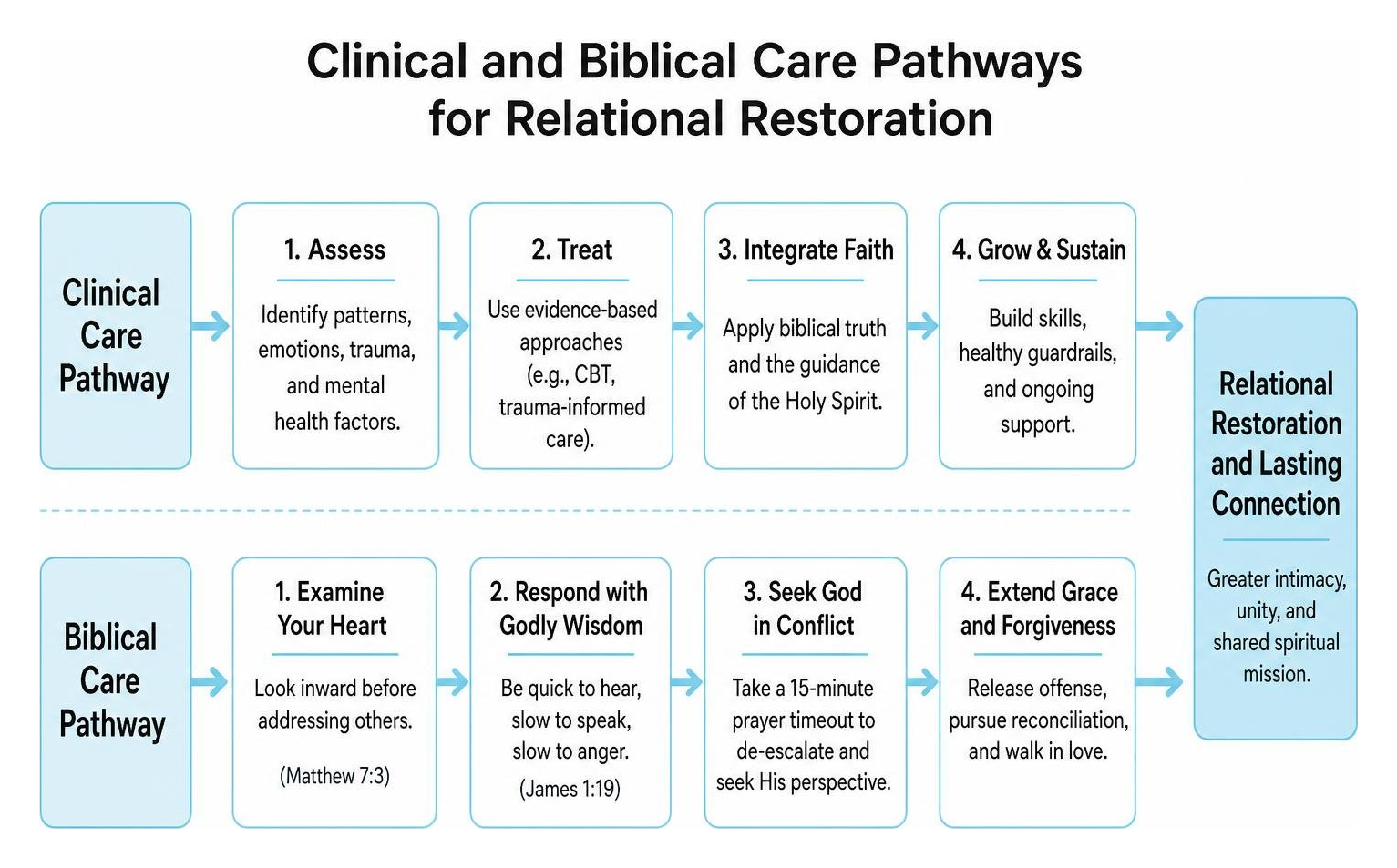
At Grace Christian Counseling, our licensed clinicians (LAPC, LSW) integrate trauma-informed care and CBT with biblical truth and the guidance of the Holy Spirit. If you are experiencing persistent gridlock, emotional distance, or communication breakdown, explore the signs you need couples counseling to determine if professional therapy is the right next step. For a deeper look at our clinical model, review the ultimate guide to Christian therapy for couples and why it works.
Frequently Asked Questions About Christ-Centered Relationships
How do couples keep a relationship God-centered with a busy schedule?
Keeping God at the center does not require hours of daily theological study. Focus on simple, consistent micro-disciplines: pray together for two minutes before leaving for work, text each other an encouraging Scripture verse midday, and practice intentional gratitude over dinner by discussing how God showed His faithfulness during your week.
What are the main warning signs of spiritual drift in dating?
Key warning signs include withdrawing from corporate church worship, neglecting personal prayer, rationalizing compromises in physical boundaries, and relying entirely on your partner for emotional validation. If your relationship is pulling you away from the body of Christ rather than drawing you closer, pause and re-evaluate your boundaries.
How does a Christ-centered relationship navigate major disagreements?
Begin by looking upward to Christ in prayer, asking the Holy Spirit to reveal any pride or self-righteousness. Conduct personal self-examination before addressing your partner, listen attentively without interrupting, speak the truth in love, and commit to prompt forgiveness and biblical restitution rather than harboring lingering resentment.
Conclusion
Building a resilient, Christ-centered relationship is an ongoing journey of grace, humility, and intentional discipleship. When both partners anchor their ultimate hope in the supremacy of Jesus, their relationship is transformed from a fragile arrangement into an enduring covenant that reflects God’s steadfast love.
If you and your partner are facing emotional fatigue, communication barriers, or marital distress, you do not have to walk this path alone. Grace Christian Counseling provides compassionate, Christ-centered, and evidence-based care for individuals, couples, and families. We serve clients across Western Pennsylvania, including Pittsburgh, North Huntingdon, Penn Hills, Uniontown, Bethel Park, Sewickley, and Mt. Lebanon, as well as through secure online counseling.
Whether you need weekly therapy or an intensive format such as our Christian marriage intensive, our licensed counselors are here to help you heal and thrive. Contact us today to schedule your confidential consultation.
This guide is for educational and spiritual encouragement and is not a substitute for personalized professional counseling. If you are in crisis, please reach out for immediate help.


