

Navigating Christian Counseling Marriage Problems with Faith and Clinical Expertise
Christian counseling for marriage problems is a faith-integrated approach to couples therapy that blends evidence-based clinical methods with biblical truth, prayer, and the guidance of the Holy Spirit. If you are looking for a quick overview of what it involves and how it can help, here is what you need to know:
What Christian marriage counseling addresses:
- Repeated conflict cycles and communication breakdowns
- Emotional distance, loneliness, and loss of intimacy
- Betrayal, infidelity, and broken trust
- Power struggles and control issues
- Unresolved pain from the past, including unmet expectations, ungrieved loss, and unforgiven offenses
- Spiritual disconnect within the marriage covenant
Who it is for: Couples at any stage, whether newly married and struggling, or years into a painful cycle with no clear way forward.
What to expect: A licensed counselor (LAPC or LSW) will help you and your spouse identify root issues, not just surface arguments, while grounding the healing process in Scripture and clinically proven tools like Cognitive Behavioral Therapy (CBT) and Emotionally Focused Therapy (EFT).
Most couples do not walk into a counselor’s office after their first bad argument. Although an often-repeated claim says couples wait six years before seeking help, newer research challenges that figure. A 2021 study of 270 people who entered couples therapy found an average delay of 2.68 years, with most seeking help within two years of serious relationship problems beginning. Even so, painful patterns can become harder to change when couples struggle alone for extended periods.
If that sounds familiar, you are not alone, and it is not too late.
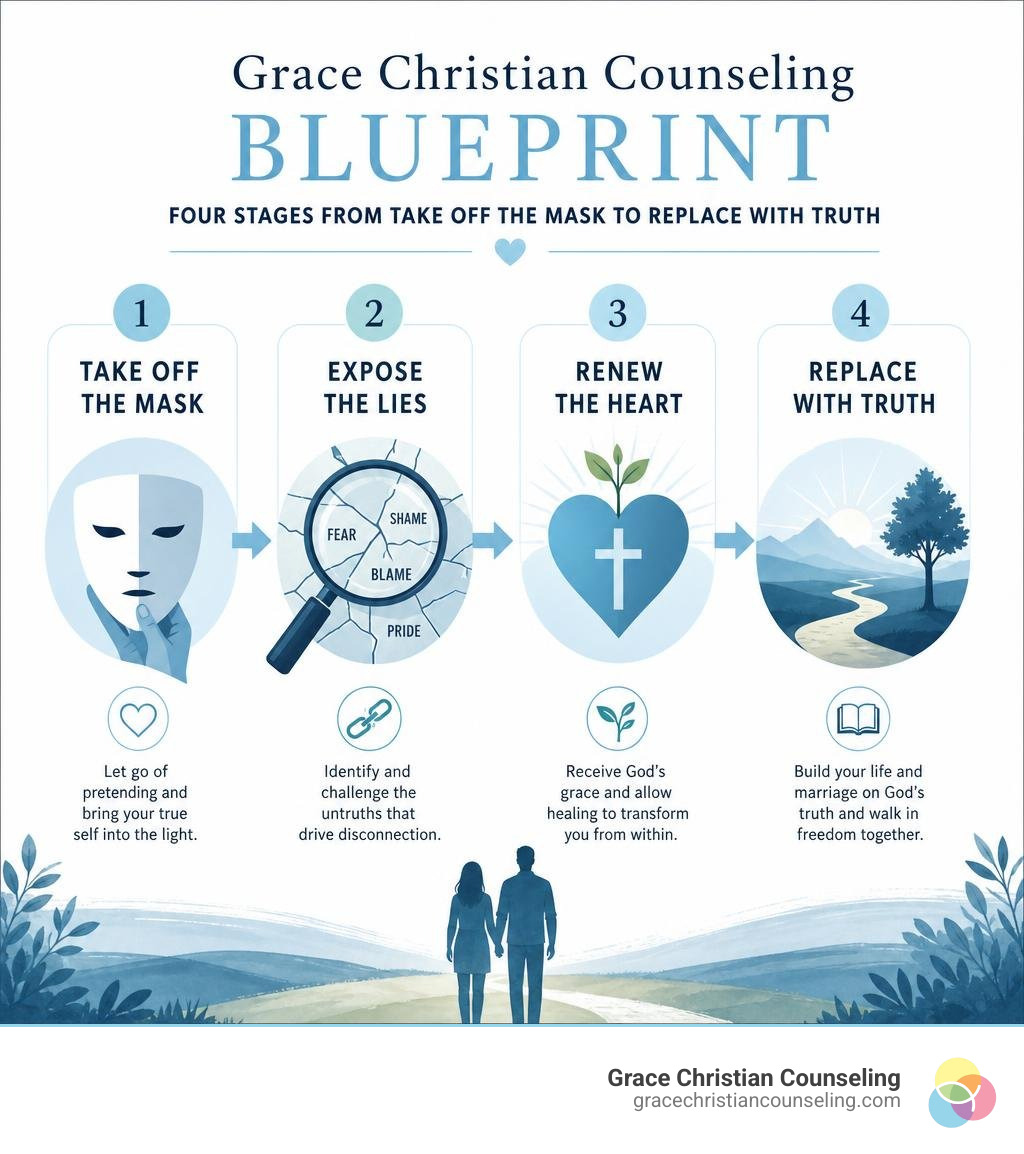
At Grace Christian Counseling, we serve couples across Western Pennsylvania, including Pittsburgh, North Huntingdon, Penn Hills, and surrounding communities, as well as online across the state. Our approach follows the Counseling Blueprint, a four-stage journey designed to bring genuine, lasting healing to your marriage.
When a marriage faces severe strain, couples often feel torn between two worlds. They may wonder if they should seek clinical, evidence-based psychological help, or if they should simply pray more and consult their pastor. At Grace Christian Counseling, we believe you do not have to choose between clinical excellence and deep biblical faith.

Marriage is not merely a legal contract or a social arrangement; it is a sacred covenant designed by God. As scripture reminds us in Mark 10:9, what God has joined together, let not man separate. Because marriage is a covenant, the challenges couples face are often a mix of emotional wounds, psychological patterns, and spiritual warfare. Our licensed professionals, including Licensed Associate Professional Counselors (LAPCs) and Licensed Social Workers (LSWs), are uniquely trained to navigate these overlapping dynamics. If you want to learn more about how we structure this care, you can read more info about faith integrated therapy.
By blending clinical psychology with biblical truth, we help couples look at their struggles through a holistic lens. We address the psychological habits that keep you stuck, while also honoring the biblical call to mutual submission, respect, and sacrificial love. For those seeking additional mental health resources and virtual support, platforms like NuWell Online also highlight the growing value of accessible, professional care.
What Distinguishes Christian Marriage Counseling from Secular Approaches?
Evidence-based couples counseling can offer valuable tools for understanding communication patterns, emotional responses, attachment, conflict, and relationship dynamics. Christian marriage counseling can incorporate these clinical approaches while also making room for the beliefs that shape how Christian couples understand marriage, including covenant, forgiveness, repentance, grace, sacrificial love, and dependence on God.
At Grace Christian Counseling, we approach marriage from a distinctly biblical worldview rather than treating faith as an optional addition to therapy. Sessions may integrate Scripture and prayer while using appropriate clinical tools to help couples understand unhealthy patterns, communicate more effectively, address emotional wounds, and pursue healthier relationships. For a deeper look at this integration, discover more info about Christ centered therapy.
We are called to walk in forgiveness, as highlighted in Ephesians 4:32, which instructs us to be kind to one another, tenderhearted, forgiving one another, as God in Christ forgave us. By centering therapy on Christ, we help couples move beyond mere behavior modification and experience deep, heart-level restoration. For a deeper look at this spiritual transformation, discover more info about Christ centered therapy.
Recognizing the Signs of Christian Counseling Marriage Problems
It is common for couples to minimize their struggles, hoping that a difficult season will simply pass on its own. However, ignoring the warning signs often allows resentment to build. Recognizing when your relationship has shifted from normal marital tension into a serious crisis is the first step toward recovery.
| Minor Marital Tension | Acute Marital Crisis |
|---|---|
| Occasional disagreements over daily routines | Chronic, circular arguments with no resolution |
| Temporary feelings of disconnect during busy seasons | Deep emotional distance, feeling like roommates |
| Intentional periods of space to cool down | Prolonged withdrawal, stonewalling, or complete apathy |
| Surface-level frustrations about finances or chores | Broken trust, secret behaviors, or infidelity |
When a marriage is in trouble, the signs can manifest physically, emotionally, and spiritually. You might notice a complete loss of physical intimacy, a constant state of defensiveness, or a feeling of hopelessness when thinking about the future. Sometimes, children’s behavioral changes can also serve as a barometer, reflecting the unspoken tension in the home.
When couples delay seeking help, active conflict can sometimes give way to emotional withdrawal or apathy. If you recognize growing distance, repeated unresolved conflict, or other concerning patterns in your own relationship, you can explore more info about recognizing warning signs and consider whether professional support could help you determine your next steps.
Unpacking the Past: Moving from Surface Conflicts to Root Heart Issues
In our counseling practice, we often find that couples argue about “fruit issues” rather than “root issues.” Fruit issues are the surface-level arguments, such as disagreements over finances, parenting styles, or household chores. Root issues, however, are the deeper spiritual and emotional wounds hiding beneath the surface.

To experience lasting change, couples must do the hard work of looking below the surface. This is where we identify the “sin behind the sin,” which often includes unconfessed sin, pride, or deep-seated fears. Marriages often get stuck in repetitive conflict cycles because of unresolved past baggage. We typically categorize these past unresolved issues into five key areas:
- Unmet Expectations: Unspoken or unrealistic expectations placed on a spouse to heal past wounds or provide ultimate satisfaction, a role only God can fill.
- Ungrieved Loss: Hidden grief from past losses, such as a miscarriage, the death of a parent, or a previous divorce, which quietly fuels current emotional volatility.
- Unconfessed Sin: Secret habits, deceptions, or patterns of behavior that create spiritual barriers between spouses.
- Unforgiven Offenses: Lingering bitterness and resentment from past hurts that act as triggers, causing a spouse to go from zero to ninety in seconds during an argument.
- Unresolved Conflict: Old arguments that were swept under the rug rather than biblically resolved, leaving a foundation of emotional instability.
Scripture calls us to bear with one another and forgive each other, as outlined in Colossians 3:13. When we unpack this baggage and submit it to the Lord, we clear the way for genuine reconciliation. To understand how this process unfolds in therapy, read more info about saving relationships.
Breaking Negative Communication Patterns and the Four Horsemen
When communication breaks down, couples often fall into predictable, destructive cycles. Renowned relationship researcher John Gottman identified four specific communication patterns, known as the “Four Horsemen,” that strongly predict the end of a relationship:
- Criticism: Attacking your partner’s character or personality rather than addressing a specific behavior.
- Defensiveness: Warding off a perceived attack by making excuses, cross-complaining, or playing the victim.
- Stonewalling: Withdrawing from the interaction, shutting down, and refusing to respond.
- Contempt: Speaking from a place of superiority, using sarcasm, cynicism, or hostile humor to demean your partner.
To break these patterns, couples must learn the art of emotional regulation and self-soothing. When a discussion escalates, our physiological trauma responses, such as fight, flight, freeze, or fawn, can take over, making productive conversation impossible. In counseling, we teach couples how to recognize these triggers, call for constructive timeouts, and replace harsh criticism with gentle, vulnerable expressions of their needs. For practical tips on transforming your conversations, explore more info about improving communication.
Overcoming Power Struggles and the Need for Control
At the heart of many communication problems lies a deeper, unaddressed struggle for control. When we feel unsafe, hurt, or vulnerable, our natural, fallen instinct is to protect ourselves by trying to control our environment, our circumstances, and our spouse.
This struggle for control dates back to the Fall in Genesis 3:16, which describes the natural tension and desire for dominance that entered human relationships. Control can show up in subtle ways, such as constant correction, emotional withdrawal, spiritual superiority, or needing to have the final word in every disagreement.
True healing requires both partners to recognize that control is driven by fear and pride. From a Christian perspective, the antidote to control is surrender. Surrender does not mean staying silent in the face of unhealthy behavior; rather, it means releasing the demand to manage your spouse’s actions and placing your marriage under the authority of God. When we lay down our need to win, we create space for humility, mutual submission, and genuine partnership.
It is also important to distinguish ordinary marital power struggles from coercive control or abuse. If one spouse uses intimidation, threats, surveillance, isolation, financial control, sexual coercion, physical violence, or other behaviors to create fear and maintain power over the other, the problem should not be treated simply as a mutual communication breakdown. Safety and an individualized professional assessment should come first, and traditional couples counseling may not always be appropriate.
Rebuilding Trust and Restoring Connection After Betrayal
Rebuilding a marriage after a major betrayal, such as infidelity, financial deception, or emotional affairs, is one of the most challenging journeys a couple can undertake. The discovery of betrayal triggers a profound trauma response in the hurting spouse, shattering their sense of safety, significance, and security.
Hearing from betrayal is not a quick process; it typically takes anywhere from eighteen months to several years of consistent, intentional effort. True reconciliation requires a clear distinction between forgiveness and the rebuilding of trust. Forgiveness is a spiritual decision to release the offender to God, which can happen immediately. Trust, however, must be rebuilt gradually over time through consistent, transparent, and honest behavior.
The spouse who caused the hurt must practice complete transparency, avoid minimizing the impact of their actions, and patiently walk through the healing process without demanding immediate restoration. For couples navigating this painful road, we offer specialized guidance; read more info about recovering from infidelity. Additionally, utilizing structured tools like the Marriage First Aid Kit, Focus on the Family can provide immediate stabilization strategies during the initial shock of discovery.
The Role of Emotional and Relational Intelligence in Healing
To sustain long-term healing, couples must develop both emotional and relational intelligence. Emotional intelligence involves the ability to identify, understand, and manage your own emotions, particularly difficult ones like anger, fear, and grief. Relational intelligence is the capacity to understand and connect with your spouse’s emotional world, practicing deep empathy and active listening.
Jesus serves as our ultimate model for emotional regulation. He experienced intense emotions, including grief, anger, and sorrow, yet He never allowed His emotions to dictate unrighteous actions. Instead, He responded through virtuous, godly principles.
In therapy, we help couples move away from pathologizing each other with labels or focusing solely on proving who is right. Instead, we teach partners how to express vulnerability. When a spouse can say, “I feel lonely and scared,” rather than, “You never spend time with me,” it shifts the dynamic from defense to connection, fostering a safe environment where true intimacy can grow.
When to Choose a Marriage Intensive Over Weekly Counseling
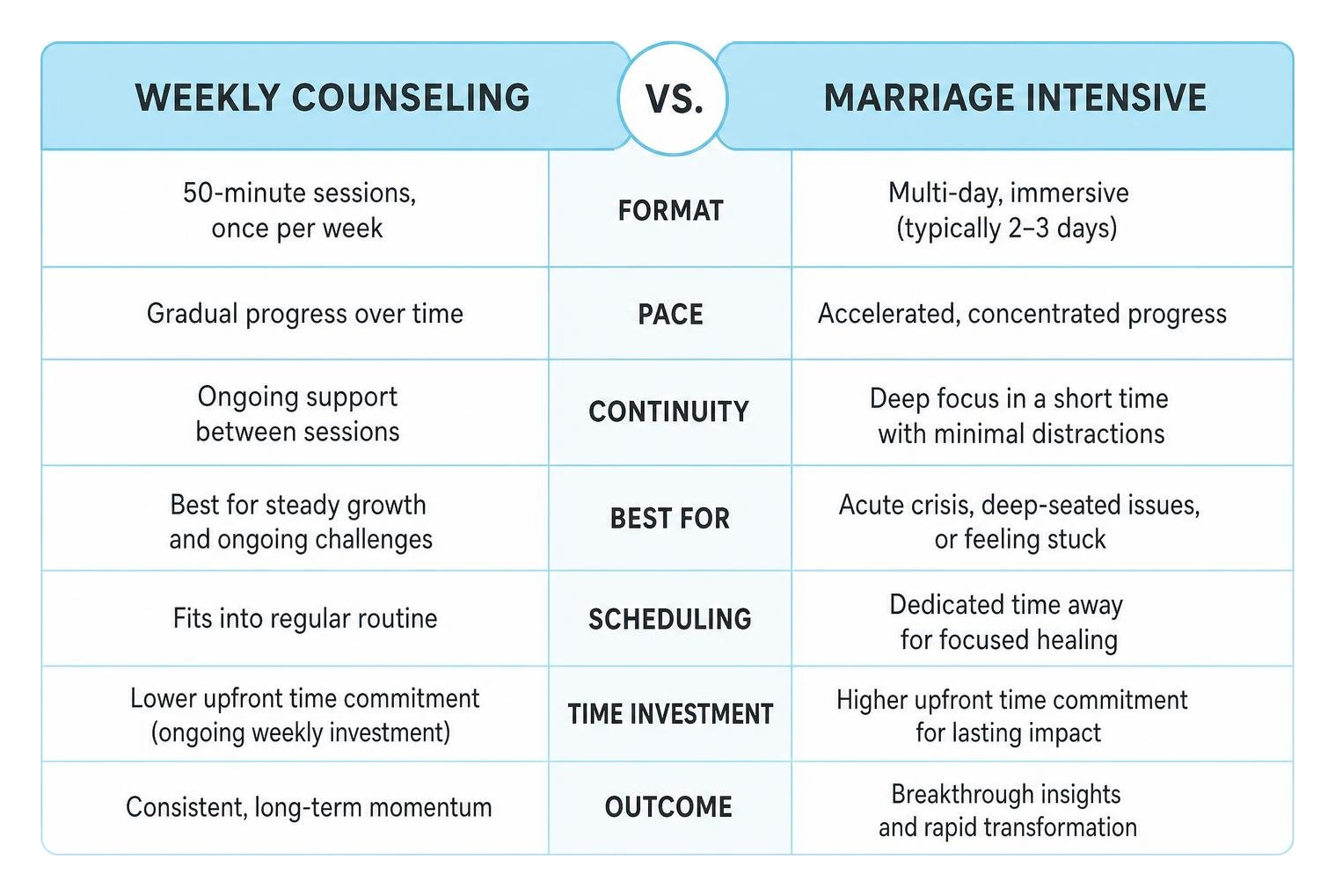
While weekly counseling can be helpful for many couples, there are times when a more concentrated approach may be beneficial. At Grace Christian Counseling, our Marriage Intensive is a focused 6–8-hour, one-day counseling experience that gives couples extended time to explore their relationship concerns, identify patterns, and begin working on practical strategies for moving forward.
A marriage intensive may be worth considering when:
- A marriage is in an acute crisis, and the couple is on the brink of separation or divorce.
- Weekly, fifty-minute sessions do not provide enough time to process complex trauma or deep-seated resentment.
- Schedule constraints or geographic distances make weekly in-person visits difficult.
- The couple feels stuck in a repetitive cycle and needs a structured, distraction-free environment to jumpstart their healing.
During the intensive, couples complete a Gottman Assessment and spend focused time with a Gottman Method-trained marriage therapist reviewing relationship strengths, areas of concern, and recurring patterns. The second portion focuses on practical conflict strategies and processing significant relationship issues, while incorporating Grace Christian Counseling’s Christ-centered Counseling Blueprint. If you believe your relationship could benefit from this concentrated approach, you can learn more info about marriage intensives and whether an intensive may be appropriate for you.
Practical Steps for Couples to Reinforce Progress at Home
The work of marriage counseling does not end when you walk out of the therapist’s office or close your laptop screen. The real transformation happens in the ordinary, day-to-day moments at home. To reinforce the progress made during your sessions, couples must establish intentional, healthy habits.
We encourage couples to implement small, daily connection rituals. This can include a ten-minute daily check-in where you ask each other, “How is your heart today?” rather than discussing logistics like schedules and chores. Shared prayer is another powerful tool; praying together regularly helps soften hearts, builds spiritual intimacy, and realigns your focus on God’s design for your covenant.
Additionally, completing assigned therapeutic homework, such as communication exercises or reading specific biblical passages, keeps the momentum going between sessions. For practical advice on how to start this journey well, read more info about preparing for counseling.
Breaking the Cycle of Christian Counseling Marriage Problems at Home
To maintain emotional safety at home, couples need a clear plan for resolving conflicts when they arise. This involves replacing accusatory “you” statements with vulnerable “I” statements, which express how a situation affected you without placing immediate blame.
For example, instead of saying, “You always ignore me when you get home,” you might say, “I feel disconnected and lonely when we don’t greet each other after work.” If a discussion begins to escalate and emotions run hot, either spouse should call for a structured timeout. The person who calls the timeout is responsible for setting a specific time to return to the conversation, usually within twenty-four hours, ensuring the issue is not simply swept under the rug.
By prioritizing emotional safety, couples can experience the peace promised in Philippians 4:6-7, which encourages us to bring our anxieties to God in prayer, allowing His peace to guard our hearts and minds in Christ Jesus.
Frequently Asked Questions about Christian Marriage Counseling
Here are some of the most common questions couples ask when considering faith-based counseling for their marriage problems.
Can I attend marriage counseling alone if my spouse refuses to go?
Yes. While the ideal scenario is for both partners to participate, you can absolutely attend counseling alone. In our practice, we often work with individual spouses who are navigating highly difficult or unresponsive marriages.
A marriage is a system; when one person changes their behavior, sets healthy boundaries, and learns to regulate their emotional responses, it naturally shifts the dynamic of the entire relationship. Individual counseling can help you find personal peace, heal from past wounds, and gain the tools needed to live peaceably in a challenging situation, which often opens the door for your spouse to consider joining therapy later.
How long does it typically take to heal a marriage after a major crisis?
There is no single timeline for healing, as every relationship is unique. However, for marriages recovering from a severe crisis, such as infidelity or a long-term emotional disconnect, genuine healing typically takes anywhere from eighteen months to several years.
An acute crisis, like a sudden discovery of betrayal, requires an initial period of stabilization, often lasting thirty to ninety days, before deep rebuilding can even begin. Chronic issues that have built up over decades also require time and patience to dismantle. Healing is a journey of small, consistent steps, and celebrating minor milestones along the way is essential for maintaining hope.
Does online Christian marriage counseling actually work compared to in-person sessions?
Yes, online Christian marriage counseling is effective and offers several unique advantages. Modern clinical research shows that virtual couples therapy yields the same clinical efficacy and relationship satisfaction rates as traditional, in-person sessions.
Research suggests that online couples counseling can be a viable alternative to in-person care for some couples. In one randomized study involving 30 couples, participants receiving a six-session couples intervention by videoconference showed improvements in relationship satisfaction and mental health that did not significantly differ from those receiving the same intervention face-to-face. Therapeutic alliance also did not differ between the two groups. While one study cannot establish that every form of online couples counseling is equivalent to in-person therapy, the findings support telehealth as a promising and accessible option for appropriate couples.
Online counseling can also reduce practical barriers such as travel and scheduling. For Pennsylvania residents, our secure telehealth services provide access to faith-integrated counseling from home when online care is clinically appropriate.
Conclusion
Your marriage is a sacred covenant, and no matter how broken or distant it may feel right now, there is always hope. With the right blend of evidence-based clinical psychology, biblical truth, and the healing power of the Holy Spirit, restoration is entirely possible.
At Grace Christian Counseling, we are dedicated to helping couples across Western Pennsylvania, including Pittsburgh, North Huntingdon, Penn Hills, Sewickley, Uniontown, and surrounding areas, as well as statewide through our secure online counseling services. Our structured Counseling Blueprint is designed to guide you step-by-step from pain to peace, helping you take off the mask, heal your wounds, remove toxic beliefs, and replace them with God’s life-giving truth.
Do not wait for another year of distance and pain to pass. Take the first step toward healing today, and Schedule a Christian Marriage Counseling Session with one of our compassionate, licensed professionals. We are here to walk beside you on the journey to restoration.
This article was researched with AI and heavily edited by Bekah McCrorey for accuracy and relevance.
Bekah McCrorey is a counselor at Grace Christian Counseling. She holds a Master’s degree in Counseling from Dallas Theological Seminary and a Bachelor’s degree in Christian Ministry from Chesapeake Bible College and Seminary. She is a provisionally licensed counselor working under supervision toward full licensure as a Licensed Professional Counselor (LPC) in Pennsylvania.
With over 12 years of full-time ministry experience supporting individuals, families, ministry leaders, and churches nationally and internationally, Bekah brings a deep understanding of emotional and spiritual struggles. As a counselor, she uses a client-centered, trauma-informed, and evidence-based approach. She is Level 1 trained in Restoration Therapy and is passionate about helping clients navigate anxiety, depression, grief, trauma, life transitions, and relational difficulties while integrating emotional and spiritual well-being.
This guide is for educational and spiritual encouragement and is not a substitute for personalized professional counseling. If you are in crisis, please reach out for immediate help.


