

A Practical First Step for Christian Counseling Communication Issues
To begin resolving Christian counseling communication issues, choose a calm time to talk, remove distractions, let each person finish, and speak about the problem as a shared “we” concern. If emotions rise, take a brief pause to pray, settle your thoughts, and return when you can listen with care.
Many marriage conflicts are not caused by one conversation. They grow through tiredness, interruptions, defensiveness, harsh tones, or feeling unheard. Biblical wisdom offers a better path: be thoughtful with words, slow down before reacting, and pursue understanding. James 3 reminds us that speech has real power, while Proverbs 15:1 points to the calming value of a gentle answer.
At Grace Christian Counseling, our licensed counselors, including LAPC and LSW professionals, provide Christ-centered, evidence-based care for couples, individuals, and families across Western Pennsylvania and through online counseling. We help couples build healthier patterns with practical skills, Scripture, prayer, and forgiveness.
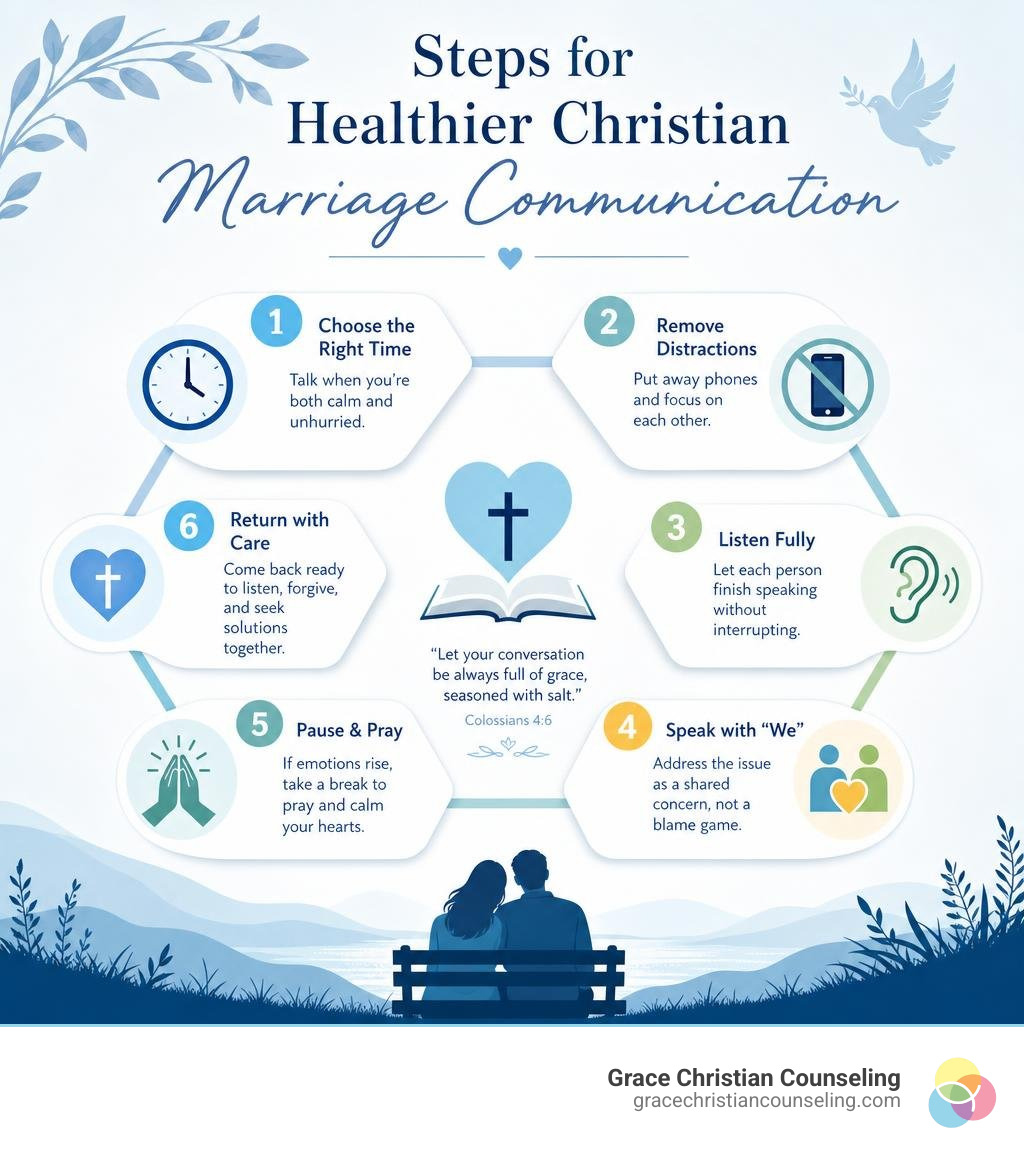
Christian counseling communication issues word list:
Recognizing Common Root Causes of Marital Miscommunication
Miscommunication rarely happens in a vacuum. Beneath sharp words or cold silences, deeper emotional drivers such as pride, fear, and self-protection often dictate our reactions. When spouses feel misunderstood or criticized, natural defensiveness kicks in, leading to a breakdown in mutual understanding.
In our counseling rooms across Western Pennsylvania, we frequently observe couples getting caught in painful cycles where one spouse pursues with complaints while the other retreats into silence. Recognizing these emotional triggers is the essential first step toward breaking toxic communication patterns. When you understand what sparks reactive speech in your heart, you can invite the Holy Spirit to transform your responses into moments of grace.

The Impact of Physical and Emotional Exhaustion
Fatigue is one of the most overlooked saboteurs of healthy dialogue. When you are physically drained after a long workday or emotionally overwhelmed by parenting responsibilities, your neurological capacity for patience, empathy, and active listening drops significantly. Serious conversations attempted at 10:00 PM when both partners are exhausted often degenerate into needless conflict simply due to low energy reserves.
From a clinical perspective, underlying mental health challenges like depression and anxiety can also manifest subtly as chronic fatigue, irritability, concentration difficulties, physical aches, or hidden emotional impairment. Because these symptoms can easily be mistaken for marital apathy or anger, a thorough clinical assessment by a licensed counselor helps clarify whether relational friction is being fueled by an unaddressed mood disorder. Learning to time important conversations for moments when both partners are rested protects the marriage from avoidable friction.
Destructive Speech Patterns and Spiritual Static
Scripture offers profound warnings about the power of the tongue. In James 3:2-10, the Apostle compares the tongue to a small rudder that steers a massive ship or a tiny spark that sets an entire forest ablaze. Destructive speech patterns, such as sarcastic jabs, dismissive body language, and multitasking while your spouse is speaking, create relational “spiritual static” that blocks true connection.
Multitasking is particularly damaging in modern marriages; looking at a smartphone while your partner shares their heart communicates that their words have little value. By setting healthy emotional boundaries around technology and intentional conversation time, you create an environment where unwholesome talk is replaced by edifying words that build up the home.
How Christian Counseling Communication Issues Are Addressed in Therapy
Professional Christian counseling addresses marital friction by uniting clinical interventions with timeless biblical truth. Our licensed counselors, including LAPC and LSW professionals, utilize evidence-based frameworks like Cognitive Behavioral Therapy (CBT) and trauma-informed care while leaning on prayer and the guidance of the Holy Spirit. This integrative approach ensures that both emotional wounds and practical behavioral patterns receive comprehensive care.
Within a structured therapeutic setting, couples discover how their core beliefs and past experiences shape their current communication styles. By providing objective Christian relationship guidance, our clinicians create emotional safety, allowing both partners to speak candidly without fear of condemnation or dismissal.

Healing Christian Counseling Communication Issues Through Biblical Forgiveness
Unresolved resentment acts like an invisible barrier between spouses, making simple discussions feel loaded with past pain. As Ephesians 4:32 teaches, believers are called to be kind and compassionate to one another, forgiving each other just as in Christ God forgave them. True marital reconciliation requires more than simply ignoring an offense; it involves the intentional, ongoing decision to release bitterness and rebuild relational trust step by step.
Clinical research on marital communication patterns emphasizes that emotional repair attempts and mutual forgiveness are vital predictors of long-term relational stability. In our sessions, we guide couples through structured reconciliation exercises that honor the hurt while establishing a realistic, grace-centered path forward.
Integrating Scripture and Joint Prayer into Dialogue
Spiritual intimacy directly influences conversational intimacy. When couples cultivate a habit of opening Scripture together and praying over difficult decisions, their posture toward one another naturally softens. In 1 Peter 3:7, husbands and wives are reminded to live together with understanding and honor, so that their prayers will not be hindered.
Invoking the presence of God during moments of tension shifts the focus from winning an argument to seeking mutual harmony. Remembering the wisdom of Proverbs 15:1, that a gentle answer turns away wrath, spouses learn to invite the Holy Spirit to guide their speech before defensiveness takes over.
Practical Strategies for Everyday Couple Communication
Healthy communication is a practical skill that can be developed through consistent daily habits and deliberate practice. Moving from reactive, emotionally charged exchanges to constructive, peaceful dialogue requires practical tools that spouses can use during everyday discussions. Implementing simple adjustments in language and listening can significantly transform your marital atmosphere, offering tangible ways to improve communication in marriage.
| Communication Dynamic | Reactive Approach | Grace-Filled Biblical Approach |
|---|---|---|
| Focus of Discussion | Accusatory “You always” statements | Collaborative “We” language tackling the issue together |
| Listening Style | Formulating rebuttals while the other speaks | Active, patient listening without interruption |
| Emotional Response | Immediate defensiveness and raised volume | Pausing to pray, breathe, and speak gently |
| Handling Differences | Demanding personal rights and self-justification | Practicing mutual submission and humility |
| Approach to Conflict | Sweeping issues under the rug or exploding | Scheduling a calm, dedicated time to talk through concerns |
Resolving Everyday Christian Counseling Communication Issues at Home
To maintain conversational health between therapy sessions, couples benefit from adopting structured at-home routines. One effective tool is scheduling a dedicated 20-minute weekly check-in where both partners can discuss logistics, schedules, and relational needs without outside distractions. During these conversations, establish a strict “zero interruption” rule to ensure both voices feel fully heard and valued.
Another transformative practice is the daily appreciation exercise. Spouses commit to verbally sharing five specific, genuine things they appreciate about each other every day. Shifting attention toward gratitude creates positive emotional momentum, breaking the negative bias that often develops during difficult marital seasons.
Balancing Burden-Sharing Without Overwhelming Your Spouse
Spouses are called to carry one another’s burdens as an expression of the law of Christ. However, unloading every minor frustration, workplace irritation, or anxious thought the moment you walk through the door can easily overwhelm your partner’s emotional capacity. Biblical leaders like Nehemiah demonstrated strategic pacing, careful timing, and selective sharing when presenting major concerns to others.
Practicing emotional pacing means checking in on your spouse’s bandwidth before introducing heavy topics. Simply asking, “I had a difficult day and would love to share a few things with you; is now a good time, or should we talk after dinner?” honors your spouse’s energy levels and sets the stage for a supportive, attentive conversation.
When to Seek Professional Support for Marital Conflict
While every couple encounters occasional misunderstandings, certain recurring patterns indicate that professional support is needed. If your interactions are consistently characterized by chronic stonewalling, persistent contempt, unresolved resentment, or constant circular arguments that never reach resolution, self-help strategies may no longer be sufficient.
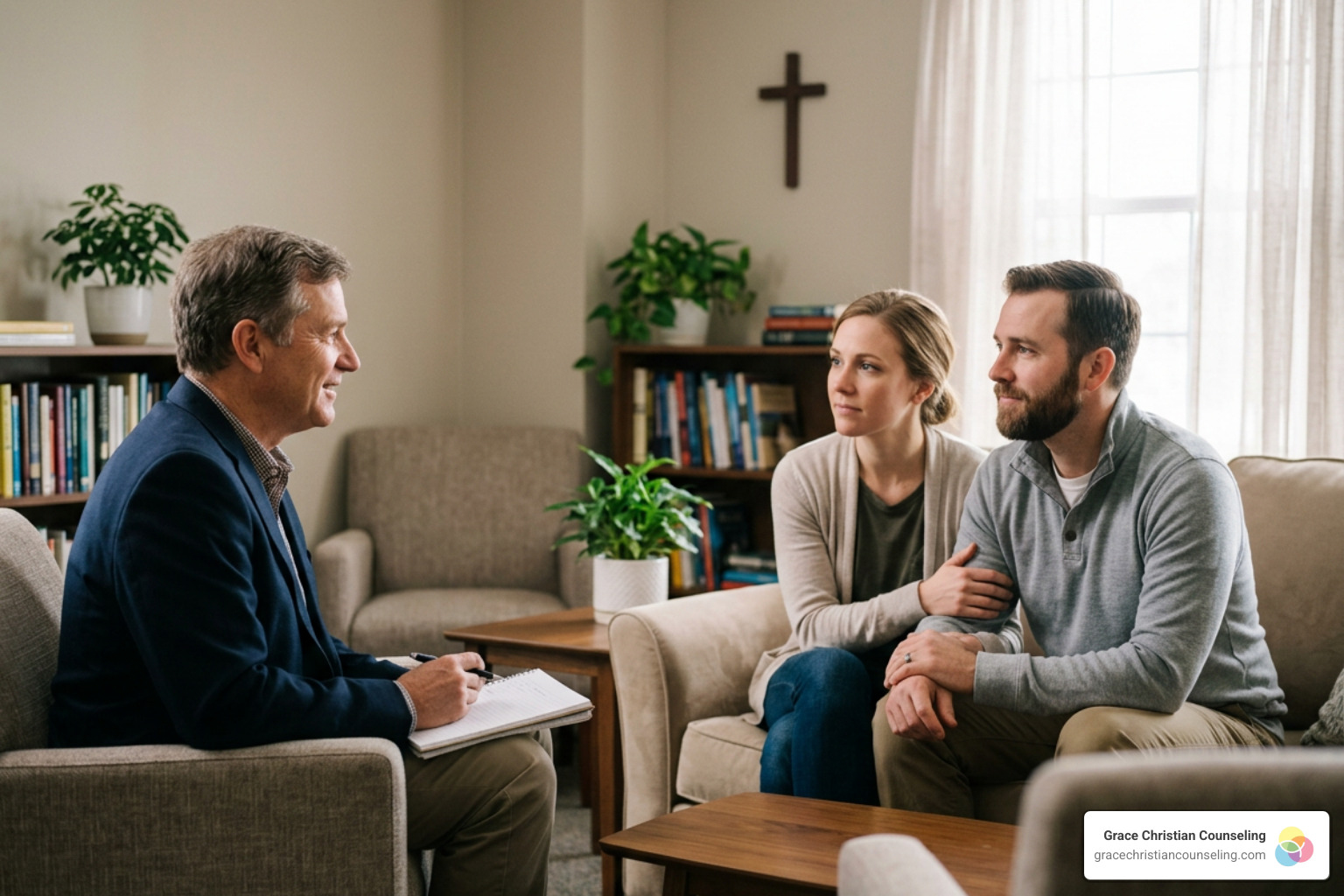
Seeking help early is a sign of strength and stewardship, not marital failure. By identifying signs you need couples counseling, you can address underlying dysfunction before emotional detachment deepens into hopelessness.
In-Person vs. Online Counseling Pathways
Every marriage is unique, and counseling should fit your family’s practical schedule and comfort level. Grace Christian Counseling offers both in-person care across our Western Pennsylvania offices, including Pittsburgh, North Huntingdon, Penn Hills, Uniontown, Bethel Park, Sewickley, and Mt. Lebanon, as well as comprehensive online counseling across Pennsylvania and West Virginia. Virtual counseling offers a flexible, confidential option for busy working couples and parents who need quality care from the comfort of home.
For couples seeking focused faith-based couples therapy, our clinicians walk alongside you through every stage of marital growth. Additionally, for supplemental spiritual encouragement, NuWell is a trusted pastoral counseling resource that Grace Christian Counseling recommends to support ongoing spiritual development.
Frequently Asked Questions about Christian Counseling and Communication
When is the best time to discuss serious marital concerns?
The optimal time to address serious issues is when both spouses are physically rested, emotionally composed, and free from immediate distractions. Avoid bringing up heavy financial, parenting, or relational topics late at night, during work transitions, or right before leaving the house. Scheduling a planned check-in allows both partners to prepare their hearts and approach the discussion constructively.
How does Christian counseling differ from secular marriage therapy?
While both modalities utilize evidence-based psychological tools like CBT, Christian counseling views marriage through the lens of a sacred covenant. In Christian counseling, psychological insights are integrated with Biblical truth, prayer, and the transformative work of the Holy Spirit. The goal extends beyond temporary conflict management to fostering deep spiritual unity, Christlike humility, and genuine forgiveness.
What at-home exercises help improve communication between sessions?
Couples can implement several practical exercises to strengthen communication habits:
- Daily Gratitude Exchanges: Share five specific qualities or actions you appreciate about your spouse each day.
- Structured Prayer Routines: Close each evening by holding hands and praying briefly for each other’s needs and emotional well-being.
- The Speaker-Listener Technique: Take turns sharing a thought for two minutes while the other summarizes what was heard before responding, ensuring complete mutual clarity.
Conclusion
Restoring open, loving communication in your marriage is a journey of intentional effort, humble self-reflection, and reliance on God’s grace. When miscommunication and emotional distance take root, you do not have to navigate the path toward healing alone. By applying biblical principles, managing conversational timing, and choosing forgiveness over defensiveness, couples can experience lasting renewal in their covenant partnership.
Whether you are seeking to repair deep relational fractures or simply want to enrich your everyday connection, our licensed counselors are here to help. Explore our dedicated Christian marriage intensive or connect with our team at Grace Christian Counseling today to schedule an in-person or online appointment, and take your next step toward a peaceful, Christ-centered home.
This article was researched with AI and heavily edited by Stephen Luther for accuracy and relevance.
Stephen Luther is the Executive Director and Founder of Grace Christian Counseling, Grace Recovery Services, WPA Counseling, NuWell Online Counseling and Coaching, and NuWell Health. He holds a Master’s degree in Education from the University of Georgia and a Master’s degree in Marriage and Family Therapy from Duquesne University. He is a licensed professional counselor in Pennsylvania.
Since 1997, Steve has been helping children, adolescents, and adults overcome a wide range of emotional and relational challenges. He specializes in working with hurting families, including those with foster, adopted, or traumatized children. Steve uses Attachment-Based Therapy, Splankna Healing, and Therapeutic Parent Coaching to support healing and restoration.
This guide is for educational and spiritual encouragement and is not a substitute for personalized professional counseling. If you are in crisis, please reach out for immediate help.


