
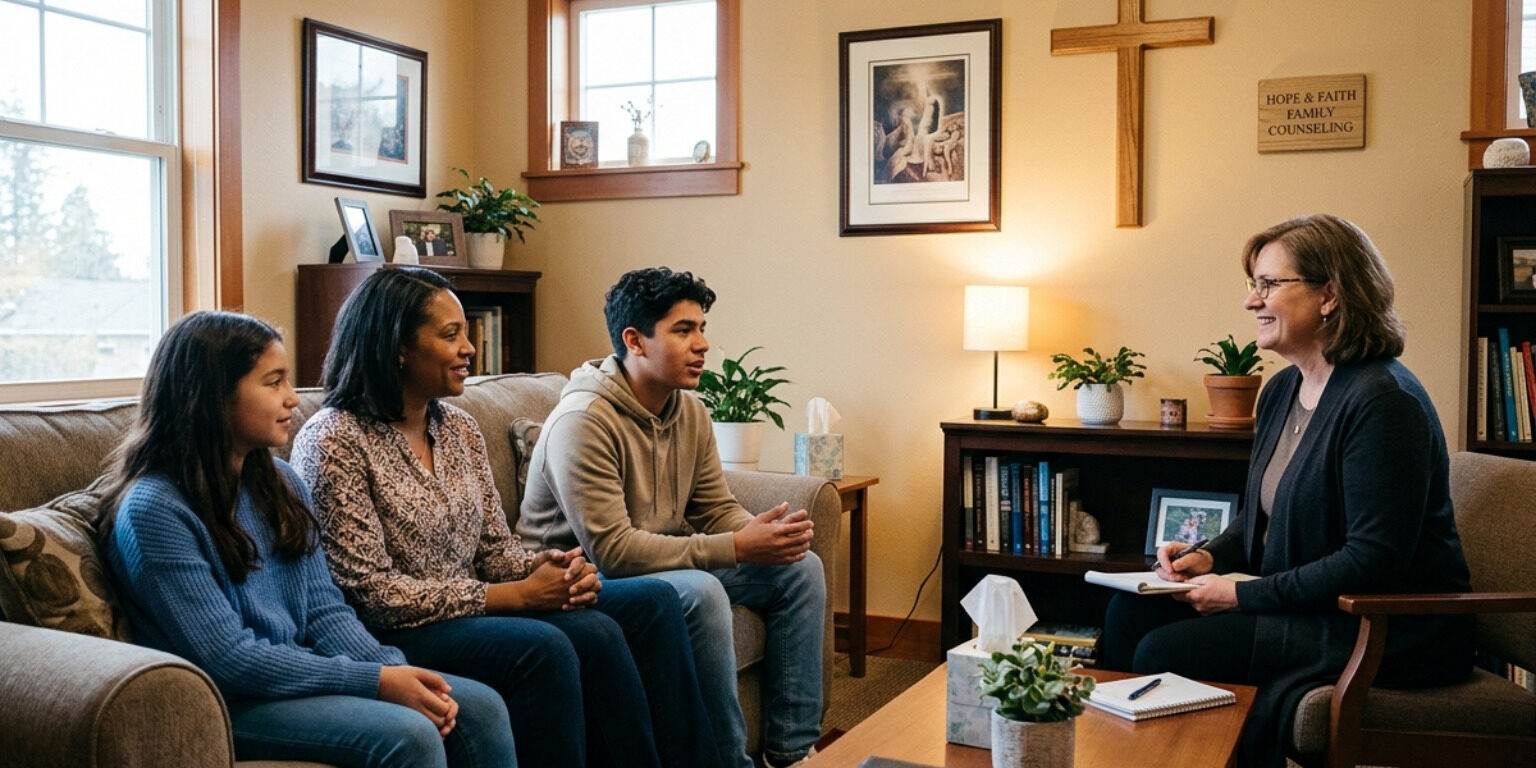
Understanding Faith Based Family Counseling
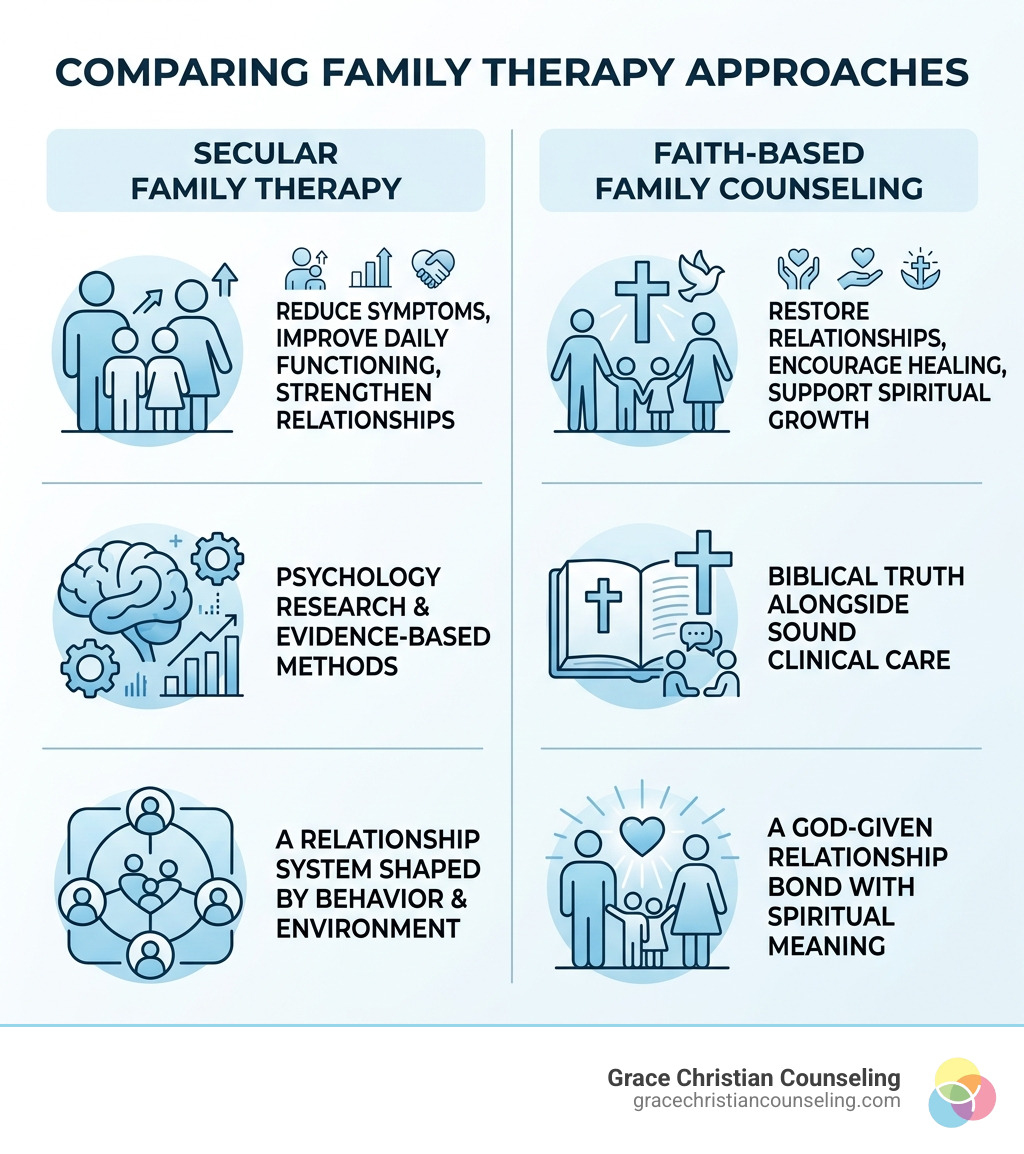
When we talk about faith based family counseling, we are describing a specialized approach that views the family unit through the lens of God’s design. While secular family therapy often focuses solely on behavioral changes or psychological symptoms, our approach at Grace Christian Counseling recognizes that humans are integrated beings. We don’t just have minds and bodies; we have spirits that are deeply connected to our Creator.
This whole-person approach means care is not limited to emotions or behavior alone. In family counseling, it is often helpful to consider biological factors, psychological patterns, relationships, and spiritual life together.
If a child is dealing with anxiety, for example, a counselor may explore stress responses, family dynamics, and daily triggers, while also making room for faith-based sources of comfort, hope, and peace. In that setting, evidence-based methods like Cognitive Behavioral Therapy (CBT) or EMDR can work alongside Christian beliefs, rather than against them, to support healing and healthy change.
More info about family counseling services
Biblical Foundations of Faith Based Family Counseling
At the heart of our work is the belief that the family was the first institution God created. From the beginning, God emphasized that it is not good for man to be alone. Relationships are central to who we are. When we provide faith based family counseling, we lean on scriptural truths such as the sanctity of marriage and the value of children.
We often look at Mark 10:7-9, which reminds us that when God joins a family together, it is a bond meant to be nurtured and protected. We also respect the “family blueprint” found in the Bible, one based on sacrificial love, mutual respect, and forgiveness.
Pennsylvania households, where tradition and faith often run deep, these foundations provide a sense of stability that secular models sometimes lack. By aligning therapy with God’s design, we aren’t just fixing a temporary problem; we are helping you build a legacy.
In
The Role of Spiritual Practices in Therapy
How does this actually look in a session? It isn’t just about quoting verses (though Scripture is vital). It’s about integration. We might start a session with prayer, asking the Holy Spirit to reveal root causes of pain that we might otherwise miss. We use Scripture not as a “band-aid,” but as a diagnostic tool and a source of ultimate hope.
For example, when a family is dealing with deep-seated bitterness, we might explore the biblical mandate for forgiveness while simultaneously using clinical tools to process the emotional trauma that makes forgiveness feel so difficult. We depend on the Holy Spirit’s guidance to move past the “symptoms” and get to the heart of the matter. This spiritual integration creates a safe, shame-free space where families can be honest about their struggles without fear of judgment.
Common Family Issues and Specialized Care
Families in Western Pennsylvania face a variety of challenges, from the stressors of economic shifts to the internal pressures of modern parenting. Faith based family counseling is highly effective because it addresses these issues at both a practical and a spiritual level.
Marriage conflict is one of the most common reasons families seek counseling. National data shows about 40 to 50 percent of first marriages in the United States end in divorce, which helps explain why many couples look for support before problems grow deeper. Whether a couple wants a healthy relationship check-in or urgent help during a crisis, faith-based family counseling can address communication breakdowns, rebuild trust after betrayal, and help end the exhausting “tug of war” that keeps spouses stuck.
Parenting is one of the most common reasons families seek support, especially after weeks of meltdowns, defiance, or constant tension at home. Many mothers and fathers quietly wonder, “Am I handling this well?” You are not alone.
Family stress often rises when children or teens are struggling emotionally. In 2023, 33 percent of high school students reported poor mental health during the past year, according to the CDC. Faith-based family counseling helps parents respond with both wisdom and compassion by combining evidence-based parenting tools with biblical principles that support consistency, connection, and healthy boundaries.
Research also shows that parenting practices matter greatly, children with supportive, engaged caregivers tend to have better emotional and behavioral outcomes, as noted by the Child Mind Institute. The goal is to help parents build stronger relationships with their children while creating a calmer, more secure home.
More info about resolving family conflict
Specialized Programs for Unique Needs
Sometimes, a family needs more than general counseling. They need a specialist who understands the nuances of their specific trial. We offer care for:
- Addiction Recovery: We believe recovery is less isolating when supported by a faith-integrated community. We look at the root causes of addiction while providing compassionate accountability.
- Grief and Loss: Navigating the “valley of the shadow of death” requires a space where you can mourn with hope.
- Anxiety and Depression: We use tools like trauma-informed therapy to address the body and mind, while anchoring the spirit in Christ.
- Premarital Preparation: We help couples evaluate their strengths and weaknesses before saying “I do,” often helping them waive waiting periods or reduce license fees through registered courses.
More info about parenting teens
Addressing Generational Patterns and Trauma
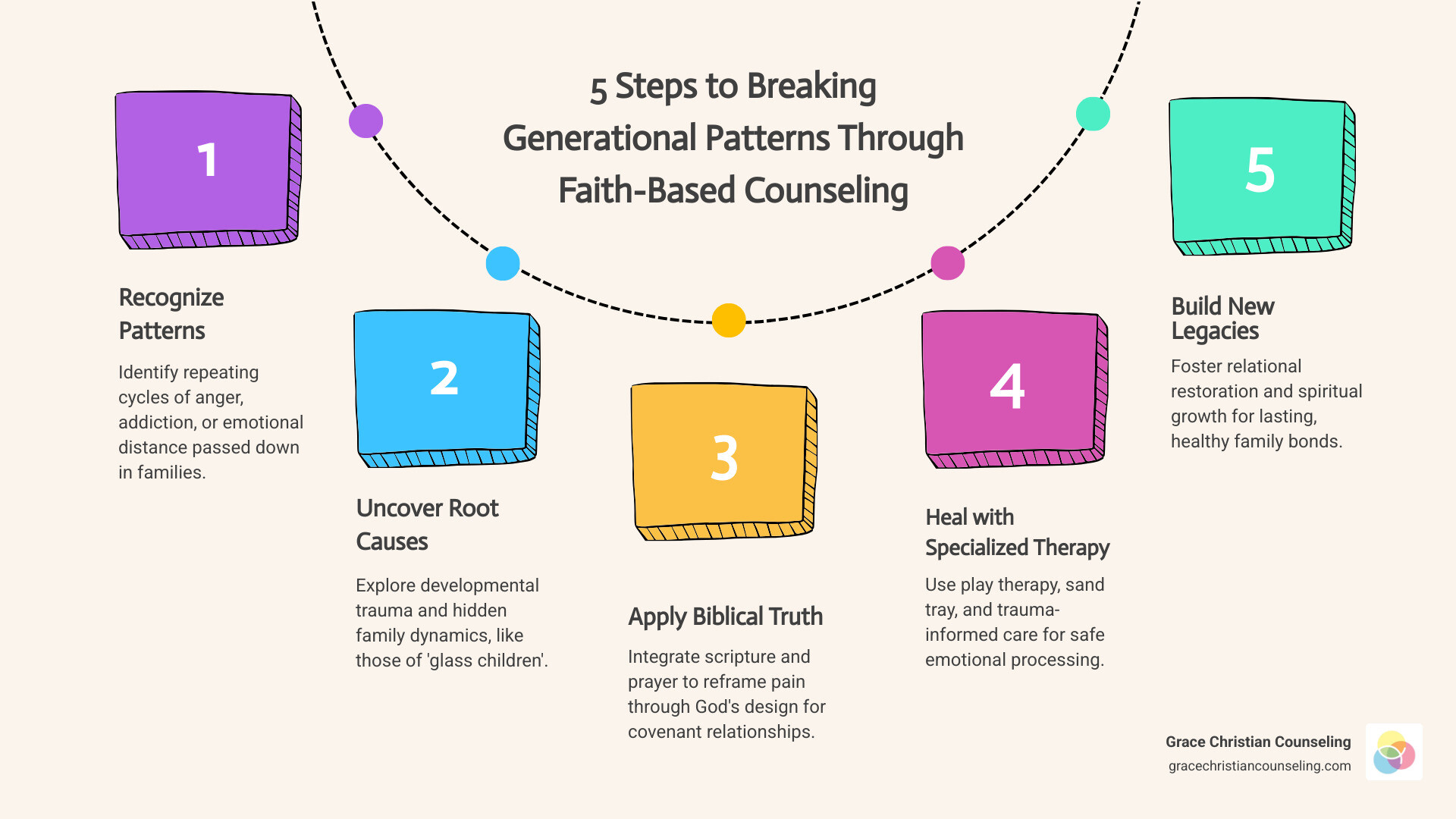
One of the most profound aspects of faith-based family counseling is its ability to break unhealthy generational or patterns. We often see families where the same dysfunctions (anger, addiction, or emotional distance) repeat and have been passed down for decades.
We pay close attention to “glass children,” a term often used for siblings whose emotional needs can fade into the background when a brother or sister has significant medical, developmental, or behavioral challenges. In these families, one child may receive most of the attention because the needs are more urgent. Counselors may use developmentally appropriate methods, such as play therapy and sand tray work, to help children and teens express stress, loss, and trauma in ways that feel safe, natural, and easier to process.
Benefits and Success of the Faith-Integrated Approach
Why choose a faith-based approach over a traditional one? The primary benefit is the depth of the healing. When you address the whole person (body, soul, spirit), the changes in behavior and emotion tend to last because they are rooted in a change of heart, not just a change of habit.

The Long-Term Impact of Faith Based Family Counseling
Relational restoration is not only about reducing conflict, but also about rebuilding trust, meaning, and daily patterns that support peace. That matters because family strain is common, 37.7 percent of ever-married women in Pennsylvania and 34.2 percent of ever-married men have been divorced, according to the CDC. Counseling can help families move from repeated power struggles toward healthier communication, shared goals, and a clearer path forward.
Over time, faith-based family counseling can deepen each person’s relationship with God while also strengthening the family as a whole. As trust is rebuilt and communication improves, many households discover a renewed sense of peace, purpose, and stability. Healing in one area of family life often creates positive change in others, helping each member grow with greater compassion, wisdom, and resilience.
This kind of progress can also shape how a family responds to future challenges. Instead of falling back into old patterns, families often leave counseling with healthier ways to handle conflict, support one another, and stay grounded in shared biblical values. That lasting foundation can help parents, children, and couples move forward with greater confidence and hope.
More info about family therapy
Real-Life Success Stories and Community Support
We’ve seen thousands of couples and families in Pennsylvania achieve joy and satisfaction in their homes. For instance, we’ve worked with parents who felt they had “lost” their teenager to rebellion, only to see the relationship restored through humble communication and the application of Gospel-centered tools.
The church also plays a vital role here. While we provide professional clinical care, the church community provides the ongoing “wraparound” support like small groups, meals, and shared life that complements the work done in the counseling room. We see ourselves as a partner to the local church, providing the specialized care that pastors often refer out when a situation requires professional licensure.
More info about Christian parenting
Getting Started with a Provider in Pennsylvania
If you are looking for faith based family counseling, it is important to check the credentials of your provider. In Christian care, you will find everything from lay counselors to highly trained professionals.
At Grace Christian Counseling, our team consists of licensed professionals (LPCs, LCSWs, etc.) who have also committed their lives to Christ. Many of our counselors are members of organizations like the American Association of Christian Counselors (AACC), which ensures we stay up-to-date on both clinical ethics and spiritual integration.
Accessibility and Getting Started
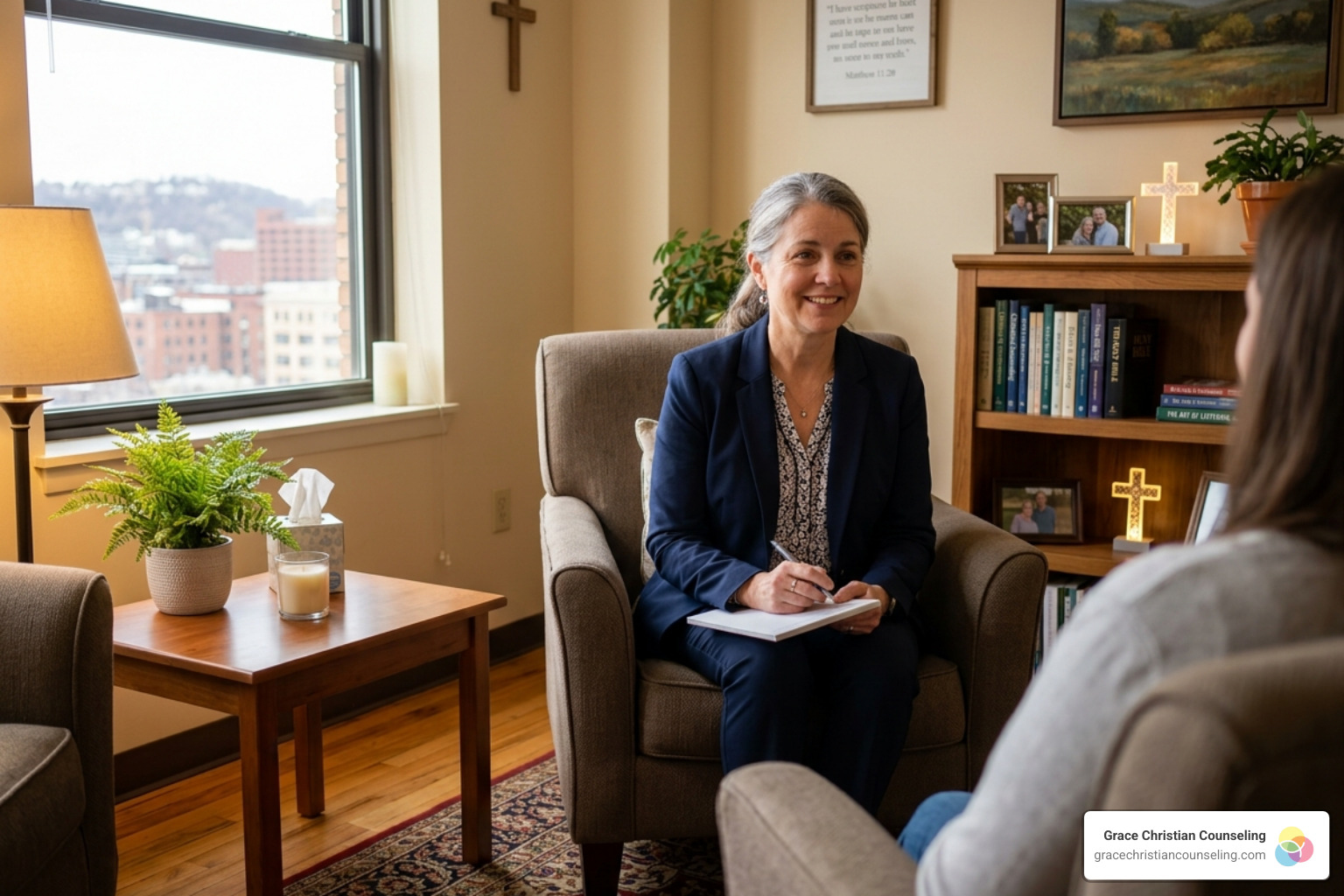
We believe that high-quality, Christ-centered care should be accessible to everyone in Pennsylvania. Whether you are in Pittsburgh, North Huntingdon, Uniontown, or even more rural areas like Punxsutawney or Ligonier, we have options for you.
- In-Person Care: We have several locations throughout Western Pennsylvania, providing a “cozy lobby” environment where you can feel at home.
- Online Counseling: For those across the state or those with busy schedules, our virtual sessions offer the same level of intimacy and professional care.
- Cost and Insurance: We understand that finances are a major concern. Many families use their HSA or FSA accounts. While some faith-based centers operate solely on donations, we work to provide clear superbills for out-of-network reimbursement, and in some cases, we offer sliding scale options or scholarships for those facing extreme financial hardship.
More info about family services
What to Expect in Your First Session
The first step is often the hardest, but we strive to make the intake process as smooth as possible. Your first session is typically an evaluation where we get to know your family’s story. There is no shame here, only a safe space to be heard.
How to prepare for your first session:
- Pray together if that fits your family: Ask God for wisdom, honesty, and peace as you begin counseling.
- Think about your goals: What patterns, symptoms, or relationship struggles would you most like to see improve over the next few months?
- Review your family history: It helps to be ready to discuss past stressors, major losses, trauma, or recurring generational patterns.
- Complete your intake forms: Finishing paperwork ahead of time gives your counselor more time to understand your concerns and start building a treatment plan.
- Stay open to the process: Come ready to consider new insights, practical tools, and faith-based guidance that support healing and growth.
Frequently Asked Questions about Faith Based Family Counseling
How does faith-based counseling differ from secular therapy?
The main difference is the inclusion of the spiritual dimension. While secular therapy stops at the mind and behavior, faith-based counseling invites God into the healing process, using Scripture as the ultimate authority for truth while still employing scientifically proven psychological methods.
What qualifications should I look for in a Christian counselor?
You should look for someone who is a Licensed Professional Counselor (LPC), Licensed Clinical Social Worker (LCSW), or similar. This ensures they have the necessary education and state oversight. Additionally, look for someone who explicitly states their commitment to biblical integration and perhaps holds membership in the AACC.
Is faith-based family counseling covered by insurance?
It depends on the provider and your plan. Many Christian counseling centers are “private pay” to avoid the limitations insurance companies often place on the number or type of sessions. However, many providers offer “superbills” that you can submit to your insurance for out-of-network reimbursement.
Bringing Your Family Toward Healing and Hope
At Grace Christian Counseling, we believe that your family is not just a social unit, it is a sacred assignment. Whether you are navigating the heavy fog of grief, the sharp pain of marital conflict, or the exhausting cycle of parenting struggles, you don’t have to walk this path alone.
We serve Western Pennsylvania and the entire state virtually with a commitment to clinical excellence and Christ-centered compassion. Our licensed professionals are ready to help you discover a renewed “family blueprint” that leads to lasting peace and generational healing.
Schedule your faith-based family counseling session today
This guide is for educational and spiritual encouragement and is not a substitute for personalized professional counseling. If you are in crisis, please reach out for immediate help.
10 Common Questions About Christian Family Counseling Answered
Faith-Based Trauma Healing: Find Peace with God


