

When you are looking for Christian couples counseling Pennsylvania, it is natural to wonder how faith-integrated therapy differs from standard secular options. Secular and faith-based counselors can both provide valuable psychological tools, but Christian couples counseling intentionally brings biblical beliefs about marriage, forgiveness, commitment, and spiritual growth into the therapeutic process. For couples whose faith is central to their lives, this means counseling can address both relational concerns and the spiritual convictions that shape how they understand marriage.
Our approach integrates evidence-based psychology with a firm biblical worldview. We recognize that God is the author of human emotions and relational design. By bringing faith into the therapeutic process, couples can access deeper spiritual alignment while working through emotional distance, unresolved bitterness, and communication barriers. To explore more about this integrated framework, read The Ultimate Guide to Christian Therapy for Couples and Why It Works.
Research supports thoughtfully integrating a client’s religious beliefs into psychotherapy when those beliefs are important to the client. A meta-analysis of 97 studies involving 7,181 participants found that religiously and spiritually adapted psychotherapy was effective for psychological concerns and offered additional benefits for spiritual well-being. For Christian couples who want their faith included in counseling, this allows biblical convictions to become part of the therapeutic conversation rather than something that has to remain separate from it. Learn more by reading The Ultimate Guide to Christian Counseling for Relationships.
Integrating Biblical Scripture and Evidence-Based Psychology
At Grace Christian Counseling, we believe that psychological science and biblical truth are deeply complementary. Insights from clinical psychology help us understand brain function, emotional distress, and attachment behaviors, while Scripture provides the ultimate moral framework for love and restoration. We combine evidence-based approaches such as Cognitive Behavioral Therapy (CBT) and Emotionally Focused Therapy (EFT) with guidance from God’s Word and the Holy Spirit.
Couples therapy also has a substantial research base. One meta-analysis of 33 randomized controlled studies involving 2,730 participants found that Emotionally Focused Couples Therapy and behavioral couple therapy produced meaningful improvements in relationship satisfaction after treatment. Research like this helps inform the clinical side of our approach, while Scripture and each couple’s Christian convictions guide how faith is incorporated into care.
Scripture gives us direct instructions on how to handle inter-relational stress and communication. James 1:19 teaches us to be quick to listen, slow to speak, and slow to become angry. Ephesians 4:29 instructs us to use words that build others up according to their needs. Ephesians 5 outlines mutual respect, self-sacrificing love, and sacrificial leadership within marriage, creating a standard of security and support.
The Four-Step Blueprint for Relational Healing
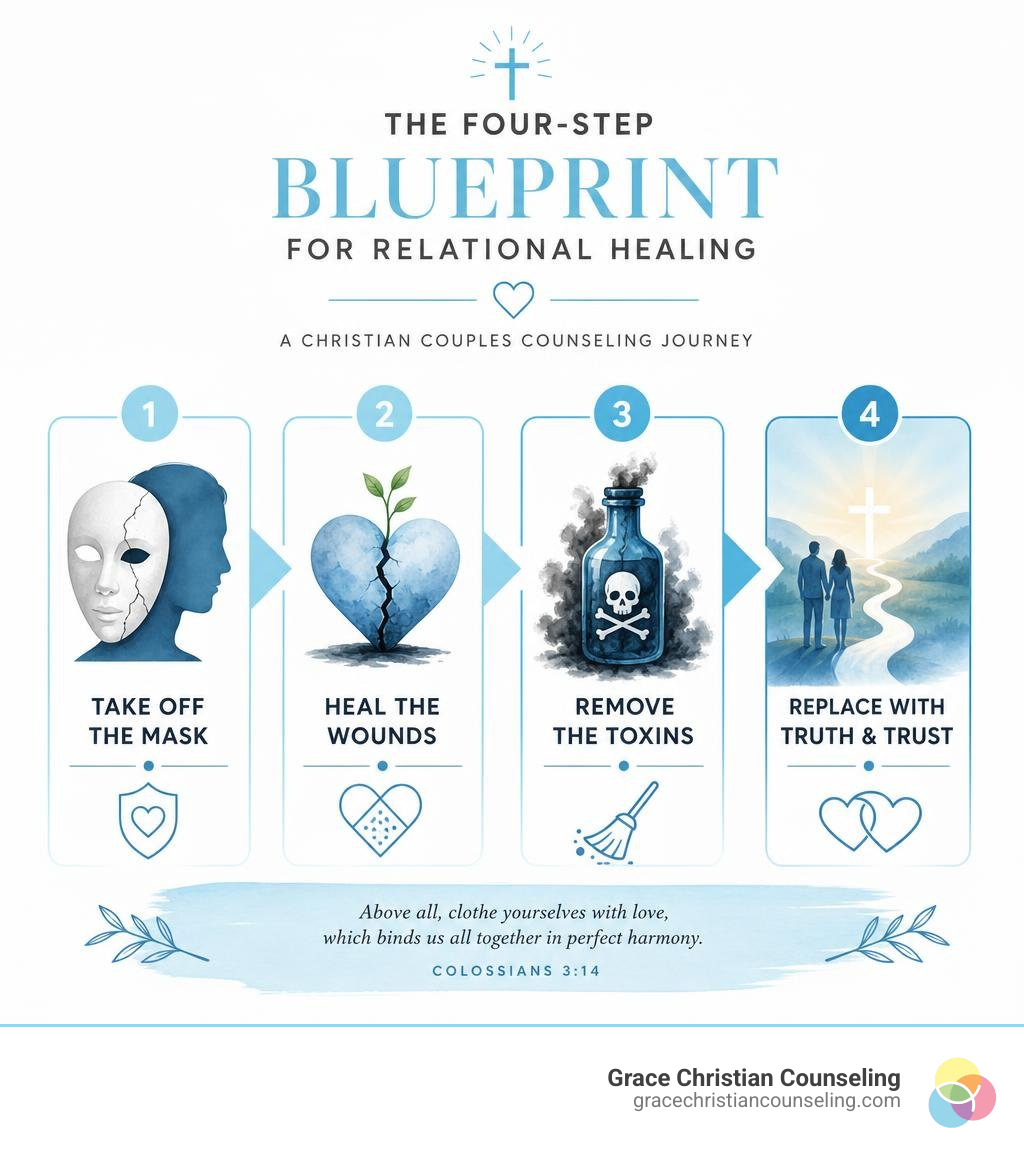
Healing a hurting relationship requires an intentional pathway. We utilize a four-step therapeutic blueprint designed to guide couples from initial defensiveness toward lasting trust connection, and covenant unity. First, partners learn to lay down emotional armor, self-protective behaviors, and unhealthy coping mechanisms that hinder genuine vulnerability. Then they identify emotional injuries, past traumas, attachment ruptures, accumulated resentment, and unhelpful patterns so that God’s grace, clinical tools, truth, and practical commitment skills can support healing.
In our work with couples, we often find that the argument happening on the surface is only part of the problem. Recurring disagreements about finances, parenting, intimacy, household responsibilities, or communication can become connected to deeper feelings of rejection, fear, resentment, or disconnection. The Blueprint helps us look beyond the immediate disagreement and understand the patterns that keep bringing a couple back to the same conflict. To learn more about how this structured approach supports relationships, read How Professional Christian Marriage Counseling Saves Relationships.
When and Why to Seek Faith-Based Marriage Counseling
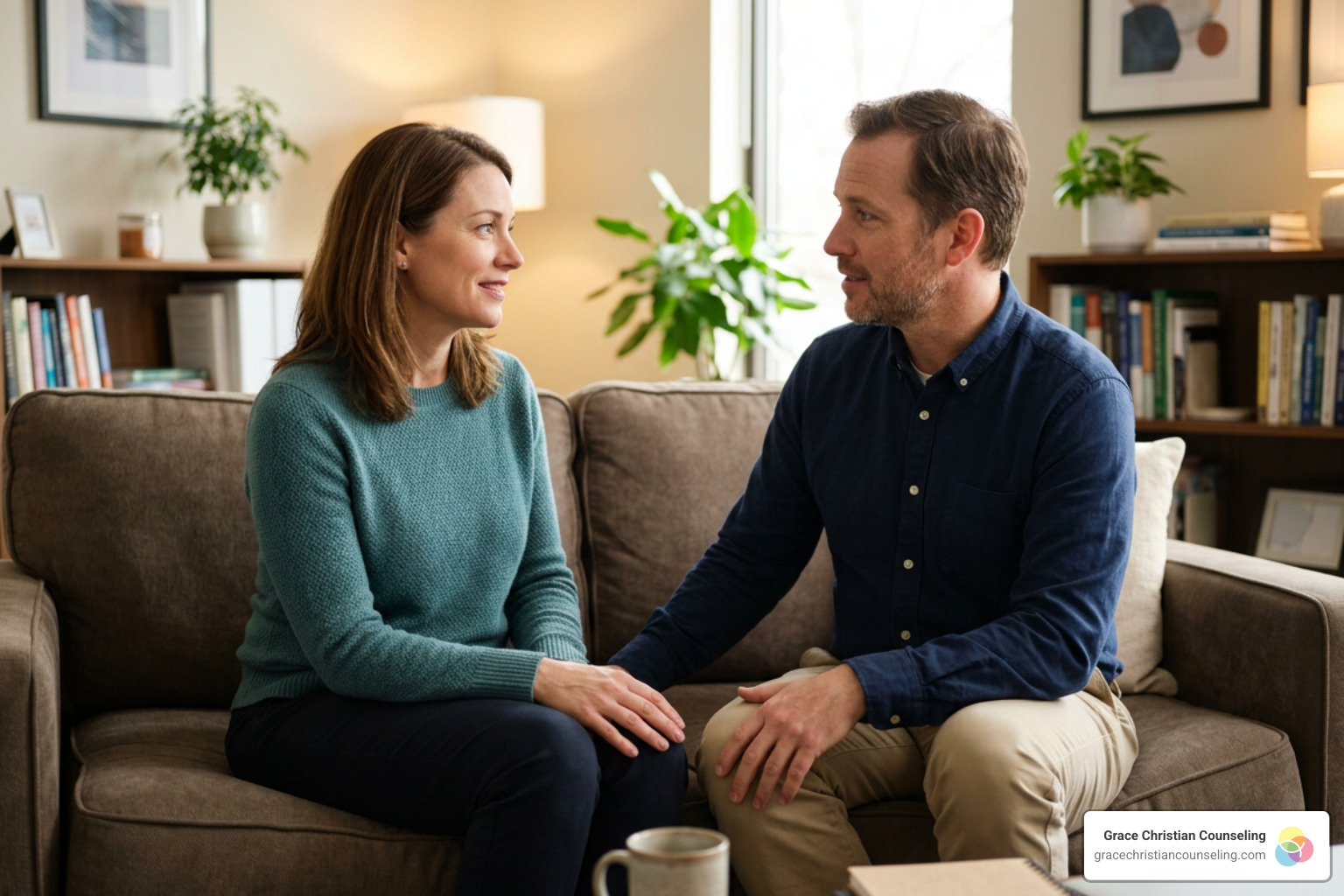
Many couples wait until a crisis hits before seeking professional support. However, therapy is just as beneficial for routine maintenance and proactive growth as it is for emergency intervention. Addressing small relational friction points early prevents deep-seated bitterness from taking root later. Early care can also help couples practice healthier communication before painful patterns become more established.
Signs that it may be time to schedule a session include chronic emotional distance, persistent arguments that never reach resolution, physical or emotional intimacy loss, and major life transitions. These signs do not mean a marriage is beyond repair, but they can indicate that the couple would benefit from guided support. In practice, couples do not always come to counseling because of one major crisis. Sometimes they recognize that they keep having the same conversation without reaching a resolution, or that they have gradually become more like roommates than partners.
Seeking support allows you to tackle challenges systematically under the guidance of a trained professional who shares your faith. Counseling gives couples space to slow those patterns down and understand what may be happening underneath them. For a deeper look at warning indicators and season-of-life transitions, see Signs You Need Couples Counseling and Navigating Marriage Challenges.
Addressing Infidelity, Communication Breakdown, and Relational Stress
Infidelity is one of the most painful trials a marriage can face, yet healing is possible through dedicated care and spiritual renewal. Christian therapy helps couples work through the pain of betrayal, rebuild accountability, and establish transparent boundaries. If your marriage is recovering from a breach of trust, read How to Rebuild a Marriage After Infidelity and Healing Broken Vows With Christian Counseling for Infidelity. We also discuss why taking this step is worthwhile in our article Why Marriage Counseling for Infidelity Is Not a Waste of Time.
Beyond infidelity, couples often face severe communication breakdowns, financial pressure, or parenting conflicts. Intrapersonal challenges can also impact marital health. When symptoms of depression or anxiety are affecting a marriage, counselors can assess how emotional and behavioral symptoms may be contributing to the couple’s difficulties. Symptoms can vary but may include fatigue, irritability, difficulty concentrating, sleep changes, physical symptoms, excessive worry, or difficulty functioning in everyday life.
Assessment can help counselors understand whether individual mental health symptoms, relationship dynamics, or a combination of both may be contributing to the couple’s distress. This kind of careful assessment keeps counseling from oversimplifying a complex relational struggle. It can also help couples make wise decisions about whether individual counseling, couples counseling, or coordinated care is most appropriate. Learn practical ways to walk alongside your partner by reading How to Support Spouse With Depression and visiting NuWellonline.com for additional mental health and wellness resources.
What If One Spouse Is Unwilling to Attend Counseling?
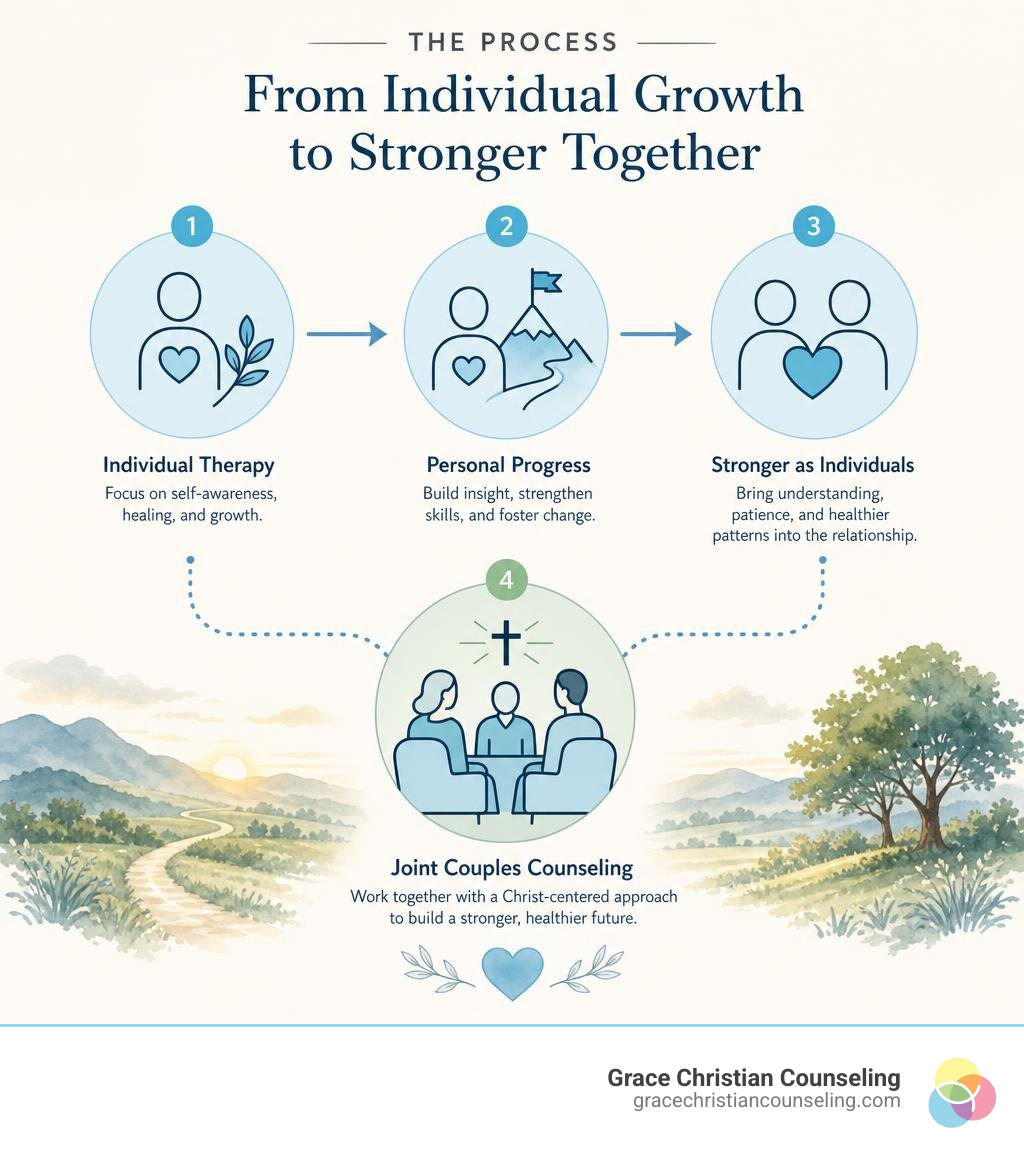
A common question we receive is, “What if my spouse refuses to attend counseling?” While joint sessions are ideal for working through dynamic relationship patterns, individual counseling for one spouse can still yield positive relational change. This can be a compassionate and practical first step when one partner is unsure, resistant, or not yet ready to begin. It also gives the participating spouse a safe place to process concerns with clinical and spiritual support.
In practice, we also meet with individuals who want help navigating marital difficulties even when their spouse is not ready to participate. The focus in these situations is not on changing the absent spouse, but on helping the individual understand their own responses, communicate more intentionally, establish appropriate boundaries, and make thoughtful decisions about what is within their control.
When one partner begins practicing healthier communication, establishing appropriate boundaries, and addressing personal anxiety or emotional wounds, their own participation in the relationship can change. Individual counseling cannot guarantee that the other spouse will change or eventually attend therapy, but it can help the participating spouse respond more intentionally and make healthier decisions about the relationship. This kind of support can be especially valuable when a couple is facing prolonged tension, uncertainty, or fear about the future. You can read more about navigating this season in our guide From the Brink of Separation to Restoration Biblical Counseling for Struggling Couples.
Service Delivery: In-Person and Virtual Counseling Across the Keystone State
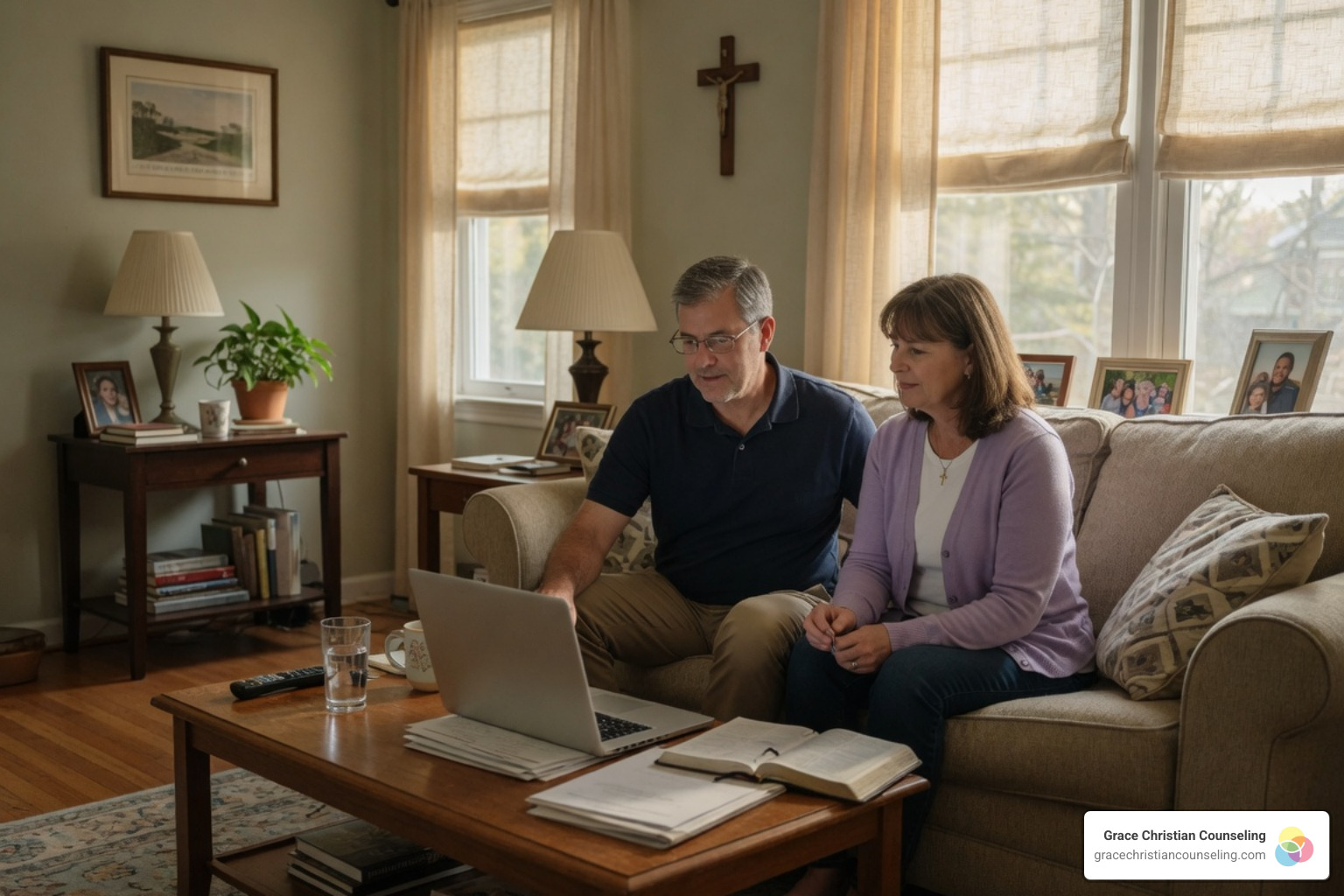
At Grace Christian Counseling, we make high-quality, faith-integrated therapy accessible across Pennsylvania. We offer both traditional face-to-face appointments and convenient virtual telehealth sessions to accommodate your schedule and preference. This flexibility helps couples choose the setting that feels most comfortable, whether they value the steadiness of an office visit or the convenience of meeting from home. If you are curious about virtual format effectiveness, explore our article Marriage Counseling Online Does It Actually Work.
In-Person Counseling in Western Pennsylvania
For couples who prefer sitting in the same room with their therapist, we provide welcoming in-person offices throughout Western Pennsylvania. In-person sessions can be especially helpful for couples who want a dedicated space away from home, work, or family distractions. Meeting face-to-face also allows your counselor to observe interaction patterns, body language, and emotional responses in real time. Our physical locations serve clients in:
- Pittsburgh
- North Huntingdon
- Penn Hills
- Uniontown
- Bethel Park
- Sewickley
- Mt. Lebanon
- Pleasant Hills
- Ligonier
- Belle Vernon
- Punxsutawney
To learn more about local counseling options in Mt. Lebanon and surrounding Western PA communities, visit From Conflict to Covenant Christian Couples Therapy in Mt Lebanon and Beyond. This local focus can help couples understand what faith-integrated care looks like in a familiar community setting. It can also make the first step feel more approachable when you know support is available close to home.
Online Marriage Counseling Across Pennsylvania
For couples managing busy work schedules, childcare responsibilities, or long commutes, virtual counseling offers a flexible solution. Statewide telehealth services allow you to receive expert care directly from your home anywhere in Pennsylvania. Online sessions can also reduce travel barriers for couples who live outside the Pittsburgh area or who need care during evenings or weekends. Many couples find that meeting from a familiar environment helps them enter the conversation with less stress.
Virtual sessions deliver the same high standard of clinical care, confidential connection, and faith-centered guidance as in-person visits. We also provide evening and weekend appointment options so you can prioritize your relationship without adding calendar stress. Your counselor can help you prepare for online sessions by encouraging privacy, minimizing distractions, and setting aside intentional time before and after the appointment. Discover how easy it is to start by reading How to Choose a Christian Marriage Counselor From Your Own Couch.
Frequently Asked Questions About Christian Couples Counseling
How does confidentiality work in Christian couples counseling?
Confidentiality is a fundamental legal and ethical standard in professional counseling. Our team consists of state-licensed mental health professionals, including LAPC, LPC, LSW, LCSW, and LMFT clinicians, who follow strict state privacy regulations, professional ethical codes, and HIPAA standards. This protects the counseling space so couples can speak honestly about painful, personal, or sensitive concerns. Your counselor will review confidentiality expectations before care begins so you understand how privacy works in a couples counseling setting.
Counseling is confidential within the limits established by law, professional ethics, and the practice’s informed-consent policies. There are circumstances in which a counselor may be legally or ethically required to disclose information, such as certain safety or abuse-related situations. Couples counseling can also involve specific policies about information shared individually with the therapist, which your counselor will explain before treatment begins. If you have questions about privacy, it is appropriate to ask your counselor directly during the intake process.
Can couples receive premarital counseling to build a firm foundation?
Yes! Premarital counseling is one of the best investments an engaged couple can make. Rather than waiting for communication patterns to break down, premarital counseling helps you proactively discuss expectations, financial stewardship, family dynamics, intimacy, and conflict resolution before stepping into covenant marriage. These conversations can help couples identify strengths, clarify assumptions, and prepare for common areas of tension. They also create space to connect spiritual convictions with practical decisions about daily married life.
Premarital care equips you to build your union on a firm spiritual and emotional foundation. It can also help you enter marriage with shared language for conflict, forgiveness, finances, family boundaries, and prayer. For many couples, this preparation feels less like crisis counseling and more like wise discipleship before a major covenant commitment. Learn more about preparing for your wedding and marriage by exploring these resources:
- Why Every Christian Couple Needs Counseling Before the Wedding
- Before You Say I Do Top Premarital Counseling Tips
- Starting Your Marriage on a Firm Foundation of Faith
- Must-Have Christian Premarital Counseling Kits and Resources
- Don’t Break the Bank Before the Big Day With Premarital Counseling
How do licensed counselors help couples transition from conflict to biblical teamwork?
When couples experience chronic friction, they often fall into an “me versus you” dynamic where every disagreement becomes a win-lose battle. Licensed counselors help transform this dynamic into unified teamwork, or “us versus the problem.” This shift does not erase real differences, but it helps spouses approach conflict with more humility, clarity, and shared purpose. Over time, couples can learn to name the pattern without attacking one another.
Using structured communication exercises, active listening skills, and shared prayer, counselors help couples identify mutual goals and align their decision-making. By applying scriptures like Philippians 2:3-4, which encourages placing others’ needs above our own, couples shift away from scorekeeping toward collaborative partnership. This kind of teamwork supports both emotional safety and biblical faithfulness in daily marriage. For insights into overcoming persistent disagreement, read Can This Marriage Be Saved Insights From Biblical Conflict Counseling and How to Improve Communication in Marriage.
Take the Next Step Toward a Stronger, Christ-Centered Marriage
Your marriage is a sacred investment, and taking steps to strengthen, repair, or restore it is a courageous choice. Whether you are dealing with communication barriers, navigating trust issues, adjusting to new life seasons, or establishing a premarital foundation, faith-based couples counseling in Pennsylvania can provide clinical support and biblical guidance as couples work toward healing. You do not have to wait until every issue feels urgent before asking for help. A thoughtful counseling process can give you a structured place to slow down, listen well, and begin rebuilding trust.
At Grace Christian Counseling, our compassionate team of licensed professionals is dedicated to walking alongside you. We combine evidence-based psychological modalities with Christ-centered truth to help you move from relational strain toward genuine peace and unity. We accept most major insurance plans and offer flexible evening and weekend appointment slots to fit your routine. Our goal is to make care accessible, clinically responsible, and spiritually grounded for couples across Pennsylvania.
We proudly serve individuals, couples, and families in person across Western Pennsylvania, including Pittsburgh, North Huntingdon, Penn Hills, Uniontown, Bethel Park, Sewickley, and Mt. Lebanon, as well as statewide through our secure online telehealth platform. This means you can choose the care format that fits your family, commute, schedule, and comfort level. Whether you meet in person or online, your counselor will help you approach hard conversations with compassion, structure, and biblical wisdom. That steady support can help couples take the next faithful step, even when the whole path is not yet clear.
If you are ready to take the next step toward a restored relationship, we invite you to reach out today. Schedule your consultation by visiting our Christian Marriage Counseling Services page or exploring our main Grace Christian Counseling Home page. You can also explore our overall Counseling Services and Online Christian Counseling in PA to find the care option that best fits your family’s needs. Hope and healing are closer than you think.
This article was researched with AI and heavily edited by Bekah McCrorey for accuracy and relevance. Bekah’s review helps ensure the content reflects Grace Christian Counseling’s voice, values, and clinical care standards. It also supports readers who want practical guidance that is both spiritually grounded and responsibly framed. The goal is to offer encouragement without replacing personalized care from a qualified counselor.
Bekah McCrorey is a counselor at Grace Christian Counseling. She holds a Master’s degree in Counseling from Dallas Theological Seminary and a Bachelor’s degree in Christian Ministry from Chesapeake Bible College and Seminary. She is a provisionally licensed counselor working under supervision toward full licensure as a Licensed Professional Counselor (LPC) in Pennsylvania. Her background helps her serve clients with both theological sensitivity and clinical care.
With over 12 years of full-time ministry experience supporting individuals, families, ministry leaders, and churches nationally and internationally, Bekah brings a deep understanding of emotional and spiritual struggles. As a counselor, she uses a client-centered, trauma-informed, and evidence-based approach. She is Level 1 trained in Restoration Therapy and is passionate about helping clients navigate anxiety, depression, grief, trauma, life transitions, and relational difficulties while integrating emotional and spiritual well-being. Learn more about Bekah
This guide is for educational and spiritual encouragement and is not a substitute for personalized professional counseling. If you are in crisis, please reach out for immediate help. In an emergency, call 911 or go to the nearest emergency room. For urgent emotional or mental health support in the United States, you can call or text 988 to reach the Suicide and Crisis Lifeline.


