

When Your Teen Is Struggling: Finding the Right Support Near You
Teen counseling near me is something many parents search for when they notice their child withdrawing, shutting down, or carrying a weight that feels too heavy for them to handle alone. If that’s where you are right now, here’s a quick overview of what you need to know:
Quick answers for parents searching for teen counseling:
- What it is: Professional therapy tailored to adolescents (typically ages 12–19) addressing anxiety, depression, trauma, identity, and more
- How to find it: Ask your primary care physician for a referral, check your insurance provider’s directory, or search for licensed counselors in your area who specialize in adolescents
- What to expect: A confidential, supportive space where your teen can talk openly, with clear limits on privacy if safety is a concern
- Cost: Varies by provider; many accept insurance, and some offer sliding scale fees
- Format: Available in-person or online, depending on your teen’s needs and comfort level
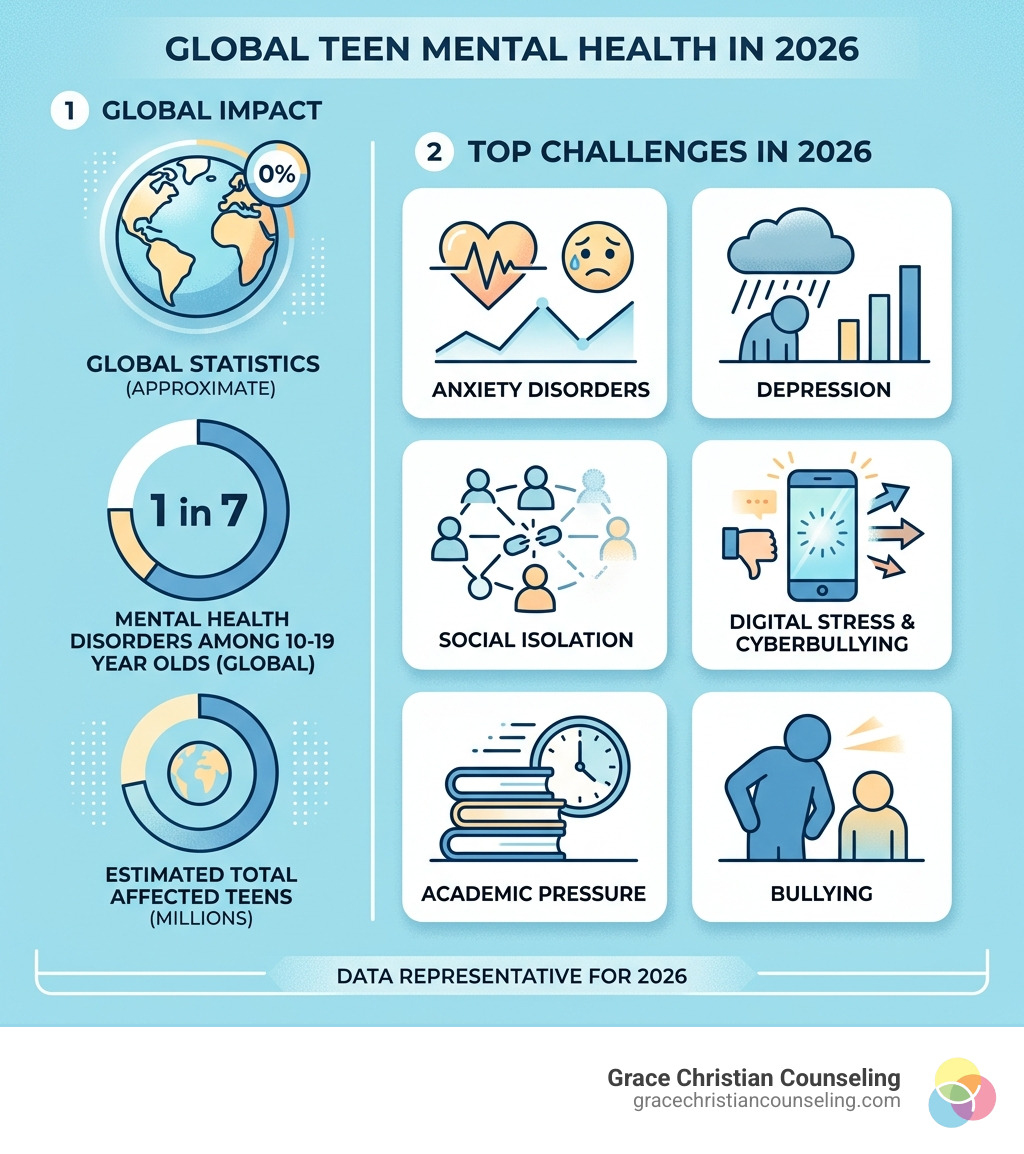
The teenage years can be beautiful and brutal at the same time. One in seven young people globally between the ages of 10 and 19 currently experiences a mental health disorder, according to the World Health Organization. In the United States, the CDC also reports that anxiety, depression, behavior concerns, and related mental health needs affect many children and adolescents.
Whether your teen is battling anxiety, struggling with self-worth, or simply seems different than they used to be, early support makes a real difference. Guidance from the National Institute of Mental Health encourages parents to take persistent changes in mood, sleep, school performance, irritability, or withdrawal seriously rather than assuming they are only a phase.
Understanding the Need for Teen Counseling Near Me

As we move through April 2026, the landscape of adolescence has never been more complex. While the “teenage years” have always been synonymous with change, the modern world places a unique set of demands on young minds. At Grace Christian Counseling, we see many families searching for teen counseling near me because they’ve noticed a shift in their child’s spirit. It isn’t just “hormones” or “a phase”; often, it is a cry for support in a world that feels increasingly loud and chaotic.
Early intervention is the cornerstone of long-term wellness. The World Health Organization notes that adolescence is a critical period for developing social and emotional habits that support mental well-being. The need for early intervention is underscored by national data showing that approximately 50% of all lifetime mental health conditions begin by age 14, and about 75% begin by age 24. These findings help explain why counselors place such a strong emphasis on identifying concerns during adolescence rather than waiting until symptoms become more severe in adulthood. When we address these issues early, we aren’t just fixing a temporary problem; we are helping teens build skills for adult life. Recognizing the Signs Of Depression In Teenagers is often the first step toward healing.
Depression in teens doesn’t always look like sadness; it often manifests as irritability, withdrawal from hobbies, or a sudden drop in academic performance. The National Institute of Mental Health lists persistent sadness, irritability, changes in sleep or appetite, low energy, and loss of interest as warning signs parents should not ignore. Knowing How To Help A Teenager With Anxiety can also prevent a young person from feeling paralyzed by the pressures of daily life.
Scientific trends in 2026 show that while teens are more digitally connected than ever, they often report feeling more isolated. The CDC Youth Risk Behavior Survey continues to track serious concerns such as persistent sadness, hopelessness, and suicide risk among high school students. This “connection paradox” makes professional, face-to-face or screen-to-screen therapeutic interaction vital.
Recognizing Common Struggles in 2026
The pressures facing teenagers today are multifaceted. Academic pressure has reached a fever pitch, with many students feeling that their entire future hinges on every single exam grade. Coupled with this is the relentless nature of social media, where a teen’s social standing is constantly measured in likes, views, and “perfect” curated images.
We frequently work with families dealing with:
- Social Anxiety: The fear of being judged or rejected by peers.
- Academic Burnout: Exhaustion from high-stakes testing and packed schedules.
- Relationship Conflict: Navigating the complexities of first romances and changing friendships.
- Identity Struggles: Trying to figure out who they are in Christ versus who the world says they should be.
If you are noticing these patterns, our resources on teen depression warning signs and helping a teenager with anxiety can provide specific guidance for what your child might be experiencing. One thing we consistently observe in counseling is that parents often wait longer than they realize before reaching out for help. Many hope the changes are simply part of adolescence or worry that therapy might make their teen feel “labeled.” In reality, the opposite is often true. Teens frequently tell us they feel relieved to finally have a place where they can speak honestly without worrying about disappointing their parents, teachers, or friends. That early opportunity to be heard can make meaningful therapeutic work possible before struggles become more deeply rooted.
The Importance of Early Support
The fact that many mental health struggles emerge during adolescence is actually a reason for hope. The adolescent brain is still incredibly adaptable and responsive to change. By seeking teen counseling near me now, you are giving your child tools to interrupt negative thought patterns before they become deeply ingrained habits in adulthood.
The Substance Abuse and Mental Health Services Administration encourages parents and caregivers to talk openly with young people about mental health and seek professional support when concerns persist. We believe that every teen deserves a chance to build emotional resilience. That journey often starts with a single, courageous conversation.
Effective Therapy Modalities for Adolescents

When searching for teen counseling near me, it is important to understand how the counseling works. Not all therapy is created equal, and teenagers often require a different approach than adults. At Grace Christian Counseling, we utilize evidence-based practices that are proven to resonate with younger clients.
- Cognitive Behavioral Therapy (CBT): This is one of the most widely used tools for treating depression and anxiety. It helps teens identify the “lies” they believe about themselves and replace them with truth. By connecting thoughts, feelings, and actions, teens learn they have agency over their emotional state.
- Dialectical Behavior Therapy (DBT): This is particularly helpful for teens who feel emotions very intensely. It teaches mindfulness, distress tolerance, and emotional regulation.
- Trauma-Informed Care: For teens who have experienced significant loss, abuse, or upheaval, a trauma-informed approach ensures they feel safe and understood without being re-traumatized by the process.
Grace Christian Counseling’s Framework for Teen Support
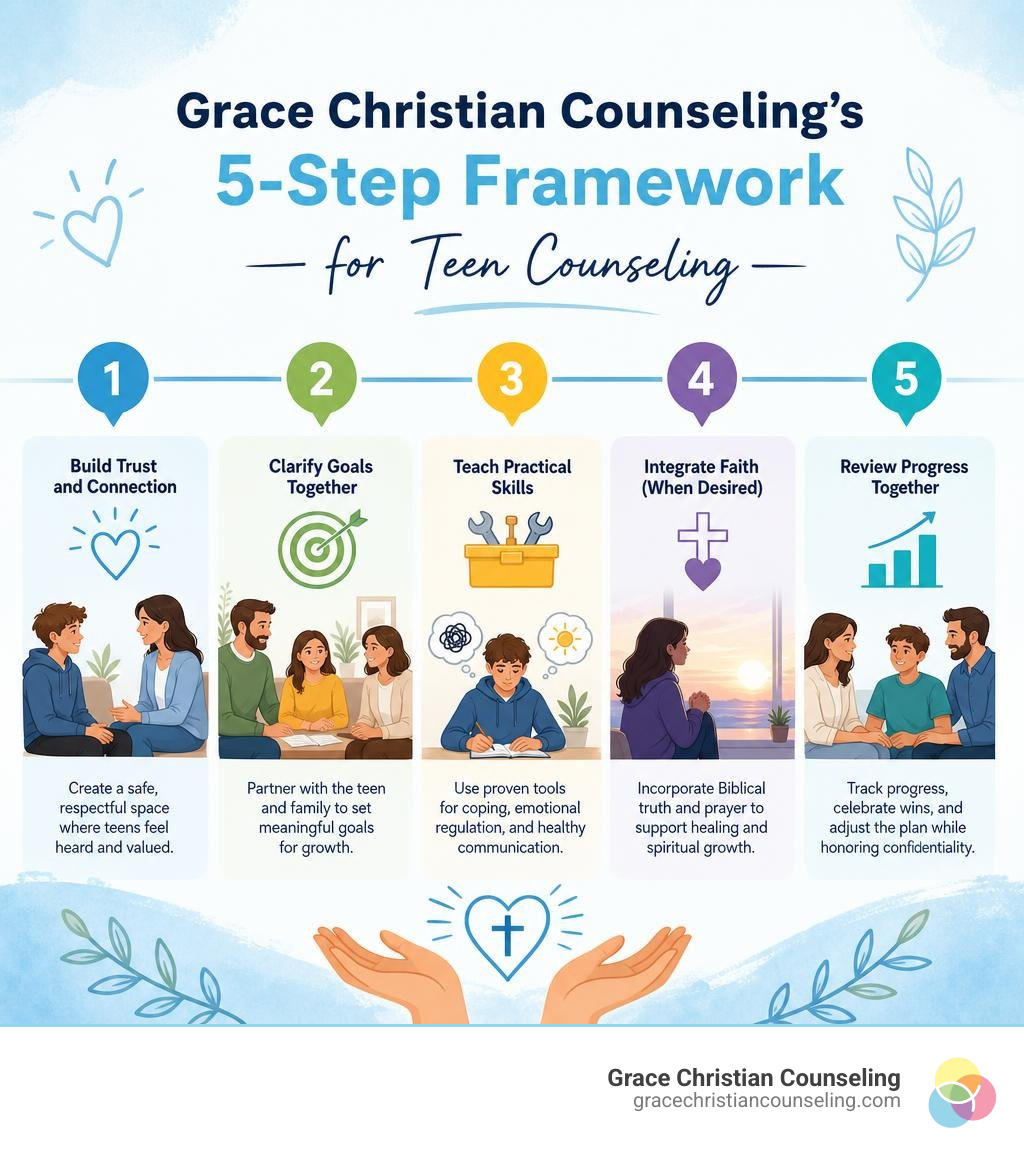
Our work with teens follows a clear, relational framework. First, we focus on building trust with the teen so counseling feels safe rather than forced. Then we clarify goals with the family, teach practical coping and communication tools, integrate faith when the teen is comfortable with that approach, and review progress with parents while still respecting appropriate confidentiality.
This framework helps families understand that teen counseling is not just a series of conversations. It is a guided process that supports emotional safety, practical skill-building, spiritual care, and healthy parent involvement. By using a consistent approach, we can meet each teen with compassion while still helping the family move toward measurable growth.
Specialized Support and Teen Counseling Near Me
Adolescence is a time of profound transition, and some challenges require a specialized lens. The World Health Organization identifies adolescence as a sensitive developmental stage shaped by emotional habits, social relationships, sleep, physical activity, and exposure to stress or adversity. This is why the right counselor should understand both teen development and the specific concern your family is facing.
Specialized support may be important for:
- Eating Disorders: Early intervention is critical because eating concerns can affect both physical and mental health.
- Substance Abuse: Catching unhealthy patterns during the teen years can change the entire trajectory of a life.
- Identity Development: We help teens navigate the “Who am I?” question through the lens of Teenage Identity Development and broader teen mental health support.
Blending Clinical Excellence with Faith
Our unique approach at Grace Christian Counseling is the integration of high-level clinical expertise with Biblical truth. We don’t believe you have to choose between psychology and faith. Instead, we see psychology as a way to understand God’s incredible design for the human mind.
In our sessions, we might use CBT to challenge a negative thought, but we also look to Scripture to find the ultimate truth that sets us free. We pray with our clients when they are comfortable and seek the guidance of the Holy Spirit in the healing process. This holistic approach supports the teen’s faith while addressing their clinical needs.
Our counselors also recognize that building trust with a teenager rarely happens in a single session. Many adolescents arrive guarded, offering only brief answers or insisting they do not need counseling. Rather than forcing difficult conversations too quickly, we focus first on creating a predictable, respectful relationship where they feel emotionally safe. As trust develops, teens often become far more willing to discuss the anxiety, grief, family conflict, or identity questions they initially kept hidden.
Navigating the Search: How to Find Teen Counseling Near Me
Finding a counselor can feel like a daunting task, especially when your family is already under stress. If you are looking for teen counseling near me in Pennsylvania, Georgia, or Florida, here are practical steps to find a qualified professional:
- Check Credentials: Ensure the therapist is a Licensed Professional Counselor (LPC/LAPC), Licensed Social Worker (LCSW/LSW), or a Licensed Psychologist.
- Verify Insurance: Many families need to use their insurance benefits. At Grace Christian Counseling, we work with many major providers to make care accessible.
- Look for “Fit”: A therapist can have all the degrees in the world, but if your teen doesn’t “click” with them, progress will be slow. Many of our counselors offer initial consultations to see if it’s a good match.
- Consider Location: We offer in-person sessions across Western Pennsylvania, including Pittsburgh, North Huntingdon, Penn Hills, Uniontown, Bethel Park, Sewickley, and Mt. Lebanon.
Evaluating In-Person vs. Online Sessions
In 2026, the choice between in-person and virtual therapy is a major consideration. Neither is “better” than the other; it depends on your teen’s personality and your family’s schedule.
| Feature | In-Person Counseling | Online (Telehealth) Counseling |
|---|---|---|
| Connection | High; physical presence builds rapport quickly. | Moderate to High; great for digital-native teens. |
| Convenience | Requires travel time to the office. | Can be done from home, saving travel time. |
| Privacy | Guaranteed private office environment. | Requires a private space at home. |
| Comfort | Good for teens who need to leave their home environment. | Good for teens with social anxiety or limited mobility. |
Whether you choose the traditional office setting or the convenience of your living room, our goal remains the same: providing Christ-centered, evidence-based care.
Preparing Your Teen for the First Appointment
It is common for teens to be a bit reluctant or even flat-out resistant to the idea of therapy. As a parent, your role is to reduce the stigma. Frame it as “mental fitness” or “getting a coach for your brain” rather than “fixing something that is broken.”
Encourage open communication. Listen to their fears without jumping to “solve” them. Our guide on how to help a teenager with anxiety offers more practical ways to support a teen who feels overwhelmed. Remind them that the counselor is a neutral third party, someone who isn’t a parent or a teacher, who is there solely to support them.
What to Expect: Confidentiality and the Therapeutic Process
One of the biggest hurdles in teen counseling near me is the question of privacy. Teens often worry, “Is the counselor going to tell my parents everything I say?”
At Grace Christian Counseling, we follow strict privacy laws (HIPAA) and ethical guidelines. For therapy to work, the teen must feel it is a safe space. This means that what is said in the room generally stays in the room. However, there are vital safety exceptions.
If a teen indicates they are a danger to themselves, a danger to others, or if there is ongoing abuse, we are legally and ethically required to break confidentiality to ensure everyone’s safety. We discuss these “ground rules” clearly in the first session so everyone knows what to expect.
The Role of Parental Involvement
While the teen needs their own space, parents are a crucial part of the healing team. We typically involve parents through periodic updates and family sessions when appropriate. We believe that healing the teen often involves addressing the family dynamics as a whole.
Sometimes, we might suggest that parents work with their own specialist to learn new communication tools. This collaborative approach ensures that the progress made in the counseling office is supported by the environment at home. If you’re seeing possible signs of depression in your teenager, your involvement and support are the most powerful medicines your child has.
We also spend time helping parents understand that progress is not measured only by whether difficult behaviors disappear immediately. Often, the earliest signs of growth are more subtle. A teen may begin expressing emotions instead of shutting down, recover more quickly after setbacks, or become more willing to ask for help. We encourage families to celebrate these small but meaningful changes because they often signal that healthier coping patterns are taking root.
Measuring Progress and Growth
How do you know if teen counseling near me is working? Progress isn’t always a straight line, but you should eventually see:
- Improved Coping Skills: The teen uses healthy tools (like deep breathing or journaling) instead of lashing out or shutting down.
- Emotional Regulation: Fewer “explosions” and a greater ability to bounce back from setbacks.
- Better Relationships: More open communication with parents and healthier boundaries with friends.
Our goal is to help your teen develop practical tools for anxiety, emotional regulation, and communication so they can navigate life’s storms with confidence and faith.
Frequently Asked Questions about Teen Therapy
How is confidentiality handled between the counselor, the teen, and the parent?
Confidentiality is the bedrock of the therapeutic relationship. We provide a private space for the teen to share their heart. While we provide parents with general updates on progress and goals, specific details remain private unless there is a safety risk such as suicidal ideation, self-harm, abuse, or harm to others. We aim for a “No Surprises” policy where these boundaries are explained to everyone at the start.
Does insurance typically cover adolescent counseling services?
Yes, many major insurance plans cover adolescent mental health services just as they would other medically necessary behavioral health care. Coverage can vary by plan, provider network, diagnosis, deductible, and copay. We recommend calling your provider to check your specific mental health benefits, and our team at Grace Christian Counseling is also happy to help you navigate the insurance process.
How do I know if my teen’s behavior is “normal” or requires professional help?
This is the most common question we hear! While moodiness and testing boundaries are “normal” parts of adolescent development, look for the “Three Ds”: Duration, Degree, and Disruption. If the behavior lasts for more than a few weeks, seems extreme, or is disrupting school, sleep, friendships, or family life, it is time to seek professional support. Trust your gut; if you feel something is wrong, it’s worth an assessment.
Helping Your Teen Take the Next Step Toward Healing
The journey of adolescence is a sacred time of growth, but it can also be a time of significant pain. If you are searching for teen counseling near me, know that there is hope. At Grace Christian Counseling, we are committed to providing a path toward restoration that honors both clinical excellence and the transformative power of Christ.
Whether you are in Pittsburgh, Penn Hills, Sewickley, Uniontown, or anywhere else in Western Pennsylvania (or seeking virtual support in Georgia or Florida), our team of licensed professionals is ready to walk with your family. You don’t have to navigate this season alone. There is healing, there is growth, and there is a bright future ahead for your teenager.
If you’re ready to take that next step, we invite you to learn more about Christian counseling for teens or contact us today to schedule an appointment. Let’s work together to help your teen thrive.
This guide is for educational and spiritual encouragement and is not a substitute for personalized professional counseling. If you are in crisis, please reach out for immediate help.
The Ultimate Guide to Finding a Great Teen Therapist Nearby


