

When Prayer Alone Isn’t Enough: Understanding Spiritual Strongholds
Breaking spiritual strongholds is the process of dismantling deeply entrenched patterns of thinking, feeling, or behaving that keep you stuck, even when you know God’s truth and genuinely want to change.
Here is a quick overview of how it works:
- Identify the stronghold; recognize the recurring pattern, lie, or behavior that keeps returning despite prayer and effort.
- Find the root; ask the Holy Spirit to reveal the underlying lie, wound, or agreement that gave the stronghold its foothold.
- Repent, renounce, and forgive; close the spiritual doorway through confession, breaking agreements with lies, and releasing offense toward others.
- Renew your mind; replace the lie with God’s truth through consistent Scripture meditation and declaration.
- Guard your freedom; build daily habits, spiritual accountability, and community cover to prevent re-entry.
You’ve prayed. You’ve confessed. You’ve tried harder. And yet the same cycle of fear, shame, or defeat keeps circling back. If that’s where you are, you are not alone, and you are not failing.
Many believers in Western Pennsylvania and beyond carry invisible weights that no amount of willpower seems to lift. These are not simply bad habits or personal weaknesses. According to 2 Corinthians 10:4-5, there are fortified structures of thought, what the Bible calls strongholds, that actively resist the knowledge of God and must be demolished with spiritual weapons.
The root of most strongholds is a lie. Something planted in the past through trauma, loss, rejection, or persistent sin slowly built a fortress in the mind. Once established, that fortress shapes how you see yourself, how you relate to others, and how you experience God.
The good news is that no stronghold is permanent. At Grace Christian Counseling, our licensed counselors integrate biblical truth with evidence-based care to help you identify what is keeping you stuck and walk you toward real, lasting freedom.
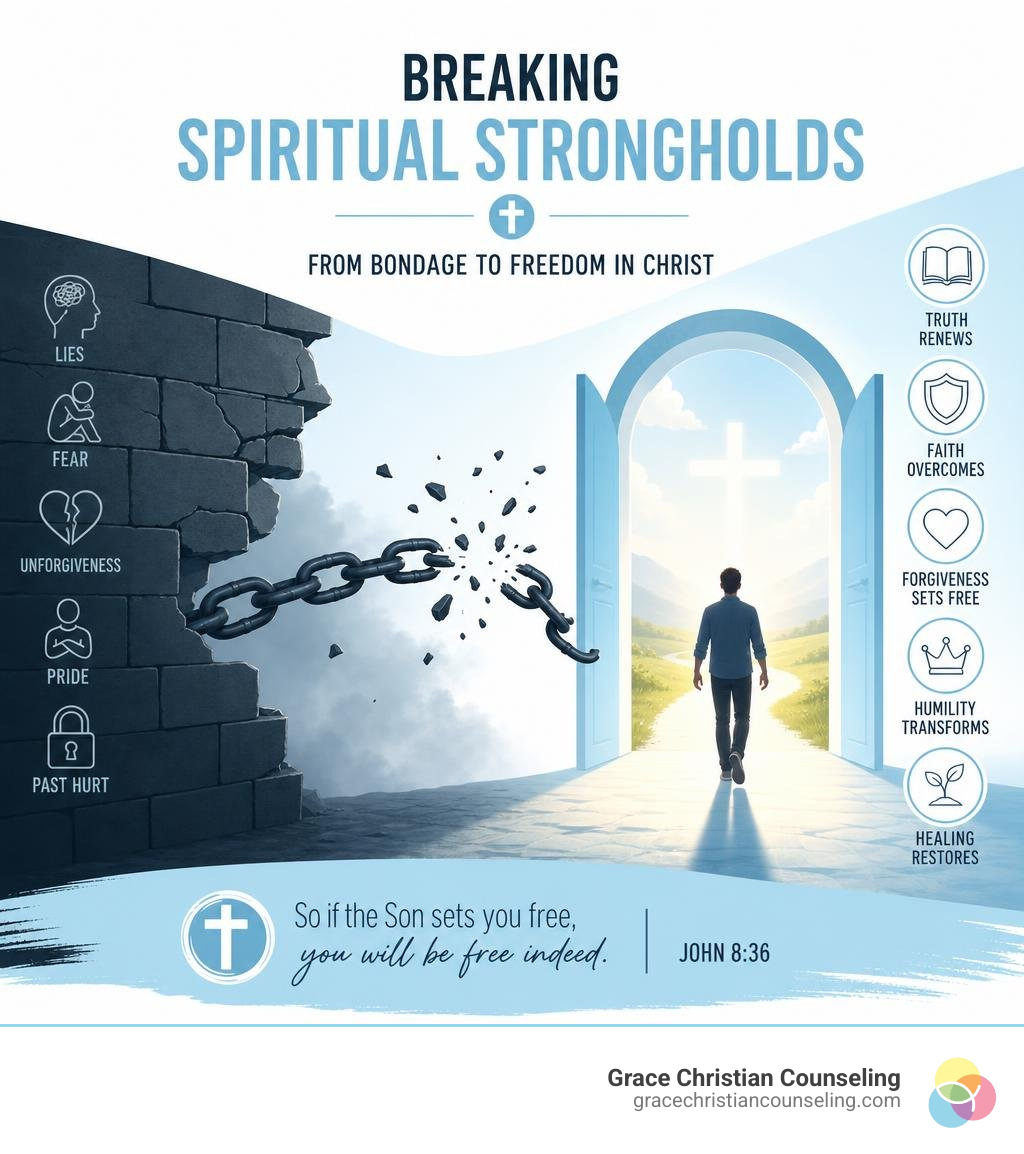
What is a Spiritual Stronghold and How Does It Form?
To understand how to tear down a spiritual stronghold, we must first understand what it actually is. The Apostle Paul uses the Greek word ochyrōma in 2 Corinthians 10:4-5, which historically referred to a heavily fortified military castle, fortress, or prison. In a spiritual context, a stronghold is a fortified pattern of thinking, feeling, or behaving that has become deeply entrenched in our minds and emotions. It operates like a locked system, running in the background of our lives and keeping us bound even when our spirits desire to walk in God’s freedom.
These spiritual fortresses do not appear overnight; rather, they are built brick by brick over time. They often form through unresolved trauma, persistent sin, generational patterns, and deceptive beliefs. When we experience deep pain or rejection, we often build emotional walls to protect ourselves, yet these protective walls can quickly become the very prisons that keep us isolated.
Furthermore, when we agree with ungodly thoughts or harbor hidden sins, we allow the enemy to lay down a legal landing strip in our souls. Over time, these agreements solidify into defensive spiritual fortresses that distort our perception of God, ourselves, and those around us. If you find yourself constantly battling these invisible barriers, seeking professional Spiritual Warfare Counseling can provide the safe, clinically grounded space needed to begin dismantling them.
Identifying the Root Lies That Fuel a Stronghold
Many people attempt to break free from their struggles by focusing solely on behavior modification. They try to stop the bad habit, control their temper, or force themselves to feel happy. However, behavior modification only cuts the surface behavior; if the root lie is not removed, the behavior will eventually creep back in. True spiritual freedom is about identity change and belief modification, not just managing symptoms.
Think of a spiritual stronghold like a stubborn weed in your yard. If you simply mow over the top of the weed, it looks fine for a few days, but the deep root system remains intact, waiting to spring back up. To destroy the weed permanently, you must dig down and pull it out by its roots. In the spiritual realm, the root is almost always a lie planted in your past, often during moments of deep vulnerability or trauma.
To help our clients dig down to these roots, our licensed counselors, use targeted diagnostic questions during therapy. In our clinical experience, recurring patterns usually have more than one contributing factor. A client may describe a struggle as spiritual, while assessment also reveals anxiety, trauma, grief, depression, relationship stress, or learned coping patterns. We do not assume the cause before understanding the whole picture. Instead, licensed counselors explore symptoms, history, current stressors, and spiritual concerns together so treatment addresses what is actually keeping the person stuck.
You can ask yourself these questions during your own quiet time with God too:
- What thought pattern do we return to automatically when we are stressed or overwhelmed?
- What areas of our lives feel completely blocked or out of control, no matter how much we pray?
- What negative emotions overtake us out of proportion to our actual situations?
- Did our parents or ancestors struggle with these exact same emotional or behavioral patterns?
- What specific wounds, offenses, or traumas have we never fully surrendered to God?
By bringing these answers into the light, we can begin the journey of Biblical Healing: Trusting God with Your Past Hurts. It is through this deep exploration that we can experience genuine Faith-Based Trauma Healing: Find Peace with God.
In our clinical experience, identifying a spiritual stronghold also requires careful attention to what may be happening psychologically and emotionally. A recurring thought, fear, or behavior is not automatically evidence of spiritual oppression. Licensed counselors assess the pattern, its history, triggers, severity, and impact on daily functioning while also exploring the client’s spiritual beliefs and concerns. This helps us avoid reducing complex struggles to either “just a spiritual problem” or “just a mental health problem.”
We also monitor how symptoms change as treatment progresses. For example, a client may begin recognizing a core belief such as “I am unsafe” or “I am unworthy,” then learn to challenge that belief through evidence-based interventions, healthy relationships, prayer, and Scripture. When trauma, anxiety, depression, or other clinical concerns are present, those issues can be addressed alongside a client’s faith rather than being overlooked. This integrated approach allows spiritual care and clinical treatment to work together while keeping the client’s safety and individual needs at the center.
The Biblical Process of Breaking Spiritual Strongholds
Dismantling a deeply entrenched stronghold requires a structured, almost legal process of closing spiritual doorways and revoking the enemy’s legal access to our lives. This is not about shouting at the darkness or relying on emotional hype; instead, it is about aligning ourselves with the spiritual authority of Jesus Christ. One pattern we’ve observed over years of counseling is that meaningful change usually involves both spiritual reflection and practical behavioral work. Prayer and Scripture may help a client identify what they believe, but therapy also looks at how those beliefs affect daily choices, relationships, emotional regulation, and coping. When appropriate, we use evidence-based interventions alongside biblical practices so clients can work on both the spiritual and psychological dimensions of a struggle. The biblical framework for breaking these fortresses involves three distinct, interconnected steps: repentance, renunciation, and forgiveness.
When we engage in all three of these steps together, we systematically dismantle the legal rights that keep us bound. Repentance addresses our personal sin and choices; renunciation breaks our agreements with the enemy’s lies; and forgiveness releases the debts of those who have wounded us. This holistic process is essential for Letting Go of Past Traumas and reclaiming our emotional well-being. If you want to explore this process further, you can read more about practical next steps through The Steps to Freedom in Christ.
Repentance and Renunciation in Breaking Spiritual Strongholds
The first step in revoking spiritual agreements is honest confession and repentance. According to 1 John 1:9, when we confess our sins, God is faithful and righteous to forgive us and cleanse us from all unrighteousness. Repentance is far more than mere remorse or feeling bad about getting caught; it is an active turning away from ungodly thought patterns and behaviors.
Renunciation is the verbal declaration that we are breaking our covenant with the lie. Because verbal declarations carry spiritual authority, we must speak these renunciations out loud rather than keeping them silent in our minds. For example, we might pray: “In the name of Jesus, I repent for agreeing with the lie that I am worthless and unlovable. I renounce the spirit of rejection, and I break every agreement I have made with fear and shame.”
The Power of Forgiveness in Breaking Spiritual Strongholds
Unforgiveness is one of the most common legal rights that allows a spiritual stronghold to maintain its grip on our lives. When we hold onto bitterness and resentment, we are spiritually binding ourselves to the person who hurt us, creating unhealthy emotional cords. Jesus emphasized the absolute necessity of unlimited forgiveness in Matthew 18:21-22, showing that our own spiritual freedom is directly tied to our willingness to release others.
Forgiveness is not about condoning the bad behavior or pretending the pain did not happen; rather, it is a conscious decision to hand the debt over to God and let go of our desire for revenge. By releasing the offense, we cut the spiritual cord and shut the doorway to enemy influence. If you are struggling to identify the specific strongholds operating in your life, you can explore these practical Examples of spiritual strongholds: 10 Ways to Break Free.
Renewing the Mind with God’s Truth

Once the legal rights of a stronghold have been broken, we must actively fill and rebuild the mental space that was once occupied by the enemy’s fortress. If we leave our minds empty, we remain vulnerable to recurring negative thoughts. This is where clinical psychology and biblical counseling beautifully intersect through the process of cognitive reframing, which the Bible calls mind renewal.
At Grace Christian Counseling, we utilize our structured Counseling Blueprint to guide clients through this journey of transformation. This blueprint consists of four essential stages:
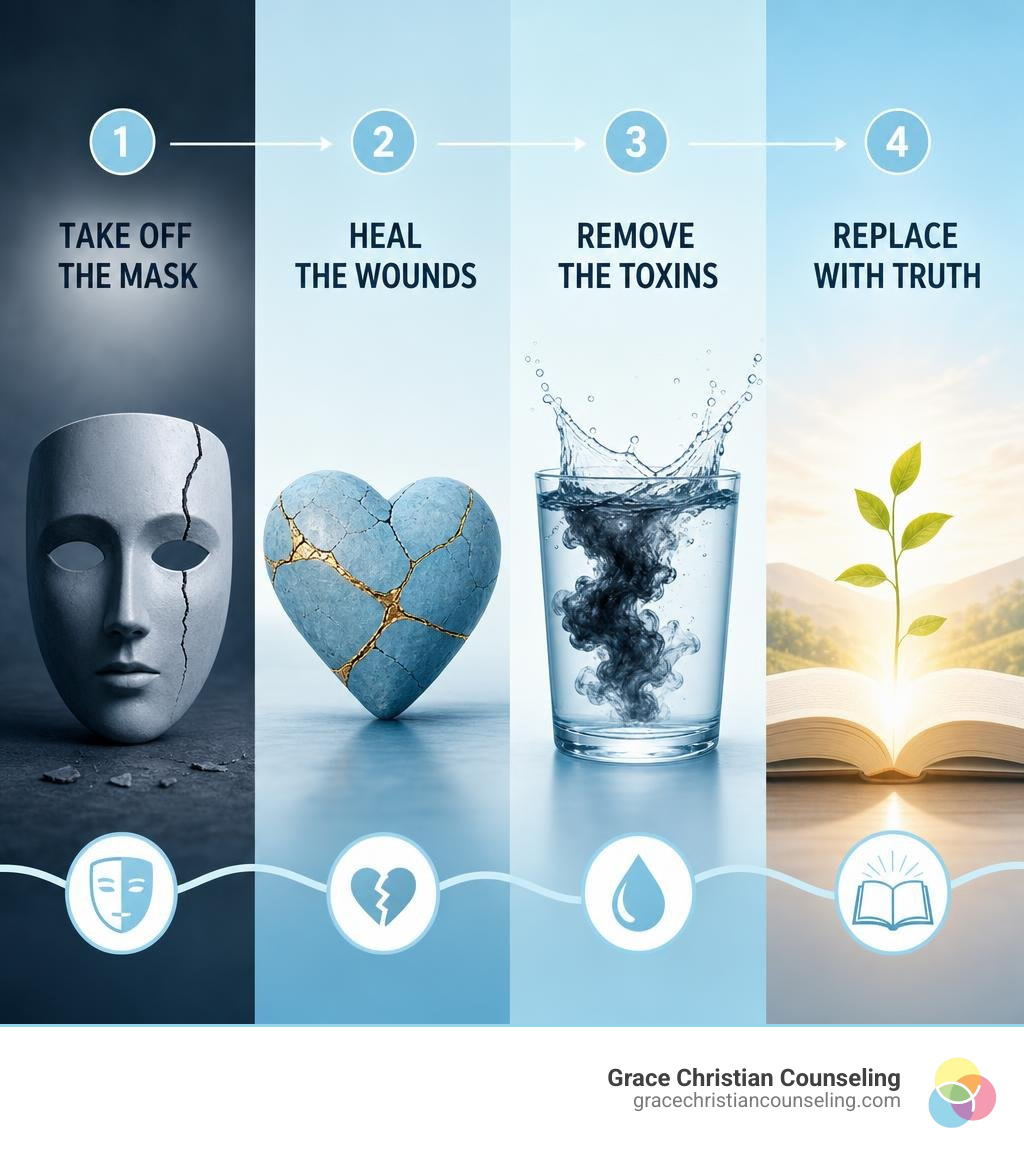
- Take Off the Mask; we build genuine rapport, trust, and safety, allowing you to bring your struggles into the light without fear of judgment.
- Heal the Wounds; we explore past emotional hurts, trauma, and relational pain to find where the initial damage occurred.
- Remove the Toxins; we identify the unhelpful beliefs, cognitive distortions, and lingering lies that have built up over time.
- Replace with Truth; we install empowering, biblically accurate perspectives about your identity, God, and the world around you.
During treatment, we also monitor whether the strategies being used are actually helping. A counselor may track changes in anxiety, mood, avoidance, intrusive thoughts, or relationship functioning and adjust the treatment plan when needed. This ongoing process matters because spiritual growth and clinical progress do not always happen at the same pace, and effective counseling should respond to what the client is experiencing rather than follow a predetermined script.
This therapeutic journey perfectly aligns with Romans 12:2, which commands us not to be conformed to this world, but to be transformed by the renewing of our minds. By pairing evidence-based clinical practices, like Cognitive Behavioral Therapy (CBT), with the truth of Scripture, we can dismantle old neural pathways and build healthy, life-giving thought patterns. For a comprehensive look at how to care for your soul, check out The Ultimate Guide to Faith-Driven Mental Wellness and Soul Care.
Practical Steps to Maintain Freedom and Prevent Re-entry
Breaking a stronghold is a wonderful victory, but maintaining your freedom requires daily diligence and spiritual stewardship. In Matthew 12:43-45, Jesus warns that when an unclean spirit leaves a person, it searches for a way to return. If it finds the house swept clean but empty, it brings back worse influences to re-occupy the space. Therefore, we must never leave our newly freed minds vacant.
To protect your breakthrough, we recommend establishing these healthy spiritual and emotional habits:
- Daily Scripture Meditation; fill your mind with God’s Word every morning to set your focus on what is true, pure, and lovely.
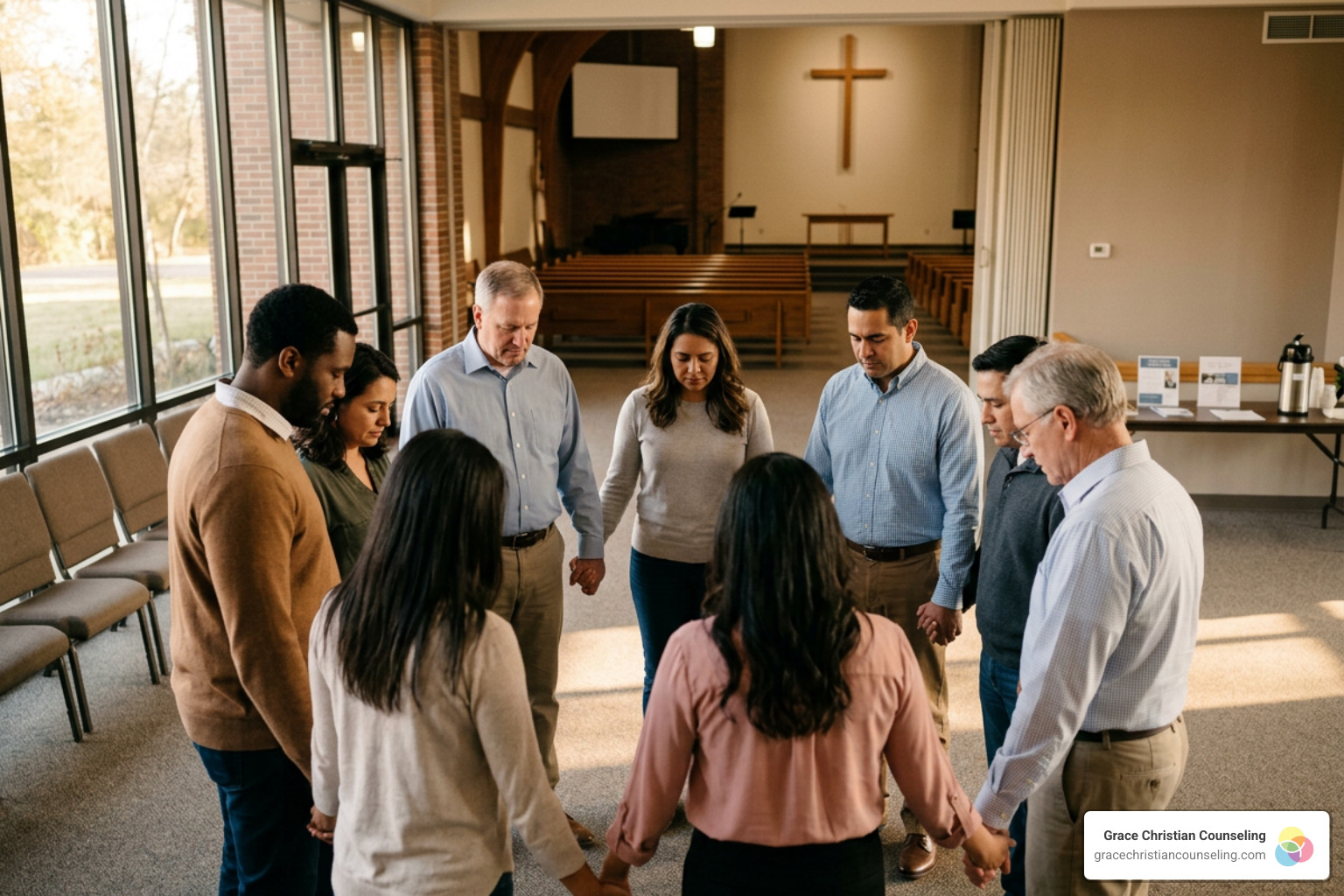
- Spiritual Cover and Accountability; do not isolate yourself; stay actively involved in a local church community and share your struggles with trusted mentors or a professional counselor.
- Boundaries and Sabbath Rest; physical exhaustion makes us highly vulnerable to spiritual attack, making consistent rest and healthy boundaries essential tools for self-care.
- Immediate Response; if you feel an old thought pattern or temptation returning, immediately address it through prayer, repentance, and verbal declaration before it can rebuild a foothold.
For those facing highly resistant, long-standing struggles, combining these habits with specific spiritual disciplines can provide needed support as you continue healing. You can read more about this integrated path in our article on Faith-Based Trauma Healing: Find Peace with God.
Frequently Asked Questions about Breaking Spiritual Strongholds
Can a Christian have a spiritual stronghold?
Yes, a Christian can absolutely struggle with a spiritual stronghold. While a believer’s spirit is sealed by the Holy Spirit and cannot be “possessed” or owned by the enemy, our souls, which consist of our minds, wills, and emotions, can still be heavily influenced. If we harbor unresolved wounds, agree with ungodly lies, or persist in unrepentant sin, we allow the enemy to build fortresses of defeat within our thought lives.
How do I know if my struggle is spiritual or psychological?
The truth is that our spiritual, emotional, and physical lives are deeply interconnected. A struggle is rarely purely psychological or purely spiritual; clinical anxiety, depression, and trauma often have biological, psychological, and spiritual components simultaneously. True discernment involves looking at the fruit: if a struggle persists despite excellent clinical therapy, or if it actively resists prayer and Scripture, it likely requires a holistic approach that addresses both the psychological and spiritual roots.
What is the role of fasting in breaking resistant strongholds?
Fasting is a historical spiritual discipline that humbles the soul, subdues carnal desires, and intensifies our dependence on God. In Matthew 17:21, Jesus indicates that certain highly resistant spiritual challenges require both prayer and fasting to overcome. Fasting does not change God’s willingness to help us; rather, it sharpens our spiritual sensitivity, breaks our reliance on physical comforts, and releases supernatural power to dismantle stubborn fortresses.
Stepping Into Lasting Freedom
Breaking spiritual strongholds is not a journey you have to take alone. While the walls of fear, shame, and past trauma can feel completely insurmountable, the authority of Jesus Christ and the power of His truth are fully capable of demolishing every barrier in your life.
At Grace Christian Counseling, we are honored to walk alongside individuals, couples, and families with compassionate, Christ-centered, and evidence-based care. Our licensed counselors, including LSWs and LAPCs, provide in-person counseling throughout Western Pennsylvania communities such as Pittsburgh, Penn Hills, Sewickley, Uniontown, Pleasant Hills, Bethel Park, North Huntingdon, and Mt. Lebanon, along with online counseling options for clients who need flexible support throughout the state of PA, GA, WV, and FL.
If you are ready to take off the mask, heal your wounds, and step into the lasting liberty God has for you, we invite you to reach out to us today. Let us help you begin your journey toward Healing from Generational Trauma and finding true peace.
This guide is for educational and spiritual encouragement and is not a substitute for personalized professional counseling. If you are in crisis, please reach out for immediate help.
A Comprehensive Guide to Therapy For Generational Trauma


