

Start Healing Ancestral Wounds With Awareness and Support
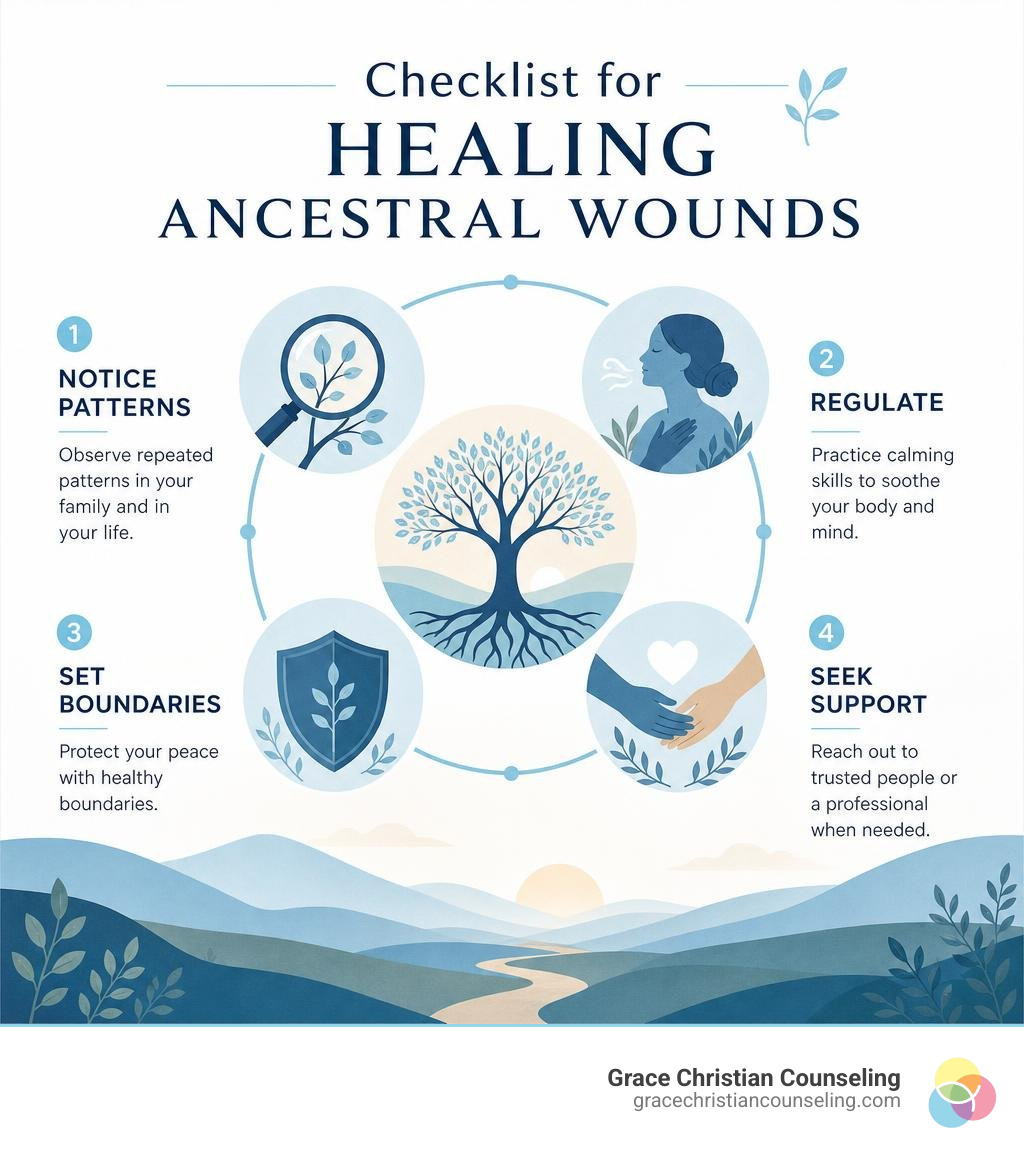
Healing ancestral wounds starts by noticing repeated family patterns, naming what is yours to address, and seeking safe support for what feels too heavy to carry alone. You do not need a complete family history to begin. Try these first steps:
- Write down patterns you see in your family, such as anxiety, silence, addiction, conflict, grief, or fear around money.
- Notice strong reactions that seem larger than the present moment.
- Practice calming skills, prayer, journaling, and healthy boundaries.
- Talk with a licensed counselor if trauma, depression, anxiety, or family conflict is affecting daily life.
Intergenerational trauma is the way unresolved stress, loss, abuse, displacement, or survival habits can shape a family across time. It may be passed through learned behavior, family rules, relationships, culture, and possibly biological stress responses. Research into epigenetics explores how severe stress may affect chemical markers involved in gene activity, though it does not mean your future is fixed.
For Christians, this work can include honest prayer, biblical forgiveness, and wise care without denying harm. Forgiveness does not excuse cruelty or require unsafe contact. It can mean releasing the burden of ongoing resentment while keeping clear boundaries.
At Grace Christian Counseling, our licensed counselors provide Christ-centered, evidence-based counseling for individuals, couples, and families across Western Pennsylvania, including Pittsburgh, North Huntingdon, Penn Hills, Uniontown, Bethel Park, Sewickley, and Mt. Lebanon, as well as through online counseling. We also recommend NuWell as a pastoral counseling resource.
Understanding Generational Trauma and the Science of Lineage Pain
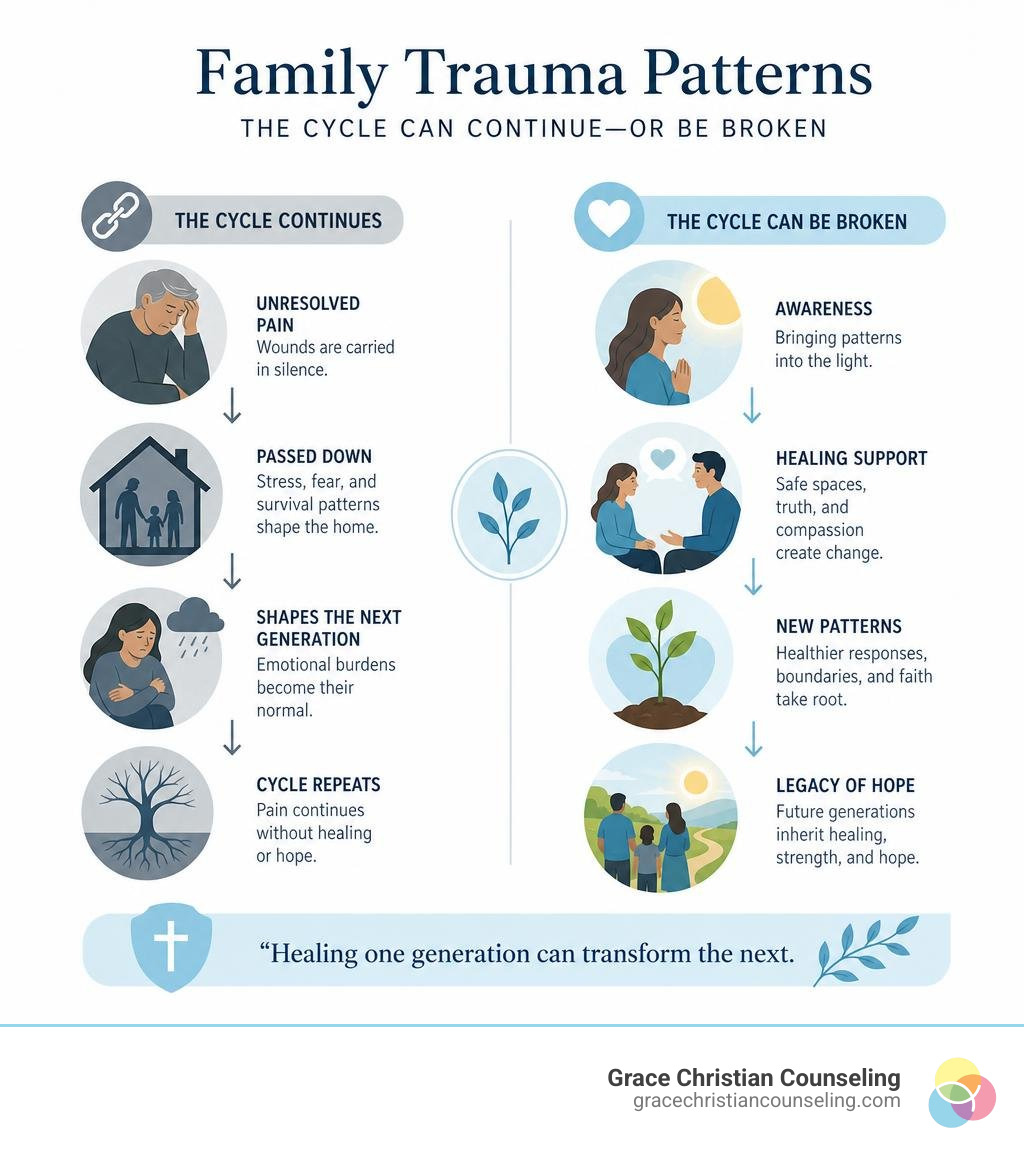
Generational trauma refers to the cumulative emotional, psychological, and physiological distress passed down through family lines. When a parent or grandparent survives profound adversity, such as war, systemic oppression, severe poverty, or prolonged domestic abuse, their survival responses often become the emotional architecture of the entire home. Understanding these nuances is easier when exploring a Step-by-Step Guide to Transgenerational vs Intergenerational dynamics.
Unresolved suffering rarely disappears with time; instead, it tends to echo through subtle relational dynamics, unspoken rules, and conditioned stress responses. In our clinical work across Western Pennsylvania, we frequently see how these inherited patterns manifest as chronic tension in families who cannot pinpoint a specific modern cause for their distress.
Through clinical frameworks like Cognitive Behavioral Therapy (CBT) and trauma-informed care, we can bring these subconscious cycles into the light of conscious awareness. When paired with Biblical truth, this integration offers both practical coping mechanisms and deep spiritual restoration through the guidance of the Holy Spirit.
Epigenetics and Biological Transmission of Family Pain
Researchers are still learning how severe stress and trauma may affect families across generations. One area of study is epigenetics, which looks at chemical processes that influence how genes function without actually changing the DNA itself. Some studies have found differences in these processes among children of parents who experienced significant trauma, raising interesting questions about whether stress can have biological effects across generations.
The science is still developing, however. A 2023 review found preliminary evidence of differences in DNA methylation among offspring of trauma-exposed parents, but researchers cannot yet separate possible biological inheritance from influences such as pregnancy, parenting, shared environments, culture, and family experiences. In other words, your family history may influence how you respond to stress, but it does not biologically determine your future. You can explore the research through PubMed.
Clinical observations remind us that depression and anxiety frequently present as fatigue, irritability, concentration difficulties, physical aches, or hidden impairment. Rather than viewing these symptoms as personal failure, a thorough clinical assessment can help determine whether an overactive nervous system is responding to inherited physiological stress tags.
Displacement, Land Loss, and Cultural Disconnection
Human beings were created to live in reciprocal relationship with their communities and their physical environment. When colonization, oppression, famine, or industrial poverty forces a people from their ancestral lands, that vital connection is severed. Displacement can disrupt meaningful connections to family, community, culture, traditions, language, and place. These losses can affect identity and belonging and may continue influencing families as later generations adapt to new environments.
Multi-generational displacement fractures cultural roots and fosters an inner void that modern consumerism frequently fails to soothe. When families lose their geographic and communal grounding, they often pass down a legacy of hypervigilance and rootlessness.
Recognizing the impact of historical displacement allows us to view our lineage with compassion rather than confusion. God honors our roots, and He desires to replant us in places of spiritual belonging, emotional security, and restoration (Jeremiah 17:7-8).
Signs You Are Carrying Unresolved Family Line Burdens
It is common to carry emotional burdens that feel far older than your personal history. Unconscious loyalties to family suffering often compel individuals to repeat painful cycles, such as staying small, enduring emotional deprivation, or remaining in financial distress out of solidarity with past generations. For deeper therapeutic frameworks, see A Comprehensive Guide to Therapy for Generational Trauma.
Many people experience sudden emotional dread or deep-seated beliefs of being fundamentally broken, even when their personal lives are stable. These manifestations reflect how survival defaults are passed down through family lines across generations.

Identifying Inherited Grief and Repeating Behavioral Loops
Sometimes people notice sadness, fears, or relationship patterns that seem connected to themes present in their family for generations. For example, a family shaped by repeated loss or abandonment may develop beliefs about vulnerability, trust, or self-protection that children learn and carry into their own relationships. Exploring these patterns can help you understand what your family learned to do in order to cope and decide which patterns are still helpful today.
These dynamics often surface within Christian families throughout Western Pennsylvania who struggle with chronic guilt, perfectionism, or unexpressed anger. When unresolved grief is buried, it typically converts into rigid family rules, such as strict emotional silence or relentless workaholism. Recognizing these loops is the first step toward releasing inherited pain and embracing Letting Go of Past Traumas.
How Family Patterns Can Affect the Present
Intergenerational trauma is not a separate mental health diagnosis, and there is no clinical test that can determine whether anxiety, grief, physical tension, financial fears, or relationship difficulties were inherited from previous generations. These experiences can have many possible causes and deserve careful assessment rather than being automatically attributed to ancestral trauma.
What you can explore are observable family patterns. A counselor may help you consider how experiences such as abuse, addiction, loss, poverty, displacement, family conflict, emotional silence, or other adversity affected previous generations and how beliefs, coping strategies, parenting practices, and relationship patterns may have continued within the family. Understanding these influences can help you decide which patterns you want to address in your own life.
Understanding these distinctions allows you to address the root causes of distress effectively, combining clinical care with faith-centered renewal.
The Comprehensive Checklist for Healing Ancestral Wounds
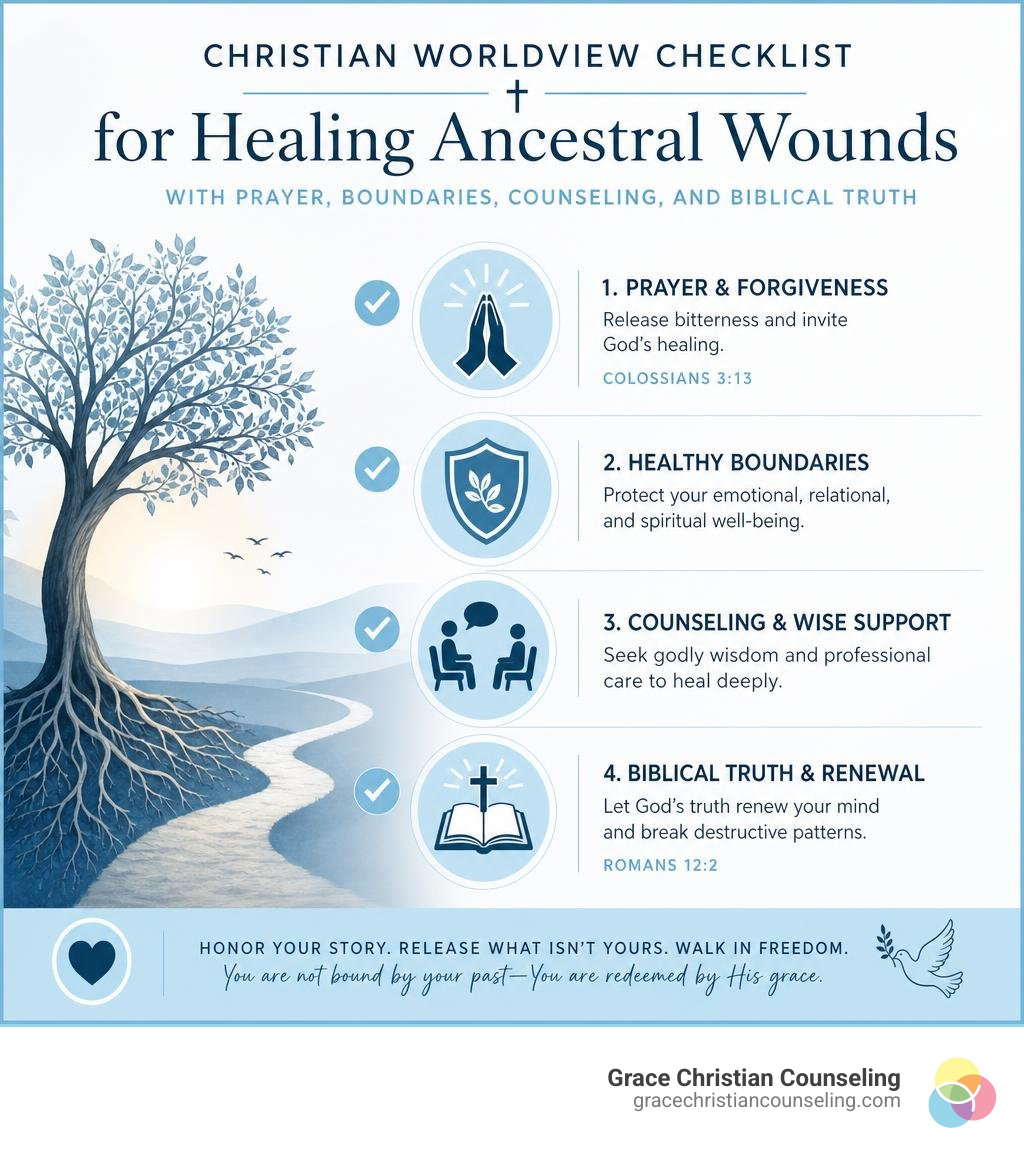
Healing family wounds requires an intentional, compassionate, and structured approach. You can find complementary interventions in our guide on Effective Therapy Techniques for Healing Generational Trauma. Below is a practical four-step checklist to guide your journey toward freedom.
Step 1: Mapping Lineage Patterns and Unconscious Loyalties
Begin by creating a genogram, a detailed family tree that tracks not just names and dates, but emotional themes, medical histories, addictions, relational styles, and major losses across three or four generations.
- Identify Family Rules: What was rewarded in your family (e.g., stoicism, overachievement)? What was forbidden (e.g., expressing anger, crying, admitting fear)?
- Explore Family Expectations: Are there spoken or unspoken messages in your family about success, money, relationships, emotions, or what it means to be loyal to your family? Consider whether any of these expectations still influence the choices you make today
- Acknowledge Buried Sorrow: Name the historical crises, such as sudden deaths, migrations, or lost inheritances, that your ancestors lacked the emotional resources to grieve.
Naming these patterns brings unconscious loyalties into the open, allowing you to return impossible burdens to their rightful place. Integrating evidence-based reflection helps create A Roadmap to Wholeness Integrating Faith and Evidence.
Step 2: The Practice of Lineage Forgiveness
Forgiveness is a central discipline in resolving generational pain, yet it is widely misunderstood. Forgiveness does not mean minimizing harm, making excuses for abuse, or maintaining unsafe contact with toxic family members. When you forgive an ancestor for their cruelty, addiction, abandonment, or weakness, you are recognizing their humanity, their own wounds, their own unhealed ancestors, and choosing to stop paying the interest on their debt.
Lineage forgiveness acts as an intentional spiritual release where you declare that the emotional debt stops with you. Through Christ, we are invited to lay down bitterness and invite divine justice and mercy into our family narrative (Colossians 3:13). For more spiritual reflection, explore Biblical Healing Trusting God with Your Past Hurts.
- Write a letter to an ancestor detailing the pain their choices caused, and conclude with a statement choosing to release the debt to God.
- Pray honestly and specifically about generational resentment, grief, or anger, asking the Holy Spirit for wisdom as you pursue forgiveness, healthy boundaries, and freedom from destructive family patterns.
- Establish clear, protective boundaries in the present day to protect your emotional, relational, and spiritual health.
Step 3: Engaging Clinical Support and Faith-Based Guidance
Healing multi-generational patterns often requires specialized professional guidance. Navigating complex trauma, deep-seated grief, or family dysfunction benefits from the support of trained professionals who respect your spiritual convictions.
Our licensed counselors integrate evidence-based interventions like CBT, EMDR, and Family Systems Therapy with biblical principles. In addition to our practice, we also recommend NuWell as a supportive pastoral counseling resource for faith-based care.
Professional therapy provides a secure environment to process hidden impairment, unpack diagnostic symptoms, and safely reprocess traumatic family memories. Whether you meet in person in communities like Penn Hills, Sewickley, or Mt. Lebanon, or utilize online Christian counseling, professional support ensures that deep-seated pain is handled safely and effectively.
Step 4: Clinical and Spiritual Exercises for Healing Ancestral Wounds
To anchor your healing, engage in regular somatic, cognitive, and spiritual practices that regulate your nervous system and reinforce healthy boundaries:
- Somatic Boundary Practice: Sit quietly in a comfortable chair. Place both feet firmly on the ground, take slow diaphragmatic breaths, and imagine a gentle, protective boundary surrounding your body. Affirm internally: “I honor my family’s story, but I only carry what is mine.”
- Stillness and Breathwork: You do not need exhaustive historical details to heal. Spend ten minutes in quiet prayer, letting the Holy Spirit calm your racing thoughts.
- Downstream Blessing Ritual: Shift your focus forward. Speak intentional words of blessing, faith, and emotional health over your children, future descendants, or the young people you mentor, intentionally replacing historical curses with declarations of grace.
Frequently Asked Questions About Lineage Trauma
Do I need to know my full family history to heal?
No, you do not need an exhaustive genealogical record or specific historical stories to experience deep healing. Many people are adopted, estranged, or separated from their family history due to displacement, loss of records, or familial silence. Healing can begin in the present even when parts of your family history are unknown. You can work with the experiences, beliefs, relationship patterns, coping strategies, and emotional responses that are affecting your life today.
When you notice fear, grief, or beliefs about safety and scarcity, counseling can help you explore where those responses may have come from without assuming they were biologically inherited from an ancestor. Developing healthier coping strategies, relationships, boundaries, and patterns can also change the environment you create for the people around you and for future generations.
How does resolving ancestral pain protect future generations?
As we heal ourselves in the present, we naturally ripple that healing outward into the lineages. Unresolved trauma dysregulates a parent’s nervous system, which can unintentionally create an insecure attachment environment for their children.
When you work on anxiety, change unhealthy communication patterns, and establish healthier emotional boundaries, you can change the environment your children experience at home. Consistent, responsive relationships and healthier ways of handling stress can support children’s emotional development and give families an opportunity to interrupt patterns that might otherwise continue into the next generation. For further reading on family dynamics, see our guide on Grace-Filled Healing for Attachment Wounds in Christian Parenting.
What is the role of forgiveness when ancestors caused severe harm?
Forgiveness in the context of generational trauma is not about saying the abuse, neglect, or abandonment was acceptable. It is about emotional and spiritual unburdening. Long-standing anger and resentment can remain emotionally burdensome, but forgiveness should not be treated as a requirement for immediate emotional recovery or reconciliation. Biblical forgiveness can include entrusting justice to God while maintaining appropriate physical, emotional, or legal boundaries.
By choosing biblical forgiveness, you place the ultimate reckoning in God’s hands (Romans 12:19). This frees your energy to focus on building a healthy present and future, while maintaining any physical, emotional, or legal boundaries necessary to ensure safety.
Breaking Cycles and Restoring Future Generations
You do not have to remain trapped by the unhealed grief, behavioral patterns, or survival responses of previous generations. Through the transformative power of Christ, clinical insight, and intentional practice, you can become the turning point in your family tree. By choosing to face these wounds today, you pave the way for downstream freedom and lasting wholeness for generations to come.
At Grace Christian Counseling, our licensed counselors (including LAPCs and LSWs) are dedicated to walking alongside you through this transformative journey. We provide Christ-centered, evidence-based therapy tailored for individuals, couples, and families navigating anxiety, depression, and complex trauma.
Whether you reside in Western Pennsylvania, including Pittsburgh, North Huntingdon, Penn Hills, Uniontown, Bethel Park, Sewickley, and Mt. Lebanon, or prefer the convenience of statewide virtual therapy, we are here to support you. We also encourage you to explore NuWell for additional pastoral counseling resources.
Take the first step toward lasting freedom and lineage restoration today. Reach out to schedule a consultation with our compassionate team and begin healing from generational trauma.
This article was researched with AI and heavily edited by Bekah McCrorey for accuracy and relevance.
Bekah McCrorey is a counselor at Grace Christian Counseling. She holds a Master’s degree in Counseling from Dallas Theological Seminary and a Bachelor’s degree in Christian Ministry from Chesapeake Bible College and Seminary. She is a provisionally licensed counselor working under supervision toward full licensure as a Licensed Professional Counselor (LPC) in Pennsylvania.
With over 12 years of full-time ministry experience supporting individuals, families, ministry leaders, and churches nationally and internationally, Bekah brings a deep understanding of emotional and spiritual struggles. As a counselor, she uses a client-centered, trauma-informed, and evidence-based approach. She is Level 1 trained in Restoration Therapy and is passionate about helping clients navigate anxiety, depression, grief, trauma, life transitions, and relational difficulties while integrating emotional and spiritual well-being.
This guide is for educational and spiritual encouragement and is not a substitute for personalized professional counseling. If you are in crisis, please reach out for immediate help.


