

Christian Narcissistic Abuse Therapy Can Help You Find Safety and Clarity
Christian narcissistic abuse therapy combines trauma-informed counseling with faith in a way that can help you name what happened, calm trauma responses, rebuild healthy boundaries, and restore a grounded sense of identity. Look for a licensed counselor, such as an LAPC or LSW, who understands emotional abuse, gaslighting, and trauma, and who can respect and thoughtfully integrate your Christian beliefs.
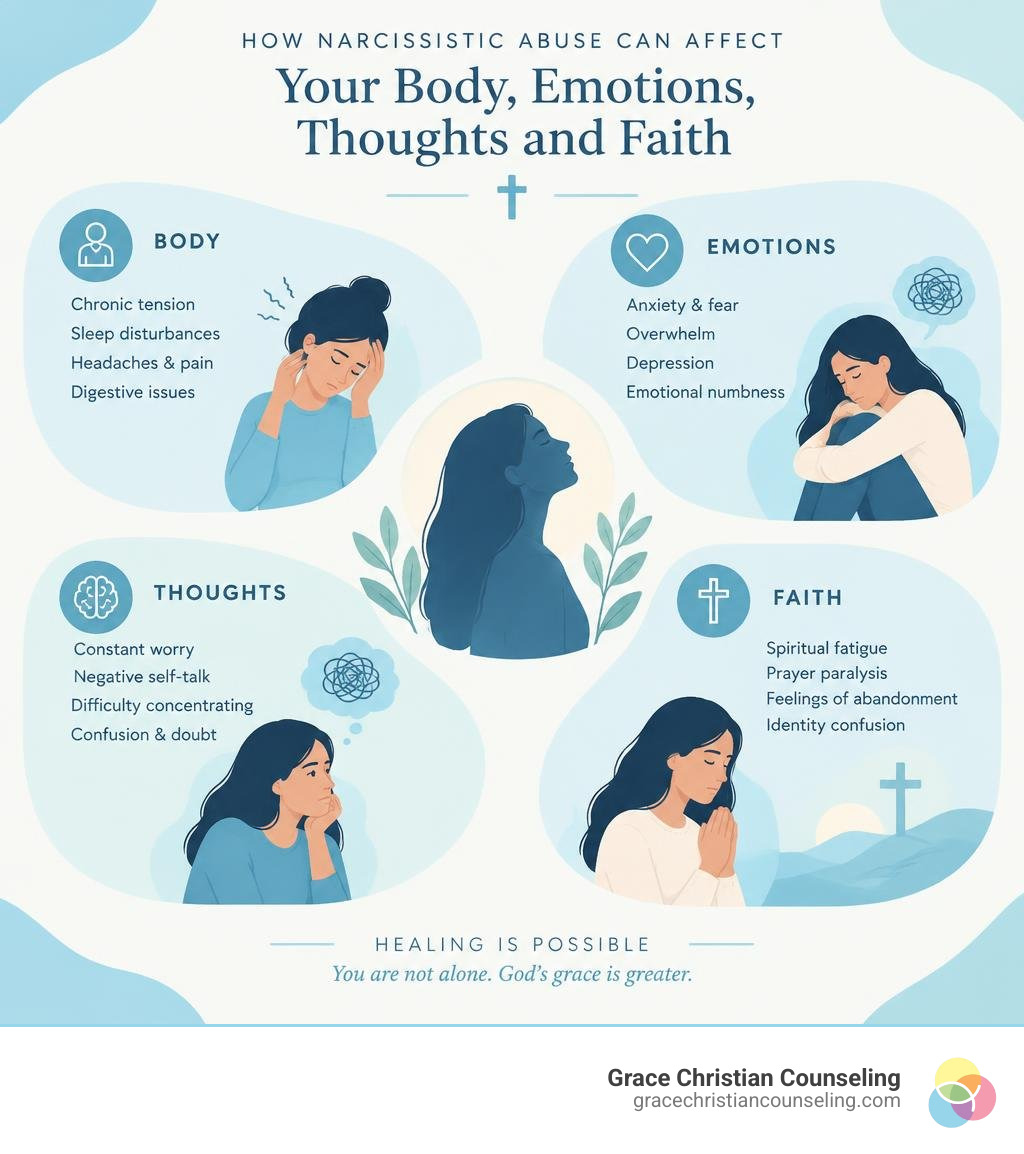
Narcissistic abuse often involves patterns of manipulation, blame shifting, isolation, love-bombing, and gaslighting. In Christian relationships or families, an abusive person may also misuse Scripture, forgiveness, or ideas about submission to create false guilt. The result can be anxiety, depression, sleep problems, self-doubt, emotional numbness, and confusion about God, yourself, and what is safe.
At Grace Christian Counseling, we provide Christ-centered, evidence-based counseling for individuals, couples, and families across Western Pennsylvania, including Pittsburgh, North Huntingdon, Penn Hills, Uniontown, Bethel Park, Sewickley, and Mt. Lebanon, as well as online. Our counselors can help you take practical next steps without minimizing your experience or pressuring you toward a quick outcome. For those seeking additional pastoral support alongside licensed counseling, we recommend NuWell as a complementary pastoral care resource.
Understanding the Spiritual and Psychological Impact of Narcissistic Abuse
The term narcissistic abuse is commonly used to describe patterns of emotional or psychological harm that may include manipulation, coercive control, gaslighting, blame shifting, isolation, and repeated invalidation. These behaviors can occur whether or not the person causing harm has been diagnosed with narcissistic personality disorder (NPD). In some relationships, harmful behavior may happen primarily in private while the person presents very differently to others, which can leave survivors feeling isolated and questioning their own perceptions.
When manipulation enters a Christian home, marriage, or church environment, it frequently takes on a spiritual dimension. Spiritual gaslighting occurs when an abuser weaponizes biblical passages to deflect accountability, shift blame, and demand unconditional compliance. You can learn more about these behavioral patterns in our detailed guide to the narcissistic abuse cycle.
Deconstructing Spiritual Manipulation and False Guilt
In faith communities, toxic religious control often distorts core tenets of the Christian walk. Abusers may misapply Scriptures on forgiveness, insisting that a survivor must instantly restore trust without demanding repentance or safety. Submissive postures or servant-heartedness are reframed as obligations to endure chronic disrespect and psychological mistreatment.
These dynamics create profound false guilt, causing survivors to feel like they are failing God whenever they express hurt or establish basic relational limits. Understanding these tactics is critical; explore our resource on understanding the clinical impact of mental abuse to see how psychological manipulation damages emotional autonomy. Scripture calls believers to walk in truth, wisdom, and love, not to enable destructive, unrepentant behaviors.
Research also supports recognizing spiritual or religious coercion as a distinct dimension of abuse. One peer-reviewed study drew on interviews with 27 victim-survivors, survey responses from 24 victim-survivors, and four follow-up interviews to examine how abusive partners can use religious beliefs, doctrine, and spiritual authority as tools of coercive control. Participants described longer-term effects including anxiety, depression, guilt, sadness, disrupted relationships, and harm to their spiritual or religious identity. Although research in this area is still developing, these findings help explain why recovery from spiritually mediated abuse may involve both psychological healing and rebuilding a person’s relationship with faith.
The Psychological Toll on Believers
The psychological aftermath of chronic invalidation is severe. Victims frequently experience intense cognitive dissonance, attempting to reconcile their abuser’s public charm with private cruelty. Over time, this dynamic creates a powerful trauma bond, an emotional attachment reinforced by intermittent cycles of praise, devaluation, and reconciliation.
The connection between psychological abuse and mental health symptoms is supported by a substantial body of research. A systematic review and meta-analysis examining 194 studies found that psychological intimate partner violence was strongly associated with PTSD, depression, and anxiety. Among the different patterns researchers examined, coercive control was particularly associated with PTSD symptoms among women, while emotional and verbal abuse and patterns of dominance and isolation showed strong associations with depression.
Believers often find their sense of self-worth eroded as their thoughts, feelings, and instincts are continuously dismissed. When a partner or authority figure systematically dismantles a person’s dignity, it can lead to profound emotional dysregulation. We address these relational battles in our guide on when a narcissist targets a believer, exploring how faith can be preserved during deep psychological trials.

Signs of Psychological Trauma and Spiritual Wounding
Long-term emotional mistreatment alters how the nervous system responds to daily life. Survivors of narcissistic relationships often live in a persistent state of hypervigilance, constantly scanning their surroundings for danger, anger, or impending conflict. Recognizing these trauma symptoms is a vital first step toward reclaiming peace and stability.
If you find yourself feeling emotionally detached or constantly overwhelmed, you are not alone. Our resource on healing the brokenhearted through trauma recovery examines how complex trauma manifests and how faith-aligned clinical care restores balance.
Somatic and Emotional Indicators of Abuse
Trauma does not reside solely in our thoughts; it manifests physically across the entire body. Survivors frequently report chronic headaches, gastrointestinal distress, tension, sleep disturbances, and sudden panic attacks. When assessing mental health, clinical observations reveal that anxiety and depression can present as persistent fatigue, irritability, difficulty concentrating, unexplained physical aches, or hidden functional impairment.
Because these symptoms overlap across physiological and psychological domains, a thorough clinical assessment by a licensed professional is essential. Trauma-focused care helps soothe an overactive nervous system, giving survivors the physical and psychological safety needed to process underlying emotional wounds.
Spiritual Confusion and Rebuilding Identity
Narcissistic abuse often precipitates a profound spiritual crisis. When an abuser uses Scripture as an instrument of control, survivors can experience spiritual fatigue, prayer paralysis, and feelings of abandonment by God. It is normal to wrestle with questions about why God allowed this harm and whether safe Christian community is truly possible.
Rebuilding identity requires distinguishing between human manipulation and the true character of God. As Galatians 5:1 reminds us, Christ set us free so that we may live in freedom rather than under a yoke of slavery. Healing involves rediscovering that your identity is rooted in Christ’s unconditional love and grace, rather than in the shifting demands of an abusive person.
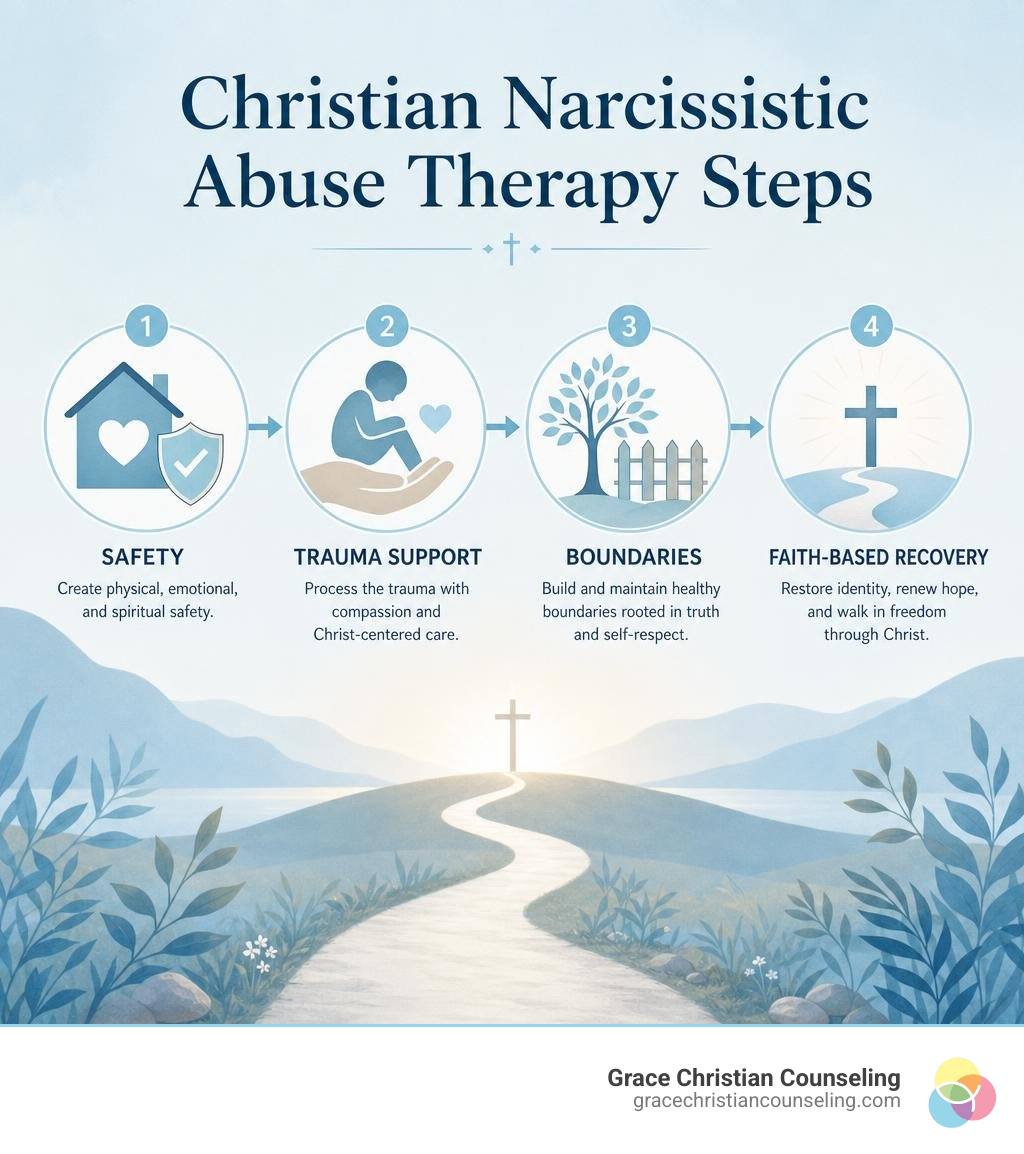
How Christian Narcissistic Abuse Therapy Restores the Soul
Restoration requires a thoughtful integration of evidence-based psychological treatment and biblical wisdom. Clinical therapies help reorganize traumatic memories and calm autonomic distress, while Scripture provides the moral and spiritual foundation for rebuilding a healthy life. Our comprehensive guide to faith-based trauma counseling outlines how these two disciplines work together harmoniously.
At Grace Christian Counseling, our licensed counselors, including Licensed Social Workers (LSW) and Licensed Associate Professional Counselors (LAPC), work under the guidance of the Holy Spirit to bring emotional stabilization, psychological insight, and spiritual renewal to individuals across Western Pennsylvania and virtually statewide.
Integrating Clinical Trauma Modalities with Scripture
Trauma treatment should be individualized to each person’s symptoms, experiences, and clinical needs. Approaches may include cognitive-behavioral therapies and Eye Movement Desensitization and Reprocessing (EMDR). For people who meet criteria for PTSD, VA/DoD clinical guidelines recommend trauma-focused psychotherapies including Cognitive Processing Therapy (CPT), Prolonged Exposure (PE), and Eye Movement Desensitization and Reprocessing (EMDR). These approaches can help people process traumatic experiences and change patterns of thinking, emotion, and responding that continue after the danger has passed.
In a faith-integrated setting, these modalities are paired with the spiritual practice of biblical lament and meditation. Reflecting on verses like Psalm 34:18 anchors the client in the reality that the Lord is close to the brokenhearted. For a deeper examination of these clinical tools, read our article on trauma therapy for healing from narcissistic abuse.
Comparing Clinical and Spiritual Recovery Frameworks
A comprehensive recovery plan honors both the mind and the spirit, blending clinical interventions with faith disciplines:
| Recovery Focus | Secular Clinical Approach | Faith-Integrated Christian Approach |
|---|---|---|
| Nervous System Regulation | Somatic tracking, mindfulness, grounding exercises | Breath prayer, resting in God’s presence, somatic calming |
| Cognitive Restructuring | Identifying cognitive distortions, reframing core beliefs | Renewing the mind, replacing gaslighting lies with biblical truth |
| Grief & Trauma Processing | EMDR, exposure techniques, narrative therapy | Honest lamentation, pastoral processing, trauma-informed clinical care |
| Boundary Setting | Assertiveness training, self-preservation limits | Biblical stewardship of life and safety, godly boundaries |
| Relational Healing | Attachment repair, social skills building | Safe fellowship, healthy church connection, reconciliation with discernment |

Reclaiming Boundaries and Self-Care as Spiritual Disciplines
Many Christians struggle with the concept of boundaries, fearing that saying “no” or limiting contact is unloving or unchristian. However, Scripture demonstrates that setting limits is a form of biblical stewardship. Guarding your heart, your emotional capacity, and your home protects the peace God has entrusted to you.
Healthy boundaries are not designed to punish the other person; they are guardrails designed to keep you safe from continued mistreatment. Our article on how to set boundaries without feeling like a bad Christian explores how Jesus regularly withdrew from hostile crowds and established clear relational expectations.
Establishing God-Honoring Boundaries
Enforcing boundaries with a narcissistic individual often requires specific communication strategies. When contact with a manipulative or abusive person is unavoidable, such as in some co-parenting situations, a counselor or advocate may help you develop communication strategies that prioritize safety and reduce unnecessary conflict. One commonly discussed strategy is the grey rock method, which involves keeping interactions brief, neutral, and minimally emotionally engaging. However, research has not established its effectiveness, and it may not be appropriate or safe in every abusive relationship, particularly if disengagement could trigger escalation.
- Define clear relational limits: Decide what behaviors you will no longer tolerate in your presence.
- Maintain objective communication: Keep discussions focused strictly on logistics, avoiding emotional debates or explanations.
- Practice emotional detachment: Recognize that an abuser’s accusations do not reflect your true character or standing before God.
- Prioritize physical and emotional safety: Create distance when patterns of rage, deceit, or manipulation continue unabated.
Restorative Self-Care and Supportive Community
Self-care is not selfish indulgence; it is honoring your body and mind as temples of the Holy Spirit. Engaging in gentle routines, prioritizing restorative sleep, enjoying creation, and spending quiet time in prayer are essential components of trauma recovery.
Isolation is one of the primary tactics of abuse, making community restoration critical. Connecting with healthy faith-based support groups, trusted friends, and wise pastoral care can provide validation, shared encouragement, and prayer support as you regain relational confidence. When additional pastoral support is helpful alongside your licensed counseling and safety planning, NuWell offers faith-based pastoral guidance that complements clinical care.
Finding the Right Path to Healing and Guidance
Navigating recovery requires discernment. Not all counselors understand the intricate dynamics of coercive control, personality disorders, and spiritual gaslighting. Finding a clinician who possesses both clinical trauma competency and an understanding of orthodox Christian theology ensures that your faith is respected rather than pathologized or misunderstood.
For a detailed roadmap of the therapeutic process, consult our step-by-step guide to recovery therapy.
What to Look for in Christian Narcissistic Abuse Therapy
When seeking professional care, consider the following qualifications and therapeutic factors:
- Trauma-informed licensure: Seek licensed therapists (such as LSWs or LAPCs) experienced in evidence-based trauma modalities like CBT and EMDR.
- Understanding of narcissistic systems: Ensure the clinician understands covert abuse dynamics, gaslighting, and the pitfalls of premature reconciliation.
- Theological alignment: Choose a therapist who integrates Scripture carefully, avoiding toxic positivity or legalistic interpretations.
- Local and virtual options: Review our guide on locating specialized abuse recovery therapists to identify accessible in-person and secure telehealth options suited to your healing journey.
Frequently Asked Questions About Healing from Narcissistic Abuse
Is it biblical to go no-contact with a narcissistic family member or spouse?
Yes, Scripture repeatedly encourages believers to protect themselves from continuous, unrepentant malice and foolishness. Passages such as Proverbs 22:3 and 2 Timothy 3:1-5 instruct believers to avoid those who are deceitful, abusive, and hostile to godliness. While God desires peace, reconciliation requires genuine repentance, safety, and restored trust; when those are absent, establishing physical and emotional boundaries is a wise and necessary protective measure.
How does Christian counseling address the trauma of gaslighting?
Christian counseling validates your lived experience by anchoring your reality in objective truth. A licensed therapist helps you dismantle the confusion caused by chronic deceit, using cognitive reframing and trauma processing to calm nervous system hyperarousal. Concurrently, therapy grounds your worth in God’s unchanging promises rather than the distorted words of an abusive person, restoring your mental clarity and spiritual peace.
Can a person with narcissistic personality disorder change through therapy and prayer?
With God all things are possible, and although change is possible, narcissistic personality disorder can be challenging to treat. Outcomes vary considerably from person to person. Psychotherapy is the primary treatment for NPD and may help a person develop healthier relationships, take greater responsibility, manage emotions more effectively, and better understand patterns affecting themselves and others. Research also suggests that motivation, willingness to remain in treatment, and the ability to engage honestly in the therapeutic process can influence progress.
From a Christian perspective, it is appropriate to pray for another person’s repentance, growth, and healing. At the same time, your safety and recovery should not depend on whether another person eventually changes. A counselor can help you make decisions based on the behavior occurring now rather than promises about what might happen in the future.
Conclusion: Moving from Pain to Spiritual Empowerment
Healing from narcissistic abuse is not a quick fix, but a meaningful journey of restoration. As you process past pain, calm your nervous system, and untangle false guilt, you can experience the freedom and purpose God intends for your life.
At Grace Christian Counseling, we provide compassionate, evidence-based, and Christ-centered counseling for individuals, couples, and families throughout Western Pennsylvania, including Pittsburgh, North Huntingdon, Penn Hills, Uniontown, Bethel Park, Sewickley, and Mt. Lebanon, as well as statewide through our secure online therapy platform.
If you are ready to take the next step toward clarity and peace, explore our specialized therapy for overcoming emotional abuse and connect with our caring team today.
This guide is for educational and spiritual encouragement and is not a substitute for personalized professional counseling. If you are in crisis, please reach out for immediate help.


