

Defining the Scientific Distinction: Transgenerational vs Intergenerational
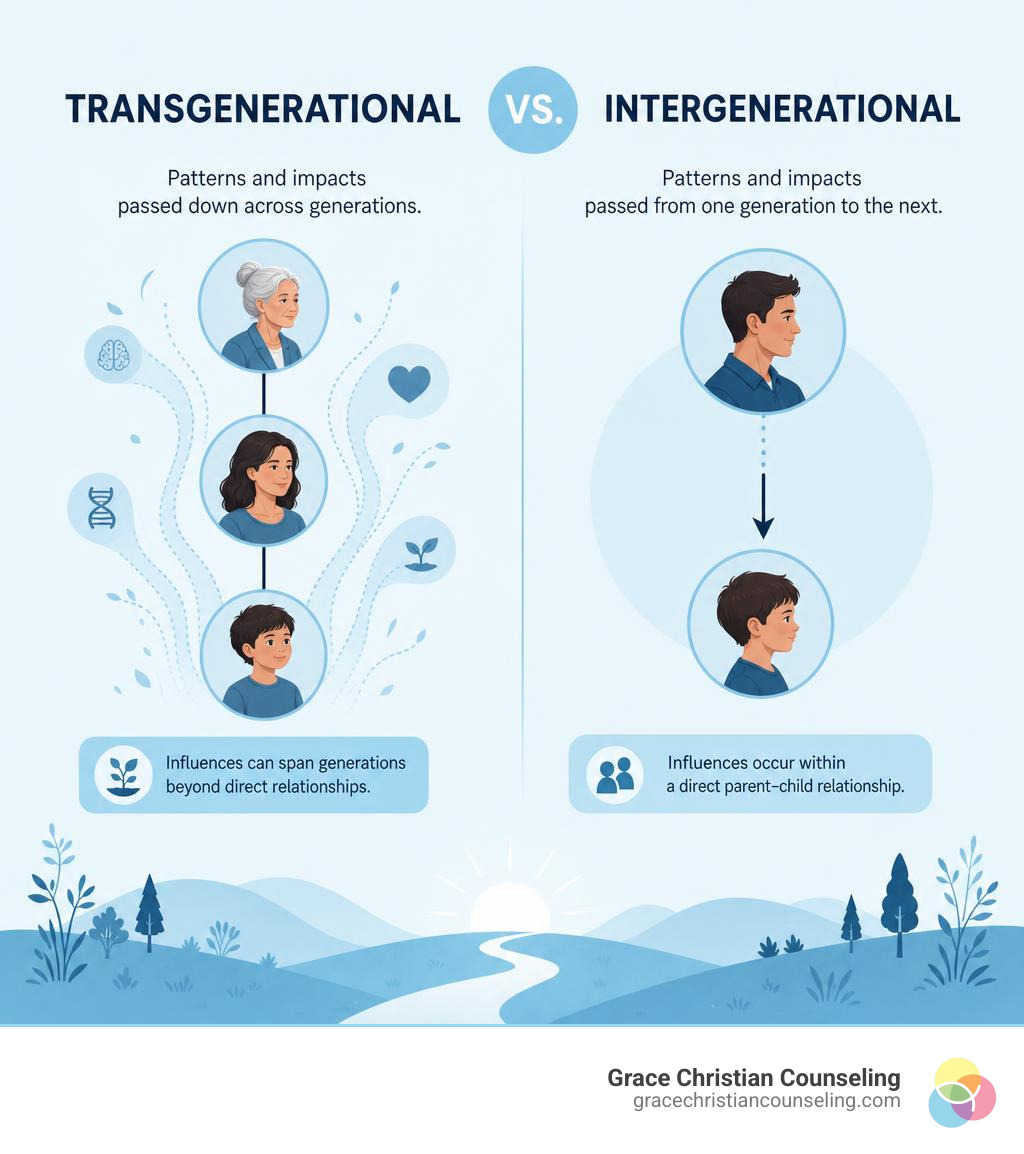
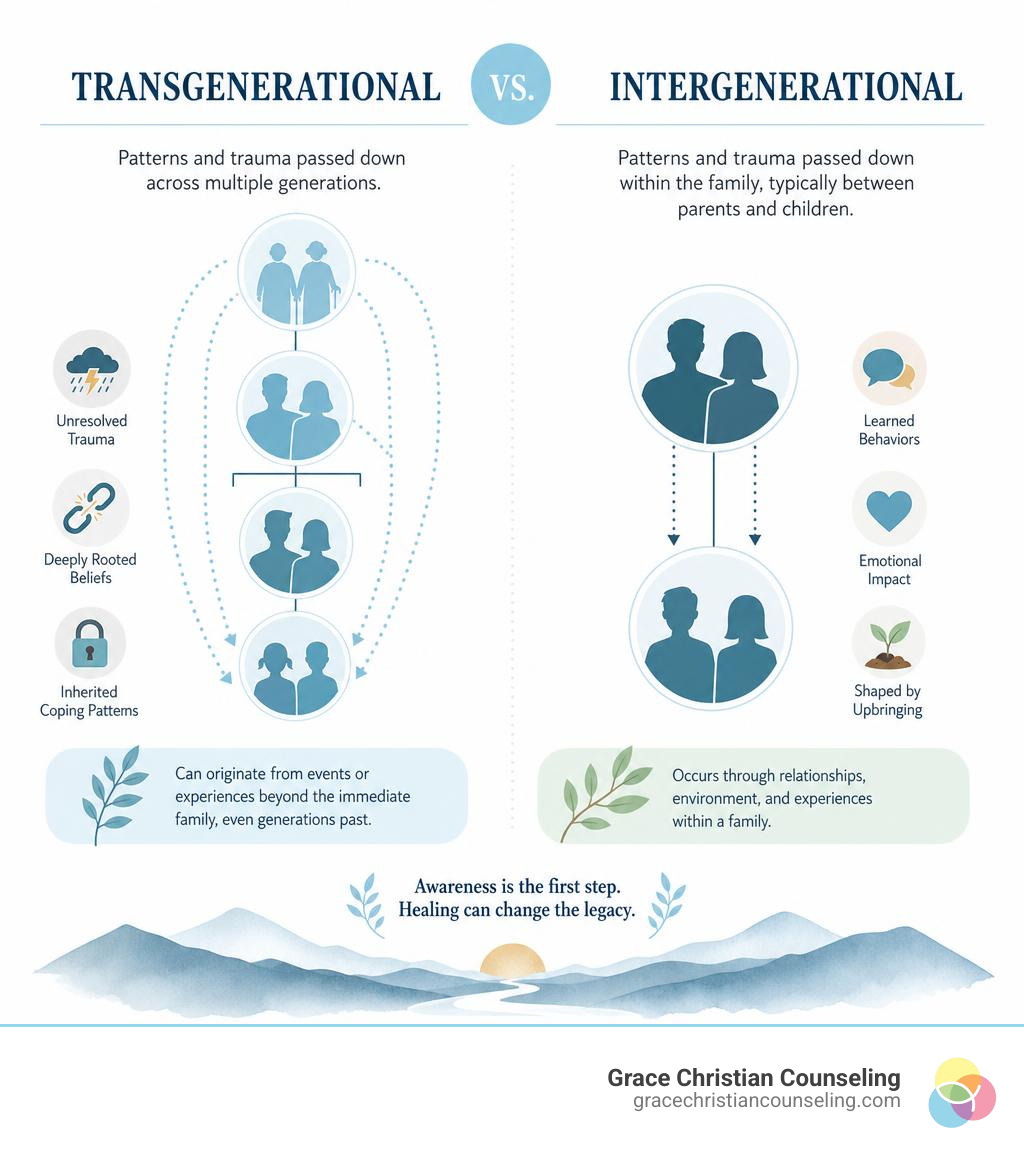
When people talk about transgenerational vs intergenerational effects, they are usually trying to understand how pain, stress, or trauma can move through a family. The difference comes down to how directly each generation was exposed.
Intergenerational trauma happens when the impact is passed between family members who were directly touched by the same event or environment, for example, a pregnant mother under severe stress and the baby developing inside her. Transgenerational trauma refers to patterns that appear in later generations who were not directly exposed, but may still carry the effects through biology, family patterns, emotional responses, or learned ways of coping.
In simple terms, intergenerational means the trauma is shared across nearby generations; transgenerational means its influence reaches further down the family line. For more detailed information, you can explore Scientific research on inter- and transgenerational epigenetic inheritance or learn about healing from generational trauma.
Understanding the “F0” to “F3” Generational Timeline
A scientific shorthand for tracking parents, children, grandchildren, and great-grandchildren in research is the letter “F,” which simply stands for “filial generation.” It is used in scientific literature and research because it helps clarify who was directly exposed to a stressor, and who may be showing effects without direct exposure. The distinction rests on whether a generation was directly exposed to a trigger.
For example, let’s look at a pregnant woman, F0, who smokes or experiences severe trauma:
- F1 = the child: The baby developing in the womb is directly exposed to the mother’s environment.
- F2 = the grandchild: The future grandchild is not born yet, but the cells that may become that child are already forming inside the F1 fetus. This means F2 is also directly exposed to the F0 environment.
- F3 = the great-grandchild: This is where true transgenerational inheritance may begin. F3 was never inside the F0 womb, not even as an early germ cell. If a trait still shows up here, it may point to inherited epigenetic changes, not direct exposure.
| Feature | Intergenerational | Transgenerational |
|---|---|---|
| Exposure Type | Direct exposure to the stressor | Indirect; passed through biological memory |
| Generations | F1 (children) and F2 (grandchildren) | F3 (great-grandchildren) and beyond |
| Mechanism | Immediate environmental impact on cells | Persistence of marks through reprogramming |
Epigenetic Reprogramming in Mammals and Why it Matters
Epigenetics is the study of how life experiences and environments can influence the way genes are turned on or off, without changing the DNA code itself. These changes can affect how cells function, including how the body responds to stress, nutrition, toxins, or trauma. One reason true transgenerational inheritance is rare in humans is a process called “epigenetic reprogramming.”
Think of it like a biological reset. During early embryo development, the body goes through major rounds of epigenetic erasure, including changes to DNA methylation, so the developing baby is not simply carrying every mark from earlier generations. Some marks may escape this reset, but in mammals, that is the exception, not the rule. This is why researchers are careful about using the word “transgenerational”; the evidence has to show effects beyond directly exposed generations.
Some epigenetic changes may be more persistent than others. They can sometimes remain after reprogramming, which may help explain why certain health or stress-related patterns continue. Human research is still developing, but animal studies show effects across multiple generations. This research also notes that stress, diet, toxins, and other environmental factors may influence offspring through epigenetic marks, including changes related to DNA methylation, histone modification, and non-coding RNAs.
The same review explains that, after exposure during pregnancy, F0, F1, and F2 can all be directly affected, so F3 is typically the first generation used to test true transgenerational inheritance. For paternal exposures, F1 is directly connected through sperm, which means effects in F2 and beyond are more relevant when researchers look for inherited epigenetic patterns. Still, proving true transgenerational inheritance in humans is difficult because family environment, culture, and direct exposure can also shape outcomes.
Mechanisms of Transmission: Maternal and Paternal Pathways
How these marks are passed down depends heavily on which parent is providing the genetic material. Maternal and paternal pathways use different biological “vehicles” to carry information.

Maternal Environmental Exposures and Fetal Programming
The maternal pathway is often described as the “intrauterine environment,” which simply means the surroundings a baby develops in before birth. A mother’s nutrition, stress, health, and exposure to substances like cigarette smoke can all shape fetal development in measurable ways.
For example, some studies have linked grandmaternal smoking with higher birth weight and BMI in grandsons, even when the mother herself did not smoke. Researchers have explored whether changes in growth-related genes, such as IGF2, may help explain part of this pattern.
In the Dutch Hunger Winter research, adults exposed to famine around conception showed about 5.2% lower DNA methylation at IGF2 nearly 60 years later compared with their unexposed siblings. Prenatal smoking studies also consistently show higher risks, including an average birth weight reduction of about 150 to 250 grams, and roughly 1.5 to 2 times greater risk of low birth weight. These findings do not mean outcomes are fixed, but they do show how early environments can matter.
Paternal Contributions to Epigenetic Memory
Fathers also contribute significantly, but through the “sperm epigenome.” Since men do not carry the child, their influence is purely through the information contained in the sperm.
Research on paternal exposure effects suggests that a father’s environment before conception, including diet, toxins, and stress, can influence offspring metabolism. In human cohort research, fathers who began smoking before age 11 had sons with higher BMI by age 9, with one study reporting an average increase of about 1.7 kg/m2. Follow-up data found the difference became more visible in adolescence, with sons showing several kilograms more body fat by ages 13 to 17.
Animal studies add another layer, paternal high-fat or low-protein diets have been linked with altered glucose tolerance, cholesterol pathways, and hundreds of gene-expression changes in offspring tissues. Researchers often point to sperm-based signals, including small RNAs, DNA methylation, and chromatin changes, as likely carriers of this information. You can read more about these scientific models of transmission here.
Breaking the Cycle: Healing from Intergenerational vs Transgenerational Trauma
While the biology is fascinating, the emotional toll is where most of us feel the impact. Many people in our Pennsylvania communities find themselves struggling with “inherited” pain that doesn’t seem to have a clear source in their own lives.

Psychological Manifestations of Transgenerational vs Intergenerational Trauma
Trauma doesn’t just change our thoughts; it changes our stress-response systems. Studies of Holocaust survivors and war veterans show that their descendants often have altered levels of cortisol (the stress hormone) due to genetic changes. This can manifest as:
- Chronic Anxiety: A sense of “waiting for the other shoe to drop.”
- Hypervigilance: Being overly aware of potential threats.
- Somatic Complaints: Physical pain or digestive issues that have no clear medical cause.
- Identity Disturbances: Feeling disconnected from one’s own story or family history.
Healing involves effective therapy techniques and learning the art of letting go of past traumas.
Parenting Patterns and Family Dynamics
Beyond biology, trauma is passed through “relational” channels. This is often studied through attachment theory. For example, Mary Ainsworth’s “Strange Situation” observed infants, often around 12 to 18 months old, during brief separations and reunions with a caregiver. Her research identified patterns such as secure, avoidant, and resistant attachment, and showed that sensitive, consistent caregiving was linked with more secure bonds. This helps explain how a parent’s unresolved trauma can shape the safety, responsiveness, and emotional connection a child experiences.
This creates a “cascade” where parenting styles, whether authoritarian or permissive, are handed down like family heirlooms. We often see “heterotypic continuity,” where a trauma manifests as depression in one generation but appears as conduct issues or anxiety in the next. Prospective three-generation research helps us see these patterns clearly so we can begin to change them.
Physical Health Implications: From Epigenetics to Respiratory Disease
The impact of transgenerational vs intergenerational inheritance isn’t limited to mental health; it significantly affects physical wellness, particularly respiratory health.
Prenatal Smoking and Grandmaternal Influence
One of the most striking findings in epigenetic research is the “grandmaternal effect.” A grandchild’s risk of developing asthma is significantly higher if their grandmother smoked during pregnancy, even if the child’s own mother never touched a cigarette.
This is likely due to epigenetic changes in the bronchial epithelium and immune cell alterations. Specifically, researchers have identified AHRR methylation patterns that act as biological “scars” from smoke exposure, which can be detected even years later. You can find more details in this scientific review of respiratory epigenetics. Understanding these risks is part of addressing childhood traumas that affect us in adulthood.
Clinical Tools and Therapeutic Interventions for Generational Healing
At Grace Christian Counseling, we don’t just look at the symptoms; we look at the story. We use various tools to help you map out where these patterns began.
Evidence-Based and Somatic Approaches
To break a generational cycle, we often need to engage both the mind and the body. Some of the methods we find most effective include:
- Family Genogram Analysis: A visual map of your family tree that identifies patterns of illness, trauma, and behavior.
- Adverse Childhood Experiences Questionnaire (ACE-Q): A tool to evaluate the level of adversity in your upbringing.
- Narrative Therapy: Helping you rewrite the “family story” so you are no longer a victim of the past.
- Somatic Experiencing: Since trauma is stored in the nervous system, these “embodied” therapies help release the physical tension associated with inherited stress.
These tools are essential for healing childhood trauma and preventing its transmission to your own children.
Integrating Biblical Truth and Clinical Practice
As a Christian practice serving Western Pennsylvania, we believe that biological and psychological insights are most powerful when paired with the Word of God. The Bible speaks often of generational patterns, but it also speaks of the power of the New Covenant to bring restoration.
We lean on the promise in Exodus 20:6, where God shows steadfast love to those who love Him and keep His commandments. While we may inherit vulnerabilities, we can also receive a spiritual legacy of grace. We encourage clients to practice prayerful reflection and lean on Philippians 4:6-7, which points us toward God’s peace guarding our hearts and minds.
Frequently Asked Questions about Transgenerational vs Intergenerational
What is the main difference between transgenerational and intergenerational trauma?
The main difference is direct exposure. Intergenerational effects happen when a child, and sometimes a grandchild, were directly affected by the original trauma or stressor. For example, during pregnancy, the baby and the baby’s developing reproductive cells can both be exposed. Transgenerational effects are different. They refer to patterns that continue into a later generation, usually the great-grandchild, who was not directly exposed to the original event.
How does transgenerational vs intergenerational trauma affect mental health?
It can show up as anxiety, hypervigilance, emotional shutdown, or feeling overwhelmed by stress. Some of this comes through family patterns, attachment wounds, and learned coping strategies. Some may also be influenced by stress-related biological changes. In simple terms, your mind and body may have learned to stay on guard, even when you are safe.
Can smoking-related epigenetic changes affect grandchildren?
Possibly. Some studies have found links between a grandmother’s smoking and higher asthma risk or BMI changes in her grandchildren, even when the child’s mother did not smoke. This suggests smoking may affect future generations, but the science is still cautious about saying it is always inherited through epigenetics.
Healing the Family Story
Understanding the nuances of transgenerational vs intergenerational patterns can be a key to unlocking a future that is free from the shadows of the past. Whether it is a biological vulnerability to asthma or a psychological tendency toward anxiety, these “inherited” traits do not have to be your final story.
At Grace Christian Counseling, we are dedicated to helping families across Pennsylvania find a path to restoration. Our licensed counselors blend evidence-based psychology with the timeless truths of Scripture to help you break deleterious cycles and build a healthy, vibrant legacy for the generations to come.
If you’re ready to explore your history and find healing, we invite you to start your journey toward healing from generational trauma today. We offer both in-person sessions at our various Western PA locations and online Christian counseling for your convenience. There is hope, and there is a way forward.
This article was researched with AI and heavily edited by Bekah McCrorey for accuracy and relevance.
Bekah McCrorey is a counselor at Grace Christian Counseling. She holds a Master’s degree in Counseling from Dallas Theological Seminary and a Bachelor’s degree in Christian Ministry from Chesapeake Bible College and Seminary. She is a provisionally licensed counselor working under supervision toward full licensure as a Licensed Professional Counselor (LPC) in Pennsylvania.
With over 12 years of full-time ministry experience supporting individuals, families, ministry leaders, and churches nationally and internationally, Bekah brings a deep understanding of emotional and spiritual struggles. As a counselor, she uses a client-centered, trauma-informed, and evidence-based approach. She is Level 1 trained in Restoration Therapy and is passionate about helping clients navigate anxiety, depression, grief, trauma, life transitions, and relational difficulties while integrating emotional and spiritual well-being.
This guide is for educational and spiritual encouragement and is not a substitute for personalized professional counseling. If you are in crisis, please reach out for immediate help.
How to Resolve Family Conflict: Finding Your Way Back to Harmony


