

Why Seek a Licensed Biblical Trauma Therapist in Western PA?
If you are looking for licensed therapists who integrate biblical principles into trauma counseling in Western PA, Grace Christian Counseling offers in-person appointments in communities such as Penn Hills, Sewickley, Uniontown, Pleasant Hills, and surrounding areas, with online Christian trauma counseling available throughout Pennsylvania.
Trauma is a complex and heavy burden; it can reshape how you view yourself, how you interact with loved ones, and how you connect with God. Whether you are dealing with the painful echoes of childhood abuse, the deep sting of church hurt, or the devastating impact of betrayal trauma, these experiences leave lasting marks on your mind, body, and spirit.
When looking for healing, many Christians find themselves at a difficult crossroads. Secular therapy often overlooks the spiritual dimension of recovery, while some well-meaning faith communities might encourage you to simply pray harder, which can leave you feeling isolated and misunderstood. This is why finding a licensed therapist who integrates Biblical principles with clinical trauma counseling is so crucial.
By combining clinical excellence with the timeless truth of Scripture, you can address the physiological and emotional impacts of trauma while anchoring your recovery in the healing power of God. At Grace Christian Counseling, we are dedicated to walking alongside you through this holistic process. We serve communities throughout Western PA, providing a safe, compassionate space where your faith and your mental health are both deeply valued.
In the midst of your pain, remember the promise of Psalm 34:18, which reminds us that the Lord is close to the brokenhearted and saves those who are crushed in spirit. Healing is not about hiding your wounds; it is about bringing them into the light of God’s grace and professional clinical care.
What Does It Mean to Integrate Biblical Principles into Trauma Counseling?
To integrate Biblical principles into trauma therapy means recognizing that true healing must address the whole person, including the mind, body, emotions, and spirit. We do not view psychology and Scripture as competing frameworks; instead, we see them as beautiful, complementary threads. Psychology is the study of God’s intricate design for human nature, and clinical tools provide the practical “how” of healing, while Biblical principles provide the ultimate “why” and “Who.”
In our practice, we help you reframe your painful experiences through the lens of Scripture. This does not mean using Bible verses to dismiss your pain; rather, it means anchoring your story in God’s character, His promises, and His redemptive love. We gently incorporate prayer, Scripture, and spiritual practices into our sessions, always moving at your comfort level and respecting where you are in your faith journey. You can read more about this approach on our Christian Trauma Counseling page.
The Difference Between Secular and Faith-Based Approaches
Secular trauma therapy is valuable, but it often stops short of answering the deepest questions of the soul. It frequently focuses on self-actualization or finding “your truth” as the ultimate source of healing. In contrast, faith-based trauma counseling anchors your recovery in the objective, unchanging truth of God’s Word. Instead of relying solely on secular coping mechanisms, we point you toward lasting spiritual restoration.
Research consistently demonstrates that faith-based interventions produce improved outcomes for Christian clients compared to standard secular approaches. When you can openly discuss your relationship with God, process spiritual doubts, and utilize prayer alongside clinical techniques, your healing becomes deeper and more integrated. To explore how this works in practice, visit our guide on How Christian Therapy Can Help Trauma.
The Counseling Blueprint: Integrating Mind and Soul
To guide you through this journey, we utilize a structured approach known as our Counseling Blueprint. This four-step process is designed to bring alignment to your emotional, relational, and spiritual life:
- Take Off the Mask: We help you step away from the pressure to look perfect or pretend that everything is fine. Together, we look at your life and help you see yourself exactly as God sees you, fully known and deeply loved.
- Heal the Wounds: We safely unpack your pain and trauma together, utilizing evidence-based clinical tools to help your nervous system process overwhelming memories.
- Remove the Toxins: We work to identify and release toxic beliefs, lies, and cognitive distortions that trauma has left behind, such as feelings of worthlessness or abandonment.
- Replace With Truth: We help you replace those lies with Biblical truth, allowing you to embrace your truest identity in Christ and step into the freedom He desires for you.
Where Can You Find Licensed Christian Trauma Counselors in Western PA?

Finding a professional who shares your faith and possesses the specialized training to treat trauma should not be a stressful search. We have established a strong presence throughout Western Pennsylvania, making it easier for you to access the care you need close to home.
Many people searching for a licensed biblical trauma therapist in Western PA are really asking the same practical questions: Can I find someone who shares my faith? Do they have trauma-specific training? Will my insurance cover therapy? Can I meet online if I live outside Pittsburgh? The answer is yes. The most important step is choosing a licensed mental health professional who is experienced in trauma treatment and, if your faith is important to you, comfortable integrating biblical principles into evidence-based care. Looking for these qualifications helps ensure you receive treatment that is both clinically sound and spiritually aligned with your values.
We proudly serve local Western PA communities, including Pittsburgh, North Huntingdon, Penn Hills, Uniontown, Bethel Park, Sewickley, Mt. Lebanon, Zelienople, Fombell, and Butler. Whether you prefer to meet in a quiet, professional office or connect from the comfort of your home, we provide both in-person and online options throughout Pennsylvania.
When deciding between in-person and online therapy, many clients wonder if virtual sessions are truly effective. Research and clinical experience show that telehealth can be an effective option for trauma, anxiety, and depression, especially when it helps you access consistent care. At the same time, many clients value in-person counseling for the sense of presence, privacy, and separation from daily life that a dedicated office setting can provide. The best format is the one that helps you feel safe, engaged, and able to build a strong therapeutic relationship with your counselor.
In-Person Counseling Locations in Western PA
For those who find comfort in a physical, dedicated therapeutic space, we offer warm and welcoming offices across the region. Our physical locations are designed to be safe, confidential, and peaceful environments where you can step away from the demands of daily life and focus on your healing. You can find a complete list of our physical offices on our Locations page, or explore our specialized services through Pittsburgh Christian Counseling.
Online Christian Counseling Across Pennsylvania
If you live outside our physical office areas, have a busy schedule, or simply prefer the privacy of your own home, our virtual sessions are an excellent option. Through our secure, HIPAA-compliant telehealth platform, we bring professional, faith-integrated care to clients anywhere in the state. This option is highly convenient for busy families, working professionals, and individuals who find it difficult to travel to an office. Learn more about our virtual services on our Online Christian Counseling PA page.
Comparing Your Care Options
Both in-person and online counseling can provide compassionate, clinically sound care. The right choice often depends on your location, schedule, comfort level, privacy needs, and how you connect best with a therapist.
| Feature | In-Person Counseling | Online Counseling |
|---|---|---|
| Convenience | Set office appointment; easier for some clients to focus. | No commute; easier to fit into a busy schedule. |
| Therapeutic Alliance | Face-to-face connection in a calm office setting. | Strong connection through secure video sessions. |
| Accessibility | Best for clients near our Western PA offices. | Helpful for clients anywhere in Pennsylvania. |
| Environment | Private office away from home responsibilities. | Private space from the comfort of home. |
What Credentials and Clinical Methods Should You Look For?
When you are searching for a therapist to help you heal from trauma, it is essential to look for someone who holds both professional clinical credentials and a deep commitment to Biblical truth. Trauma therapy is a highly specialized field; it requires more than general talk therapy or informal pastoral advice to resolve the deep physiological and emotional impacts of painful experiences.
When comparing therapists, don’t be afraid to ask direct questions before scheduling your first appointment. You can ask whether the counselor has experience treating PTSD, complex trauma, childhood abuse, or spiritual abuse; which evidence-based therapies they use; whether they integrate prayer or Scripture only when requested; and whether they offer telehealth, evening appointments, or insurance billing. A qualified therapist should be comfortable explaining their approach so you can decide whether it feels like the right fit.
Understanding Professional Licensure
Professional licensure is your guarantee that a therapist has met rigorous state standards for education, supervised clinical hours, and ethical practice. When researching providers, look for credentials such as Licensed Professional Counselors (LPC), Licensed Clinical Social Workers (LCSW), Licensed Marriage and Family Therapists (LMFT), as well as associate licenses like Licensed Associate Professional Counselors (LAPC) and Licensed Social Workers (LSW). These credentials ensure clinical accountability and professional oversight.
At Grace Christian Counseling, our therapists are fully licensed professionals who are committed to clinical excellence and spiritual integrity. By choosing a credentialed professional, you ensure that your care is grounded in proven, safe, and ethical therapeutic practices.
Evidence-Based Trauma Modalities
A qualified trauma therapist will utilize evidence-based modalities that are specifically designed to help the brain and body process traumatic memories. In our practice, we seamlessly pair these clinical tools with Biblical truth.
Trauma is more common than many people realize. According to the National Center for PTSD, about 6% of U.S. adults will experience PTSD at some point in their lives, while many more experience traumatic events without developing the full disorder. Recovery looks different for every person, but early access to trauma-informed care can reduce symptoms and improve day-to-day functioning.
The clinical approaches used in trauma therapy have also been extensively studied. The American Psychological Association recommends treatments such as Cognitive Behavioral Therapy (CBT) and trauma-focused interventions as first-line approaches for PTSD, and multiple systematic reviews have found that secure telehealth delivery produces outcomes comparable to in-person psychotherapy for many anxiety, depression, and trauma-related conditions. These findings allow many clients to receive high-quality trauma care even when attending sessions from home.
For example, we use Cognitive Behavioral Therapy (CBT) to help you identify cognitive distortions, which are toxic, untrue thoughts about yourself or the world. We then pair this clinical tool with the Biblical concept of renewing your mind, as described in Romans 12:2. By replacing traumatic lies with God’s truth, you experience lasting freedom.
We also utilize advanced trauma therapies, including:
- Eye Movement Desensitization and Reprocessing (EMDR): This is an evidence-based, 8-phase protocol that uses bilateral stimulation, such as eye movements or tapping, to help your brain and body process disturbing experiences so they lose their painful emotional charge.
- Trauma-Focused Cognitive Behavioral Therapy (TF-CBT): A specialized approach designed to help children and teens process trauma while helping parents support their healing.
- Somatic Work: Because trauma is stored physically in the nervous system, somatic techniques help you tune into your body’s physical responses and release stored tension.
- Parts Work: This approach helps resolve internal conflicts between different survival strategies, helping you find internal peace and alignment.
To learn more about how these professional methods work together with faith, you can read Unmasking Trauma: The Power of Christian Trauma Counseling and explore The Power of Connection: Building Bridges to Trauma Recovery. For additional resources such as pastoral counseling and wellness, you can also visit NuWellonline.com.
How Do Faith-Based Counselors Address PTSD, Anxiety, and Depression?
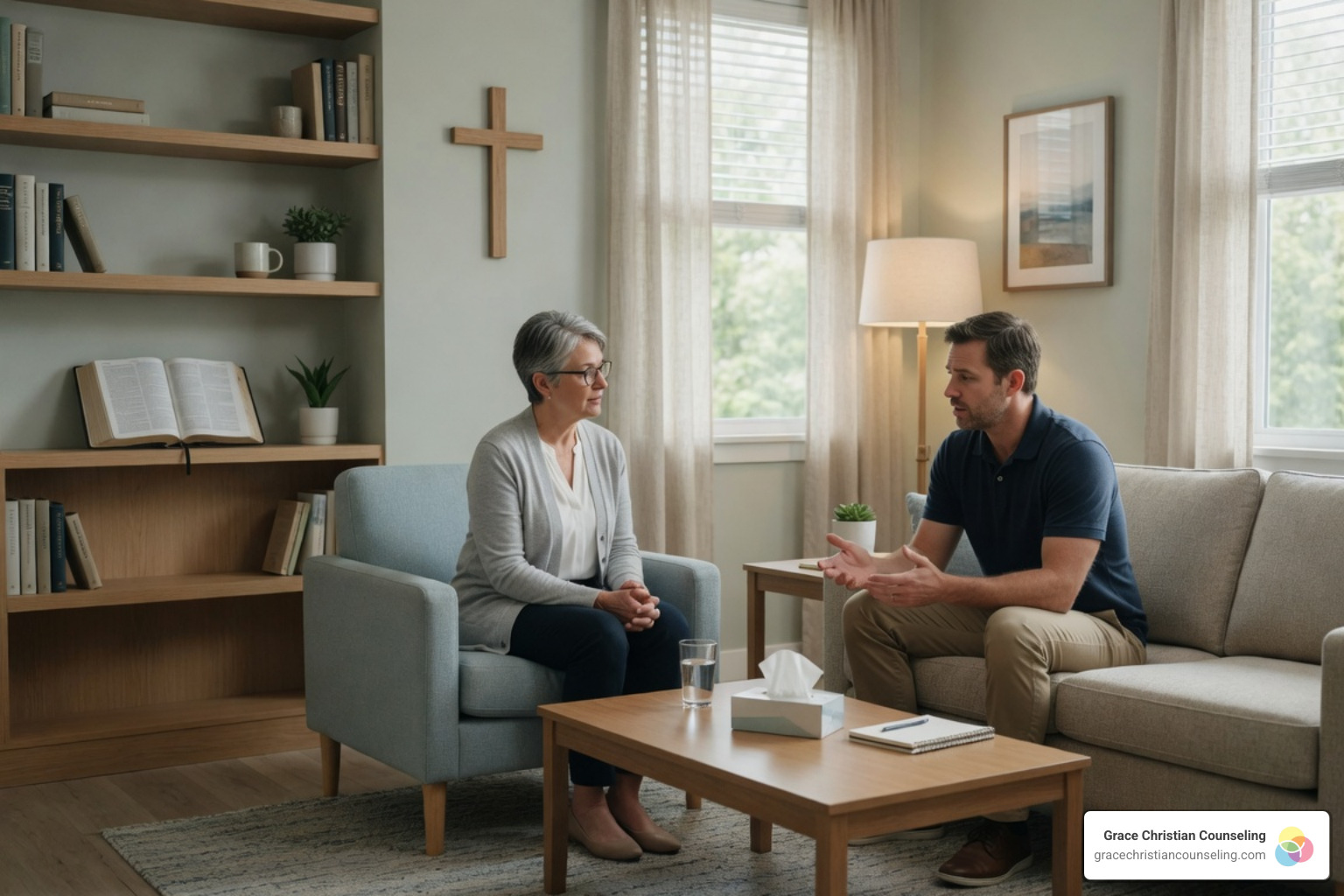
Trauma rarely travels alone; it often manifests as a complex mix of Post-Traumatic Stress Disorder (PTSD), chronic anxiety, and deep depression. You might experience persistent hypervigilance, intrusive flashbacks, emotional numbness, or an overwhelming sense of hopelessness.
As faith-based counselors, we understand that clinical diagnoses and spiritual struggles often coexist. Experiencing anxiety or depression does not mean you lack faith; rather, it means your nervous system is responding to overwhelming experiences. We provide a safe, non-judgmental, and grace-filled space where you can process your pain, voice your doubts, and explore your spiritual questions without fear of condemnation.
Healing from Childhood and Generational Trauma
The wounds of childhood abuse, neglect, and dysfunctional family dynamics can cast a long shadow over your adult life. If you grew up in an environment where safety was scarce, you may find yourself struggling with trust, self-worth, and emotional regulation today.
We use attachment-informed and trauma-focused therapies to help you address these deep-seated wounds. By understanding how your past experiences shaped your survival strategies, we can work together to break unhealthy generational patterns, allowing you to build healthier relationships and experience genuine freedom.
To explore this topic further, read our articles on Healing Childhood Trauma and Addressing Childhood Traumas to Foster Healing in Adulthood. You can also learn about breaking family cycles in Effective Therapy Techniques for Healing Generational Trauma and Healing from Generational Trauma.
Navigating Church Hurt and Betrayal Trauma
Some of the most painful forms of trauma occur within relationships and environments that were meant to be safe. Church hurt, spiritual abuse, and high-control faith environments can deeply damage your relationship with God and make it difficult to trust any spiritual community. Similarly, betrayal trauma, such as the discovery of infidelity or narcissistic abuse, can shatter your sense of reality and self-worth.
We specialize in helping individuals navigate these complex spiritual and emotional wounds. We offer a gentle, validating space to help you untangle the truth of who God is from the painful actions of people who may have misrepresented Him. We help you let go of toxic guilt, rebuild healthy boundaries, and reclaim your identity in Christ. To find support for these specific challenges, explore Letting Go of Past Traumas and Trauma Therapy for Healing from Narcissistic Abuse.
Supporting Teens and Families Facing Trauma
Trauma does not only affect individuals; it impacts entire family systems. Adolescents and teenagers are particularly vulnerable to the effects of trauma, which can manifest as sudden academic struggles, social withdrawal, intense anxiety, or depression.
We provide dedicated support for teens and families, helping parents navigate their teenager’s emotional needs while fostering a supportive home environment. By integrating Biblical principles with family systems therapy, we help families restore communication, resolve conflicts, and build stronger, healthier connections.
For more resources on supporting your family’s mental health, please explore:
- Christian Counseling for Depression
- Christian Depression Counseling in Pennsylvania
- Christian Depression Counseling Pittsburgh
- Christian Counseling for Teens
- Christian Family Counseling Pittsburgh PA: Parenting & Teen Therapy
Frequently Asked Questions About Christian Trauma Therapy?
Who should see a licensed biblical trauma therapist?
Biblical trauma therapy may be appropriate for adults, teens, couples, and families who are experiencing lasting emotional effects after abuse, neglect, violence, betrayal, spiritual abuse, medical trauma, or other overwhelming life events. You do not need a formal PTSD diagnosis before seeking help. If memories, anxiety, emotional numbness, relationship struggles, or persistent fear are interfering with daily life or your relationship with God, a trauma-informed assessment can help determine the most appropriate course of treatment.
What should I expect during my first session with a Christian trauma counselor?
Your first session is entirely focused on building safety, trust, and a compassionate connection. We understand that sharing your story can feel intimidating, so your counselor will never rush you or force you to discuss painful memories before you are ready. We will listen to your story at your comfort level, answer any questions you have about the therapeutic process, and begin collaborating on a personalized treatment plan that honors your goals. All sessions are fully confidential within the limits of Pennsylvania law, providing you with a secure space to heal.
Will my counselor judge me for my trauma responses or faith struggles?
Absolutely not. Our counselors are here to provide a grace-filled, non-judgmental space. Experiencing intense emotional responses, feeling angry at God, or struggling with doubts are completely normal parts of processing trauma. We meet you exactly where you are, offering compassion and professional guidance as you work through these complex feelings.
Is online Christian trauma counseling as effective as in-person sessions?
Yes, it is. Countless research studies and clinical outcomes show that virtual therapy is highly effective for trauma recovery, PTSD, anxiety, and depression. Telehealth allows you to receive specialized, high-quality care from the comfort, safety, and privacy of your own home, making it easier than ever to prioritize your healing. You can explore our virtual therapy options on our Online Christian Counseling page.
How Can You Take the First Step Toward Healing Today?
Your trauma may be a part of your story, but it does not have to be the end of it. Healing, restoration, and lasting peace are entirely possible when you combine professional, evidence-based clinical care with the life-giving truth of God’s Word. You do not have to walk through this difficult season alone; we are here to support you every step of the way.
If you are ready to take off the mask, heal your wounds, and step into the truest identity God has for you, we invite you to connect with us. Whether you prefer in-person sessions at one of our Western PA offices or virtual therapy from anywhere in Pennsylvania, our team of licensed Christian counselors is ready to walk with you.
To take your first step toward healing, you can schedule a consultation by visiting Grace Christian Counseling. Explore our specialized services further on our Christian Trauma Counseling and Online Christian Counseling PA pages.
As you begin this journey, hold fast to the encouraging words of Philippians 4:6-7: “Do not be anxious about anything, but in every situation, by prayer and petition, with thanksgiving, present your requests to God. And the peace of God, which transcends all understanding, will guard your hearts and your minds in Christ Jesus.” There is hope for your future, and we are honored to help you find it.
This guide is for educational and spiritual encouragement and is not a substitute for personalized professional counseling. If you are in crisis, please reach out for immediate help.
Christian Depression Counseling


