

Understanding the Silent Wounds of Psychological Harm
Mental abuse therapy is a specialized form of counseling that helps survivors of emotional and psychological abuse recognize what happened, process the trauma, and rebuild a healthy sense of self. If you are looking for a quick overview, here is what you need to know:
- What it is: Therapy for mental abuse helps survivors heal from patterns of manipulation, control, gaslighting, and chronic criticism.
- Who it helps: Anyone who has experienced emotional harm in a romantic relationship, family, or other close relationship.
- Common approaches: Cognitive Behavioral Therapy (CBT), EMDR, Dialectical Behavior Therapy (DBT), trauma-focused care, and faith-integrated counseling.
- What to expect: Validation of your experience, trauma processing, boundary-setting skills, and identity restoration.
- Where to start: Reach out to a licensed, trauma-informed counselor, in person or online.
Emotional abuse leaves no visible marks, but its damage runs deep. Survivors often describe a slow, quiet erosion of confidence, a creeping sense that they can no longer trust their own judgment. Some wake up bracing for the day before it has even started. Others spend hours replaying conversations, trying to figure out what they did wrong.
The hard truth is that psychological harm can be just as serious as physical harm. Research suggests that emotional abuse is associated with significantly higher PTSD symptom severity, and many survivors also struggle with depression, anxiety, and damaged self-worth. You do not need a perfect label for what happened before you ask for help. If something feels deeply wrong, that matters.
At Grace Christian Counseling, we believe healing is possible, and we believe it works best when clinical care is woven together with Biblical truth and the compassion of Christ. Whether you are in Pittsburgh, North Huntingdon, or anywhere in Western Pennsylvania, or you prefer online counseling, you do not have to carry this alone.
What We Commonly See in Therapy
While every survivor’s story is unique, our counselors consistently observe several common themes during the first stages of recovery. Many clients arrive questioning whether what they experienced “counts” as abuse because emotional manipulation often leaves no physical evidence. Others describe chronic self-doubt, hypervigilance, difficulty making everyday decisions, or feeling responsible for another person’s emotions. These recurring clinical patterns reinforce what trauma research has documented for years: emotional abuse often disrupts a person’s sense of safety, identity, and trust long before they recognize the relationship as abusive.
In our clinical work, we also find that healing rarely begins with dramatic breakthroughs. More often, progress starts with small but meaningful changes, recognizing manipulation more quickly, setting one healthy boundary, sleeping more consistently, or trusting one’s own judgment again after years of self-doubt. While each person’s timeline is different, these early milestones often become the building blocks of long-term recovery when paired with trauma-informed, evidence-based counseling.
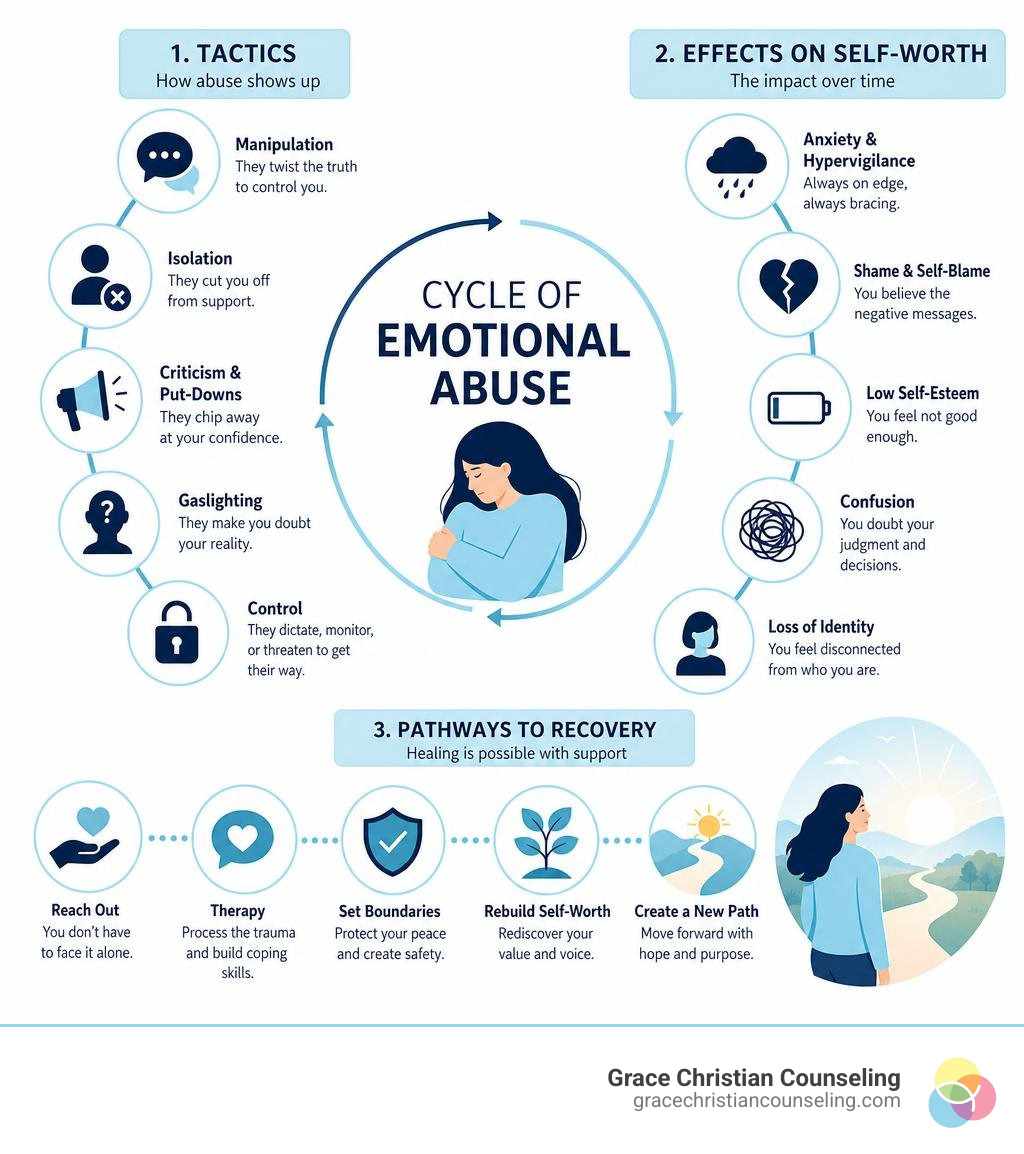
What is Mental Abuse Therapy and How Does It Differ from Other Treatments?
Unlike physical abuse, which leaves visible scars, emotional and psychological abuse is often invisible to outsiders. It involves symbolic, verbal, or behavioral acts designed to scare, isolate, humiliate, or control another person. Because there are no physical bruises, survivors frequently minimize their own pain, wondering if things are “really that bad.”
Standard physical health treatments focus on bodily safety and healing. In contrast, mental abuse therapy is specifically designed to address the intangible, yet deeply painful, psychological harm caused by coercive control. This therapeutic approach focuses heavily on helping you regain your voice, rebuild your self-worth, and restore your cognitive confidence.
According to a Systematic review on the treatment of emotional abuse victimization, emotional abuse is the most widespread form of relationship trauma, yet it is often the least researched. Traditional couples counseling is frequently inappropriate and even unsafe when active coercive control or emotional abuse is present, as it can inadvertently give the abuser a platform to further manipulate the narrative. Grace’s guide to when couples counseling is not recommended explains how to choose a safer first step. Instead, individual Therapy For Overcoming Emotional Abuse provides a safe, confidential environment where you can speak your truth without fear of retaliation.
Recognizing the Signs of Emotional and Psychological Abuse
The first step in healing is learning to name what you have experienced. Emotional abusers utilize a variety of subtle, overlapping tactics to maintain power and control over their partners or family members. Common warning signs include:
- Verbal attacks: Frequent yelling, name-calling, public humiliation, and harsh, unremitting criticism.
- Isolation: Systematically cutting you off from friends, family, and supportive communities to make you entirely dependent on the abuser.
- The Silent Treatment: Withholding affection, communication, or basic acknowledgment as a form of punishment.
- Love Bombing: Overwhelming you with intense affection, gifts, and declarations of love early in the relationship, only to withdraw it when you do not comply with their demands.
These tactics form a predictable, destructive loop. To better understand these patterns, you can read our Detailed Guide To The Narcissistic Abuse Cycle, which outlines how abusers transition from idealization to devaluation and discard.
Research consistently shows that emotional abuse and psychological control are common and clinically serious forms of relationship harm. A systematic review and meta-analysis on narcissism and intimate partner violence found a significant positive relationship between trait narcissism and intimate partner violence perpetration. For diagnostic context, a clinical review on narcissistic personality disorder reports that NPD is estimated to affect about 1% to 2% of the general population and 1.3% to 20% of clinical populations. These statistics should not be used to diagnose an abuser, but they can help survivors understand that patterns of manipulation, control, and emotional harm are documented in clinical research.
How Mental Abuse Therapy Restores Your Identity
Prolonged exposure to emotional manipulation severely damages your self-esteem and cognitive confidence. When you are constantly told that your memory of events is incorrect, or that you are “too sensitive,” you begin to experience decision paralysis and profound self-doubt. This confusion is often compounded by a phenomenon known as trauma bonding, where intermittent kindness from the abuser keeps you chemically and emotionally tethered to the relationship. You might find yourself constantly scanning old text messages or replaying conversations, trying to prove to yourself that your reality is real.
Through specialized Trauma Therapy For Healing From Narcissistic Abuse, you can begin to break these toxic bonds. A licensed counselor can help you validate your experiences, quiet the inner critic that has adopted the abuser’s voice, and systematically rebuild your sense of self.
Clinical Modalities and the Counseling Blueprint
Recovering from psychological harm requires more than just talking about the pain; it requires evidence-based clinical interventions that address both the mind and the body. At Grace Christian Counseling, we utilize highly effective therapeutic modalities to help you process trauma and regulate your nervous system.
A landmark study on Trauma-focused cognitive behavioural therapy for domestic abuse demonstrated that trauma-focused therapies can be safely and effectively delivered to survivors, dramatically reducing symptoms of PTSD, anxiety, and depression. To help our clients navigate this journey, we have developed a structured, compassionate process outlined in our Step By Step Guide To Narcissistic Abuse Therapy.
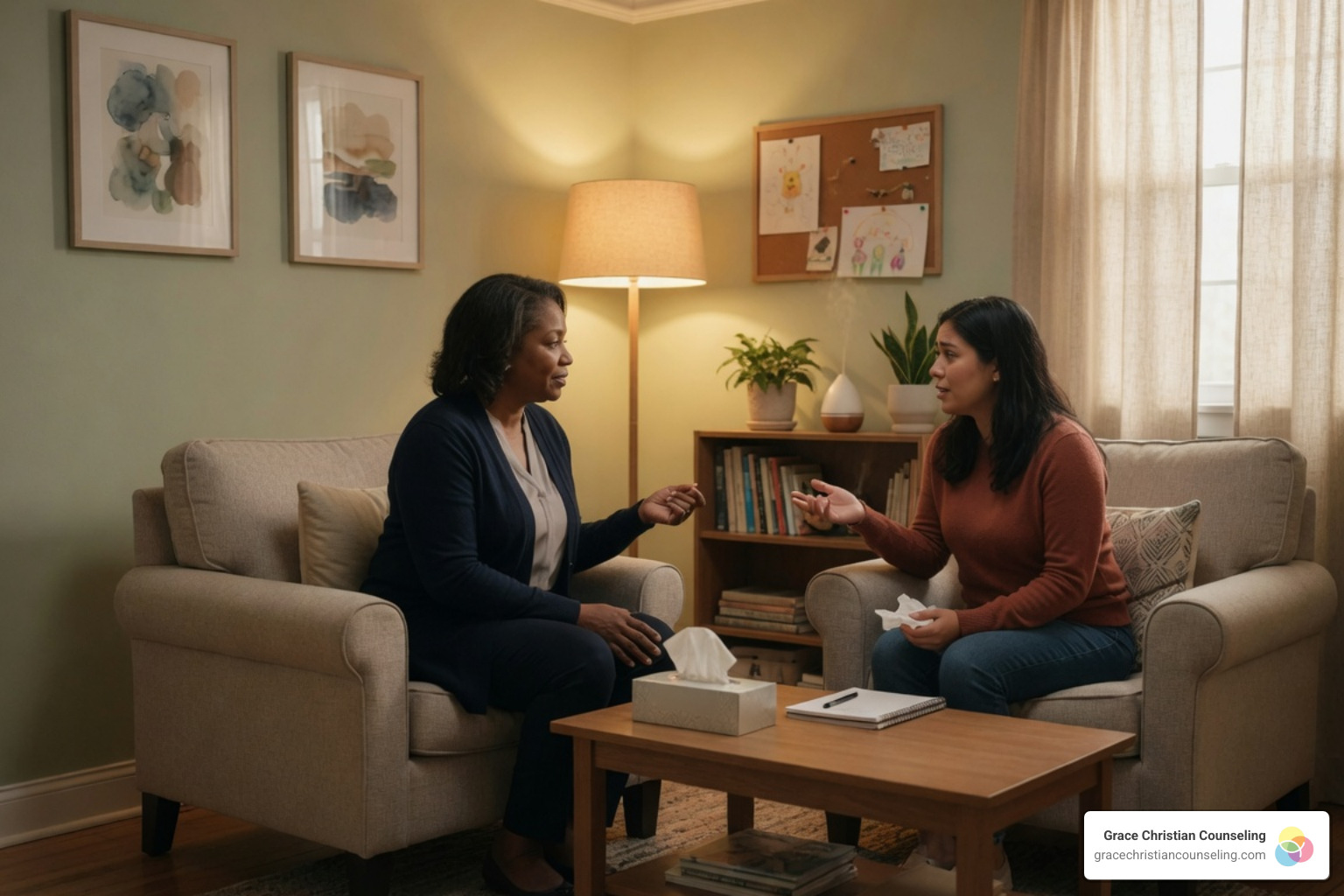
Integrating CBT, EMDR, and Somatic Processing
Our therapists combine several powerful clinical tools to facilitate deep, lasting healing:
- Cognitive Behavioral Therapy (CBT): This approach helps you identify and challenge the distorted, negative beliefs you may have internalized during the abuse, replacing them with objective truth.
- Eye Movement Desensitization and Reprocessing (EMDR): EMDR uses bilateral stimulation, such as guided side-to-side eye movements, to help your brain process and file away painful, highly charged traumatic memories.
- Somatic Therapy: Because trauma is often stored physically in the body, somatic processing helps you recognize and release physical tension, chronic stress, and nervous system dysregulation.
By addressing childhood roots and relational patterns, we can prevent these painful dynamics from repeating in future relationships. Understanding and Addressing Childhood Traumas To Foster Healing In Adulthood allows you to break free from long-standing patterns of survival-based behavior.
Navigating the Four Stages of Healing
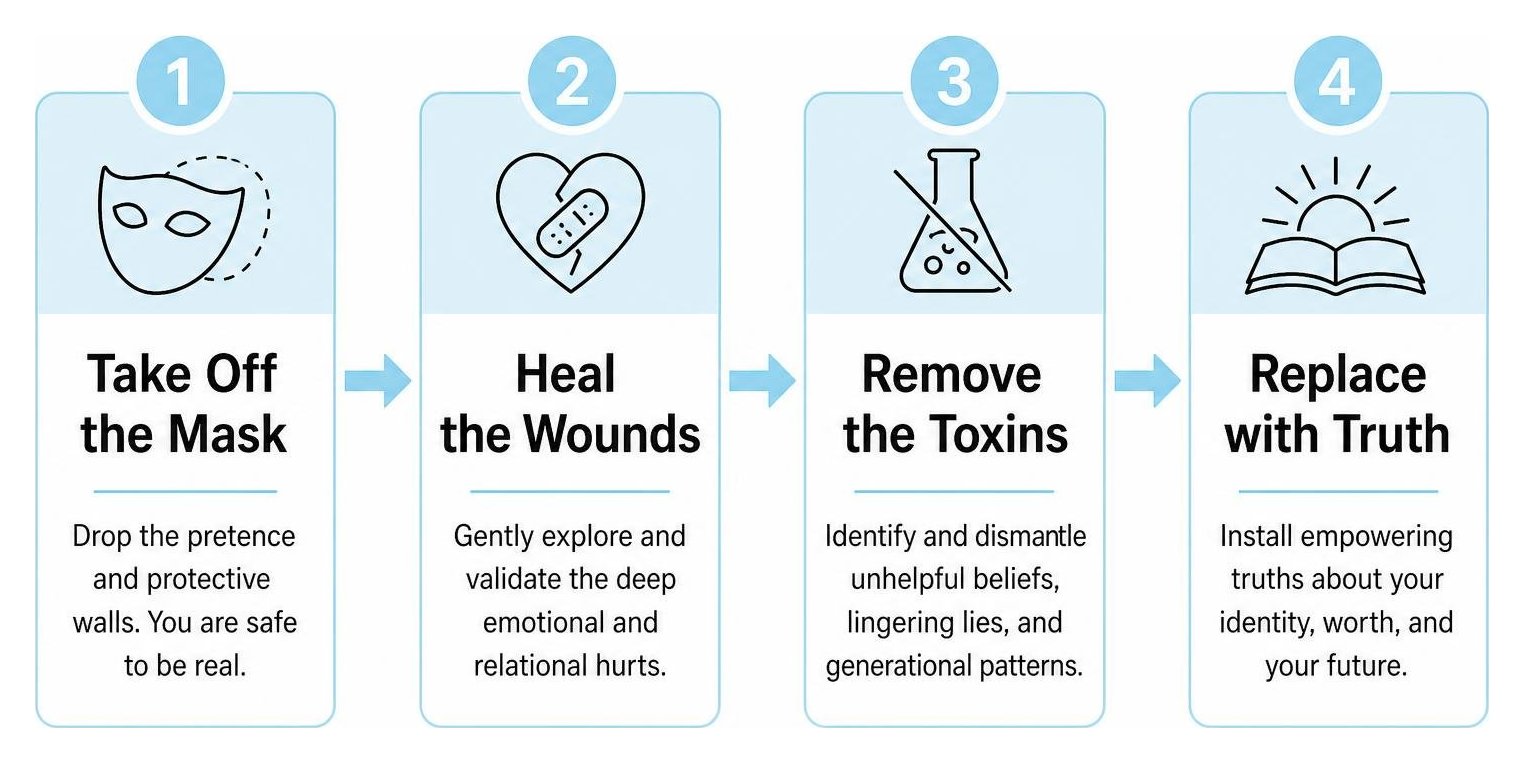
Our core therapeutic approach is built upon the Counseling Blueprint, a gentle, four-stage journey designed to guide you from confusion to complete restoration:
- Take Off the Mask: We begin by building genuine rapport and trust. In this safe space, you do not have to pretend everything is fine. You can drop the protective walls you have built to survive.
- Heal the Wounds: Together, we gently explore the deep emotional and relational hurts caused by the abuse, validating your pain without rushing you to “just get over it.”
- Remove the Toxins: We identify and dismantle the unhelpful beliefs, lingering lies, and generational patterns that have kept you stuck. This is especially vital when Healing From Generational Trauma, ensuring that the cycle of abuse stops with you.
- Replace with Truth: Finally, we install empowering, accurate perspectives about your identity, your worth, and the world, grounding your recovery firmly in God’s unconditional love.
Practical Steps to Rebuild Boundaries and Self-Esteem
Healing is an active process that continues outside the therapy room. While working with a professional is essential, there are practical, everyday steps you can take to reclaim your personal agency and cultivate emotional safety. Connecting with healthy, affirming communities is a vital part of this process. As we discuss in our resource on The Power Of Connection Building Bridges To Trauma Recovery, isolation is the abuser’s greatest weapon, but authentic, loving relationships are a powerful catalyst for healing.
Establishing Healthy Boundaries After Coercive Control
When you have been subjected to coercive control, setting boundaries can feel incredibly intimidating. You might fear conflict, anger, or abandonment. However, boundaries are not meant to punish others; they are meant to protect your own peace and well-being.
- Practice Saying No: Start small. You do not owe anyone an exhaustive explanation for your limits. A simple, polite “I am not able to do that” is a complete sentence.
- Prioritize Safety: If you are navigating a highly volatile situation, your physical and emotional safety must come first. You may need to utilize compassionate, pastoral safety planning, which can include limiting contact or, when necessary, quietly preparing to exit an unsafe environment.
- Protect Your Emotional Independence: Recognize where you end and the other person begins. You are not responsible for managing or fixing an abuser’s volatile moods.
For those navigating these complex spiritual and emotional waters, our guide on When A Narcissist Tries To Destroy A Christian offers deep scriptural wisdom and practical advice on maintaining your integrity while establishing firm, protective boundaries.
Rebuilding Trust and Overcoming Self-Doubt
Abuse teaches you to ignore your gut instincts. Rebuilding self-trust is a gradual process of learning to listen to your body and mind again. Practice self-compassion by treating yourself with the same kindness you would offer a dear friend. When self-doubt creeps in, ground yourself in the present moment and seek cognitive clarity by writing down the objective facts of your situation.
When your mind feels like a stormy sea of anxiety, scripture offers a beautiful anchor. As God’s word reminds us in Philippians 4:6-7:
“Do not be anxious about anything, but in everything by prayer and supplication with thanksgiving let your requests be made known to God. And the peace of God, which surpasses all understanding, will guard your hearts and your minds in Christ Jesus.”
Finding Support and Frequently Asked Questions
Taking the first step toward recovery can feel overwhelming, but you do not have to walk this path alone. There are numerous professional resources, support networks, and clinical options available to help you find your footing. You can also learn more about our specific approach to care by reading about Unmasking Trauma The Power Of Christian Trauma Counseling and How Christian Therapy Can Help Trauma.
What to Expect in Your First Session of Mental Abuse Therapy
Your initial session is focused entirely on establishing safety, comfort, and connection. There is no pressure to share every painful detail of your story right away. Your counselor will conduct a gentle intake assessment to understand your current symptoms, such as anxiety, hypervigilance, or sleep disturbances. The primary goal is building rapport, ensuring you feel heard and believed, and collaborating on a personalized safety and treatment plan.
How long does recovery from psychological abuse take?
There is no single, rigid timeline for healing. For some, initial relief and cognitive clarity begin to emerge within 6 to 12 months of consistent, trauma-informed therapy. For others, particularly those recovering from decades of coercive control or childhood emotional neglect, full identity restoration and the development of healthy relationship patterns may unfold over several years. What matters most is consistent, gentle progress.
Can you fully recover from emotional abuse?
Yes, many survivors experience deep and lasting recovery from emotional abuse. Healing is often gradual, not instant. In therapy, painful memories can become less intense. The nervous system can become calmer, and shame, fear, people-pleasing, and self-doubt can begin to lose their grip. Emotional abuse may remain part of your story, but it does not have to be the final word.
Clinical recovery does not mean pretending the abuse never happened. It means learning to tell the truth about what happened without being ruled by it. Trauma-informed counseling can help survivors rebuild safety, name distorted beliefs, practice healthy boundaries, and regain confidence in their own perceptions. Safe relationships and steady spiritual care can also help restore trust, connection, and hope.
From a Christian worldview, emotional abuse never reflects a survivor’s worth. Every person is made in the image of God and deserves dignity, protection, and truthful love. Scripture does not call victims to deny harm, excuse sin, or stay silent in unsafe relationships. God’s heart is for the oppressed, the brokenhearted, and those who need refuge. Biblical healing includes both truth and compassion. Survivors can grieve what was lost, reject lies spoken over them, and remember that their identity is not defined by an abuser’s words. In Christ, restoration is not forced or rushed. It is a patient work of God’s grace, often supported through wise counseling, prayer, community, and safe boundaries.
Hope and Next Steps for Healing
The invisible wounds of emotional and psychological abuse are deep, but they are not permanent. You deserve a safe space to heal, to be heard, and to rediscover the person God created you to be.
At Grace Christian Counseling, we are honored to walk alongside survivors throughout Western Pennsylvania and beyond. We provide compassionate, Christ-centered care both in person at our local offices and statewide through our secure online telehealth platform. Our licensed counselors blend clinical excellence with biblical truth, helping you step out of the fog of manipulation and into the light of freedom.
If you are ready to take that first courageous step toward healing, we invite you to learn more about our specialized Therapy For Overcoming Emotional Abuse and schedule a confidential consultation with us today. Your story is not over, and hope is closer than you think.
This guide is for educational and spiritual encouragement and is not a substitute for personalized professional counseling. If you are in crisis, please reach out for immediate help.
Biblical Healing from Abuse: Trusting God with Trauma


