
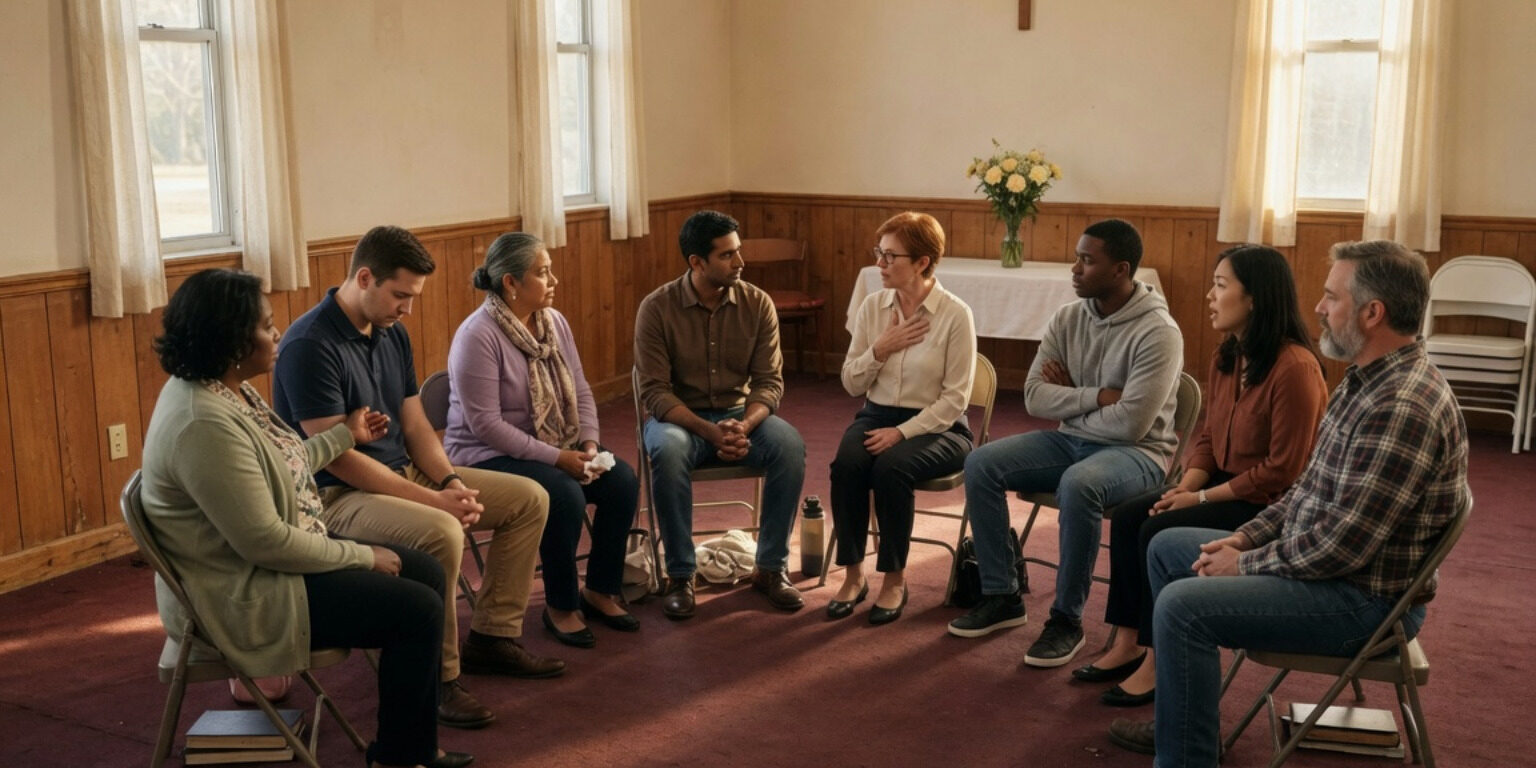
When Grief Feels Isolating, Faith-Based Community Can Help
Faith-based grief groups can be a helpful starting point for people mourning the loss of a loved one. They often combine peer support with Christian Scripture, prayer, and spiritual community. Some well-known options include GriefShare, Faith & Grief Ministries, and Hope After Loss.
Grief is something nearly everyone will face. According to the CDC, life expectancy in the United States is about 78 years, meaning most people will experience the death of a parent, spouse, sibling, close friend, or other loved one during their lifetime. While grief is a normal human response, the emotional impact varies widely from person to person.
At the same time, a group is not always enough. Grief can bring trauma, guilt, anger, spiritual questions, family conflict, anxiety, depression, and complicated emotions that need more individualized care than a peer setting can provide. If you are looking for Christ-centered support in Western Pennsylvania or through online counseling in Pennsylvania, Grace Christian Counseling offers a more personal path forward.
Our counselors help clients process loss with both evidence-based clinical care and biblical hope. In counseling, you have space to talk honestly about the person you lost, the questions you are carrying, and the ways grief is affecting your daily life, faith, relationships, and sense of identity. This guide explains how faith-based grief groups can help, where they may have limits, and how Grace Christian Counseling can walk with you when you need deeper one-on-one support.
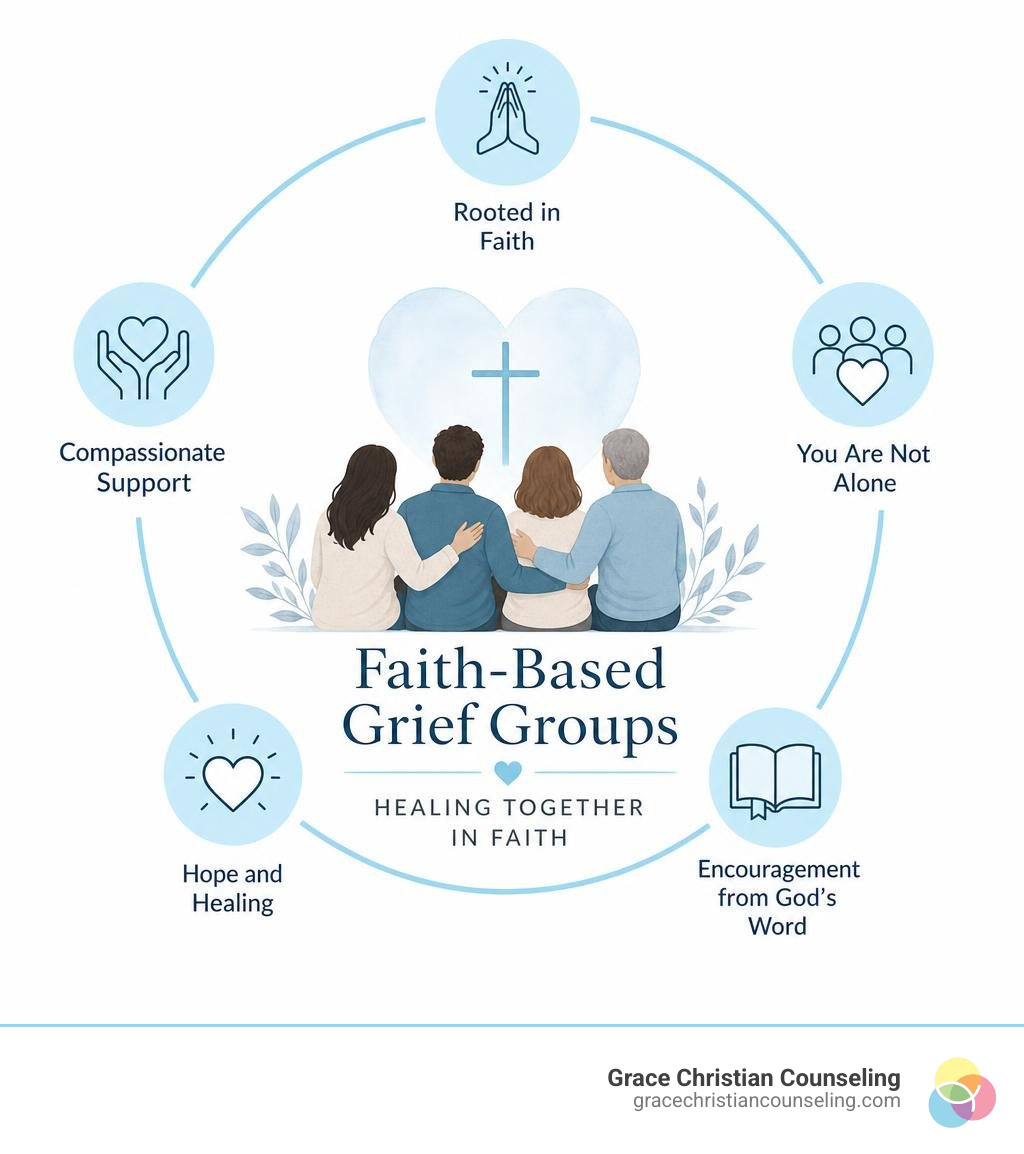
At Grace Christian Counseling, we value the role of peer support groups, but our primary focus is helping people receive compassionate, individualized counseling when grief feels too heavy to carry alone.
Understanding the Landscape of Faith Based Grief Groups
When you begin looking for faith based grief groups, you will find that they are not all structured the same way. Some programs are highly organized with weekly video lessons and homework, while others are informal, monthly peer-to-peer gatherings. Knowing these structural differences can help you choose the format that best matches your personal healing needs.
The main options differ in their structure, materials, and target audience. Below is a broad comparison of several Christian grief support programs people often encounter.
| Program Name | Format | Materials Provided | Key Focus & Approach |
|---|---|---|---|
| GriefShare | Structured group cycle | Video seminars, participant guide | Biblical curriculum and peer discussion |
| iCare Christian Grief Support Program | Congregation-based group format | Facilitator and participant materials | Non-denominational grief support with reflection exercises |
| Faith & Grief Ministries | Gatherings, workshops, retreats, and online resources | Peer-to-peer and remembrance resources | Relational support and sacred space for grief |
| Hope After Loss | Ongoing faith-based support | Scripture-focused discussion resources | Specialized support for loss connected to addiction |
Structured Curriculums: GriefShare and iCare
Structured curriculums like GriefShare and the iCare Christian Grief Support Program can provide a clear roadmap through the chaotic emotions of loss. GriefShare uses video teaching and supportive peer discussions, and its sessions are designed so people can participate even if they are entering the group after the cycle has already begun.
The iCare program is designed to help congregations offer a Christ-centered grief support format with facilitator and participant resources. Programs like these can be valuable because they give churches a practical structure for walking with people who are mourning.
Still, most grief support groups are not the same as professional counseling. They are often led by trained or caring facilitators rather than licensed mental health professionals. If you find yourself stuck in deep trauma, complicated grief, depression, or anxiety, pairing a group with professional Grief Counseling can provide focused care that is tailored to your story.
Specialized Faith Based Grief Groups for Specific Losses
General grief groups can be helpful, but sometimes you need to be surrounded by people who understand your exact type of loss. Specialized faith based grief groups may address unique circumstances such as the loss of a spouse, the death of a parent, or loss connected to suicide or addiction. Sharing a common, specific language of loss can help reduce the isolation that often accompanies these trials.
For those walking through the painful aftermath of a self-inflicted death, specialized biblical support may be one part of the healing process. You can read more about this journey in our guide on Losing a Loved One Due to Suicide. Programs like Hope After Loss focus specifically on families who have lost a loved one to substance abuse, reminding families that their loved one was far more than the disease of addiction.
Young adults can also face unique challenges when they lose a parent, often feeling out of place in general bereavement groups. Programs like the Loss of a Parent Grief Group – Resurrection Church show how some ministries create more specific spaces for particular grief experiences.
Grace Christian Counseling can help you discern what level of care you need. A group may be a supportive companion, while individual counseling can help you process the deeper emotional, relational, and spiritual wounds that may not be fully addressed in a group setting.
How Scripture and Spiritual Practices Foster Healing
The primary difference between secular recovery programs and Christian grief groups is the active integration of a biblical worldview. Secular groups focus heavily on emotional management, which is highly valuable; however, faith-based groups acknowledge that death is not just a psychological event, but a spiritual one. By looking at loss through the lens of eternity, these groups help you process your pain without losing your hope.
Scripture acts as an emotional anchor when your world is spinning out of control. Reading about the grief of biblical figures, such as David in the Psalms or Jesus weeping at the tomb of Lazarus, normalizes your own tears. If you are currently struggling to find words for your pain, you may find comfort in reading our article on How to Find Biblical Comfort for Grief When You Are Feeling Sad.
Research in grief counseling has shown that healthy mourning is not about “moving on” or forgetting the person who was lost. Instead, effective grief work often involves learning how to maintain a meaningful connection with the person while adapting to life after loss. The field of grief therapy increasingly recognizes that healing involves integrating the loss into a person’s ongoing story rather than simply trying to eliminate painful emotions.
Integrating Prayer, Scripture, and Bible Journaling
Faith-based groups utilize several spiritual disciplines to help participants externalize their pain. Bible journaling is a popular practice in programs like iCare, allowing individuals to write, color, or paint their prayers directly alongside Scripture. This hands-on approach engages both the creative and logical parts of the brain, helping to soothe an overactive nervous system.
Many groups also incorporate symbolic rituals, such as candlelight ceremonies, to honor the memory of those who have passed. These physical acts of remembrance, combined with quiet prayer, remind us of the comforting invitation of Jesus in Matthew 11:28 to bring our heavy burdens to Him for rest. In times of profound sorrow, we cling to the promise in Romans 8:38 that absolutely nothing can separate us from the overwhelming love of God.
Addressing Hard Questions and Finding Hope in Faith Based Grief Groups
It is entirely normal to wrestle with difficult questions after a loss, such as asking why God allowed this to happen, or dealing with intense guilt and regret. A healthy Christian support group provides a safe, non-judgmental space to voice these doubts. Experienced leaders know that processing anger at God is often a necessary stepping stone on the path to deeper trust.
These groups help you move from initial shock and rage toward a place of biblical hope and renewed purpose. We look forward to the ultimate promise in Revelation 21:4 that God will one day wipe away every tear, and death will be no more. For a deeper look at how to navigate this spiritual valley, explore our resource on Finding Hope in the Valley: A Guide to Faith-Based Grief Support.
Comparing Faith-Based Support to Secular Grief Recovery Options
When deciding between a secular support group, a faith-based group, and individual Christian counseling, it is helpful to look at how each approach addresses the human experience of mourning. Secular community groups, such as those listed by the Grief Support – Haven Hospice network, can provide coping strategies and peer comfort. They may be beneficial for managing the physical and emotional symptoms of acute bereavement.
However, secular groups generally avoid discussing spiritual matters, which can leave a major part of your grief unaddressed if you are a person of faith. Christian groups allow you to bring your faith into the conversation, but they may still be limited by the structure of a group format. Individual Christian counseling provides a confidential place to explore grief, trauma, questions about God, and personal circumstances in more depth.
At Grace Christian Counseling, our counselors integrate evidence-based clinical care with biblical truth. That means you do not have to separate emotional healing from spiritual support. This can be especially meaningful during difficult seasonal milestones, which we discuss in our guide on Navigating Holiday Grief with Faith.
Below is a brief summary of how these approaches compare:
- Secular Groups: Focus on coping skills, emotional regulation, and peer support while remaining neutral on spiritual matters.
- Faith-Based Groups: Combine peer support with prayer, Scripture, and conversations about hope, heaven, and God’s presence in suffering.
- Grace Christian Counseling: Offers individualized Christian counseling for grief, trauma, complicated emotions, and spiritual questions, with support tailored to your story and pace.
How to Find Support Without Replacing Professional Care
If you are looking for a local group, start by checking with churches in your community or searching directly through organizations such as GriefShare, Faith & Grief Ministries, Hope After Loss, or the iCare Christian Grief Support Program. In Western Pennsylvania, many local congregations host grief support ministries throughout the year.
For regional listings and broader community resources, you can also consult local health department or mental health directories. These listings can help you find peer support, but they should not be viewed as a replacement for individualized counseling when grief is affecting your daily functioning, faith, relationships, or mental health.
Most people gradually adapt to life after a significant loss, but some experience a more persistent form of grief. Research suggests that about 7% to 10% of bereaved adults develop prolonged grief disorder, a condition marked by intense grief that continues to interfere with daily functioning well beyond the initial period of mourning. According to the National Institute of Mental Health, prolonged grief disorder is recognized as a condition affecting some individuals after a significant loss, particularly when intense grief symptoms persist and interfere with daily life. While many people adapt over time with healthy support systems, others benefit from professional care specifically designed to address complicated grief responses.
One distinction counselors often make is the difference between expected grief responses and grief that becomes difficult to move through without additional support. Grief does not follow a predictable timeline, and there is no “right” way to mourn. However, when intense symptoms continue to interfere with daily functioning, relationships, or a person’s ability to reconnect with life, specialized grief counseling can provide a structured place to process what has happened. In our clinical experience, many people are not struggling because they are grieving incorrectly; they are struggling because they are carrying a loss that has affected their identity, sense of safety, relationships, and faith.
If your grief feels overwhelming, Grace Christian Counseling can help you decide whether a group, individual counseling, or both would be the best next step. Our counselors serve clients in Western Pennsylvania and offer virtual therapy across Pennsylvania, making it possible to receive Christ-centered grief support even if you are not near one of our office locations.
Building a support network is especially crucial before major holidays, anniversaries, birthdays, and other painful reminders. For practical encouragement, you can read our guide on Ways to Handle the Loss of Loved Ones During Christmas.
Frequently Asked Questions About Christian Grief Support
How much do faith-based grief groups typically cost?
Many church-hosted grief support groups are completely free to attend. If there is a cost, it is usually a nominal fee of $15 to $30 to cover the price of your personal participant workbook or journal. Many churches gladly sponsor these costs or offer scholarships, meaning you should never hesitate to reach out to a group leader if you cannot afford the materials.
Can I join a group if I am not a member of that church or denomination?
Yes, the vast majority of faith-based grief groups are open to the entire community. You do not need to be a member of the hosting church, nor do you need to belong to their specific denomination. These ministries are designed to be ecumenical and welcoming to anyone, including those who are still figuring out what they believe about God.
What is the difference between a grief support group and individual Christian counseling?
A support group offers peer-to-peer encouragement, shared stories, and community connection, which are vital for normalizing your loss. However, a group facilitator is typically a volunteer, not a therapist. Individual Christian counseling involves working one-on-one with a licensed professional, such as a Licensed Associate Professional Counselor (LAPC) or a Licensed Social Worker (LSW). This clinical setting allows you to safely process deep trauma, complicated grief, and relational wounds at your own pace.
Christian Grief Counseling at Grace Christian Counseling
Participating in faith based grief groups can be a life-giving step on your journey toward recovery. Walking alongside others who understand loss can provide comfort and connection. But if your grief feels too heavy to carry in a group setting, or if you are struggling with trauma, guilt, depression, anxiety, or spiritual confusion, individual counseling can help you take the next step.
At Grace Christian Counseling, we serve communities across Western Pennsylvania, including Pittsburgh, North Huntingdon, Penn Hills, Uniontown, Bethel Park, Sewickley, and Mt. Lebanon, as well as offering virtual therapy statewide. Our licensed counselors blend evidence-based clinical psychology with biblical truth.
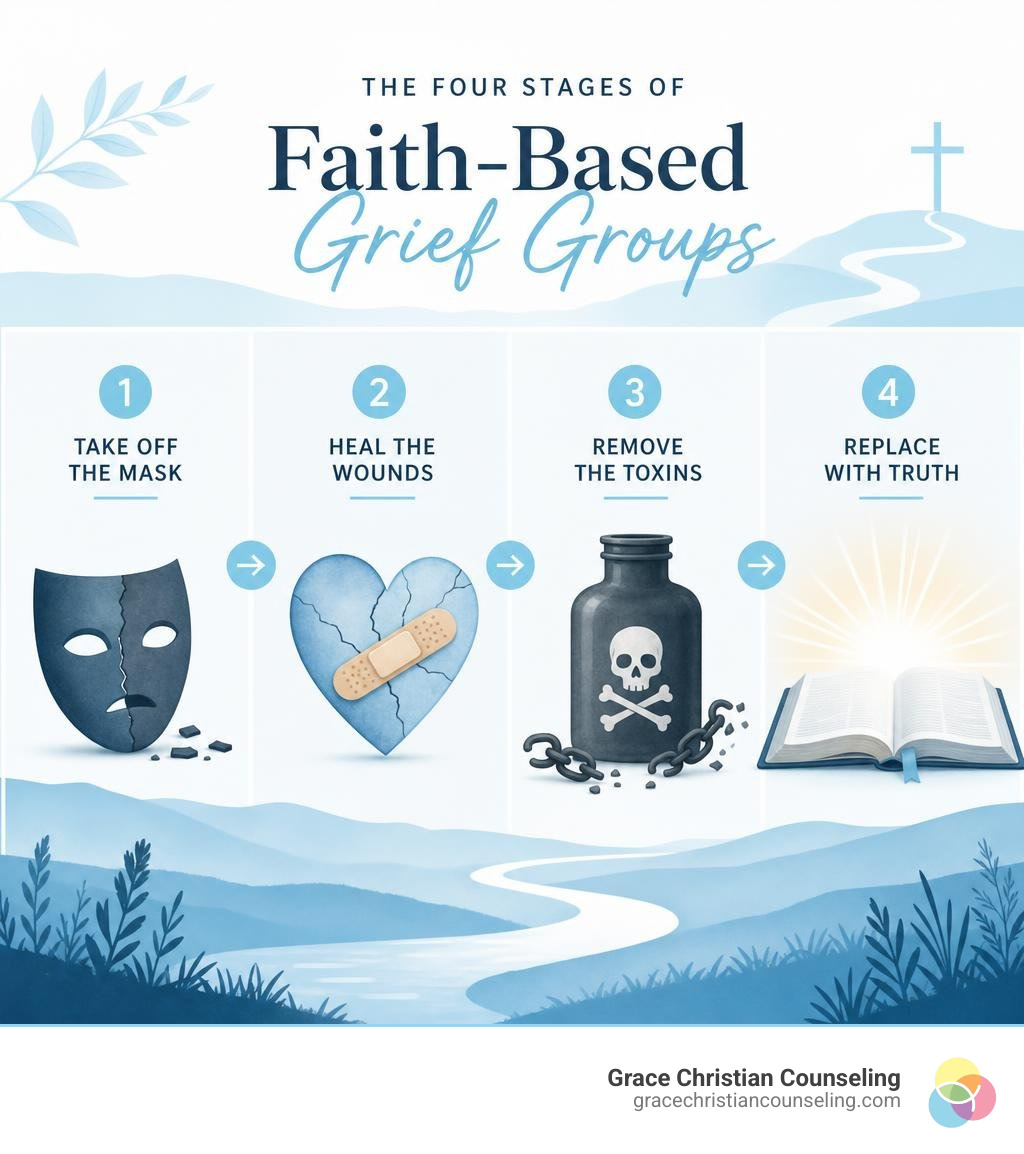
Our Counseling Blueprint is a gentle, step-by-step journey:
- Take Off the Mask: We build a safe, confidential, and trusting relationship where you can drop your guard and be completely honest about your pain.
- Heal the Wounds: Together, we gently explore the deep emotional, physical, and relational hurts caused by your loss.
- Remove the Toxins: We help you identify and dismantle unhelpful beliefs, lingering lies, or unresolved guilt that may be keeping you stuck in your sorrow.
- Replace with Truth: We install empowering, biblically accurate perspectives about yourself, your loved one, and God’s loving plan for your future.
Through years of working with individuals experiencing grief, we have noticed that loss often affects more than emotions alone. Many people experience changes in their relationships, routines, spiritual beliefs, and understanding of themselves. That is why our approach begins with listening carefully to each person’s story rather than assuming every loss should be processed the same way. Two people can experience the same type of loss and need completely different kinds of support.
If you are ready to process grief with a compassionate Christian counselor, we invite you to visit our Grace Christian Counseling Grief Services page. You can also explore additional pastoral counseling and other wellness options at NuWellonline.com to support your overall wellness. Please reach out to us today to schedule an in-person or online session, and let us walk alongside you toward hope and lasting restoration.
This guide is for educational and spiritual encouragement and is not a substitute for personalized professional counseling. If you are in crisis, please reach out for immediate help.
A Practical Christian Counseling Guide for Real Healing and Hope


