

Biblical Grief Counseling in Pennsylvania: Faith and Clinical Support
Biblical grief counseling in Pennsylvania is professional mental health counseling that integrates clinical grief support with a Christian worldview, including Scripture, prayer, lament, and spiritual reflection when appropriate. It can support people grieving the death of a loved one, pregnancy loss, divorce, health changes, job loss, or an expected loss. You do not have to hide sadness, anger, doubt, or numbness to receive support.
At Grace Christian Counseling, our licensed counselors, including LSW and LAPC clinicians, help individuals, couples, and families make room for grief while building practical ways to cope. Faith is invited at your pace, whether that means prayer, a Psalm, questions about God, or simply a safe place to tell your story.
We offer Christ-centered counseling in Pittsburgh, North Huntingdon, Penn Hills, Uniontown, Bethel Park, Sewickley, and Mt. Lebanon, plus online counseling for people across Pennsylvania. We also recommend NuWell as a pastoral counseling resource for people seeking added spiritual support.
Understanding Biblical Grief Counseling and How It Differs from Secular Therapy
Grief can change daily routines, relationships, and the way a person thinks about the future. It can also raise deeply spiritual questions about suffering, death, God’s presence, and hope. For Christians, it can be important to have a counselor who is prepared to engage those questions rather than treating faith as separate from emotional care.
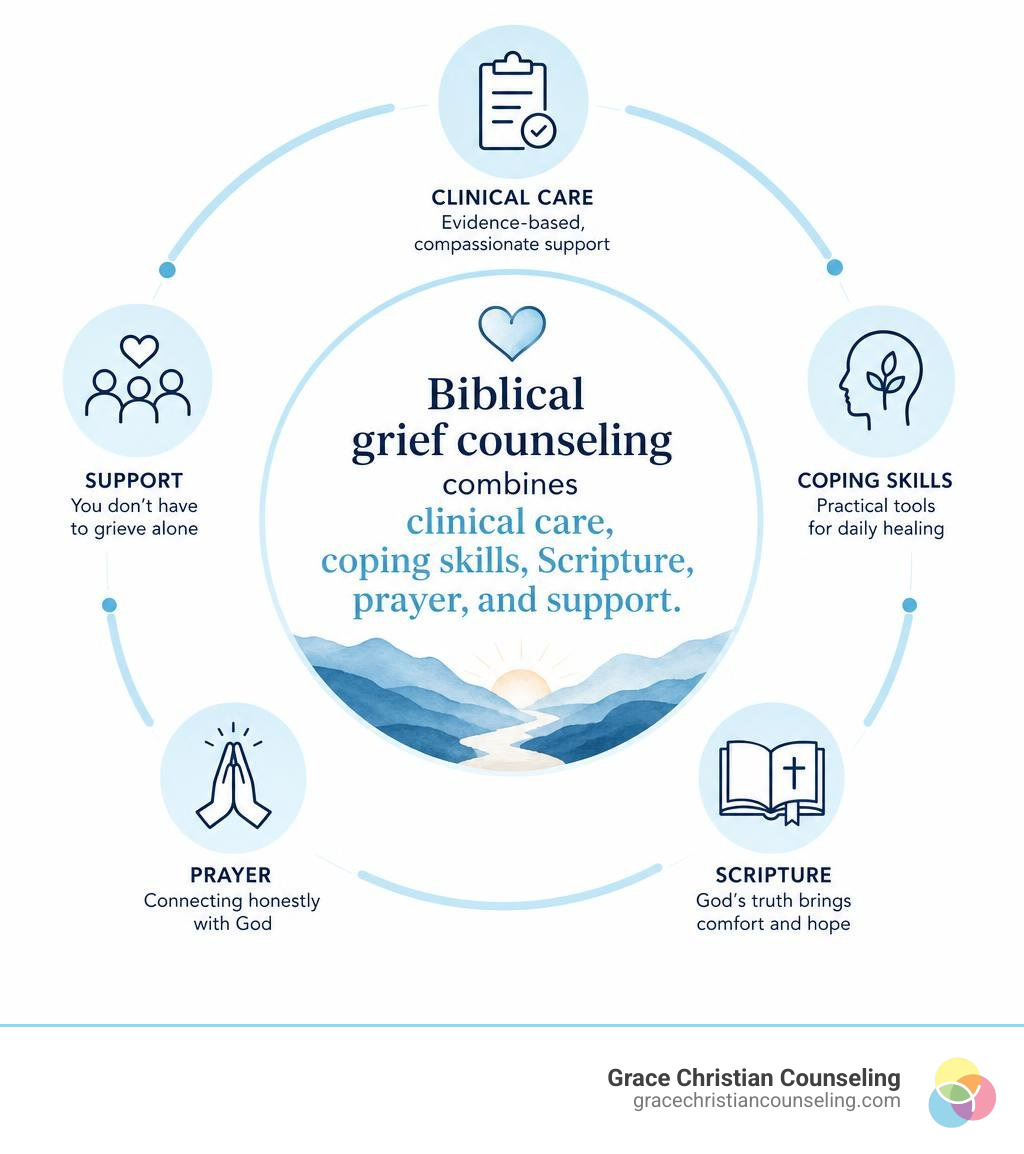
Biblical grief counseling at Grace Christian Counseling combines professional mental health care with a distinctly Christian understanding of suffering, hope, identity, and life with God. Clinical approaches can help clients understand grief, cope with difficult emotions, and adjust to life after loss, while Scripture, prayer, lament, and Christian community can provide meaningful spiritual support. These are not competing approaches; within Christian counseling, clinical care is practiced within a biblical understanding of the whole person.
We do not offer quick formulas or dismiss deep heartache with superficial clichés. Instead, we provide a warm, clinical environment where you can safely process raw emotions while drawing strength from God’s unfailing presence.
The Biblical Stages of Mourning and Healing
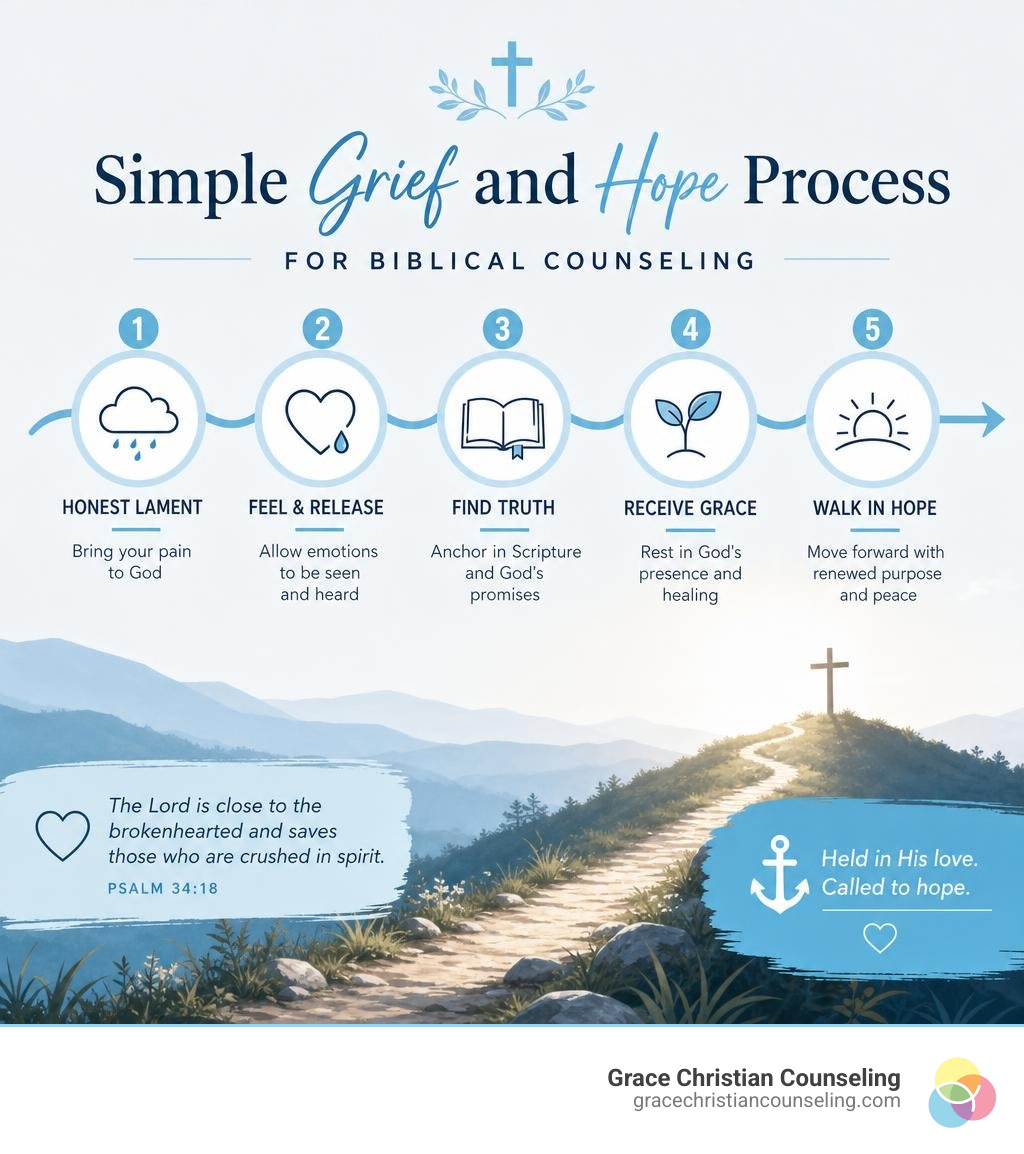
Grief rarely follows a predictable sequence. You may have heard grief described through denial, anger, bargaining, depression, and acceptance, but these experiences are not steps that every grieving person must complete in order. The American Psychological Association describes the stages model as nonlinear, meaning experiences can overlap, recur, or happen in a different order. Scripture likewise gives us many different pictures of grief (from David’s lament in the Psalms to the sorrow expressed throughout Lamentations) showing that grief can include tears, questions, anger, longing, remembrance, worship, and hope.
Biblical grief counseling helps you navigate these emotional waves without judgment. As shared in The Ultimate Guide To Bible Based Mourning Support And Grief Recovery/, mourning is an active spiritual and emotional process. God draws exceptionally near to us when our hearts are crushed, reminding us in Psalm 34:18 that He rescues those whose spirits are broken.
Grief is common, but each person’s response to loss is different. Research does not support a single timetable or emotional sequence that everyone must follow. Most bereaved people gradually adapt to loss without developing a mental health disorder, while a smaller group experiences persistent, disabling grief that may require more specialized treatment. The American Psychiatric Association notes that approximately 7%–10% of bereaved adults experience the persistent symptoms associated with prolonged grief disorder.
Surrendering heavy burdens to the Lord does not mean suppressing sadness. Through the guidance of the Holy Spirit, we help you express anger, grieve losses honestly, and slowly rediscover peace, anchoring your soul in Christian hope.
Who Can Benefit from Biblical Grief Counseling in Pennsylvania?
Loss takes many forms throughout our lives. You do not need to wait until a crisis becomes unmanageable to seek supportive care. Christian grief counseling addresses a broad spectrum of painful life transitions for individuals, teens, and families throughout Western Pennsylvania.
Bereavement is a common human experience, but its impact can be significant. The CDC reports that more than 3 million deaths occur in the United States in a typical year, each affecting families, friends, and communities. While grief is not itself a mental health disorder, some people benefit from professional support as they adjust to life after a significant loss.
We provide compassionate therapeutic care for many types of loss, including:
- Bereavement: Mourning the passing of a parent, child, spouse, sibling, or close friend.
- Perinatal and Pregnancy Loss: Processing the unique, silent heartbreak of miscarriage, stillbirth, or infertility. When the grief is tied to ongoing fertility uncertainty rather than a completed loss, support during ongoing fertility uncertainty can also address decision fatigue, relationship strain, and faith questions.
- Divorce and Relationship Separation: Walking through the profound grief of broken marital vows and family reorganization.
- Anticipatory Grief: Navigating the slow, painful decline of a loved one facing a terminal medical diagnosis, where compassionate spiritual support brings peace to families walking through palliative and hospice stages.
- Life Transitions and Health Declines: Adapting to chronic illness, disability, retirement, or unexpected career changes.
Whatever valley you are walking through, biblical counseling creates space to honor what was lost while helping you rebuild a meaningful path forward.
Integrating Clinical Modalities with Scripture in Bereavement Care

True healing addresses the whole person, mind, body, and spirit. At Grace Christian Counseling, our clinicians combine evidence-based psychological modalities with rich biblical truth. We believe that clinical science reveals how God designed our brains and emotions to heal, while Scripture provides the ultimate framework for identity and purpose.
Grief and trauma can also overlap, particularly after sudden or violent loss. One large international study involving 68,894 adults across 24 countries found that the unexpected death of a loved one was the most commonly reported potentially traumatic experience, reported by 31.4% of participants. This helps explain why grief counseling sometimes needs to address trauma symptoms alongside bereavement. You can review the study through World Psychiatry.
Our counselors may draw from several clinical approaches and supportive practices depending on the person’s needs. Faith can be integrated throughout this work rather than treated as separate from emotional healing:
- Cognitive and Behavioral Strategies: Counseling can help you notice patterns such as excessive self-blame, hopeless predictions, or avoidance and consider healthier ways of responding. For Christian clients, these conversations can also include reflecting on biblical truth without treating every painful thought or emotion as a spiritual failure.
- Trauma-Informed Care: A sudden, violent, or frightening death may involve trauma symptoms in addition to grief. Trauma-informed care emphasizes safety, trust, collaboration, and sensitivity to the ways traumatic experiences may affect the grieving process.
- Attachment-Informed Care: Losing someone deeply important can affect your sense of connection, security, and identity. Counseling can provide space to explore these changes while helping you maintain meaningful connections with others and, for Christian clients, draw comfort from God’s presence and character.
- Spiritual Reflection and Prayer: When desired, sessions can include Scripture, prayer, lament, questions about God, and other Christian practices. These are integrated thoughtfully alongside clinical care rather than used to rush grief or replace emotional processing.
When addressing depression or anxiety related to grief, we observe that symptoms often present as heavy fatigue, sudden irritability, concentration difficulties, persistent physical aches, or hidden functional impairment. Because these signs can mirror other conditions, a thorough clinical assessment is essential to tailor an effective care plan.
Identifying When Grief Becomes Overwhelming or Complicated
Grief is a natural response to loss, and there is no single timetable for grieving. Intense sadness, longing, changes in sleep, difficulty concentrating, and periods of feeling disconnected can all occur during bereavement. Having difficult days months after a death does not automatically mean that something is clinically wrong.
For some people, however, grief remains intensely distressing and significantly interferes with daily functioning over an extended period. The DSM-5-TR recognizes Prolonged Grief Disorder, which may be diagnosed in adults when the death occurred at least 12 months earlier and specific grief symptoms cause significant distress or impairment beyond what would be expected within the person’s social, cultural, or religious context. You do not need to meet criteria for a disorder, however, to benefit from counseling when grief feels difficult to carry.
Signs that grief may be overwhelming include:
- Inability to perform daily basic self-care, work duties, or parenting responsibilities.
- Intense, persistent feelings of worthlessness, excessive guilt, or emotional detachment from surviving loved ones.
- Escaping into unhealthy coping mechanisms, such as substance misuse, excessive isolation, or self-harming tendencies.
- Enduring physical exhaustion, sleep disruption, or persistent physical pain without a clear medical cause.
- Severe spiritual confusion, ongoing bitterness toward God, or total loss of hope for the future.
You do not have to wait until grief becomes a diagnosable disorder to seek counseling. Consider reaching out when grief is making it difficult to function, care for yourself, maintain important relationships, or cope safely. Professional support may also be especially helpful when grief occurs alongside depression, trauma symptoms, substance use, or thoughts of self-harm. The National Institute of Mental Health recommends considering professional help when distressing symptoms persist, worsen, or begin interfering with everyday activities.
Pastoral Guidance and Community Spiritual Resources
Clinical therapy is most effective when supported by a strong spiritual community. We encourage collaboration between our counseling team and local church ministries to promote relational encouragement during your healing journey. Pastors, trusted friends, small groups, and church communities may provide prayer, practical help, companionship, and opportunities to mourn with others. When appropriate and desired by the client, this kind of spiritual support can complement professional counseling.
In addition to licensed clinical sessions, we recommend NuWell as a pastoral counseling resource for those seeking supplemental discipleship, prayer support, and spiritual direction. Professional counseling, pastoral care, and supportive Christian community serve different roles, but they can work alongside one another to provide meaningful emotional, practical, and spiritual support.
Choosing Biblical Grief Counseling in Pennsylvania for Lasting Healing

Selecting the right therapist is a crucial step toward emotional recovery. At Grace Christian Counseling, our team includes licensed social workers (LSW), licensed associate professional counselors (LAPC), and licensed professional counselors (LPC) dedicated to providing top-tier clinical care with deep pastoral warmth.
Our clinicians possess specialized training in bereavement, trauma recovery, and family dynamics. We walk beside you through the heavy burdens of loss, offering practical coping tools, emotional validation, and spiritual hope without ever minimizing your pain.
Accessing Biblical Grief Counseling in Pennsylvania Online and In-Person
If you are looking for biblical grief counseling in Pennsylvania, you can choose between in-person care in Western Pennsylvania and online counseling from elsewhere in the state. Grace Christian Counseling provides Christian grief counseling through multiple Western Pennsylvania locations, with telehealth available to clients throughout Pennsylvania when clinically appropriate.
Our counselors support people facing bereavement, pregnancy loss, anticipatory grief, relationship loss, and other major life transitions. In-person counseling is available in communities including:
Our physical offices serve communities across Western Pennsylvania, including:
- Pittsburgh
- North Huntingdon
- Penn Hills
- Uniontown
- Bethel Park
- Sewickley
- Mt. Lebanon
- Pleasant Hills
- Belle Vernon
- Ligonier
- Punxsutawney
For residents living outside these regions, or for those whose health, schedule, or mobility makes traveling difficult, we provide secure online Christian counseling statewide across all of Pennsylvania.
Frequently Asked Questions About Faith-Based Grief Therapy
What happens during an initial Christian grief counseling session?
Your first session is a gentle, low-pressure conversation focused on understanding your unique story and current needs. Your counselor will complete a comprehensive intake assessment, discussing your loss, your physical and emotional symptoms, and your personal faith background. Together, you will establish collaborative goals for therapy. You are never forced to discuss painful details before you feel ready; your counselor will pace sessions according to your comfort level.
Can biblical counseling help with holiday grief and anniversary triggers?
Yes. Anniversaries, birthdays, and holiday gatherings often intensify grief, catching families off guard. In therapy, we help you prepare for these significant dates by developing proactive coping strategies, setting healthy personal boundaries, and creating meaningful traditions that honor your loved one’s memory while caring for your emotional capacity. Learn more practical strategies in our guide to Navigating Holiday Grief With Faith/.
How does faith-based counseling address loss from suicide or sudden tragedy?
Loss following suicide or sudden tragedy can bring a complicated mixture of grief, shock, unanswered questions, anger, guilt, or confusion. Suicide loss affects thousands of families each year. According to the CDC, more than 49,000 people died by suicide in the United States in 2023, underscoring how many families and communities may be touched by this kind of sudden loss. After a suicide, some people may also encounter stigma or find themselves repeatedly questioning what they could have done differently. Counseling can provide a confidential place to explore these reactions, address painful self-blame when it arises, and consider whether grief, trauma symptoms, depression, or other concerns need additional support. Our resource on loss after suicide offers additional support for families navigating this kind of grief.
Finding Hope After Loss
Grief can make you feel completely isolated, but you do not have to walk through the darkness alone. True healing does not mean forgetting the past or pretending the pain never happened; it means learning to carry your story with grace, discovering that joy and sorrow can coexist, and leaning on Christ for strength each day.
At Grace Christian Counseling, we are honored to walk beside individuals, couples, and families across Western Pennsylvania and throughout the state via online therapy. If your heart is heavy and you are looking for compassionate, Christ-centered care, we invite you to take the first step toward restoration.
If grief feels especially heavy right now, you do not have to determine the next steps on your own. You can learn more about our approach to biblical emotional healing counseling or connect with our team to explore whether Christian counseling may be a helpful source of support.
This guide is for educational and spiritual encouragement and is not a substitute for personalized professional counseling. If you are in crisis, please reach out for immediate help.


