

Understanding Trauma: Types, Neurobiology, and Daily Impact
Trauma recovery counseling helps people understand and work through the emotional, relational, and physical effects of overwhelming experiences. Depending on a person’s symptoms and needs, treatment may include evidence-based approaches such as Cognitive Processing Therapy (CPT), Prolonged Exposure (PE), Eye Movement Desensitization and Reprocessing (EMDR), coping skills, grounding strategies, and trauma-informed care.
Trauma can follow an event, series of events, or circumstances that a person experiences as physically or emotionally harmful or threatening. According to SAMHSA, trauma can have lasting effects on mental, physical, social, emotional, or spiritual well-being. Around 70% of people worldwide experience at least one potentially traumatic event during their lifetime, but most do not go on to develop PTSD. People can respond very differently to similar experiences depending on factors such as prior history, support, meaning, and individual vulnerability.
When trauma settles into the mind and nervous system, it often shifts what cognitive psychologists call the cognitive triad. Survivors may develop unhelpful beliefs about themselves (“I am irrevocably broken”), the surrounding world (“No one can be trusted”), and the future (“Nothing will ever improve”). This altered framework can generate severe emotional dysregulation, chronic relational difficulties, and a sense of a foreshortened future. Through how Christian therapy can help trauma, individuals learn that these disruptions are not personal failures, but physiological and psychological adaptations to overwhelming circumstances.
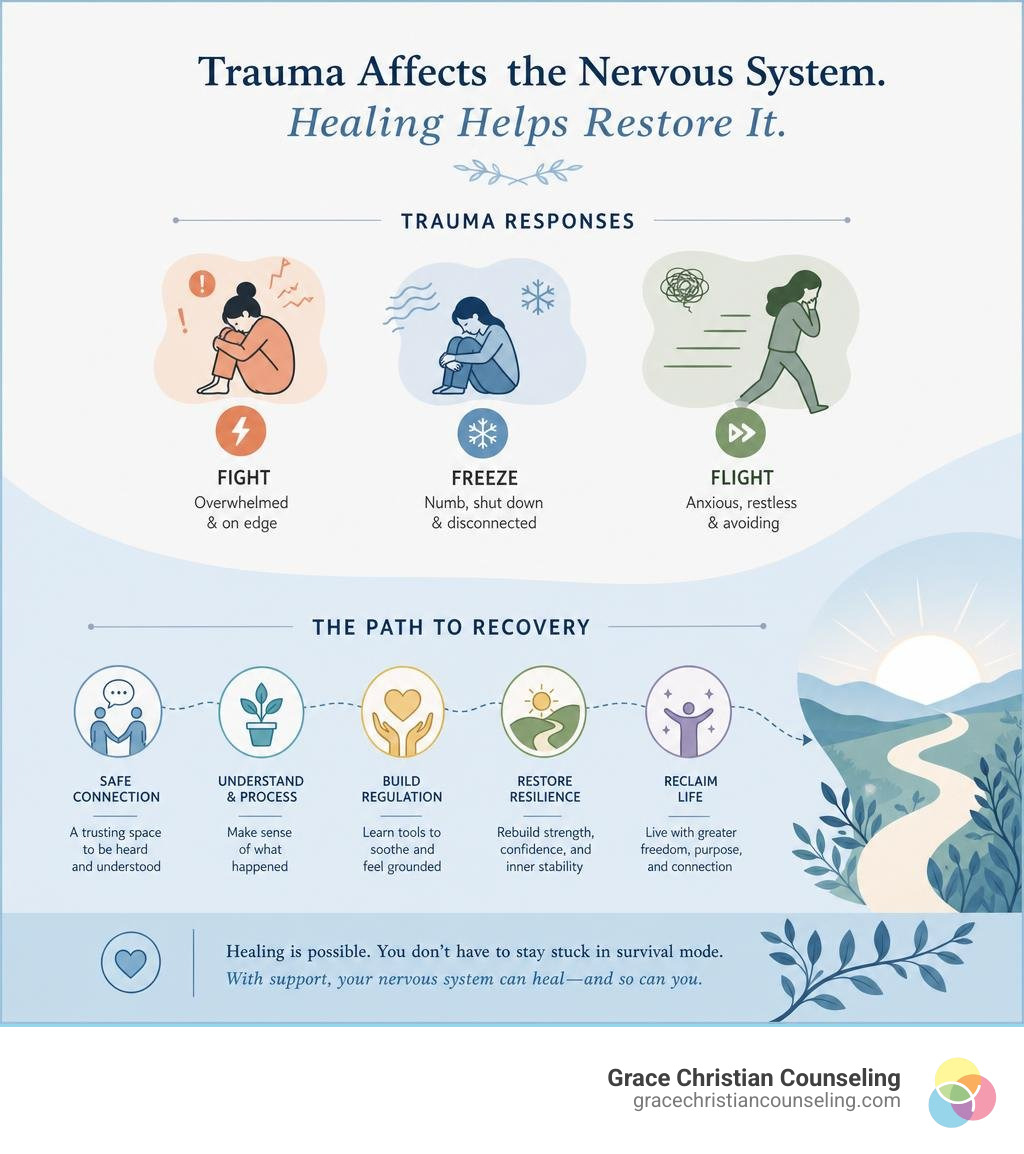
Acute, Chronic, Complex, and Generational Trauma
Clinical psychology categorizes traumatic stress based on its frequency, duration, and relational context:
- Acute Trauma: Results from a single, isolated, and unexpected event, such as a severe motor vehicle crash, natural disaster, or sudden violent encounter.
- Chronic Trauma: Arises from prolonged, repeated exposure to severe stressors, such as sustained domestic distress, chronic illness, combat, or enduring workplace harassment.
- Complex Trauma (C-PTSD): Typically stems from early interpersonal violations, such as enduring physical abuse, persistent neglect, or profound emotional betrayal by primary caregivers. Investing in healing childhood trauma helps adults address these deeply embedded developmental wounds.
- Adverse Childhood Experiences (ACEs): Research consistently demonstrates that higher cumulative ACE scores elevate adult vulnerability to chronic health conditions, interpersonal distress, and mood disorders.
- Generational and Systemic Trauma: Traumatic stressors can echo across generations through learned behavioral patterns, altered family narratives, and epigenetic changes. Exploring effective therapy techniques for healing generational trauma alongside a comprehensive guide to therapy for generational trauma allows families to break destructive cycles.
- Secondary and Vicarious Trauma: First responders, healthcare workers, and caregivers frequently absorb the traumatic experiences of those they serve, leading to compassion fatigue and secondary traumatic stress.
Police, fire, EMS, dispatch, and other emergency personnel can also explore counseling for Pennsylvania first responders when repeated exposure or a critical incident begins affecting life beyond the shift.
Neurobiological Responses: Amygdala, HPA Axis, and the Body
When the brain perceives danger, several stress-response systems become active to help the body respond quickly. This can involve changes in heart rate, breathing, muscle tension, attention, and stress hormones such as cortisol. These reactions are adaptive in the short term because they prepare the body to respond to threat.
After trauma, some people continue to experience reactions such as hypervigilance, sleep problems, irritability, difficulty concentrating, or strong physical responses to reminders of what happened. These responses vary from person to person, and they do not necessarily mean that the brain or nervous system has been permanently damaged. Understanding trauma as a real mind-body experience can reduce shame while still leaving room for the fact that recovery is possible.
Distinguishing Normal Traumatic Stress from PTSD and Related Disorders
Experiencing profound distress, tearfulness, intrusive memories, or hyperarousal immediately following a crisis is a normal physiological reaction to an abnormal event. The vast majority of people demonstrate natural psychological resilience; their internal coping resources and relational support networks allow symptoms to subside over time. Most people who experience potentially traumatic events do not develop PTSD. According to the World Health Organization, about 3.9% of people worldwide experience PTSD at some point in their lives, while approximately 5.6% of people exposed to traumatic events develop PTSD.
Distinguishing between normal acute stress responses and clinical conditions requires skilled clinical assessment. During evaluation, licensed counselors (LAPC, LSW) observe how symptoms manifest across everyday life. Depression or anxiety connected to traumatic events often presents as chronic fatigue, irritability, difficulty concentrating, physical aches, or quiet social withdrawal. Comprehensive diagnostic evaluation, frequently utilizing structured frameworks like the Clinician-Administered PTSD Scale (CAPS), ensures clients receive targeted support tailored to their specific symptoms.
Acute Stress Reactions vs. Clinical PTSD Criteria
The primary clinical distinction between Acute Stress Disorder (ASD) and PTSD is symptom duration and persistence:
| Clinical Consideration | Acute Stress Disorder (ASD) | Post-Traumatic Stress Disorder (PTSD) |
|---|---|---|
| Duration of Symptoms | 3 days to 1 month following the event | Symptoms persist for more than 1 month |
| Primary Symptom Clusters | Intrusions, negative mood, dissociation, avoidance, arousal | Persistent re-experiencing, active avoidance, negative cognitions/mood, hyperarousal |
| Functional Impairment | Immediate temporary disruption of daily routines | Enduring impairment in work, school, relationships, and health |
| Diagnostic Criteria Context | Evaluates immediate post-crisis survival reactions | DSM-5-TR structured criteria requiring specific symptom thresholds |
| Associated Experiences | Acute shock, disorientation, heightened startle | Chronic hypervigilance, emotional numbing, co-occurring depression |
When working with survivors of persistent relational boundary violations, clinical care also addresses complex presentations such as narcissistic abuse dynamics. Resources on PTSD and narcissistic abuse recovery and our step-by-step guide to narcissistic abuse therapy help untangle these intricate emotional wounds.
Identifying Dissociation, Triggers, Flashbacks, and Emotional Numbing
Trauma often alters sensory processing through a mechanism known as traumatic coupling, where neutral stimuli (such as the hum of an engine, a specific scent, or a sudden change in tone of voice) become linked with past danger. Encountering these triggers can ignite immediate responses:
- Flashbacks: Temporary psychological re-experiencing where the survivor feels as though the trauma is recurring in the present moment, accompanied by vivid sensory intrusions.
- Dissociation: A biological defense mechanism causing depersonalization (feeling detached from one’s own body) or derealization (feeling as though the surrounding environment is unreal or dreamlike).
- Emotional Flooding: A sudden wave of intense terror, rage, or grief that overwhelms emotional regulation capacity.
- Emotional Numbing: A protective shutdown where the mind separates feelings from conscious awareness to shield against severe distress, often presenting as relational detachment or apathy.
Core Principles of Trauma Recovery Counseling
Effective trauma recovery counseling is built upon the established foundations of Trauma-Informed Therapy frameworks. Developed to prevent re-traumatization within behavioral health settings, trauma-informed care shifts the foundational clinical question from “What is wrong with you?” to “What happened to you?” This paradigm respects natural coping adaptations while guiding individuals toward sustainable restoration.
Our licensed therapists integrate evidence-based practices with pastoral warmth and the guidance of the Holy Spirit. We work with clients to restore a secure sense of self, fostering true post-traumatic growth. For individuals navigating complicated relational hurts, exploring trauma therapy for healing from narcissistic abuse offers clear pathways to rebuilding trust and healthy boundaries.
Trauma-Informed Care: Safety, Trust, and Empowerment
Trauma recovery counseling follows the four core assumptions established by the Substance Abuse and Mental Health Services Administration (SAMHSA), known as the 4 R’s:
- Realize: Realizing the widespread prevalence of trauma and its diverse paths to recovery.
- Recognize: Recognizing the signs and symptoms of traumatic stress in clients, families, and staff.
- Respond: Responding by fully integrating trauma knowledge into clinical policies, language, and treatment planning.
- Resist Re-traumatization: Actively creating a safe clinical environment that prevents practices or pacing that could trigger re-traumatization.
By cultivating transparency, mutuality, peer support, and explicit client choice, counseling becomes a secure space where individuals regain control over their personal stories.
The Phased Treatment Model: From Stabilization to Integration
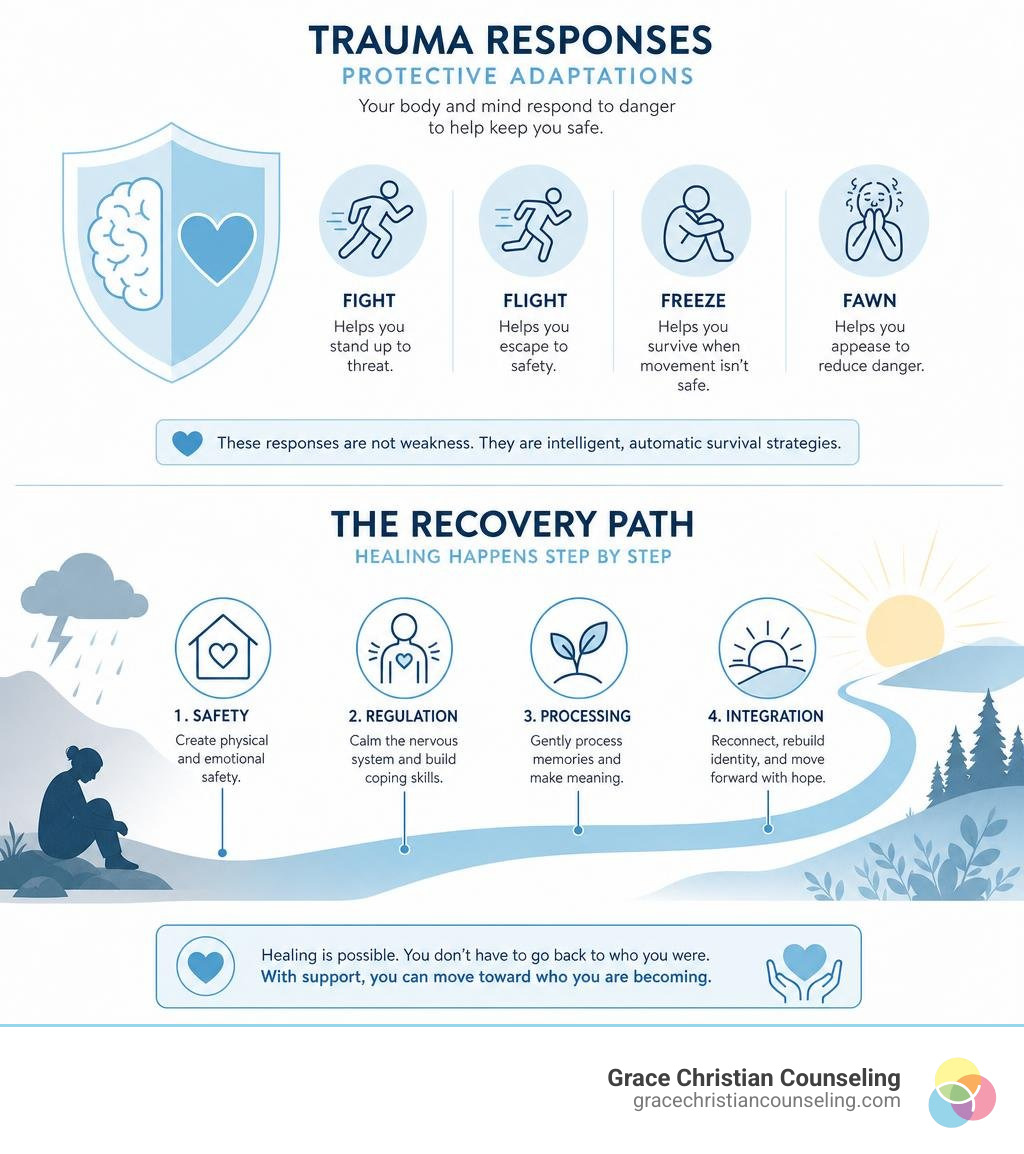
Clinical trauma recovery relies on a phased, sequential model rather than premature memory excavation:
- Phase 1 – Safety and Preparation: Counseling may begin with building trust, addressing immediate safety concerns, and developing coping or grounding skills when needed.
- Phase 2 – Trauma-Focused Treatment: When appropriate, clients may work directly with traumatic memories and their meanings using evidence-based approaches such as CPT, PE, or EMDR.
- Phase 3 – Integration and Reconnection: Therapy can also help clients apply what they have learned to relationships, boundaries, faith, work, and meaningful life goals.
The VA/DoD PTSD guidelines recommend CPT, PE, and EMDR as the trauma-focused psychotherapies with the strongest evidence for PTSD. Treatment choice should be individualized through shared decision-making rather than assuming that every survivor needs the same sequence of care. Throughout this journey, the power of connection in trauma recovery acts as a vital catalyst for long-term health.
Clinical Modalities and Intervention Strategies for Deep Healing
Modern trauma treatment blends established psychotherapeutic modalities designed to help the brain reprocess traumatic memories. Affect regulation screening ensures that each client possesses adequate distress tolerance before entering deeper processing stages. By combining cognitive restructuring with nervous system stabilization, clients discover that lingering memories can lose their intense, reactive charge.
For holistic recovery resources, clinicians often coordinate with multidisciplinary partners like NuWellonline.com to support total physical and mental well-being. Whether an individual is processing an acute adult accident or addressing childhood traumas to foster healing in adulthood, structured therapy offers reliable tools for recovery.
Evidence-Based Modalities in Trauma Recovery Counseling
Trauma treatment should be matched to the client’s symptoms, diagnosis, age, goals, and preferences. For PTSD specifically, the approaches with the strongest research support include CPT, PE, and EMDR. Our practice utilizes various evidence-based clinical modalities:
- Cognitive Processing Therapy (CPT): Helps clients identify and examine trauma-related beliefs about areas such as safety, trust, power, esteem, and intimacy.
- Prolonged Exposure (PE): Uses gradual, structured exposure to trauma memories and safe situations that have been avoided so they can become less distressing over time.
- Eye Movement Desensitization and Reprocessing (EMDR): A structured trauma-focused psychotherapy that involves recalling aspects of the traumatic experience while engaging in bilateral stimulation. The National Center for PTSD identifies EMDR as one of the most strongly supported treatments for PTSD.
- Trauma-Focused Cognitive Behavioral Therapy (TF-CBT): An evidence-based treatment developed primarily for children and adolescents who have experienced trauma, often involving caregivers as part of treatment.
- Grounding and Regulation Skills: Breathing, sensory grounding, relaxation, and other coping skills may be used to help clients manage distress, but these strategies are supportive tools rather than stand-alone treatments for PTSD.
Integrating Faith and Clinical Tools in Trauma Recovery Counseling
As Christian counselors, we believe true restoration encompasses the mind, body, and spirit. We thoughtfully integrate evidence-based protocols with the comfort of Scripture and the transformative presence of the Holy Spirit. Clinical tools are paired with biblical practices like the prayer of lament, which honors emotional pain while looking toward God’s faithfulness.
Scripture reminds us in Psalm 34:18 that the Lord is close to the brokenhearted and saves those who are crushed in spirit. Our licensed counselors (LAPC, LSW) create a space where you can bring your honest doubts, sorrow, and grief before God without fear of judgment. Readers can explore our Christian trauma counseling ultimate guide and learn more about faith-based trauma healing to find peace with God as well as biblical healing by trusting God with your past hurts.
Navigating Complex Challenges and Special Populations in Recovery
Trauma recovery is rarely linear. Survivors frequently face complex co-occurring challenges as they navigate past pain. When painful memories surface, some individuals turn to maladaptive coping strategies, such as substance use, deliberate self-harm, or intense relational withdrawal, to numb distressing emotional states.
Compassionate clinical care recognizes that these behaviors often begin as attempts to survive overwhelming emotional distress. Counselors address these habits with patience, teaching healthier emotion regulation strategies rather than responding with shame or judgment. For those who have endured emotional mistreatment, specialized care like therapy for overcoming emotional abuse and our guide on the ultimate guide to mental abuse therapy provide focused support.
Managing Self-Destructive Coping, Substance Use, and Moral Injury
Following community crises or severe individual trauma, substance use can increase significantly. For instance, in the months following major national disasters, communities have documented substantial increases in alcohol, tobacco, and cannabis consumption as survivors attempted to manage untreated hyperarousal and sleep disturbances.
Our counselors integrate relapse prevention tools directly with trauma processing:
- Distress Tolerance Protocols: Teaching sensory grounding methods (such as the 5-4-3-2-1 technique, temperature shifts, and rhythmic breathing) to manage urges safely.
- Addressing Moral Injury: Moral injury occurs when an individual witnesses or participates in events that violate their deeply held moral convictions, producing profound guilt and shame. Unlike fear-based PTSD, moral injury centers on grief, restorative justice, and spiritual reconciliation.
- Untangling Survivor Guilt: Reframing irrational self-blame through gentle cognitive restructuring and biblical grace.
Practical Somatic Grounding Techniques
When you feel overwhelmed, anxious, or disconnected from the present moment, simple grounding strategies may help redirect your attention to your immediate surroundings. Different techniques work for different people, so here are some options to explore. You can practice these simple steps to bring your nervous system back into the present:
- The 5-4-3-2-1 Sensory Method: Name 5 things you can see, 4 things you can physically feel, 3 distinct sounds you can hear, 2 scents you can smell, and 1 positive truth about yourself.
- Diaphragmatic Box Breathing: Inhale slowly through your nose for 4 seconds, hold gently for 4 seconds, exhale smoothly through your mouth for 4 seconds, and hold empty for 4 seconds. Repeat for two minutes.
- Temperature and Sensory Awareness: Notice a comfortable sensory experience, such as holding a cool object, washing your hands with comfortably cool water, or noticing the temperature of the air around you. Bringing attention to present-moment sensations may help some people feel more grounded.
- Grounding Body Press: Firmly plant both feet flat on the floor, press your back against your chair, and notice the solid support beneath you.
For a simple four-step response when a reminder brings the past close, and what healing can realistically look like, read Letting Go of Past Trauma: What Healing Can Really Mean.
Tailored Care for Children, Veterans, and Survivors of Relational Violence
Different populations require specialized therapeutic approaches:
- Children and Adolescents: Younger children often lack the abstract vocabulary to articulate traumatic memories. Counselors utilize play therapy, expressive art, and sand tray interventions to help children externalize complex feelings safely.
- Veterans and First Responders: Combat stress reactions and repeated operational exposure require structured, evidence-based approaches like Prolonged Exposure or EMDR, combined with peer support to counter isolation.
- Survivors of Relational and Domestic Violence: Treatment focuses on physical safety planning, uncoupling from narcissistic abuse cycles, and re-establishing personal autonomy. Engaging in specialized relationship trauma therapy near me helps survivors rebuild trust and mutual respect in future relationships.
Importantly, clinical research warns against mandatory, immediate psychological debriefing directly after a crisis, as forcing detailed retellings prematurely can heighten the risk of PTSD. Healing must always unfold at a pace that respects the survivor’s comfort and readiness.
Frequently Asked Questions About Trauma Counseling
How does psychological trauma differ from everyday stress or hardship?
Everyday stress challenges our coping resources, but usually leaves our foundational assumptions about safety and personal capability intact. Psychological trauma occurs when an experience completely overwhelms our capacity to cope, creating lasting disruption in nervous system regulation, self-worth, and daily functioning.
Is it necessary to recount every detail of a traumatic event to heal?
No. You do not necessarily need to describe every graphic detail of a traumatic experience in order to benefit from treatment. Effective trauma recovery counseling prioritizes safety, stability, and emotional regulation before any traumatic memories are explored. Different trauma therapies approach memories in different ways.
Modalities like EMDR and somatic therapies allow the brain and nervous system to process distressing events without requiring you to verbalize every graphic detail. A trained therapist can explain what a particular treatment involves and work with you to choose an approach that fits your needs and preferences. You can learn more about evidence-based PTSD treatments through the National Center for PTSD.
How long does trauma counseling typically take to produce measurable relief?
There is no single timeline for trauma recovery. The length of counseling can depend on the type of trauma, current symptoms, treatment approach, personal goals, safety, support system, and whether other mental health concerns are present. Some evidence-based PTSD treatments are delivered within a relatively structured number of sessions, but that does not mean every person will recover within the same timeframe. You and your counselor can regularly evaluate your progress and adjust treatment based on your needs.
Finding Hope and Restoration Through Trauma Recovery Counseling
Trauma can leave you feeling isolated, exhausted, and disconnected from your true identity, but it does not have the final word in your story. Healing from past wounds is entirely possible with the right clinical tools, a safe therapeutic alliance, and the restorative love of God. Through structured, compassionate trauma recovery counseling, you can learn to calm your nervous system, dismantle unhelpful core beliefs, and rediscover genuine emotional peace.
At Grace Christian Counseling, our team of dedicated LAPC and LSW licensed counselors combines evidence-based psychological therapies with timeless biblical wisdom. We are honored to walk alongside individuals, couples, and families throughout Western Pennsylvania, serving communities across Pittsburgh, North Huntingdon, Penn Hills, Uniontown, Bethel Park, Sewickley, and Mt. Lebanon. If you are located outside these immediate areas or prefer the comfort of home, you can easily begin online Christian counseling in Pennsylvania with our compassionate clinical team.
When you are ready to take the next step toward healing, we invite you to connect with our licensed counselors today. You do not have to carry the weight of the past alone; restoration, peace, and renewed purpose are within reach.
This guide is for educational and spiritual encouragement and is not a substitute for personalized professional counseling. If you are in crisis, please reach out for immediate help.
Christian Counseling Burnout Pennsylvania


