

Why Schools Are Turning to Art Therapy to Help Students Cope
Art therapy for students is a structured, evidence-based mental health practice that uses creative expression, such as drawing, painting, or clay work, to help young people process emotions, reduce anxiety, and build resilience. It is guided by a trained clinician rather than an art instructor.
Quick answer: What is art therapy for students?
- It combines active art-making with psychological support from a licensed therapist
- The focus is on emotional expression and healing, not artistic skill or a finished product
- It helps students manage anxiety, stress, trauma, and behavioral challenges
- It works across all ages, from primary school through university
- It can be delivered in schools, counseling offices, or even online
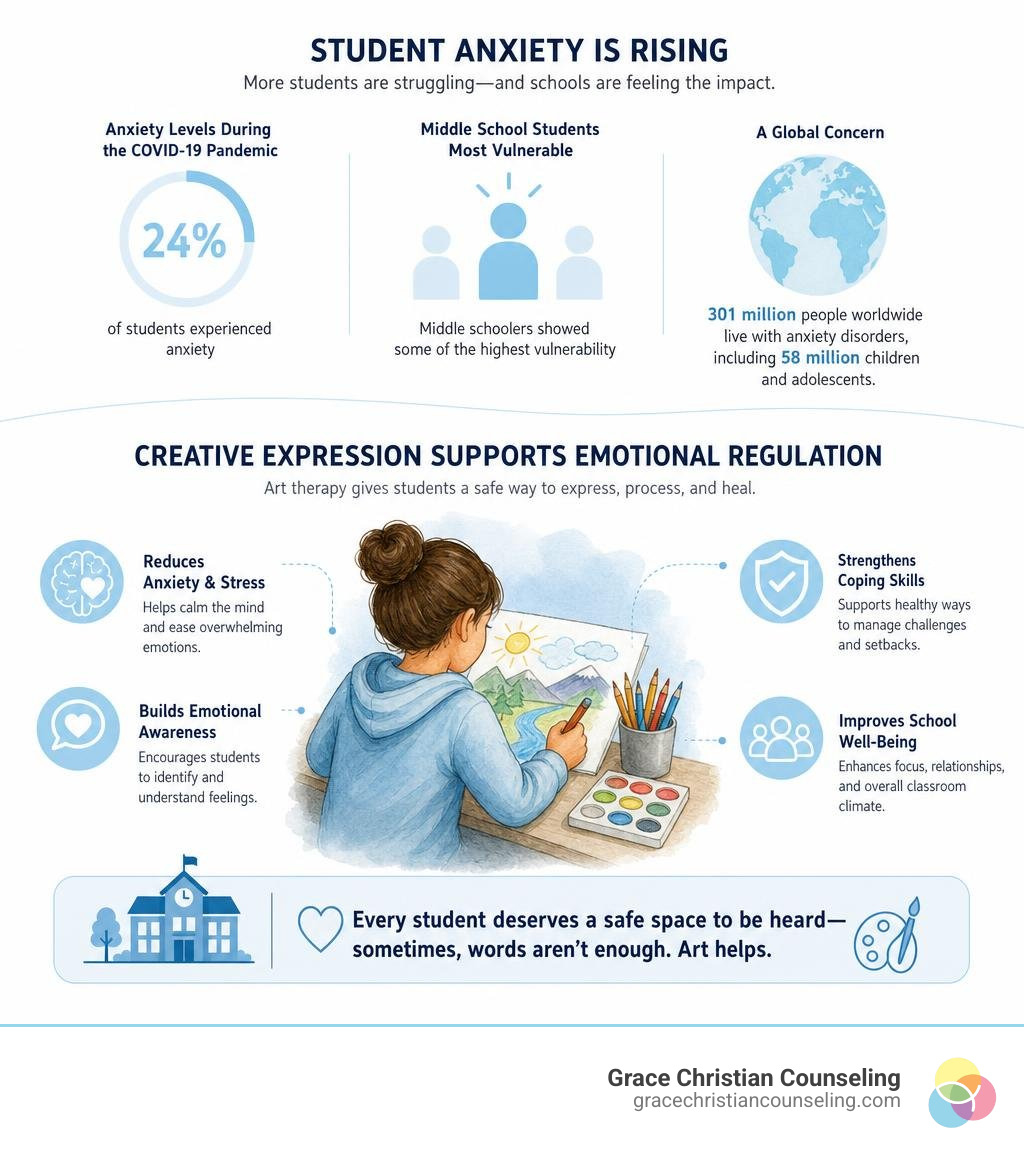
Right now, student mental health is under serious strain. According to the World Health Organization, 301 million people worldwide live with anxiety disorders, including 58 million children and adolescents. During the COVID-19 pandemic, anxiety levels among students climbed to 24%, with middle schoolers showing some of the highest vulnerability. Chronic anxiety does not just affect how a child feels; it directly impacts their academic performance, social skills, and long-term well-being.
Schools are looking for practical, accessible ways to reach students who are struggling, especially those who cannot easily put their feelings into words. Art therapy offers exactly that. A child who cannot explain why they feel hopeless may pick up a paintbrush and show you. That is not a metaphor; it is how the process actually works.
Understanding Art Therapy for Students: Expression Over Perfection
To understand why schools are increasingly relying on this approach, we must first clarify what art therapy is and what it is not. Many people assume that art therapy is simply a quiet art class or an extracurricular craft hour. In reality, the differences are profound.
An art class is focused on teaching technique, developing skill, and producing a beautiful final product. Students are graded, and their work is evaluated based on aesthetic standards. Art therapy, on the other hand, completely throws out the rulebook of technique and grading. The therapeutic process is entirely about self-expression, emotional processing, and non-verbal communication. It does not matter if a student has never held a paintbrush before or if they struggle to draw a simple stick figure. The canvas, paper, or clay serves as a safe container for whatever internal struggles they are experiencing.
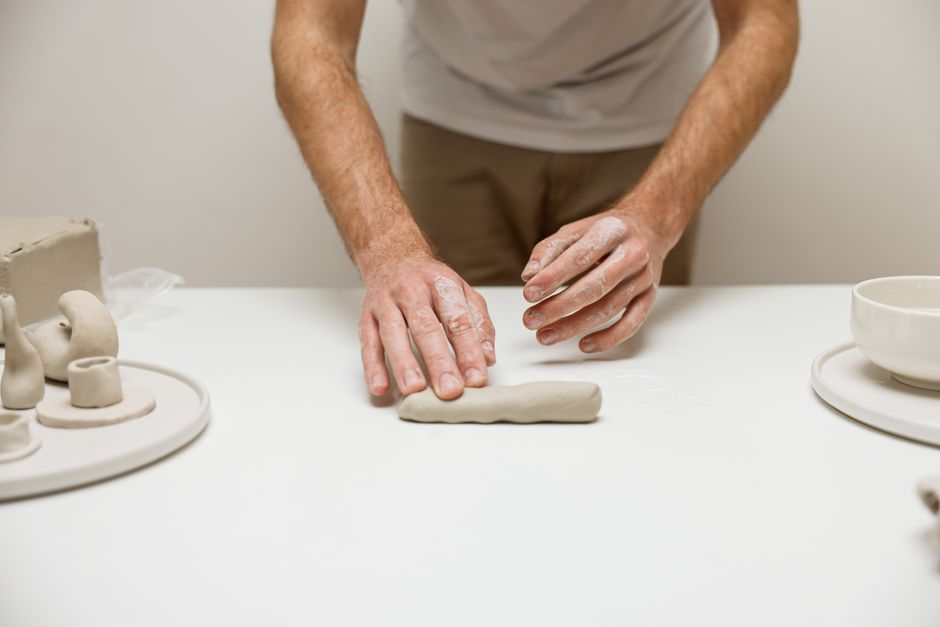
In a clinical setting, this creative process is guided by a licensed professional, such as a Provisionally Registered Art Therapist (ATR-P), a Registered Art Therapist (ATR), or a Board Certified Art Therapist (ATR-BC). These specialists often hold additional mental health licenses, such as a Licensed Associate Professional Counselor (LAPC) or a Licensed Social Worker (LSW).
At Grace Christian Counseling, we use art therapy to help students walk through our Counseling Blueprint, which is a structured four-stage healing journey:
- Take Off the Mask: Students are invited to drop their defensive walls and express their true, unfiltered feelings through raw creative mediums.
- Heal the Wounds: By externalizing their pain onto paper or into clay, students can safely explore emotional and relational hurts without feeling overwhelmed.
- Remove the Toxins: The therapist helps the student identify unhelpful beliefs, fears, or lingering lies that are reflected in their artwork.
- Replace with Truth: Finally, we guide the student to visually and mentally install empowering, accurate perspectives rooted in God’s truth.
For a deeper look at how this process unfolds, you can read our guide on Healing Through Art: The Surprising Benefits of Art Therapy for Mental Health.
The Developmental and Mental Health Benefits of Creative Expression
Art therapy is not just a soothing distraction. It is a powerful developmental tool that supports a student’s growth across multiple domains. When children and teens engage in creative expression, they experience significant benefits that touch every area of their lives.
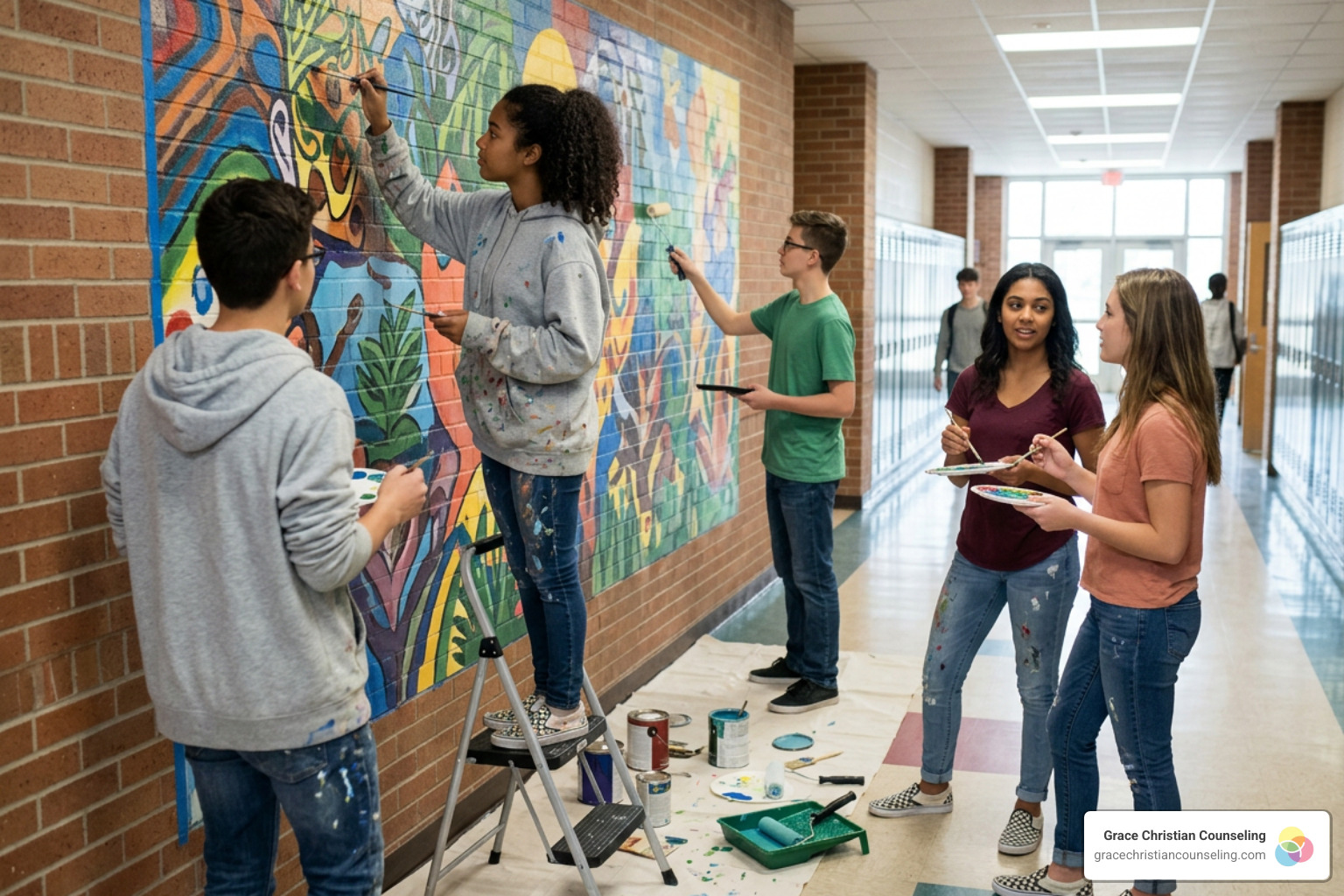
- Social Development: In group art therapy sessions, students learn to share materials, collaborate on joint projects, and respect the diverse perspectives of their peers. This shared creative space fosters empathy and reduces feelings of isolation.
- Cognitive Development: Creating art requires planning, sequential reasoning, and problem-solving. It helps the brain organize internal chaos and external realities into symbolic imagery, which actually strengthens neural pathways associated with learning.
- Emotional Development: Art provides a safe, non-verbal outlet for complex emotions. It enhances self-awareness, builds self-esteem, and allows students to experiment with coping mechanisms in a controlled environment.
- Physical Development: Working with different mediums, like sculpting clay, cutting paper, or painting, refines fine motor skills, hand-eye coordination, and spatial awareness.
These developmental benefits are crucial, especially given the current mental health landscape. With anxiety affecting millions of young people worldwide, including 58 million children and adolescents, we are seeing a direct correlation between high stress levels and declining academic performance.
When a student’s brain is locked in a state of chronic anxiety, the prefrontal cortex, which is responsible for learning, memory, and logic, essentially goes offline. By using art to soothe the nervous system, we can help students return to a state of calm, allowing them to focus and thrive in school.
As Christian counselors, we are reminded of the peace God promises us in times of distress. In Philippians 4:6-7, we are encouraged to bring our anxieties to God, and His peace, which surpasses all understanding, will guard our hearts and minds. Art therapy can be a physical, tangible way for students to release those heavy burdens and experience that divine peace.
To learn more about how these programs are transforming educational environments, you can explore the PMC Research on School-Based Art Therapy. And if you still believe that creative therapy is only for the youngest students, be sure to check out our article, Myth Buster: Art Therapy Is Only for Children.
How Art Therapy for Students Reduces Anxiety and Stress
The impact of art therapy on student stress is not just anecdotal. It is backed by clinical data. In a recent study evaluating college students facing intense academic and personal pressures, researchers utilized the Depression Anxiety Stress Scales (DASS-42) to measure physiological, emotional, and behavioral stress markers.
The results were remarkable. After participating in structured painting sessions, the students’ total stress scores dropped significantly from a pre-intervention average of 123 down to 87. This drop was reflected across all measured categories:
- Physical stress scores decreased as students physically relaxed during the creative process.
- Emotional stress scores dropped as students successfully externalized their internal anxieties onto the canvas.
- Behavioral stress markers improved, indicating that students felt a greater sense of self-control and self-confidence.
To read the full details of this research, you can access the Edunity Painting Art Therapy Study. The study highlights how the tactile act of painting allows students to bypass verbal limitations and directly address the root causes of their academic and personal stress.
The Science of Mindfulness-Based Art Therapy for Students
In recent years, researchers have paid close attention to Mindfulness-Based Art Interventions (MBAIs). These programs combine structured mindfulness practices, such as deep breathing, body scans, or present-moment awareness, with active creative expression.
A comprehensive meta-analysis published in 2025 evaluated the effectiveness of these interventions on student anxiety. The study revealed that MBAIs reduced students’ standardized anxiety scores by an overall effect size of 0.387, which represents a statistically significant, reliable reduction in symptoms.
One of the most helpful takeaways from the research is that not all art-based activities work the same way. A full, therapist-led mindfulness-based art intervention appears to offer stronger support than a simple coloring activity.
- Full Mindfulness-Based Art Interventions (MBAIs) showed the strongest results. Students seemed to benefit most when a clinician first guided them through a mindfulness practice and then supported them as they created their own expressive artwork.
- Mandala Coloring Activities still helped, but the improvement was more modest. Coloring a pre-drawn mandala can be calming and grounding, but it usually does not invite the same level of emotional exploration as creating original artwork with a trained professional.
That distinction matters. A coloring page can be a useful way to settle the mind in the moment. Clinical art therapy, however, gives students a guided space to notice what they are feeling, express it safely, and begin working through it. For a thorough breakdown of this scientific data, you can review the MDPI Meta-Analysis on MBAIs.
Age-Appropriate Art Therapy Activities for Different Educational Stages
Art therapy is highly adaptable. A skilled therapist will tailor the activities to match the developmental stage, cognitive capacity, and emotional needs of the student.
Here is a look at how art therapy is utilized across different educational levels:
Primary School (K-5)
For young children, verbalizing complex emotions like grief, trauma, or anxiety is incredibly difficult. Art therapy at this stage focuses on play, externalization, and sensory exploration.
- Worry Monsters: Children sculpt a “monster” out of clay or papier-mâché and write or draw their fears to “feed” to the monster, physically externalizing their anxieties.
- Story Stones: Painting simple characters or symbols on smooth stones allows children to arrange them to tell stories about their lives, helping them process family conflicts or school worries.
Middle School (Grades 6-8)
Adolescence is a time of rapid identity formation and intense social pressure. Middle schoolers often feel highly self-conscious, so art therapy activities must build autonomy and self-compassion.
- Inside-Out Masks: Students decorate the outside of a paper mask to represent how they present themselves to the world, while the inside of the mask is decorated to show their private, hidden feelings.
- Visual Journaling: Combining collage, writing, and sketching in a private journal helps teens process peer pressure and academic stress without the fear of judgment.
University Students
College students face immense pressure, academic workloads, and major life transitions. Art therapy for young adults often focuses on mindfulness, stress reduction, and cultivating positive affect.
- Zentangle and Pastel Nagomi: These structured, low-skill art forms focus on repetitive patterns and soft pastel blending. A randomized controlled trial during the pandemic showed that Zentangle rapidly increased positive affect, while Pastel Nagomi significantly reduced negative emotions over a 12-week period.
- Arts for the Blues Workshops: These online, multimodal workshops combine movement, drawing, and creative writing to help students manage depression and anxiety.
- Drumming and Dancing (MGW Program): Participatory performing arts programs have been shown to significantly reduce stress and improve self-reported creativity levels among university students.
| Educational Stage | Key Focus | Recommended Art Therapy Activity | Primary Benefit |
|---|---|---|---|
| Primary School (K-5) | Sensory play & externalization | Clay Worry Monsters & Story Stones | Helps children express feelings they cannot yet verbalize |
| Middle School (6-8) | Identity & self-exploration | Inside-Out Mask Making & Visual Journals | Builds self-awareness and navigates social pressures |
| University Students | Stress relief & mindfulness | Zentangle, Pastel Nagomi, & Arts for the Blues | Reduces anxiety, boosts positive affect, and builds community |
For more details on the university-level studies, you can read the Frontiers Zentangle and Pastel Nagomi Study, explore the qualitative feedback in the Arts for the Blues Qualitative Study, or review the clinical outcomes of performing arts in the BMC Public Health Performing Arts Study.
Implementing Art Therapy Programs in School Settings
As the benefits of creative therapy become undeniable, school districts across the country are finding innovative ways to integrate these services directly into their routines. By embedding art therapists into the school environment, districts can support students in a space where they already spend the majority of their day.
In Western Pennsylvania, we are seeing wonderful examples of these school-based partnerships. For instance, local initiatives like the Penn Hills School District Partnership have highlighted how school-based therapy collaborations can provide vital mental health resources directly to students in their classrooms.
Additionally, specialized educational institutions like the Watson Institute utilize these creative approaches to support students with diverse learning and behavioral needs, as detailed in their resource on Watson Institute Art Therapy in Special Education.
At Grace Christian Counseling, we are proud to offer these specialized services to families throughout Pennsylvania. Our team includes dedicated professionals who specialize in pediatric and adolescent care. To meet one of our therapists and learn about her approach, you can read our profile, Introducing Adrienne: Art Therapy and Faith-Based Counseling for Children.
Frequently Asked Questions about School-Based Art Therapy
What is the difference between an art class and art therapy?
An art class is educational, focusing on teaching specific artistic techniques, art history, and skill development. The final product is graded, and students are encouraged to improve their technical abilities.
Art therapy is a clinical mental health intervention. The focus is entirely on the internal emotional process of creation. There are no grades, no judgments, and no “mistakes.” The therapist uses the creative process to help the student explore their feelings, resolve trauma, and develop healthy coping mechanisms.
Can art therapy help students who have no artistic talent?
Yes, absolutely. Art therapy requires zero artistic talent or prior experience. The creative process is an innate, God-given human trait.
A professional therapist is not looking for technical skill. Instead, they are looking at how the student uses colors, shapes, textures, and space to express their internal world. The goal is authenticity and healing, not creating a masterpiece.
How do schools fund and hire qualified art therapists?
Schools typically fund these programs through a combination of mental health grants, special education budgets, and partnerships with local community mental health organizations. When hiring, it is crucial to verify that the candidate holds a master’s degree in art therapy and is registered or board-certified by the Art Therapy Credentials Board (ATCB).
Organizations like Florida Art Therapy Services offer excellent examples of how external agencies can partner with educational institutions to provide high-quality, credentialed clinical art therapy to students of all ages.
Helping Students Find Calm, Connection, and Hope Through Art
Art therapy for students is proving to be a highly effective, deeply compassionate way to help young people navigate the heavy burdens of anxiety, academic pressure, and emotional distress. By allowing students to step away from the pressure of verbalizing their pain and instead express it creatively, we can help them find true healing and emotional freedom.
At Grace Christian Counseling, we are committed to walking alongside your family on this journey. Whether you are located in Pittsburgh, Penn Hills, Sewickley, Uniontown, Pleasant Hills, Bethel Park, Ligonier, Belle Vernon, Punxsutawney, North Huntingdon, Mt. Lebanon, or anywhere else across Pennsylvania, we are here to support you.
We offer both in-person sessions at our local offices and convenient, secure statewide online counseling. Through our Counseling Blueprint, we will help your child Take Off the Mask, Heal the Wounds, Remove the Toxins, and ultimately Replace with Truth, the life-giving truth of God’s love and purpose for their life.
We are reminded of the beautiful promise in Jeremiah 29:11: “For I know the plans I have for you, declares the Lord, plans for welfare and not for evil, to give you a future and a hope.”
If you would like to explore how clinical art therapy can help your child heal and thrive, we invite you to take the next step. You can learn more about our online options or visit our dedicated Art Therapy page to connect with one of our licensed Christian counselors today.
This guide is for educational and spiritual encouragement and is not a substitute for personalized professional counseling. If you are in crisis, please reach out for immediate help.
Praying With Your Children


